
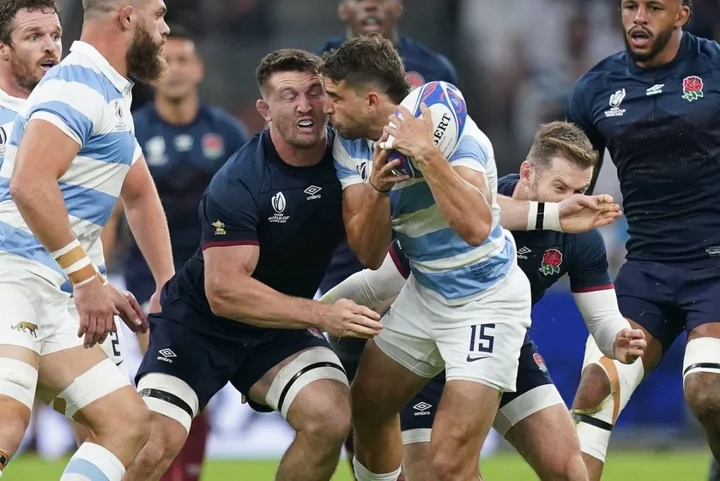
Rugby World Cup: Red card rules explained
Refereeing, head collisions and player safety again made the headlines on the opening weekend of the Rugby World Cup with a number of contentious incidents. The most high-profile came on Saturday when an England player was shown a red card for the fourth time this year, as Tom Curry was sent off early in his side’s win over Argentina, following a head-on-head collision with Juan Cruz Mallia. However, apparent inconsistency among officials irked many, especially on social media, with other incidents of head contact across the weekend not being punished as severely. Later in that same match, Santiago Carreras only received a yellow card despite his leap in attempting to charge down a George Ford kick seeing his hip make contact with the England No 10’s head. During South Africa’s impressive 18-3 win over Scotland, Jesse Kriel’s tackle on Jack Dempsey in which his head clattered into that of his Scottish opponent wasn’t even reviewed by the TMO and hasn’t subsequently been cited, while Chile captain Martin Sigren was only sin-binned despite a head-on-head collision while tackling a Japanese attacker. But what are the laws around head contact and high tackles that referees are following and how do they decide on the punishment? Here’s everything you need to know: What are World Rugby’s laws on head contact? Head-on-head contact in the tackle comes under Law 9 of the Laws of Rugby Union, which covers foul play. Law 9.11 dictates “Players must not do anything that is reckless or dangerous to others, including leading with the elbow or forearm, or jumping into, or over, a tackler” and Law 9.13 goes on to say “A player must not tackle an opponent early, late or dangerously. Dangerous tackling includes, but is not limited to, tackling or attempting to tackle an opponent above the line of the shoulders even if the tackle starts below the line of the shoulders.” If a player breaks these laws and the act is deemed to be reckless or dangerous, then the referee is entitled to issue a yellow or red card. World Rugby also clarify the intent of the laws, stating in their guidelines that: “ Player welfare drives World Rugby’s decision making for zero tolerance of foul play, especially where head contact occurs. The focus must be on the actions of those involved, not the injury – the need for an HIA [a Head Injury Assessment] does not necessarily mean that there has been illegal head contact.” What are the punishments for head-on-head contact? Ok, this is where things get technical and debates start to occur. In March 2023, World Rugby issued their latest ‘head contact process law application guidelines’ to guide referees on whether foul play has occurred and how it should be punished. The referee has to go through a four-step process (detailed below) to determine the extent of the foul play and the sanction. The four steps are: Has head contact occurred? Was there any foul play? What was the degree of danger? Is there any mitigation? Step 1 (has head contact occurred?) is relatively straightforward, with head contact including the head and the face as well as the neck and throat area. If any head contact is made at all, we move on to Step 2. Step 2 (was there foul play?) is a touch more complex. The referees are told to consider whether the head contact was either intentional, reckless or avoidable – e.g. the defender is always upright. If it was, the tackler will be penalised and they move on to Step 3. However, if the head contact was deemed not to be foul play, the game continues. Step 3 (what was the degree of danger?) – judged from high to low – determines the initial punishment. A degree of high danger is judged on any of: direct contact rather than indirect, a high-force impact, a lack of control from the tackler, the incident occurring at high speed, the tackler leading with the head/shoulder/elbow/forearm or the tackle being reckless. If the referee judges there to be a high degree of danger, a red card will be shown. Meanwhile, low danger is judged as indirect contact, low force, low speed or no leading head/shoulder/forearm/swinging arm and a yellow card or even just a penalty to the opposition may be awarded. The final step, Step 4 (is there any mitigation?) determines whether the punishment can be reduced by one grade (i.e red card down to yellow card or yellow card down to just a penalty). Mitigation includes a sudden or significant drop in height or change in direction from ball carrier, a late change in dynamics due to another player in the contact area, a clear effort from the tackler to reduce their height or the tackler having no time to adjust. However, mitigation will never apply for intentional or always-illegal acts of foul play. What about the Foul Play Review Officer/Bunker review? Introduced for this World Cup was the Bunker review system. This allows the referee to issue a yellow card to a player, sending them to the sin-bin while play goes on, where a Foul Play Review Official (FPRO) will then take another look at the incident and determine if the yellow card should be upgraded to red, allowing the game to continue rather than a long stoppage to debate this. This is what happened to Curry against Argentina. The referee crosses their arms to indicate a Bunker review will take place. Once a player is in the sin-bin, the FPRO has up to eight minutes to review the decision and decide if it warrants upgrading to a red card. If not, the player will return to the field after their 10 minutes in the sin-bin has elapsed. Read More Tom Curry ban: How many games will England star miss after red card vs Argentina? ‘Ruining this World Cup’: TV presenter slams ‘grotesque’ refereeing as Wales beat Fiji George Ford plays the pragmatist as England finally come to the boil in Marseille cauldron South Africa explain use of signals during Scotland win National anthems are ruining the Rugby World Cup – they must be changed now Tom Curry banned after red card in Rugby World Cup against Argentina
2023-09-13 17:55

Nexa3D Adds TPC to its SLS Materials Portfolio; Introduces QLS 260 Fast Cycle Sintering Platform
VENTURA, Calif.--(BUSINESS WIRE)--Nov 8, 2023--
2023-11-08 14:00

Fed doves, Fed hawks: US central bankers in their own words
The labels “dove” and “hawk” have long been used by central bank watchers to describe the monetary policy
2023-09-30 03:43

When will Conor McGregor return to the UFC?
Conor McGregor’s UFC return is edging closer. McGregor has not fought since suffering a broken leg in a loss to Dustin Poirier in July 2021, but he returned to the United States Anti-Doping Agency’s (Usada) testing pool on 8 October. The end of that saga has also sparked the end of the UFC’s relationship with Usada, which said on 11 October that it would not renew its partnership with the UFC in January, claiming that the organisations’ relationship was made ‘untenable’ by McGregor’s situation. It was announced in February that McGregor, 35, would fight Michael Chandler this year, but McGregor remained absent from the Usada pool for months; in order to compete in the UFC, athletes must have been in the pool for six months while returning zero positive test results and at least two negatives. The UFC and McGregor hinted that he might be granted an exemption, something that Usada spoke out against in early October. “We can confirm that Conor McGregor has re-entered the Usada testing pool,” said Usada CEO Travis Tygart. “We have been clear and firm with the UFC that there should be no exception given by the UFC for McGregor [...] Unfortunately, we do not currently know whether the UFC will ultimately honor the six-month or longer requirement because, as of 1 January 2024, Usada will no longer be involved with the UFC Anti-Doping Program. “Despite a positive and productive meeting about a contract renewal in May 2023, the UFC did an about-face and informed Usada on Monday 9 October that it was going in a different direction. We are disappointed for UFC athletes, who are independent contractors who rely on our independent, gold-standard global program to protect their rights to a clean, safe, and fair Octagon. The UFC’s move imperils the immense progress made within the sport under Usada’s leadership. “The relationship between Usada and UFC became untenable given the statements made by UFC leaders and others questioning Usada’s principled stance that McGregor not be allowed to fight without being in the testing pool for at least six months.” If Usada were to renew its relationship with the UFC in January and McGregor were to honour its stipulations, that would put his earliest return date at some time in April – when UFC 300 is expected to take place. McGregor even told TNT Sports on 28 October, while present at Tyson Fury’s boxing match with Francis Ngannou, that April was being discussed with the UFC. However, the end of the UFC-Usada partnership in January theoretically means that McGregor can return any time after that, without having to concern himself with drug-testing rules. That could change now that the UFC has partnered with a different drug-testing organisation, Drug Free Sport, but that remains to be seen. UFC 298 is expected to take place in February, with UFC 299 likely to be staged in March. McGregor could therefore feature on either card, in theory, and some fans and pundits have argued that UFC 300 will conjure enough hype as it is – without needing McGregor to be involved. In other words: UFC 300 can be sold with other high-profile match-ups, while McGregor’s return sells itself; or: UFC 300 does not need McGregor, and the Irishman does not need UFC 300. McGregor is still expected to face Chandler, with the 37-year-old American having held out for the icon’s return despite its ongoing delay. Since the announcement of McGregor vs Chandler, McGregor has in fact talked up potential bouts with Justin Gaethje and old rival Nate Diaz, though the latter is no longer signed to the UFC. Furthermore, UFC president Dana White has insisted that Gaethje will not be next for McGregor. There is less certainty around the weight at which McGregor will return, however. After winning the featherweight title in 2015, McGregor collected the lightweight belt in 2016 to become the UFC’s first ever dual-weight champion, but he has also competed at welterweight three times, trading wins with Diaz in 2016 and stopping Donald Cerrone in 2020. While there is no expectation for McGregor to fight at featherweight again, and although Chandler typically fights at lightweight, McGregor has hinted that he could return at middleweight – having bulked up significantly while recovering from his broken leg. McGregor suffered that injury in his second straight defeat by Poirier, who knocked out the Irishman in January 2021. The pair, who contested those bouts at lightweight, previously clashed at featherweight in 2014, with McGregor knocking out the American. Click here to subscribe to The Independent’s Sport YouTube channel for all the latest sports videos. Read More Usada ends UFC partnership over ‘untenable’ Conor McGregor situation Kamaru Usman to face Khamzat Chimaev at UFC 294 after Paulo Costa withdraws Charles Oliveira replaced by Alexander Volkanovski in Islam Makhachev fight
2023-10-30 02:03

Instructor Accuses Entire Texas A&M Class of Using ChatGPT, Withholds Grades
In a startling example of how ChatGPT can disrupt education, a university instructor punished an
2023-05-17 06:22
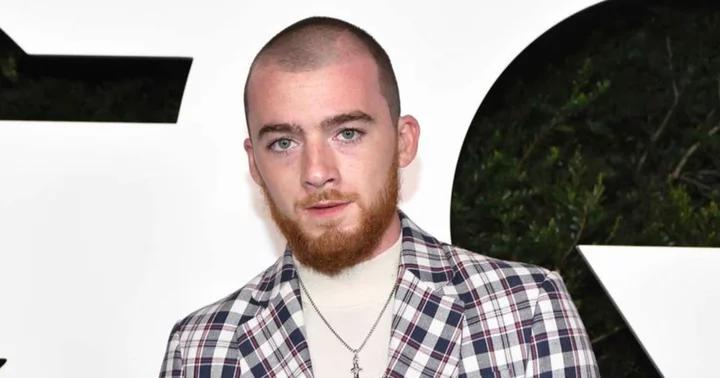
'Euphoria' star Angus Cloud's cause of death revealed nearly 2 months after he was found dead at his California home
Angus Cloud portrayed the character of Fezco, a drug dealer, on the HBO series for a couple of seasons
2023-09-22 04:32

Iranians hit by internet curbs in year since protests
Iran has imposed curbs on the internet in the year since protests erupted over Mahsa Amini's death, forcing people to find other ways to run their businesses or...
2023-09-13 11:25

Dark and sinister rhetoric drenches right-wing media amid Trump indictments
Millions of Americans are immersed in a twisted world where language used to describe autocrats is being applied to America's democratic institutions.
2023-08-04 09:24
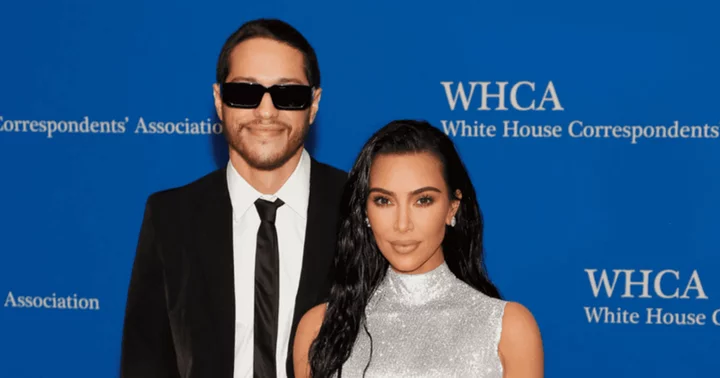
How tall is Pete Davidson? Comic's height raised speculations about Kim Kardashian's dating preferences
As Pete Davidson towered over Kim Kardashian, netizens thought the 'SKIMS' owner must have a preference for tall men
2023-09-17 18:04
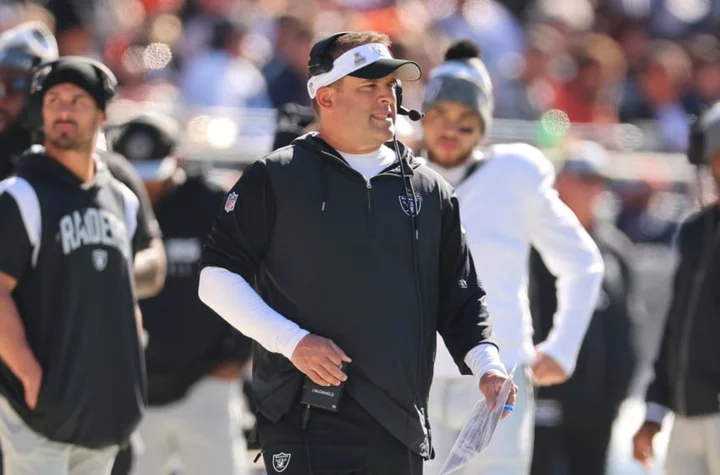
Josh McDaniels poor kids had Halloween ruined thanks to Raiders firing
The Las Vegas Raiders fired head coach Josh McDaniels on Halloween. The human element of such a decision came into play for McDaniels, who had to inform his family.
2023-11-09 00:08

France Gains Ground in Bid for Renewable Energy Carve-Out
France moved closer to securing a carve-out from the European Union’s plans to massively scale up renewable energy
2023-06-14 15:33

Who is Calla Prejean? 'The Voice' Season 24 singer joins Team Gwen Stefani after Sara Evans' blessings
'The Voice' Season 24 singer Calla Prejean is just 22 years old and has been started working professionally since 17
2023-10-17 13:52
You Might Like...
Kai Cenat denies 'scamming' allegations over Subathon stream content ideas, Dremo says 'I didn't get paid, either'

'GMA’ correspondent Deborah Roberts lands new gig once anchored by ousted ABC host Amy Robach

Trauma, injury aboard UAE flight carrying Palestinian children
Anthony Rizzo concussion timeline: Everything to know about Yankees injury
Stevenson labors to WBC lightweight crown

‘What is a lethal dose of fentanyl?’: Kouri Richins' search history under scrutiny as she is denied bail

US EPA seeks short-term delay to biofuel blending mandate final rule, sources say
'Shame on you': Ruby Rose has moved back to Australia after 'Batwoman' fiasco and bullying allegations