Focue Provides the Latest and Most Up-to-Date News, What You Focus On is What You Get.
⎯ 《 Focue • Com 》
‘Indiana Jones and the Dial of Destiny’: Harrison Ford movie gets mixed reviews ahead of release
Harrison Ford is heading back to the big screen as Indiana Jones one last time, along with Phoebe Waller-Bridge as his goddaughter
2023-06-28 13:18
Springboks have earned back respect from referees at Rugby World Cup, Erasmus says
One of the surprises of the Rugby World Cup pool stage was that South Africa was the only team not to concede a yellow or red card
2023-10-11 04:33
Starr Names Sean Chen CEO of Starr Singapore
NEW YORK--(BUSINESS WIRE)--Aug 29, 2023--
2023-08-30 04:01
Wrongly arrested because of facial recognition: Why new police tech risks serious miscarriages of justice
On 16 February, Porcha Woodruff was helping her children get ready for school when six Detroit police officers arrived at her door. They told her she was under arrest for a January carjacking and robbery. She was so shocked she wondered for a moment if she was being pranked. She was eight months into a difficult pregnancy and partway through a nursing school programme. She did little else besides study and take care of her kids. She certainly wasn’t out stealing cars at gunpoint, she said. “I’m like, ‘What,?’ I opened my door so he could see my stomach. ‘I’m eight months pregnant. You can see two vehicles in the driveway. Why would I carjack?’” she told The Independent. “‘You’ve gotta be wrong. You can’t have the right person.’” Her children cried as she asked officers if the suspect was pregnant and insisted they had mistakenly arrested her. She was put in handcuffs and taken to jail, where she had panic attacks and early contractions. She later learned police identified her as a suspect after running security footage through the department’s facial recognition software, relying on a 2015 mugshot from a past traffic arrest into a photo lineup where the carjacking victim singled out Ms Woodruff as her assailant. The Detroit Police Department eventually dropped the case, but the arrest has deeply shaken Ms Woodruff. “What happened to the questioning? What happened to me speaking to someone?” she said. “What happened to any of the initial steps that I thought were available to a person who was accused of doing something?” The case underscores the growing risks of civil rights violations as police departments and law enforcement agencies across the country increasingly adopt facial-recognition and other mass surveillance technologies, often used as an unreliable shortcut around methodical human police work. Criminal justice advocates and the people targeted by this burgeoning police tech argue these programmes are riddled with the same biases and opaque or nonexistent oversight measures plaguing policing at large. The early results, at least, haven’t been encouraging. At least six people around the US have been falsely arrested using facial ID technology. All of them are Black. These misfires haven’t stopped the technology from proliferating across the country. At least half of federal law enforcement agencies with officers and a quarter of state and local agencies are using it. “We have no idea how often facial recognition is getting it wrong,” Albert Fox Cahn, executive director of the Surveillance Technology Oversight Project (STOP), told The Independent. “When you have facial recognition being used thousands of times, without any accountability for mistakes, it’s inviting injustice,” he added. Nowhere has that injustice been more pronounced than Detroit, a city where Black people have long experienced documented over-policing from law enforcement. Three of the six people mistakenly arrested by facial recognition technology have been in the Motor City, according to the ACLU. This status quo is why Ms Woodruff is suing DPD, claiming among other things that the agency has engaged in “a pattern of racial discrimination” against her and other Black residents “by using facial recognition technology practices proven to misidentify Black citizens at a higher rate than others in violation of the equal protection guaranteed by” the Michigan civil rights statutes. “I definitely believe that situation would’ve gone differently had it been another race, honestly, just my opinion. There was no remorse shown to me and I was pregnant. I pleaded,” she told The Independent. “Being mistaken for something as serious as that crime – carjacking and armed robbery – that could’ve put me in a whole different type of lifestyle,” she added. “I was in school for nursing. Felons cannot become nurses. I could’ve ended up in jail. That could have altered my life tremendously.” The Independent has requested comment from DPD. After Ms Woodruff filed her suit, Detroit police chief James White said in a press conference in August “poor investigative work” led to the false arrest, not facial recognition technology. He claimed that department software gave detectives numerous possible suspects and was only meant to be a “launch” point for further investigation. “What this is, is very, very poor investigative work that led to a number of inappropriate decisions being made along the lines of the investigation, and that’s something this team is committed to not only correcting, having accountability, having transparency with this community, and in building policy immediately to ensure regardless of the tool being used, this never happens,” Mr White said. He added that officers won’t be allowed to use images sourced by facial recognition in lineups, and warrants based on facial ID matches must be reviewed by two captains before being carried out. ‘The lead and the conclusion’ Some aren’t convinced these changes will prevent the excesses of what they see as a fundamentally flawed technology. “The technology is flawed. It’s inaccurate,” Philip Mayor, senior staff attorney at the ACLU of Michigan, told The Independent. “Police repeatedly assured us that it’s being used only as an investigative lead, but what we see here in Detroit time and time again is it is both being used as the lead and the conclusion.” Studies suggest that facial-recognition algorithms, which have been used to capture suspects in high-profile cases like those connected to January 6, also fail to accurately identify Black people and women, driving up inequalities in arrests, because image-training datasets often lack full diversity. However, according to Mr Mayor, police departments make things even worse by failing to do basic training and common-sense investigative work on top of facial recognition tools. He represents Robert Williams, a Detroit man who was mistakenly arrested for a 2020 theft from a high-end Detroit boutique. A security contractor employed by the store worked with the city and state police and flagged Mr Williams’ name using facial recognition tools. How police came to trust that Williams was the right man reveals the sloppiness of how facial ID tech is used in practice, according to the ACLU attorney. After the theft, police searched a database containing both past photos of Mr Williams and his present-day driver’s license. ‘It picks out 486 people who are the most likely perpetrators; not a single one of them is his current driver’s license, even though his current driver’s license is in the database that was searched,’’ Mr Mayor said. “That seems like an obvious exculpatory fact, the kind of thing that would lead you to say if you were actually thinking, this isn’t the right guy.” When these dubious matches are then used to build a line-up, questionable police work attains the gloss of near-fact, and witnesses choose from a group of people who may have no credible tie to a crime that took place but still look something like the person who did. “This is not me,” Mr Williams told police during his investigation, according to The New York Times. “You think all Black men look alike?” The father of two, after asking a local police voluntarily stop using facial recognition technology, sued the DPD in 2021. “This technology is dangerous when it doesn’t work, which is what the cases in Detroit are about. It’s even more dangerous when it does work. It can be used to systematically surveillance when we come and go from every one of the places that are important in our private lives,” the ACLU attorney said. “I don’t think there’s any reason to believe that departments elsewhere right now are not making the same mistakes.” ‘A force multiplier for police racism’ Detroit isn’t the only place grappling with the impacts – and errors – of this technology. In Louisiana, the use of facial recognition technology led to a wrongful arrest of a Georgia man for a string of purse thefts. A man in Baltimore spent nine days in jail after police incorrectly identified him as a match to a suspect who assaulted a bus driver. The Baltimore Police Department ran nearly 800 facial recognition searches last year. Those cases and others have added to a growing list of misidentified suspects in a new era of racial profiling dragnets fuelled by tech that is rapidly outpacing police and lawmakers’ ability to fix it. Facial recognition software often is “a force multiplier for police racism,” worsening racial disparities and amplifying existing biases, according to Mr Cahn. It can spur a vicious cycle. Black and brown people are already arrested at disproportionate rates. These arrests mean they are more likely to enter a database of faces being analyzed and used for police investigations. Then, error-prone facial recognition technology is used to comb these databases, often failing to identify or distinguish between Black and brown people, particularly Black women. “So the algorithms are biased, but that’s just the start, not the end of the injustice,” Mr Cahn says. Such technologies, advocates warn, are embedded in wider mass surveillance programmes that often lack robust public oversight. In New York City, law enforcement agencies relied on facial recognition technology in at least 22,000 cases between 2016 and 2019, according to Amnesty International. New York City’s Police Department spent nearly $3bn growing its surveillance operations and adding new technology between 2007 and 2019, including roughly $400m for the Domain Awareness System, built in partnership with Microsoft to collect footage from tens of thousands of cameras throughout the city, according to an analysis from STOP and the Legal Aid Society. The NYPD has failed to comply with public disclosure requirements about what those contracts – from facial recognition software to drones and license plate readers – actually include, according to the report. Until 2020, that money was listed under “special expenses” in the police budget until passage of the Public Oversight of Surveillance Technology Act. The following year, more than $277m in budget items were listed under that special expenses programme, the report found. “We’ve seen just concerted pushback from police departments against the sort of oversight that every other type of government agency has because they don’t want to be held accountable,” according to Mr Cahn. “If we treated surveillance technology vendors the way we treated other technology vendors, it would be like Theranos – police would be arresting some of these vendors for fraud rather than giving them government contracts,” he added. “But there is no accountability.” On 7 August, 2020, New York City Police Department officers in riot gear launched a six-hour siege outside Derrick Ingram’s Hell’s Kitchen apartment. Mr Ingram – a racial justice organiser who is embroiled in a federal lawsuit against the NYPD – was surrounded by more than 50 officers after he allegedly shouted into an officer’s ear at a protest earlier that summer. Police insisted they had a warrant on assault charges, but couldn’t produce one when Mr Ingram asked them to, according to his suit. The whole encounter, in which the NYPD deployed snipers, drones, helicopters, and police dogs, began with facial recognition technology. “To say that I was terrified is an understatement – I was traumatized, I still am,” Mr Ingram later testified. “I fear deep down in my core that if I opened my door to those officers, my life would be swiftly taken.” To identify Mr Ingram as a potential suspect, NYPD relied on facial recognition software “as a limited investigative tool, comparing a still image from a surveillance video to a pool of lawfully possessed arrest photos,” according to a police statement, adding that “no one has ever been arrested solely on the basis of a computer match.” The software pulls from a massive internal database of mugshots to generate possible matches, according to the department. Civil rights groups and lawmakers criticized the department’s use of facial recognition – initially hailed as a tool to crack down on violence offenders – for being deployed to suppress dissent, and triggering a potentially lethal police encounter at Mr Ingram’s home. As for Ms Woodruff in Detroit, she hopes her experience can show the dangers of relying too heavily on facial recognition technology. “It may be a good tool to use, but you have to do the investigative part of using that, too,” she said. “It’s just like everything else. You have your pieces that you put together to complete a puzzle.” Her life would’ve been a whole lot different, she said, if “someone would’ve just taken the time to say, ‘OK, stop, we’re going to check this out, let me make a phone call.’” Read More Detroit police changing facial-recognition policy after pregnant woman says she was wrongly charged White House science adviser calls for more safeguards against artificial intelligence risks How a Drake concert put NYPD’s ‘arsenal’ of surveillance technologies under the spotlight
2023-09-15 03:15
Internet calls out Jennifer Aydin for comparing 'RHONJ' star Melissa Gorga to Dylan Mulvaney: 'This was gross'
Jennifer Aydin made a snide remark about Melissa Gorga's appearance only to delete it later
2023-06-20 11:15
Pep Guardiola keen to avoid ‘difficult’ transfer task after Man City lose ‘incredible players’
Pep Guardiola has vowed to do everything in his power to make sure Kyle Walker and Bernardo Silva stay at Manchester City as he concluded it would be very difficult and expensive to replace both. Walker, who only has one year left on his contract, has attracted the attention of Bayern Munich while Silva, a long-term target of Barcelona, has had an offer to join the Saudi Arabian Pro-League. But Guardiola, who has already lost Riyad Mahrez to Saudi Arabia and captain Ilkay Gundogan, believes it would cost a fortune to find successors to Walker and Silva. “They are so important players for us, we are going to do everything,” he said. “It’s not like Gundogan where he finished a contract. We want him to stay because he wants to stay because they want to stay. “We will do everything because to replace these two players is so difficult. We lost two incredible players for us in Ilkay and Riyad for us who were massively important for us in big important games with goals and assists. To lose Kyle and Bernardo would be so difficult, that is why we are going to do everything to keep them.” City have brought in Mateo Kovacic to take over from Gundogan in midfield and are close to completing a £77 million deal for defender Josko Gvardiol but Guardiola is conscious his transfer budget will be depleted if he has to get players of the calibre of Walker and Silva to take their places. “When we lose those players we have to go to the market for these players and they cost more than £50 million,” the City manager said. “We need that money to reimburse on other players to make the team as strong as possible to defend the crowns that we won and win games for our people.” Guardiola hopes the transfer to bring in the Croatia international Gvardiol from RB Leipzig will be completed on Friday or Saturday. “He’s doing a medical test, everyone knows he is here and hopefully we can finish the deal in the next hours,” he said. Guardiola has also brought Juanma Lillo back to the Etihad Stadium and explained: “Juanma is the best assistant you can find. You have to find people in the bad moments. Juanma, beyond his knowledge of football, is a massive human being.” City face Arsenal in the Community Shield on Sunday when Declan Rice is likely to make his Gunners debut. The former West Ham captain chose to join Arsenal rather than City in a £105 million deal. “All the best,” added Guardiola. “He’s a really important player. He’s a really nice guy and for the national team, is and will be important. Arsenal bought an incredible player.” Read More Pep Guardiola wants to keep ‘irreplaceable’ Kyle Walker at Manchester City Why Wrexham can’t bank on another Hollywood ending Chelsea confirm Axel Disasi signing to cure defensive woes Why Wrexham can’t bank on another Hollywood ending Chelsea confirm Axel Disasi signing to cure defensive woes Women’s World Cup LIVE: Latest news and updates as England prepare for last-16
2023-08-04 20:51
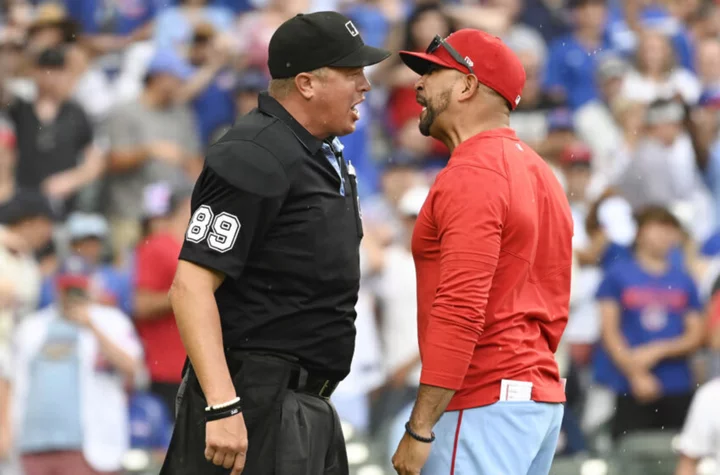
Clevinger, 4 relievers combine for shutout as White Sox beat Tigers 3-0
Mike Clevinger and four relievers combined on Chicago’s fourth shutout, Tim Anderson scored a run and drove in one, and the Chicago White Sox beat the Detroit Tigers 3-0
2023-06-03 11:02
How much are 'TikTok challenges' to blame for recent tragedies?
The nefarious potential of digital technology has never been of greater concern. Artificial intelligence is already outsmarting us, and doxxing and deepfake are now firmly part of the common lexicon, so it’s no wonder we live in fear of what lies ahead for our kids. We already lament that young people live their lives as much on social media as they do in the real world, but to what extent can we blame these platforms for everyday mistakes and, even, tragedies? To answer that question, we must turn to two words which strike fear in the hearts of parents around the world. They are: “TikTok” and “challenge”. Sign up for our free Indy100 weekly newsletter To the uninitiated, trends and challenges are the lifeblood of the video-sharing app. What began as a lighthearted stage for lip-syncing and dance routines (originally called Musical.ly), is now a hive of endless hashtags, each one encouraging a new stunt or craze. TikTok’s algorithm is a formidable and unpredictable beast, with the power to propel content creators to global stardom and seven-figure earnings and churn out entire new brands. But while most of us can forgive the platform for inviting pink sauce and Charli d’Amelio into our homes, we will not forget its more sinister capabilities. Indeed, mums and dads not only have to contend with the influence of certain notorious brainwashers, but they also face the prospect of losing their child to a dangerous prank – all for the sake of a few likes and the fleeting respect of their peers. A number of serious injuries and deaths have now been attributed to misguided attempts at “trends” on the app, with the so-called “blackout challenge” alone deemed culpable for the deaths of at least 20 children aged 14 or under in the past two years, a Bloomberg Businessweek investigation found. Archie Battersbee, 12, was widely reported to have taken part in the self-choking craze before he was found unconscious by his mother back in 2022. He’d suffered a catastrophic brain injury and died four months later. Then, in April this year, 13-year-old Jacob Stevens passed away in hospital six days after taking on the “Benedryl challenge,” according to his grieving dad. And less than a month ago, 16-year-old Mason Dark was left “unrecognisable” with burns after creating a makeshift blowtorch as part of an alleged TikTok stunt. Yet, there is scant, if any, proof that the platform had any part in fuelling the tragedies suffered by each of these particular kids. In the case of Archie, an inquest found that there was “no evidence” to back up his mum’s fear that he’d been doing the blackout challenge. A police report concluded that the 12-year-old had accessed TikTok on his mobile phone on the day of his fatal accident, but officers had been unable to pinpoint exactly what he’d been watching. However, photos and videos downloaded from the device offered no indication that he’d expressed interest in any auto-asphyxiation material. Similarly, TikTok took centre stage in reports on Jacob’s death, but a spokesperson for the company told indy100: "We have never seen this type of content (meaning the Benadryl challenge) trend on our platform and have blocked searches for years to help discourage copycat behaviour.” And although it was almost universally reported that a "TikTok challenge" had inspired Mason to created his near-lethal flamethrower, no outlets were able to provide any details on this. Could it be that he got the idea from another source or platform? Indeed, YouTube hosts numerous make-your-own blowtorch videos, some of which date back a number of years –meaning many of these fad projects were around before TikTok even existed. Still, although TikTok claims that it carefully monitors hashtags so that it can block potentially damaging content, a quick search of “flamethrower challenge” by indy100 yielded at least five examples of creators brandishing dangerous homemade devices. Admittedly one of these was captioned: “Don’t try this at home,” but doesn’t that sound like a challenge in itself? Social media companies are under mounting pressure to protect their young users from online harms and to better enforce age restrictions. And yet, even with the employment of increasingly sophisticated AI and tens of thousands of human moderators, they seem to constantly fall short in their duties. Yet, just look at recent headlines and it’s clear that TikTok seems to be shouldering most of the blame. Perhaps this is because it is the platform of choice among the very young and impressionable – it’s the most popular app in the US, used by almost 70 per cent of 13 to 17-year-olds, according to one survey. But perhaps it’s also because TikTok’s biggest rival launched a major campaign to tarnish its reputation last year, and it's still suffering the repercussions. Meta hired one of the most influential Republican consulting firms in the US to turn the public against the platform, driving home the idea that the app was a danger to American kids and society. The firm, Targeted Victory, used a nationwide media and lobbying push to spread the message that TikTok was a “threat”, according to leaked emails seen by the Washington Post. Among its tactics was to promote dubious stories about alleged “TikTok trends” that, in fact, originated on Facebook, the paper noted. In another email, a staffer for Targeted Victory asked one of the company’s partners: “Any local examples of bad TikTok trends/stories in your markets? [The] dream would be to get stories with headlines like ‘From dances to danger: how TikTok has become the most harmful social media space for kids’”. Following the Post’s investigation, Meta spokesperson Andy Stone defended the campaign saying: “We believe all platforms, including TikTok, should face a level of scrutiny consistent with their growing success.” TikTok responded by saying it was “deeply concerned” about “the stoking of local media reports on alleged trends that have not been found on the platform.” And yet, for all its protestations of innocence when it comes to the housing of high-risk content, TikTok was essentially the architect of its own problems. Back in 2016, Alex Zhu – the co-founder of what was then Musical.ly – boasted that his app was different to its competitors thanks to its promotion of "daily challenges". Every day, the company set users a new task – whether that be a dance routine or a weight-lifting mission – each of which typically spawned more than one million videos, according to Bloomberg. When Musical.ly was bought by Bejing-based platform ByteDance in 2017, and the two merged to become TikTok, the challenges came with it. These trends struck a particular chord with teens stuck at home during the first wave of the Covid pandemic, and so TikTok staff did everything they could to boost interest, for example, by getting influencers to encourage involvement. When more and more dangerous crazes started to crop up (remember the “milk crate challenge”?), TikTok established a “harm spectrum” to help its moderators decide what should be removed, Eric Han, the company’s US head of safety told Bloomberg. Nevertheless, children may be naive but they’re not stupid, and they soon found ways to circumvent the filters and restrictions. Participants adopted new names and hashtags for the dares, in some cases using deliberate typos or code names to signpost their content. The challenges were also carried over to different platforms, infesting social media as a whole with the weird, whacky and outright life-threatening. And so, we come back to our original question: to what extent can we blame these platforms – and, more specifically, TikTok – for the mistakes, injuries and even deaths of the young? The answer is, this shouldn't be about apportioning blame but about taking responsibility and collectively doing everything we can to protect our children. The likes of Facebook, Instagram and, yes, TikTok, too, all need to do more to impose age limits and remove harmful content, and stop putting growth over the safety of their young users. However, we must also accept that kids will always find ways to break the rules, and it's up to us as family members and friends, to remind them that a cheap thrill in your social life isn’t worth losing your whole life over. Have your say in our news democracy. Click the upvote icon at the top of the page to help raise this article through the indy100 rankings.
2023-05-20 14:00
Union workers at General Motors appear to have voted down tentative contract deal
The tentative contract agreement between General Motors and the United Auto Workers union appears to be headed for defeat
2023-11-15 22:46
Trey Benson runs for 200 yards, 2 TDs to help No. 5 Florida State beat Virginia Tech 39-17
Trey Benson ran for a career-best 200 yards, with touchdown runs of 85 and 62 yards, and No. 5 Florida State beat Virginia Tech 39-17 on Saturday
2023-10-08 07:23
Russia threatens US with ‘serious consequences’ after Ukraine fires first long-range ATACMS missiles
Russia has hit out at the US for its decision to send long-range missiles to Ukraine for the first time, claiming the move increases the risks of a direct conflict between Nato and Moscow. Volodymyr Zelensky confirmed on Tuesday that the Ukrainian military used the US-supplied ATACMS (Army Tactical Missile Systems) for the first time this week and struck two Russian military airfields. Western backers of Ukraine have been reluctant to provide long-range munitions since Vladimir Putin launched his invasion in February last year, fearing that their use against targets within Russia would represent an escalation of the conflict. But Ukraine has repeatedly argued that it needs long-range missiles and other more powerful equipment like fighter jets in order to defend itself against attacks launched from military facilities deep inside Russia. The GPS-guided missiles used this week destroyed nine military helicopters at Russian bases in the east of the country, Ukrainian officials said. Russia’s ambassador to America, Anatoly Antonov, threatened Washington over what he said was the secret delivery of weapons on Wednesday. "The consequences of this step, which was deliberately hidden from the public, will be of the most serious nature," Mr Antonov said on Telegram. "Washington is consistently pursuing a policy of completely curtailing bilateral relations. The United States continues to push for a direct conflict between Nato and Russia.” Volodymyr Zelensky on Tuesday confirmed the use of ATACMS and said the weapon systems have “proven themselves”. “Today, special thanks to the United States. Our agreements with President Biden are being implemented,” he said. "They have performed very accurately. ATACMS have proven themselves," Mr Zelensky said in his nightly video address. The White House also officially acknowledged the delivery of the missiles. “We believe these ATACMS will provide a significant boost to Ukraine’s battlefield capabilities without risking our (US) military readiness,” said National Security Council spokesperson Adrienne Watson. Ukraine’s Special Operations Forces said they conducted the night time attack and hit targets in Berdyansk and Luhansk. Russia suffered the loss of an air defence system, other equipment and dozens of troops, it said, adding that some people were also injured. “The ammunition depot in Berdyansk detonated until 4am. The detonation in Luhansk continued until 11am,” Ukrainian Special Operations Forces said in a statement. “Losses in the enemy’s manpower amount to dozens of dead and wounded. Bodies are still being pulled from the rubble.” ATACMS are long-range guided missiles with a specialist GPS system designed to hit targets with precision, able to carry cluster munitions to deliver hundreds of bomblets rather than a single warhead. The variant provided to Ukraine has a lower range than the maximum that it is capable of, according to the Associated Press, amid fears over its use in Russian territories. Meanwhile, Russia’s defence ministry said it destroyed 28 Ukrainian drone attacks over its western territories. Ukrainian forces launched drones over Russia’s Belgorod and Kursk regions, and over the Black Sea, it said in a statement. Two civilians were killed and four more were injured after an apartment block was pounded in an attack for which Russian and Ukrainian armies traded blame. Yuriy Malashko, governor of the Zaporizhzhia region, said that eight apartment buildings were damaged in what he said was a Russian missile attack. "Search and rescue operations are ongoing at the site," Anatoliy Kurtiev, secretary of the Zaporizhzhia city council, said on Telegram. Read More The US quietly delivered new long-range missiles to Ukraine. Why the sudden secrecy over aid? For the first time, Ukraine has used US-provided long-range ATACMS missiles against Russian forces Ukraine-Russia war – live: Putin’s forces suffer blow as helicopters destroyed by missile strikes, says Kyiv
2023-10-18 13:59
Internet calls out '1000-lb Sisters' star Tammy Slaton over 'filtered' photos as she flaunts slimmer face: 'Too much photoshop'
'1000-lb Sisters' star Tammy Slaton looks stunning in new photos
2023-08-03 10:55