Focue Provides the Latest and Most Up-to-Date News, What You Focus On is What You Get.
⎯ 《 Focue • Com 》
‘My body was burning’: Russian journalist’s horror journey in grips of suspected poisoning
“If you’re a journalist and the government wants to kill you – you’re doing it right”. Those are the chilling words of broadcaster Irina Babloyan, who until Vladimir Putin’s invasion of Ukraine hosted Russia’s most popular morning radio show. But stalked by the FSB and taken off the air within days of the war starting, the journalist felt compelled to leave Moscow for her own safety. Little did she realise, like so many of Putin’s critics, she would also suffer symptoms of suspected poisoning that left her skin “burning all the time”. Established prior to the collapse of the Soviet Union, Russia’s sole major independent radio station Echo of Moscow was taken off air in March 2022, during the Kremlin’s clampdown on information, and then shut down completely. Events soon took an even darker turn. Late one evening, near her home, Ms Babloyan was out walking with her close friend, opposition politician Ilya Yashin, when he was arrested. He was later sentenced to eight and a half years in prison, over a YouTube livestream about Russian atrocities in Bucha. From that moment, she says Russian police and FSB agents followed her everywhere – even some 350 miles south to Belgorod – and openly sat outside her home, threatening her that “it’s probably better for you to leave”. It was as she began to investigate early reports of Ukrainian children being forcibly taken to Russia that the personal danger to Ms Babloyan intensified. She approached Russian government officials, who told her they were aware of the situation and that the children would remain in the country until the war was over. While she was initially aware of just one “school” housing Ukrainian children in Russia, the findings soon snowballed until she learned from a fellow journalist of dozens more facilities, holding thousands more. Ukraine’s current figures suggest at least 19,000 children have been taken. “I was really shocked and I understood: okay, probably it’s time for me to leave,” Ms Babloyan said, adding: “I was so tired and felt I couldn’t change the situation.” She returned to her home country of Georgia in October, amid another Russian exodus sparked by Putin’s mobilisation order. With Echo of Moscow set to resume programming via its app from Berlin, the journalist planned to move to there – in a journey requiring her to drive to Armenia, before flying from Yerevan to Moldova, and then on to the German capital. On the eve of the long trip, she suddenly “felt something strange going on”. “In a second”, she began to feel nauseous and tired. “I had dinner with friends – I didn’t want to eat, I didn’t want to drink, I ordered salad and wine, and didn’t [touch] it at all. I decided to go to bed, went to my hotel and fell asleep.” It was the last time she would sleep for three days. She awoke feeling “much worse”, recalling: “I couldn’t move normally – every single movement was very hard.” She felt a metallic taste in her mouth, with “crazy” pain in her head and “in a strange place” in her stomach, while her hands and feet had turned “wine red”. “I couldn’t move my fingers normally, and I felt like [I was] touching fire in [my] hands and feet,” Ms Boloyan said. Blaming hitherto dormant allergies, she bought some antihistamines, packed a bag and embarked on a four-hour taxi journey to Yerevan. Save for the border crossing, she lay on the back seat for the entire journey, unable to move. “Every single piece of my body was burning. I couldn’t think normally, couldn’t concentrate on anything.” At the airport after a sleepless night in a hotel, filled with anxiety, she arranged a phone appointment with a Russian doctor, who told her the symptoms were probably caused by stress. “I was sitting waiting my flight crying all the time I was talking because they didn’t understand what was going on,” she said. Ms Babloyan spent another sleepless night in Chisinau, the Moldovan capital, before flying to Germany, where finally on the third day, she found she could walk, talk and eat again. “It was not all gone, but it was much better,” she said. Without health insurance, it was December by the time she saw a doctor, who prescribed her antidepressants and told her allergy tests would cost €6,000. Soon after, Ms Babloyan was forced to stop doing her radio show, as “something strange started happening with my skin”, which broke out in hive-like red spots, “burning all the time”. She took the tests for all known allergens, which came back negative. At this point, a Russian friend recommended another doctor, who upon seeing her skin immediately told her she needed toxicology tests for heavy metals – and said she knew of two other Russians, a journalist and activist, who had recently fallen ill in Europe with similar symptoms. The two other cases – Novaya Gazeta journalist Elena Kostyuchenko, in Berlin, and US-based Free Russia Foundation president Natalia Arno, in Prague – were being looked into by Riga-based investigative outlet The Insider. Doctors and poison specialists have since told the outlet that poisoning is the only explanation for Ms Kostyuchenko’s symptoms, and is the most likely reason for Babloyan and Arno’s symptoms. She was tested at the Charité Hospital, where the now-jailed Russian opposition leader Alexei Navalny was diagnosed in 2020. But she was later told that her toxicology tests had been “lost”, and although doctors also took a sample of her hair, she has still not been told the results. Ms Kostyuchenko is also still in the dark, despite claims by a source to The Insider that law enforcement carried out their own secret analysis of her blood. Having announced an investigation last month into Ms Kostyuchenko’s case, German prosecutors are now treating it as attempted murder. However, Georgia is yet to announce its own probe into Ms Babloyan’s case, and she is currently unable to return to Tblisi and formally trigger an investigation herself. For Ms Babloyan, it was while interviewing Ms Kosyuchenko on her radio show in mid-August that the stark reality truly began to set in. “When you are looking into the face and eyes of a person who felt the same [symptoms] and you understand it was real, it feels scary – very,” she said, adding that she is still “just trying to understand how to live when you know that someone wanted to kill you, and probably will do it again.” The journalist – who still has problems with her skin, and suffers pain in her fingers after opening a bottle or even a door – remains even more determined to offer an objective narrative on Russia’s affairs. “Work is like therapy for me,” she said. “I can’t stop working”, and noted that, as a journalist, if the government “wants to kill you, it means that, what you’re doing – you’re doing it right”. Asked whether she believed she had been targeted for her enquries into potential Russian war crimes, Ms Babloyan replied: “I just think that all Russian journalists and activists are a target for the Russian government. “But it’s hard to understand who’s going to be next because if you are trying to find logic, you can’t find it, and everyone can be a target.” Read More Ukraine’s First Lady Olena Zelenska’s interview with Bel Trew | An Independent TV Original Dodging a constant assault of Russian missiles – the war-weary keep fighting in Ukraine’s blood-soaked east Putin’s hit list: from poisoned tea to mysterious falls, the grisly fate of the Kremlin’s enemies Russia shuts down human rights group that preserved the legacy of Nobel laureate Andrei Sakharov
2023-09-10 16:44
New Zealand Justice Minister Resigns After Car Crash, Arrest
New Zealand Justice Minister Kiri Allan has resigned after being charged with reckless driving and resisting arrest. Allan
2023-07-24 04:37
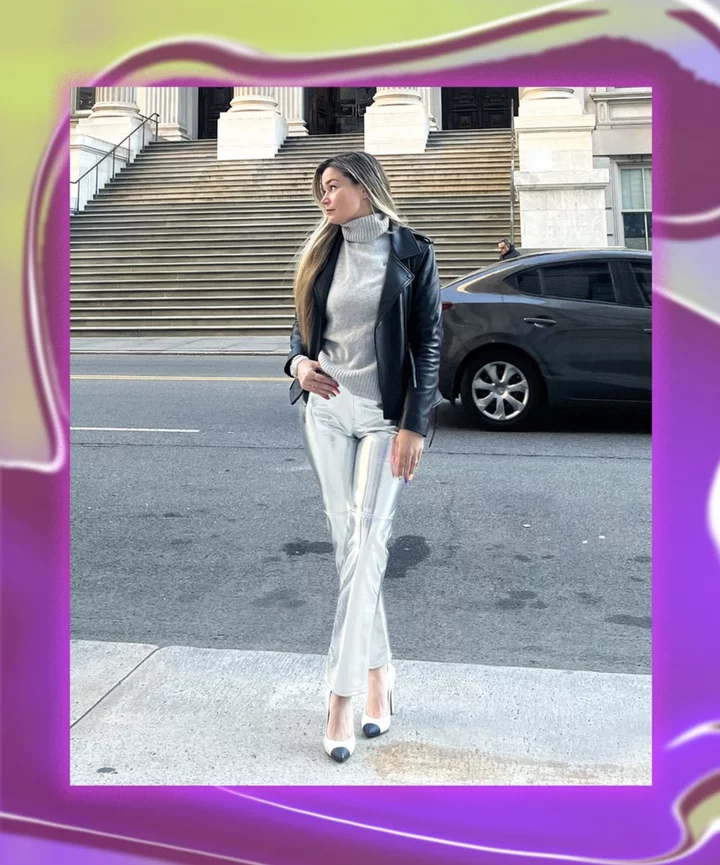
Menswear has made women feel confident for centuries, but will the gendered separation ever cease to exist?
I remember the day I realised the embodiment of my persona was a long-sleeve ironed shirt with only the collar close-lipped. Initially, I gravitated toward the crisp button-down for function, as my former workplace tended to emit heaps of chilly air, but a spontaneous feeling compelled me to button the top, leaving the rest of the shirt open. It may have been, in part, my obsession with wanting to define my look outside of popular construction or how this new silhouette framed my figure. Regardless, the androgynous piece of clothing left me feeling more confident than ever before. A clothing rack full of these formal tops sits perpendicular to my bed now, and I wear them strategically closed with almost every outfit. I couldn’t tell you exactly what it is about them that makes me feel alluring and powerful, but my style hasn’t been the same since. Now more than ever, women are setting aside archival forms of womenswear for the structure of men’s clothing, assuming their most confident, authentic selves. Mini denim shorts, bodycon dresses, and micro skirts are being swapped for baggy jorts and boxers. Individuals are donning contrasting proportions, taking risks, and exuding self-assurance in items that have historically been deemed representative of masculine codes in Western fashion. In doing so, women are diminishing the gap between gendered collections. According to Hazel Clark, professor of fashion studies at Parsons School of Design, women initiated the crossover between menswear and womenswear in the early 19th century when they started working in coal mines and riding horses. A working-class of women deliberately assumed the male dress code, whether business or activity related, because womenswear constricted their necessary movement with tight bodices and corded petticoats. Here, function and ability took precedent over society’s expectation of femininity as more opted to dirty a pair of trousers instead of their voluptuous gowns. Heading into the Second World War and the 20th century, the design gap minimised further when women’s roles in society advanced. In the 1940s, men were forced to leave their factory jobs for war, leaving their female counterparts to fill their positions. For women to be respected in the workplace, they mirrored the male look and wore the classic pantsuit. Francesca Granata, professor of fashion theory and history at Parsons, identified the “power suit of the 1980s” as “a classic instance of women trying to access men’s power in the workplace by wearing an outfit which imitated menswear and with wife shoulders: the ideal male physique.” She noted: “Yet the wide-shouldered suit jacket was often rendered appropriately feminine by being paired with a skirt.” With this came an influx of women wearing these masculine codes outside of the workplace. Though my grey dress pants from the men’s section of a closet sale were welcomed into my weekly rotation almost immediately, it took a lot of courage and self-assurance back then for women to wear similar pairs, just like it did for them to wear miniskirts when both styles were socially unacceptable. The initial need for “businesswear” transformed into desired style even if it meant a woman could be labeled as “inappropriate” or be refused at the door of an establishment. Looks from men turned to public disapproval, but that didn’t stop the progression of women dressing in menswear at all. “Although baggy clothing has been acceptable for men for quite some time, especially in the US, unlike older appropriation of menswear which were often adapted to be more skintight or revealing or somewhat rendered ‘feminine’ baggy clothes question the old dictum that women’s bodies should be on display for the male gaze,” Professor Granata remarked. In other words, this “sense of power dressing” left the confines of the office environment alongside any lingering thought to the heteronormative gaze. Fast forward to the early 21st century, when the groundwork for this fashion fusion had been laid in terms of utility and preference. As society began to understand sexuality and gender fluidity, non-gendered collections became increasingly popular. Designers became more proactive about creating androgynous clothing that didn’t need to be separated into the two typical identifiers: women and men. “Fashion must get to a point where we don’t have to talk about gender,” designer and creative director of Loewe Jonathan Anderson wrote in Amelia Anderson’s “What We Can Do Better” in 2021, nine years after he introduced the first transgender collection for his eponymous brand. “Fashion can be a way to experiment with character or to work out your identity, and I believe that clothes can have a protective role on a more emotional level.” Anderson’s obsession with how queer individuals dressed contributed to his perception that fashion can be used to “break the rules”. To him, clothing is a marker of individuality and subculture, which is what motivates him to create designs for people to express themselves free from outdated norms. Between boxy, textured T-shirts, bouncy blouses, and tailored high-waisted pants, Anderson’s worked to incorporate rival style cues even in his gender-specific collections. “Clothing is full of paradoxes, but ultimately it can empower us - and in a world that has historically taken power away from queer people, that can be vital,” he proclaimed. “In a world that often expects certain things for certain people when it comes to clothes - where society wants men, say, to wear some things, and women to wear others - I sometimes question why I do menswear and womenswear shows. But for me, it’s not about classifying people, it’s about using these categories as ideas - ideas to borrow from.” As designers helped bridge the gap, celebrities like Hailey Bieber and Bella Hadid have been seen being more experimental in campaigns for big name brands as well as in their personal street style. The 26-year-old Rhode Skin founder has been a recognised ambassador for the French fashion house, Yves-Saint Laurent, a company which has irrevocably impacted womenswear since their 1966 creation of a menswear-motivated tuxedo for women called “Le Smoking.” Both Bieber and Hadid blend feminine and masculine codes in everyday wear, leading the craze for oversized jean shorts and lengthy vintage sportswear paired with dainty ballet flats and platform boots. Other brands, such as Uniqlo and Thom Browne, design collections labelled and distributed as menswear and womenswear, but the items are still being bought and worn interchangeably. “It’s hard to explain,” Marissa Petteruti, senior menswear designer at Rag & Bone, tells The Independent when asked why she feels more assured in men’s clothing over feminine-labelled pieces. “I’ve always just felt more comfortable in, you know, oversized men’s shirts and pants. I kind of always have gravitated toward men’s fashion. I remember when I was a kid, my parents used to tell me: ‘You have to wear a skirt one day a week.’ I never saw why I couldn’t wear whatever I wanted. So maybe part of it became going against what my parents wanted me to do.” Petteruti has cultivated a closet full of suit pants, designer shirts, and vintage bomber jackets in pursuit of the perfect capsule wardrobe and collection of exclusive ready-to-wear. Ever since she attended the Parsons School of Design, pressure and expectation were absent from her style. Here, Petteruti was drawn to the serenity of menswear, and she appreciated the simplicity of its form more than women’s clothing. Her eyes wandered to streetwear brands such as Supreme and Hood-by-Air because the concept of a lux T-shirt intrigued her, and oversized pieces were pleasing. When she started at Rag & Bone, she learned that men’s tailoring was more extensive, but even so, the trends were ephemeral - meaning the pieces were inherently timeless. Womenswear detailing such as peplum cuts, scallop or lace trimming, floral embellishments, and sheer fabrics tend to cycle through seasonal collections more frequently than the stylistic choices and material preferences within menswear. The classic button-down may be presented in a specific range of colours depending on whether it’s fall or spring, but the shape and design stay the same. In other words, womenswear is more likely to follow suit with trends. Industry leaders and A-listers embracing a more avant-garde mindset in ready-to-wear and street style begs the question of whether brands will ever officially scrap the formal separation of womenswear and menswear. “Why do they have to be called ‘men’s clothing’? Just ‘cause you put the buttons on one side of the shirt and the fly on one side of the shirt and the reverse. It’s, it’s silly to me,” Petteruti agreed when asked if she thought the division was necessary. “I mean, the interesting thing about fashion now is at any given moment, it’s so diverse. We don’t all wear the same things to be in fashion. If we wanted to be in fashion, I mean, regardless of our sort of age or gender, you know, they’re like lots of different choices we can make, depending on the kind of the group we associate with or who we follow,” Clark explained. But Clark doesn’t believe concrete separation is on the horizon, due to the sizing and proportional differences between a man versus a woman. “Men’s and women’s bodies are different. You know, I mean, that’s part of it. Size and physique will prevent womenswear and menswear from being entirely infused with one another,” she proclaimed. Petteruti would argue that there’s potential. Already, she’s seen Rag & Bone mix more feminine codes into their menswear designs with varying fabrics and silhouettes. Being that inspiration is often plucked from the demand and visibility of others who motivate obsessions, the runway no longer dictates style fads. This means it may be expensive on the backend for companies, but we could see collections move away from the label if consumers want more androgynous, unisex pieces. As for Granata, she interprets the division of womenswear and menswear as already having been “tenuous,” which is exactly why women found themselves gravitating toward masculine codes to begin with. Read More How hip-hop went from being shunned by big business to multimillion-dollar collabs Dior celebrates 5 years as designer in gender-fluid Paris men's show Womenswear leads the way as Ted Baker sales soar
2023-08-11 23:27
3 best destinations for DeAndre Hopkins, Dalvin Cook as a duo
DeAndre Hopkins and Dalvin Cook are the biggest names on the NFL free agent market. What if they decided to team up?DeAndre Hopkins and Dalvin Cook have nine Pro Bowl appearances between them. Both profile as the best free agent available at their respective positions, and both are expected to c...
2023-06-30 23:04
T-Mobile Celebrates Innovative Customers at Second Annual Unconventional Awards
LAS VEGAS--(BUSINESS WIRE)--Sep 28, 2023--
2023-09-28 22:25
Keyboard maker Logitech raises forecast for first half of 2024
(Reuters) -Logitech International raised its sales and profit outlook for the first half of the financial year 2024 on Tuesday
2023-07-25 14:22
Adin Ross mocked for Fortnite performance despite victory, Internet labels him 'worst player'
Former Twitch star Adin Ross faced online mockery due to his underwhelming Fortnite performance despite securing a Victory Royale
2023-11-18 12:58
What is artificial turf? Synthetic grass has come a long way since the days of AstroTurf
Artificial turf has come a long way since since it was introduced on a grand stage to the sports world in 1966 at the Astrodome in Houston
2023-10-09 23:00
Meet Peacock’s 'Twisted Metal' cast
Mashable’s Mark Stetson sits down with the cast of Twisted Metal to discuss their characters
2023-07-27 22:55
QB C.J. Stroud shaky in preseason debut as Texas beat Patriots 20-9
FOXBOROUGH, Mass. (AP) — C.J. Stroud had a short and at times shaky NFL debut, Davis Mills threw a 6-yard touchdown pass to rookie Tank Dell and the Houston Texans beat the New England Patriots 20-9 in the teams’ preseason opener Thursday night.
2023-08-11 13:20
Spain keeps Putellas and 3 of the rebel players for Women’s World Cup
Spain will head to the Women’s World Cup with two-time Ballon d’Or winner Alexia Putellas and three of the 15 players who had renounced the national soccer team after a spat with coach Jorge Vilda
2023-06-30 23:20
Trump's drumbeat of lies about the 2020 election keeps getting louder. Here are the facts
With Donald Trump facing felony charges over his attempts to overturn the 2020 election, the former president is flooding the airwaves and his social media platform with distortions, misinformation and unfounded conspiracy theories about his defeat
2023-08-27 19:42