

Luis Rubiales’ mother vows to continue hunger strike despite son’s pleas to stop
The mother of suspended Spanish football president Luis Rubiales has vowed to continue her hunger strike despite her son’s worried pleas for her to stop. Mr Rubiales was suspended by Fifa for kissing Women’s World Cup winner, Jenni Hermoso, on the lips in an act the footballer says she did not consent to. His mother, Angeles Bejar, has locked herself in a church in Montril, southern Spain, and is going on a hunger strike in order to end the “inhumane witch-hunt” on her son as the Spanish Football Federation (Rfef) asked the football president to resign. “I am willing to die for justice because my son is a decent person and it is not fair what they’re doing,” she told a Spanish TV station. Fifa banned Rubiales from all football-related activity for 90 days over his conduct and has launched an investigation into his behaviour, while Spanish police are now investigating the federation president for alleged sexual assault. Ms Bejar told MailOnline: “My son is very worried and has asked me not to continue, to stop, but I will be here until I drop and my body can continue. ”He is not here. He is away but he has told me to stop but I’ve said I will not. I will carry on.” Following his refusal to resign, the Spanish women’s national team signed a letter stating they will not play for their country until Rubiales is removed from his role and the coaching staff – except manager Jorge Vilda – have all walked out. The Spanish FA also requested that Uefa exclude national and club teams from all European competitions because of Spanish government intervention in the crisis – a request which Uefa has denied. Mr Rubiales’ cousin Vanessa Ruiz said his family was “suffering a lot for him, we don’t think that what’s happening is fair”. “He has been judged ahead of time. We don’t think this is normal and we want them to leave us alone. The statements speak for themselves. There are videos, there are audios,” she said. Read More Is the World Cup kiss Spain’s Me Too moment? Luis Rubiales crisis: How Spanish FA president fell from grace Luis Rubiales news LIVE: Spanish FA president’s mother opens up about ongoing hunger strike Spain has condemned inappropriate World Cup kiss. Can it now reckon with sexism in soccer? Spanish soccer president faces general assembly amid reports he will resign for kissing a player Spain soccer coach faces scrutiny for touching a female assistant on the chest while celebrating
2023-08-31 00:28
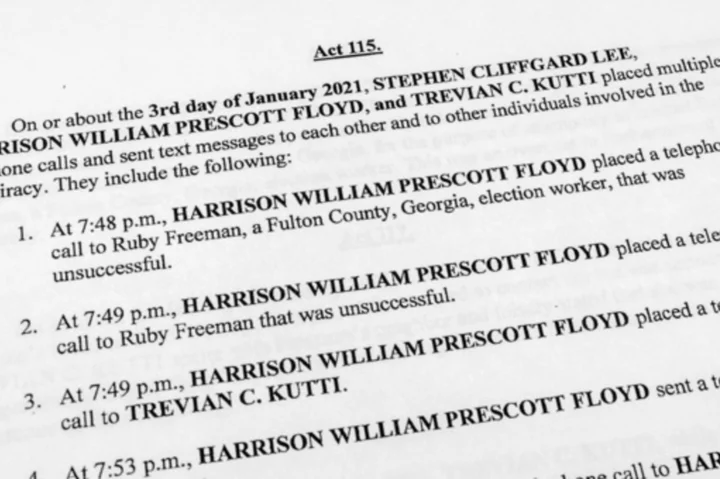
The only defendant in the Georgia election indictment to spend time in jail is released on bond
The only person who spent time behind bars as a result of the indictment related to efforts to overturn Donald Trump’s 2020 election loss in Georgia has been released from jail
2023-08-31 00:17

Geologists have figured out how to locate diamond ‘explosions’
A group of geologists has recently achieved a breakthrough in identifying potential sites for the formation of diamonds. Diamonds, the hardest naturally occurring material we have found, originate under the extreme conditions of immense pressure and high temperatures deep within the Earth's interior. These precious gems are occasionally pushed to the surface in molten rock formations known as kimberlite. However, there are currently two competing theories regarding what is responsible for this rush of kimberlite which brings diamonds to the surface. In a recent study, these theories were closely examined by a research team. In a piece for The Conversation study author and Associate Professor in Earth Science at the University of Southampton, Thomas Gernon explained: “one proposes that kimberlite magmas exploit the ‘wounds’ created when the Earth’s crust is stretched or when the slabs of solid rock covering the Earth - known as tectonic plates - split up.” “The other theory involves mantle plumes, colossal upwellings of molten rock from the core-mantle boundary, located about 2,900km [1,802] beneath the Earth’s surface.” However, neither of these theories adequately explains how magma manages to find its way through the Earth's crust, or the specific composition of the resulting kimberlite. By employing statistical analysis and machine learning, the team analysed the breakup of continents and its correlation with kimberlite formation. Their findings indicated that the majority of kimberlite volcanoes erupt 20 to 30 million years after tectonic breakup. “It also added a major clue,” Gernon explained. “Kimberlite eruptions tend to gradually migrate from the continental edges to the interiors over time at a rate that is uniform across the continents.” Delving deeper into their investigation through computer-generated models, the team ultimately concluded that diamond eruptions stem from a "domino effect." As continents gradually drift apart from each other, they generate rifts of thinned crust. As this happens, regions of thick, cold rock descend into the hot magma beneath, inducing an upsurge of the mantle, which in turn triggers a similar flow in nearby continents. Gernon elaborated on the team's findings, saying, "Various other results from our computer models then advance to show that this process can bring together the necessary ingredients in the right amounts to trigger just enough melting to generate gas-rich kimberlites,” Gernon explained. “Once formed, and with great buoyancy provided by carbon dioxide and water, the magma can rise rapidly to the surface carrying its precious cargo.” Moreover, the same methodology could potentially be employed to locate diamonds and other rare elements. “The processes triggering the eruptions that bring diamonds to the surface appear to be highly systematic,” Gernon siad. “They start on the edges of continents and migrate towards the interior at a relatively uniform rate.” The study is published in the journal Nature. Sign up to our free Indy100 weekly newsletter Have your say in our news democracy. Click the upvote icon at the top of the page to help raise this article through the indy100 rankings.
2023-08-31 00:14
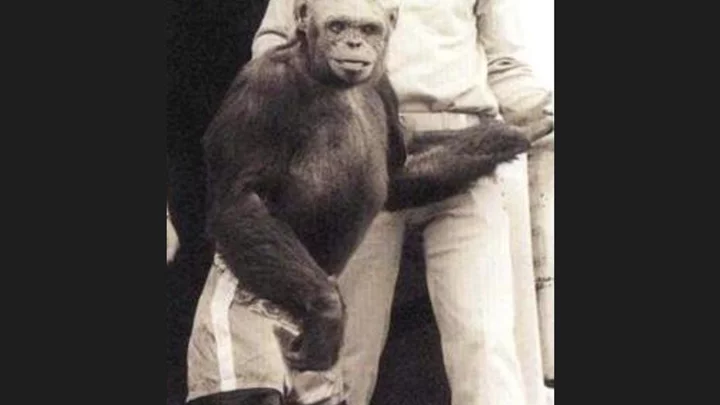
Doctor says scientists secretly made a ‘humanzee’ by mixing humans with chimps
Chimpanzees are our closest relatives, so it’s not surprising that they can do many of the things that we can. They’re able to create tools and can even use sign language, plus they share 98.8 per cent of their DNA with humans. It is, therefore, no wonder that the question has often been asked: could humans and chimps ever produce offspring? The answer, according to one evolutionary psychologist, is yes – and it’s already happened. Gordum Gallup made the eyebrow-raising claims in an interview with The Sun Online back in 2018. He told the news site that a human-chimpanzee hybrid – which he dubbed a “humanzee” – was born in a Florida lab 100 years ago. And if you’re wondering how the scientists behind the experiment managed to keep it hushed up for decades, it’s because – according to Gallup – they swiftly killed the infant when they realised the implications of what they’d done. Gallup, a professor at New York’s University at Albany, said his former university teacher told him that the secret birth took place at a research facility in Orange Park, where he used to work. “They inseminated a female chimpanzee with human semen from an undisclosed donor and claimed not only that pregnancy occurred but the pregnancy went full term and resulted in a live birth,” the psychologist told The Sun. “But in a matter of days, or a few weeks, they began to consider the moral and ethical considerations and the infant was euthanised.” Putting Gallup’s unsubstantiated story to one side, it’s unclear whether a human-chimpanzee hybrid is even possible. Some experts believe that our human ancestors and chimpanzees may have been capable of interbreeding as late as 4 million years ago according to IFL Science, which notes that our last common ancestor lived 6-7 million years ago. However, the website also notes that this theory is widely contested. It also points out that other animals with similar genetic differences to that of humans and chimps, such as horses and zebras, have been able to reproduce. And yet, the offspring are often infertile. Nevertheless, back in the 1970s, plenty of people believed that a chimp called Oliver was a human-monkey hybrid thanks to his humanistic walk, intelligence and physical features (he was said to have a smaller, flatter face than his ape peers, according to Historic Mysteries). It wasn't until tests were conducted on Oliver in 1996 that the matter was finally settled: he had 48 chromosomes so was categorically not a humanzee but a regular chimp. Oliver The Humanzee www.youtube.com Still, one certainty is that scientists continue to tread an ethical tightrope when it comes to investigating chimps and their potential to further biomedical research. In 2021, scientists created the first (publicly documented) part-monkey, part-human embryo by growing human stem cells in a macaque monkey. The aim of the work, which was carried out at California’s Salk Institute, was to help create organs for transplants and improve our understanding of human development and disease progression. In 2020, a team of German and Japanese scientists spliced human genes into the brains of marmosets, resulting in the monkey fetuses having larger, more human-like brains, according to the study, which was published in the journal Science. Once the experiment was complete, the team destroyed their creations “in light of potentially unforeseeable consequences with regard to postnatal brain function”. One thing’s for sure, no scientist wants to find themselves the architect of a real-life Planet of the Apes. Sign up for our free Indy100 weekly newsletter Have your say in our news democracy. Click the upvote icon at the top of the page to help raise this article through the indy100 rankings.
2023-08-31 00:07

Judge enters default judgment against Giuliani in defamation lawsuit from Georgia election workers
A federal judge has entered a default judgment against Rudy Giuliani in a defamation lawsuit brought by two Georgia election workers who say they were falsely accused of participating in fraud during the 2020 election
2023-08-30 23:49
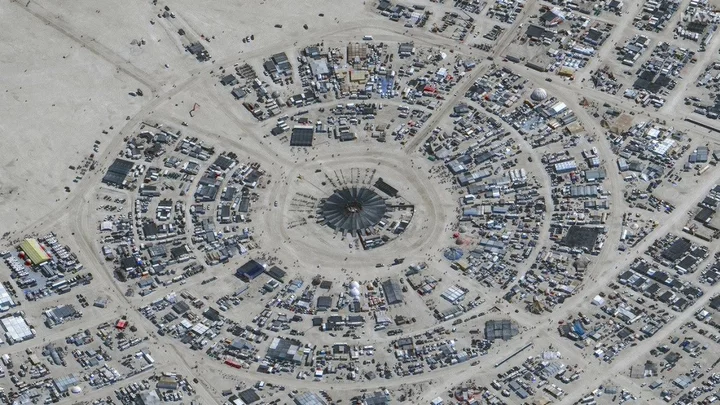
Stunning photos capture what Burning Man Festival looks like from space
Social media users are in awe of a series of Burning Man festival snaps taken from space. The world-famous festival returned to the Black Rock Desert in Nevada on Sunday (27 August) and will run until Monday (4 September). Organisers of the festival believe it can "produce positive spiritual change in the world," and "generate society that connects each individual to his or her creative powers, to participation in community, to the larger realm of civic life, and to the even greater world of nature that exists beyond society." Festival-goers have already flocked to TikTok to share their enlightening stories from previous events. One person called it "a life-changing experience," while another said it was "one of the coolest experiences ever". Well now, Maxar Technologies has shared satellite images of the festival. It shows the setting a day before thousands of people flocked to the desert for a week filled of fun. Another X/Twitter post shows an image of the festival at night, taken by Copernicus EU. They wrote: "Yesterday's view of #BurningMan #festival in #BlackRock City, #Nevada. Image taken by @CopernicusEU #Sentinel2 seems to show some kind of fire Mix of greyscale visible light and SWIR. Data processed in @sentinel_hub." Burning Man is expected to pump $60 million into the Nevada economy, according to Work Live Play, with tickets said to cost anywhere between $575 to $2,750. "Going to Burning Man, as I’m sure you’ve gathered, isn’t a straightforward operation," We Are Global Travellers shared. "It’s not cheap, it’s in the middle of the Nevada desert and it’s not something (unless you’ve been before or have friends in the know) that you can just whip together last minute." Sign up for our free Indy100 weekly newsletter Have your say in our news democracy. Click the upvote icon at the top of the page to help raise this article through the indy100 rankings.
2023-08-30 23:46

White House says Putin and Kim Jong Un traded letters as Russia looks for munitions from North Korea
The White House says it has new intelligence that shows Russian President Vladimir Putin and North Korean leader Kim Jong Un have swapped letters as Russia looks to North Korea for additional munitions for the Ukraine war
2023-08-30 23:38
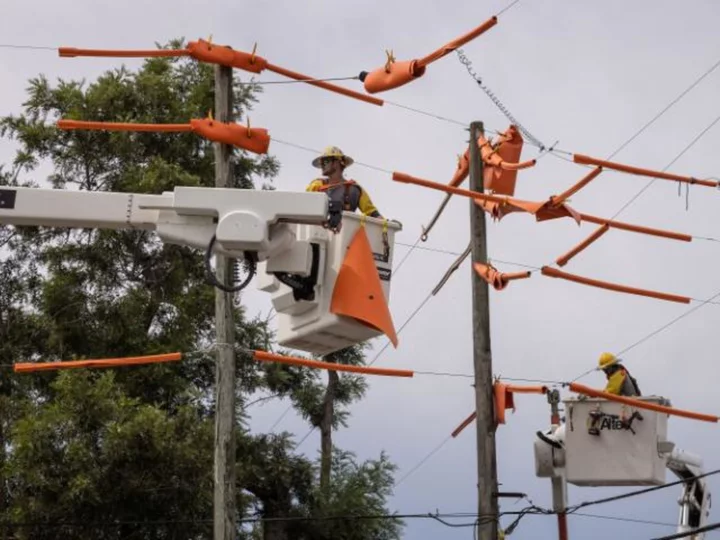
What to do if you're in the middle of a power outage
Deadly Hurricane Ian -- downgraded Thursday to a tropical storm as it crawls across Florida -- smashed into the state's southwestern coast on Wednesday, destroying homes and cutting power to millions. If you're without power during the hurricane, here's what you can do to stay safe.
2023-08-30 23:37
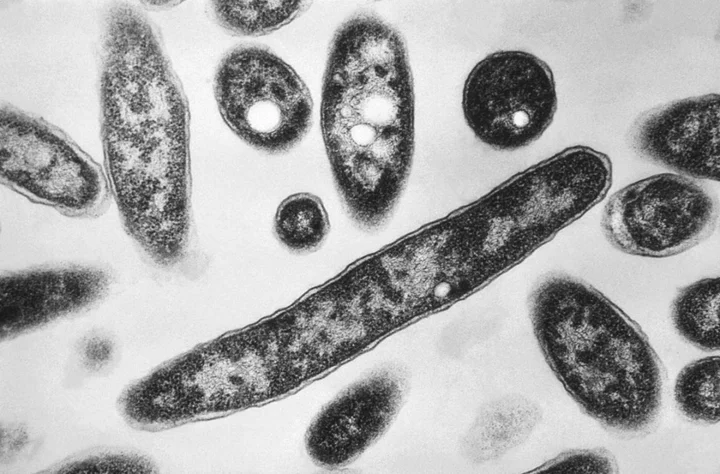
Death toll rises amid Legionnaires’ disease outbreak in Poland
The death toll from Legionnaires’ disease in Poland has risen to 16 with another 140 people infected in the southeastern region close to the border with Ukraine, health authorities said Wednesday. The region of Rzeszow, some 80 kilometers (50 miles) from the border, is a key transit hub for international military support for Ukraine following Russia’s full-scale invasion last year. Some 10,000 U.S. troops are stationed in the area. Fatalities from the disease were among elderly people who also suffered from other health issues like cancer, authorities said. Laboratory tests have confirmed the presence of Legionnaires' disease germs in the city’s water pipeline system. Authorities are still looking for the source of the infections, the numbers of which were unprecedented in the region. The Internal Security Agency was also checking for any signs of malicious action. Experts say it could come from rarely used plumbing, where the germs could have spread in high temperatures during the recent heat wave. Chlorine was applied to Rzeszow’s water system over the weekend for disinfection. Legionnaires’ disease is a lung infection that comes from inhaling infected water spray. It's not spread through drinking water. It is usually caught in places like hotels, hospitals or offices where the bacteria have got into the water supply, for example in air conditioning systems or taps and showers that are not in frequent use. The germs multiply in temperatures of between 20 and 50 degrees Celsius (68-122 degrees Fahrenheit). The disease is treated with antibiotics. Read More Legionnaires' disease kills 7 people in a strategic Polish city on the Ukrainian border Government’s ‘small boats week’ ends in humiliation as barge evacuated over legionnaires’ disease fears
2023-08-30 23:36

'I stand by my opinion': Russian on trial for critical Ukraine interview
A Russian man prosecuted for giving a spontaneous street comment criticising the Kremlin's Ukraine offensive to foreign media said he stood by his words during his trial Wednesday, despite facing...
2023-08-30 23:23
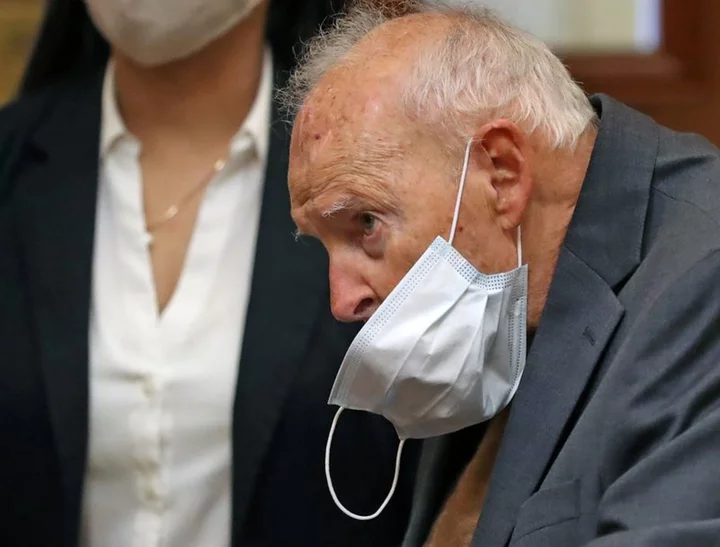
Former US Cardinal McCarrick not competent to face sex abuse trial, judge says
DEDHAM, Mass. A Massachusetts judge on Wednesday dismissed a criminal case charging former Roman Catholic Cardinal Theodore McCarrick
2023-08-30 23:22
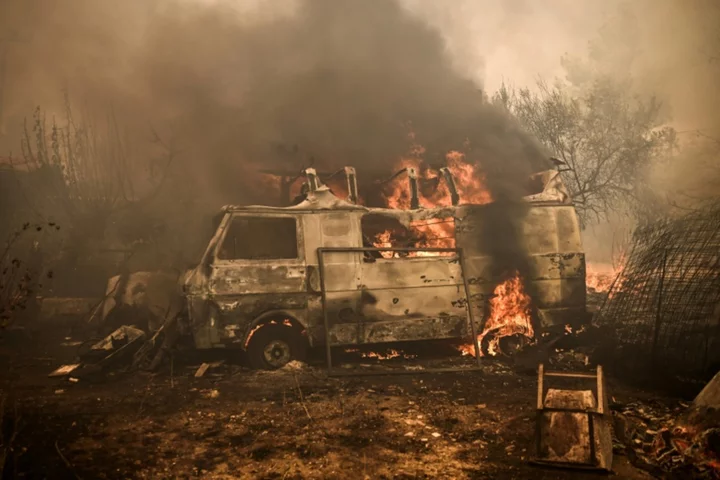
Climate change boosts risk of extreme wildfires 25%: study
Climate change has sharply boosted the risk of fast-spreading wildfires, according to a Californian study published Wednesday that offers lessons for prevention after recent disasters...
2023-08-30 23:20
You Might Like...

U.S. supports UN Security Council action to de-escalate Niger situation
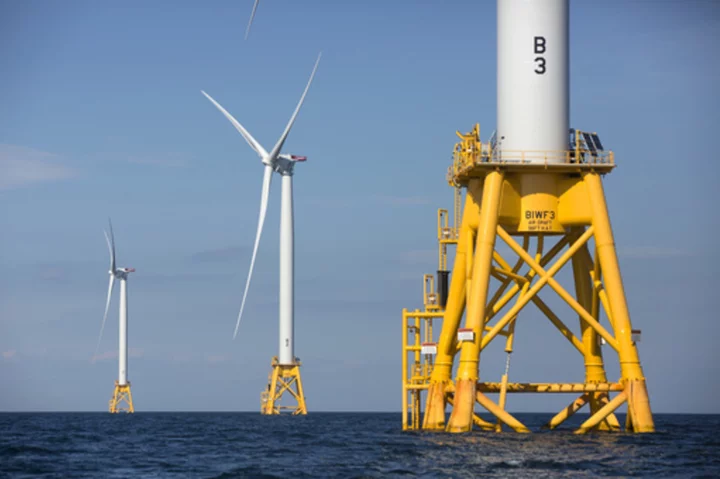
Feds approve offshore wind farm south of Rhode Island and Martha's Vineyard

Laphonza Butler sworn in as California's newest senator
Russian soldiers' corpses line road into liberated Ukrainian village

5 white nationalists sue Seattle man for allegedly leaking their identities

Streamy Awards 2023: MrBeast, Kai Cenat, IShowSpeed, xQc, Logan Paul, KSI win in their categories
Liz Truss wants to 'share lessons' in a new book and people can't believe it
Jamaica media guide