

'Horrific' Russian attack on postal depot kills six in eastern Ukraine
At least six people were killed and 16 others injured after a Russian missile strike on a postal terminal in the Kharkiv region of Ukraine, officials have said.
1970-01-01 08:00

US Push for Release of Hostages Delays Israeli Ground War, But Won’t Stop It
Israel supports diplomatic efforts to get Hamas to release hostages from Gaza quickly and in large numbers, a
1970-01-01 08:00
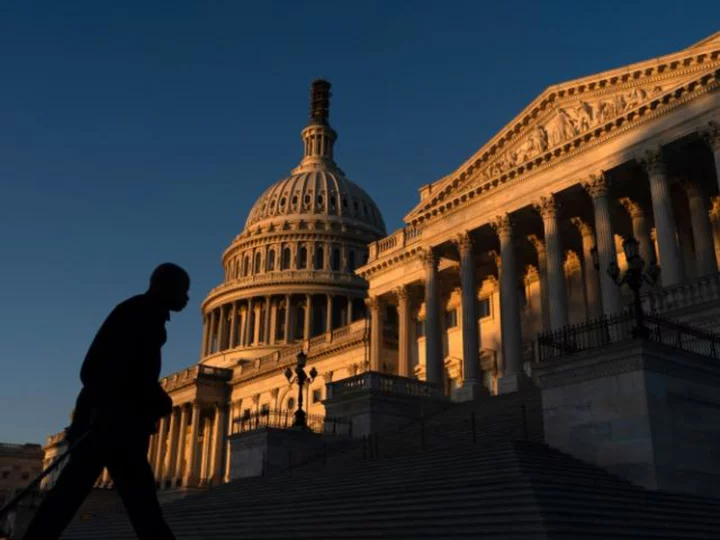
Redistricting fights in these 10 states could determine which party controls the US House
Around the country, politicians are waging high-stakes battles over new congressional lines that could influence which party controls the US House of Representatives after the 2024 election.
1970-01-01 08:00

Thousands join pro-Palestinian protest in Bosnia
SARAJEVO Several thousand people gathered in Sarajevo city centre on Sunday, waving Palestinian and Bosnian flags and demanding
1970-01-01 08:00
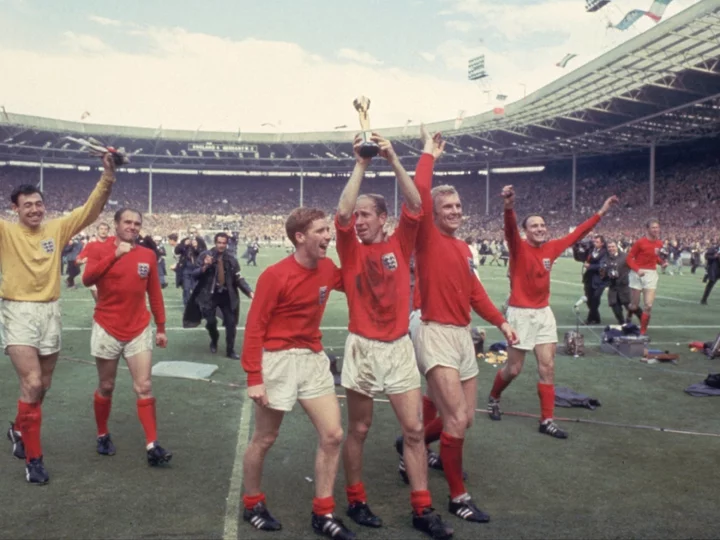
Sir Bobby Charlton: England’s greatest ever player and the artist of 1966
Two elderly men were suited. In one case, he was much smarter than normal, dressed up for the occasion. He was the taller, more angular, with the more pronounced Northumbrian accent, but the resemblance was nonetheless apparent. He was the older, too, and had long referred to a knight of the realm as “Our Kid”. He adopted a slightly more formal approach, while seemingly choking up. “Bobby Charlton is the greatest player I’ve ever seen,” he said. “He’s me brother.” It was 15 years ago, when Jack Charlton presented his younger brother with the Lifetime Achievement Award at the BBC Sports Personality of the Year award. The clip has an added poignancy after Bobby’s death at 86; three years ago, a couple of months after his 85th birthday, Jack had died. The brothers were different players and very different characters – the wisecracking, outspoken Jack was more of a man of the people, but Bobby’s quiet dignity gave him a statesmanlike air. They were not always close but their achievements will live on. There have been 22 men’s football World Cups and only two sets of brothers have won the most prestigious of prizes: Fritz and Ottmar Walter for West Germany in 1954, Bobby and Jack Charlton at West Germany’s expense in 1966. It remains the most famous year in English football history; perhaps it always will. At the heart of it was Bobby Charlton: the 1966 FWA Footballer of the Year and Ballon d’Or winner, named by France Football – in the days before Fifa had an official award – as the best player at the World Cup. Gary Lineker, who was a goal away from equalling Charlton’s long-standing national record of 49 for his country, called him England’s greatest ever player, Gary Neville, one of his successors as Manchester United captain, deemed him the greatest ever English player. They are not necessarily the same: but in Charlton’s case, he could be both. Perhaps only the other immortal Bobby – Moore, the 1966 captain – can challenge him for the title of the finest in an England shirt. Charlton was the second English footballer, and just the third man, to reach 100 caps. His 106th and last, in the 1970 quarter-final against West Germany, set a world record that Moore – and then many others – subsequently passed. He straddled eras – his first cap came alongside Tom Finney, who debuted in England’s first match after the Second World War, and one of the last alongside Emlyn Hughes, who represented his country in the 1980s – but defined one, a time of glory. Thirty years before Frank Skinner and David Baddiel sang about football coming home, Charlton brought it back. Their lyric – “Bobby belting the ball” – conjured images, some in colour, some in black and white, of a figure with a combover hairstyle and the cannonball shot striking the ball with beautiful ferocity, often rising throughout its way into the net. Decades before the invention of expected goals, Charlton was scoring unexpected ones. Consider his opener against Mexico, England’s first of the 1966 World Cup, from such a distance that the chance of it going in was statistically low, except for one factor: that Charlton, with such power on either foot, was hitting it. He was the master of the long-range hit: if most of Lineker’s 48 goals were predatory finishes, many of Charlton’s 49 were spectacular. Such a clean striker of a ball was not a striker at all: largely a left winger in his younger days, later the attacking-midfield fulcrum of Sir Alf Ramsey’s ‘Wingless Wonders’. He began in the old W-M formation, ended up as, in effect, the tip of a midfield diamond. It was a tactical shift, a belated move into modernity that Ramsey brought. If there was a pragmatism to England’s World Cup win, Charlton was the artist. With his brace against Portugal in the 1966 semi-final – like another double against Portuguese opposition, Benfica, in the 1968 European Cup final – he illustrated his talent could shine on the biggest of occasions. The 1966 semi-final was not seen by his father, Robert, a coal miner working a shift underground in his home town of Ashington; “his duty”, Bobby subsequently, and remarkably, reflected. On the grandest stage of all, the 1966 final, he was sacrificed, Charlton and Franz Beckenbauer deputed to man-mark each other. They received the same assignment in the 1970 quarter-final; England’s era of ascendency ended when Ramsey removed Charlton with 20 minutes remaining to save him for the semi-final, the 32-year-old distracted by the prospect of his withdrawal as Beckenbauer ran forward to reduce England’s lead to 2-1; without him, they lost 3-2. Ramsey thanked him for his service on the plane back from Mexico: Bobby knew his England career, like Jack’s, was over. It could have been still more glorious: keep Charlton on and maybe England would have prevailed in 1970. But for Garrincha’s brilliance, Charlton wondered if England would have been victorious in the 1962 quarter-final against Brazil, and then the tournament as a whole. He went to four World Cups in all, not taking the field in his first: time has rendered it more extraordinary that his England debut came in 1958, a couple of months after the Munich air disaster. He scored, too, but if a poorer performance on his third cap was understandable – it came in Belgrade, scene of the Busby Babes’ last game before Munich – it cost him his place in Walter Winterbottom’s starting 11 in Sweden. Were Duncan Edwards, Roger Byrne, Tommy Taylor and Eddie Colman to have lived, perhaps England would have won more and sooner. But it was Charlton who became the emblem of English football; the face of what is now a bygone age. In its own way, it felt appropriate that a man who carried a huge responsibility for decades was the last survivor among the players at Munich; now it may be fitting that Geoff Hurst, who had the final say in 1966, is the last of Ramsey’s chosen 11, forever charged with paying tributes to his fallen comrades. And Bobby Charlton, the greatest player Jack ever saw, the greatest to have Three Lions on his shirt, took England to the summit of the global game. Read More Sir Bobby Charlton turned tragedy into triumph with unique style and perseverance Fans lay flowers and scarves at Old Trafford following death of Bobby Charlton Tributes paid to ‘giant of the game’ Sir Bobby Charlton after his death at 86 Fans lay flowers and scarves at Old Trafford following death of Bobby Charlton Manchester United fans head to Old Trafford to pay tribute to Sir Bobby Charlton Premier League managers pay tribute as Sir Bobby Charlton dies at 86
1970-01-01 08:00
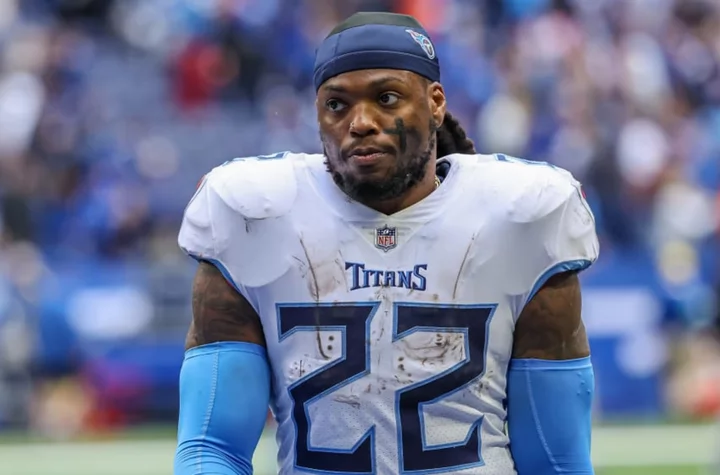
NFL rumors: Derrick Henry trade interest, Vikings picking up trade calls, receivers up for trade
With Week 7 upon us, NFL trade deadline discussions are crystalizing, with wide receivers getting most of the attention. The Vikings, though, could send out a massive star.
1970-01-01 08:00
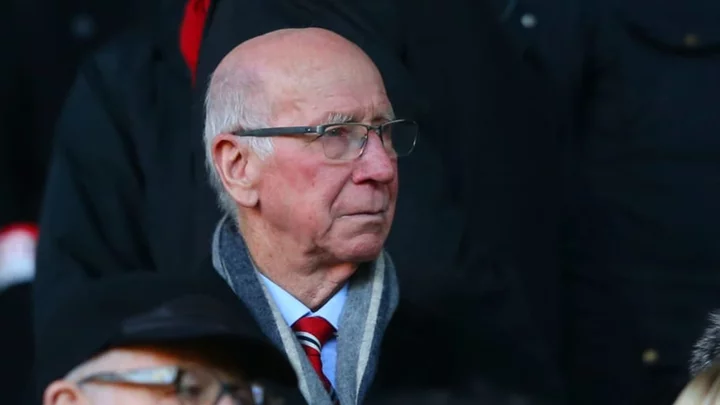
Man Utd players past and present pay tribute to Sir Bobby Charlton
Man Utd players past and present pay tribute to Sir Bobby Charlton after his passing at the age of 86.
1970-01-01 08:00
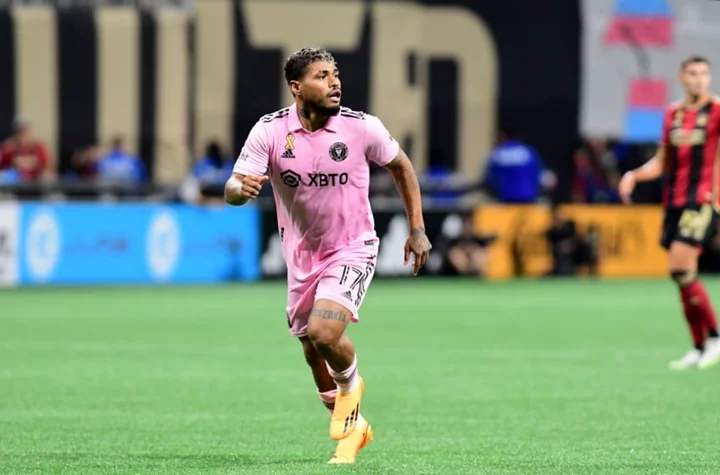
MLS rumors: Martinez to leave Miami, Kamara to play on, new deal for Sartini
Today's MLS rumors include Josef Martinez being set to leave Inter Miami. Kei Kamara wants to continue playing and Vanni Sartini has signed a new contract with the Vancouvar Whitecaps.
1970-01-01 08:00

Gordon Ramsay mercilessly mocked for flat deposit story on Jake Humphrey’s High Performance Podcast
Gordon Ramsay has been mercilessly mocked online after sharing the supposedly inspirational advice he received from his father-in-law. The celebrity chef was talking about getting the money together for his first flat with partner Tana back in the day, when he asked her father, Chris Hutcheson, for a loan. Speaking to Jake Humphrey on the High Performance Podcast, the celebrity chef recalled how he asked Tana’s father, Chris Hutcheson, for a £20,000 loan to buy a flat. “We were young, we were stupid, we were skint,” Ramsay said. He explained how he took his father-in-law out for a meal and asked him about lending money, despite driving around in a “flash” Porsche at the time. “He said ‘Okay, here’s what I’ll do. I’ll have another lunch with you when you sell your Porsche,’” the chef said. “I thought, you f***er. But, you clever f***er. Here I am driving around in a flash 911, and we didn’t even have a house, a flat, a roof over our heads. It was the best advice he ever gave me: Sell your f***ing Porsche.” Safe to say, people didn’t exactly find the story about selling a Porsche to fund a deposit all that relatable. There were people queuing up to take the mickey on social media after Humphrey posted the clip on Twitter/X, with one writing: “Great advice, just going to sell my Porsche and ask for £20,000 so I can buy a place to live. Housing crisis solved.” Another joked: “This is an incredibly powerful message. If you need money, don’t just sponge off someone else. No. Sell your Porsche. Really hit home, this one.” Sign up for our free Indy100 weekly newsletter Have your say in our news democracy. Click the upvote icon at the top of the page to help raise this article through the indy100 rankings
1970-01-01 08:00
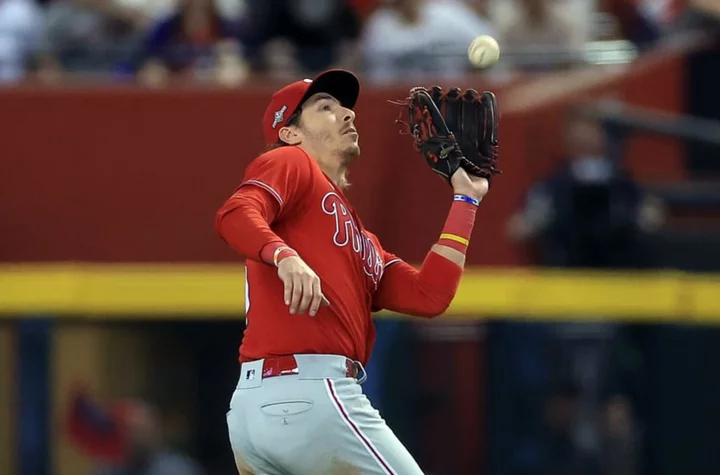
Bryce Harper says what all Phillies fans are thinking about Bryson Stott after Game 5 performance
The Philadelphia Phillies beat the Arizona Diamondbacks in Game 5, in part due to the two-way play of Bryson Stott. Bryce Harper was quick to offer high praise.
1970-01-01 08:00
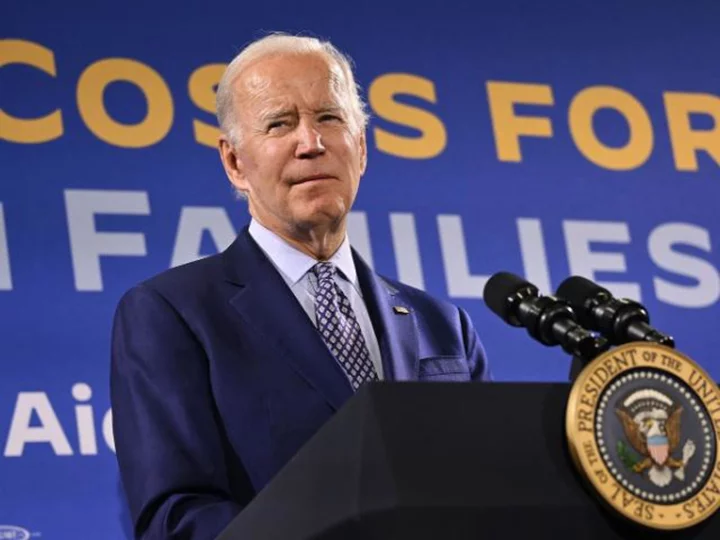
How Biden is continuing to cancel student loan debt despite Supreme Court ruling
Although the Supreme Court struck down President Joe Biden's signature student loan forgiveness program in late June, his administration has found ways to cancel more than $48 billion in debt since then.
1970-01-01 08:00

Deals Rebound Crashes Into a New World of Risk to End the Year
Just when it looked like Wall Street was seeing a rebound in equity fundraising, bankers and would-be issuers
1970-01-01 08:00