
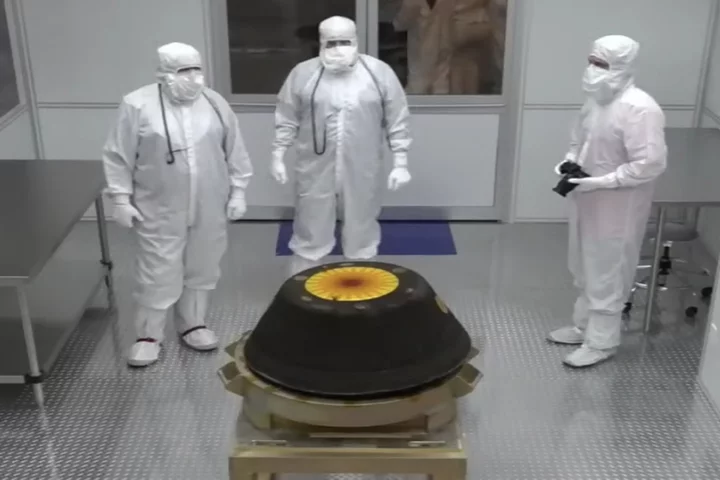
Nasa has gathered a large piece of a distant asteroid. What now?
Scientists have gathered a significant chunk of a distant asteroid, which has made its way to Earth after a mission taking millions of miles. But the really useful work will begin now. Nasa’s Osiris-Rex mission flew to the distant Asteroid Bennu, scooped up a piece of the object into a canister, and then flew back to Earth to drop it off. On Sunday, Nasa picked up that canister in the Utah desert and is now working to secure it. It will then send those samples to a variety of scientists around the world, with a chunk of it being sent to more than 200 people at 38 different institutions across the world. They hope that they can use them as a “time capsule” to peer into the early universe, telling us about where we came from. “This box when it is opened of material from the surface of Bennu can tell us untold secrets of the origins of the universe, the origins of our planet and the origins of life itself,” said Queen musician Brian May, who helped with the research by mapping out the asteroid to find a landing spot. “What an incredibly exciting day.” Sample return missions are particularly exciting to scientists because they offer a look at a pristine piece of a distant world that has been undisturbed by the environment on Earth. While some pieces of asteroids and other objects can fall down to Earth, they have to make their way through the atmosphere and can be damaged and changed in the process. They also mean that researchers are able to use all of the Earth’s latest technology to study the sample. Other pieces of distant worlds have of course been studied by spacecraft and landers, but they are only able to do so with the limited instruments they take to those planets. Another advantage of sample return missions over studying the objects at their home is that scientists can look back at those samples with new sensors and equipment invented long after the sample was actually taken. Many space missions continue for years – Curiosity is still examining Mars after arriving there in 2012, and the Voyager probes are still providing information almost 50 years after they were launched – but they are only able to do so with the technology that was available when they set off. The analysis done in sample return missions really begins when the spacecraft arrives at its target: then, it starts looking at the context of the sample, gathering information about the world from which it came that should prove useful to scientists later. Osiris-Rex arrived at Bennu in 2018, and spent two years mapping the asteroid before it set off back home with its delivery. All of that information in addition to the samples could help answer a variety of questions about our planet, scientists hope. “The asteroids in our solar system contain the raw building blocks from which the Earth was made, so working out their composition will tell us a lot of how our planet formed,” said Boris Gansicke from the department of physics at the University of Warwick. “There are many open questions, for instance, where did the water that we have on Earth come from? And where did the ingredients that made life possible to develop come from? “To answer those questions, ie measure the composition of an asteroid, you need to get your ‘hands’ on them (or in this case the arm of a space mission), and this is what Osiris-Rex achieved. “In a nutshell, it’s similar to sitting in front of a delicious dinner and wanting to have the list of ingredients.” Sample return missions are almost as old as space travel itself, and the first of them were the early Apollo missions, which brought back pieces of the Moon. Those continue to be useful to scientists. Since then, as human travel into space has declined, most of the work has been done by robots. In the early 1970s, the Soviet Union’s Luna missions gathered pieces of the Moon and brought them back, and in 2020 Japan’s Hayabusa2 mission brought back pieces of the asteroid Ryugu. Scientists have high hopes for future missions: perhaps the most discussed is a mission to Mars, which would bring back the first ever pieces of that planet. Engineers have suggested that for decades, and a number of plans have been formed, but none are likely to launch any time soon. Read More Nasa spots shocking number of galaxies like our own Nasa lands Bennu asteroid samples back on Earth Nasa just delivered a piece of a distant asteroid to Earth Pieces of a distant asteroid are about to fall to Earth Nasa to return largest asteroid sample ever as UK helps with research Massive solar flare strikes Nasa spacecraft sent to study Sun
1970-01-01 08:00

Menendez Vows to Fight Corruption Charges, Stay in Senate
Democratic New Jersey Senator Bob Menendez vowed to fight corruption charges and keep his US Senate seat, leaving
1970-01-01 08:00
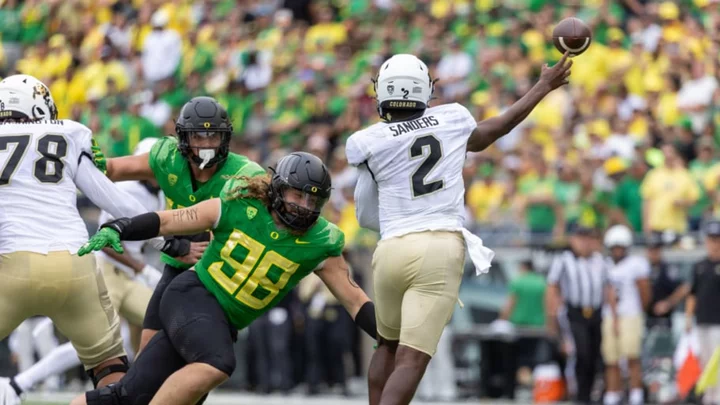
Keyshawn Johnson Claims Coaches From Other Schools Helped Oregon Gameplan For Colorado, Deion Sanders
Deion Sanders is getting coaches to share their secrets, apparently.
1970-01-01 08:00

How to Unlock Skeletor Operator in Warzone 2
To unlock the Skeletor Operator in Warzone 2, players must purchase the Skeletor Bundle from the store during The Haunting for 2,400 COD points.
1970-01-01 08:00

Irish university to offer degree in influencing
The bachelors course at Southeast Technical University in Carlow is due to start in September 2024.
1970-01-01 08:00

AI, Robots and Satellite Sensors Are Helping in the Fight Against Wildfires
This year has been a challenging one for Phil Schneider, who hasn’t seen wildfire behavior like this in
1970-01-01 08:00

How to Win $400 Bonus Betting $10 on Monday Night Football
Turn $10 into $400 in bonus bets with no sweat thanks to these new offers at FanDuel and DraftKings. Read more to learn how you can win your bonus bets in time for tonight's kickoff.
1970-01-01 08:00

Liverpool defender signs new long-term contract at Anfield
Liverpool announce a new long-term contract for full-back Kostas Tsimikas.
1970-01-01 08:00

Kosovo says Serbia should hand over escaped Serb gunmen after deadly shootout
By Fatos Bytyci MITROVICA, Kosovo Kosovo called on Serbia on Monday to hand over ethnic Serb gunmen it
1970-01-01 08:00

Hello Sunshine’s New Experiential Franchise Shine Away Announces Talent Lineup
LOS ANGELES--(BUSINESS WIRE)--Sep 25, 2023--
1970-01-01 08:00
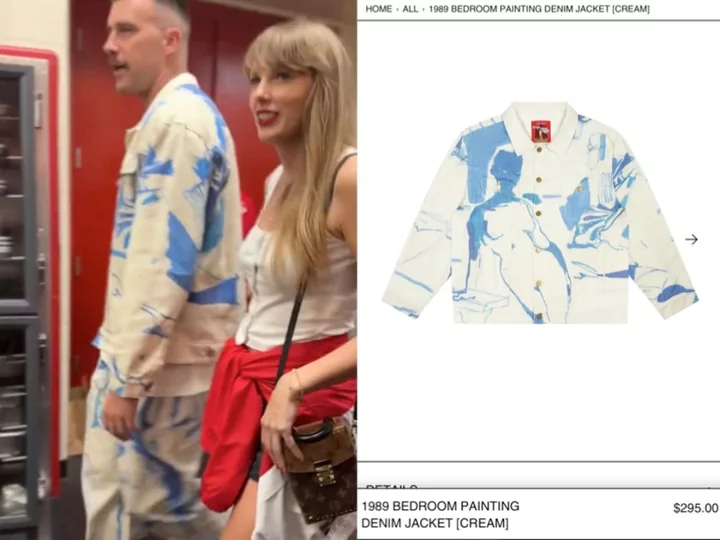
Fans spot Travis Kelce’s ‘1989’ inspired denim suit after he leaves Chiefs game with Taylor Swift
It appears that Travis Kelce is supporting Taylor Swift’s upcoming 1989 album re-release with a very fitting outfit. The Kansas City Chiefs star was seen leaving with the Grammy-winning musician on Sunday 24 September, after Swift was spotted cheering for Kelce at Arrowhead Stadium in Kansas City, Missouri. Following the game, which saw the Chiefs beat the Chicago Bears 41-10, the rumoured couple were filmed leaving Arrowhead Stadium together by sports anchor Jarred Payton. In the clip, which has been viewed more than 12m times, Kelce is spotted wearing a blue and white splatter paint denim suit by the brand KidSuper Studios. However, eagle-eyed fans noticed that the name for the denim suit seemed to pay homage to Swift’s forthcoming album, 1989 (Taylor’s Version), which is due for re-release on 27 October. “Travis Kelce wore a ‘1989 Bedroom Painting’ matching set piece tonight leaving Arrowhead Stadium with Taylor Swift, very timely for #1989TaylorsVersion,” wrote one fan on X, formerly known as Twitter. The cream denim suit jacket, which retails for $295, and the matching denim pants, which cost $285, appeared to be labelled on the KidSuper website as “1989 Bedroom Painting Denim Jacket” and “1989 Bedroom Painting Denim Pants”. The Brooklyn-based menswear label seemed to have made the change from “Bedroom Painting” to “1989 Bedroom Painting” after the NFL star was spotted with the 1989 musician at Sunday’s game. On X, the brand wrote: “Look at the name change haha”. The rumoured couple were then seen leaving the stadium in Kelce’s convertible in photos and videos posted on social media. What’s more, fans couldn’t help but notice that Kelce, much like Swift, was also born in 1989. Throughout the game, the “Shake It Off” singer was often seen enthusiastically cheering on the tight end in the Arrowhead Stadium box seats. Swift sat next to Kelce’s mother, Donna, as she appeared to yell “let’s f***ing go” in response to Kelce’s third-quarter touchdown reception. Her appearance at the NFL game comes amidst much speculation that Swift and Kelce are dating. Romance rumours first circulated when the NFL star admitted that he tried to give the “Bad Blood” singer his number at a recent Eras Tour concert. Kelce’s brother, fellow football star Jason Kelce, later fueled speculation when he claimed that rumours the pair are dating are “100 per cent true”. While Kelce encouraged fans to stop asking his “brother about [his] dating life,” he did reveal that he reached out to Swift and asked if she’d want to attend one of his football games. “I threw it out there, I threw the ball in her court,” Kelce said on the The Pat McAfee Show last week. “I told her, you know, I’ve seen you rock the stage in Arrowhead [Stadium], you might have to come see me rock the stage in Arrowhead and see which one’s a little more lit. So, we’ll see what happens in the near future.” Most recently, Swift was linked to The 1975 frontman Matty Healy. Prior to their short-lived romance, which came to an end in June, she and British actor Joe Alwyn called it quits after six years of dating. Meanwhile, Kelce was previously in an on-again, off-again relationship with ex-girlfriend Kayla Nicole for five years. The former couple reportedly ended their long-term relationship in 2022. Read More Witness claims Taylor Swift paid for entire restaurant to eat and leave for her and Travis Kelce Taylor Swift fans giddy as pop star cheers on ‘new boyfriend’ Travis Kelce at Kansas City game Taylor Swift and Travis Kelce seen together for first time leaving NFL game Witness claims Taylor Swift bought out restaurant for her and Travis Kelce Taylor Swift spotted alongside Kansas City star’s mother amid dating rumours Taylor Swift fans giddy as pop star spotted enthusiastically cheering on Travis Kelce
1970-01-01 08:00
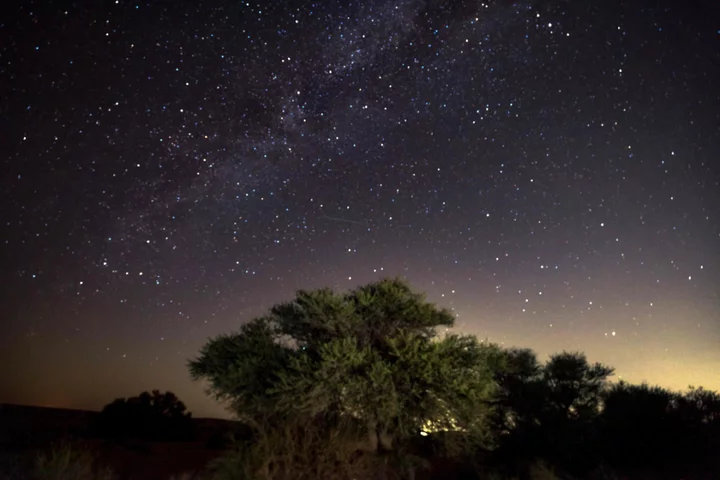
Nasa spots shocking number of galaxies like our own in early universe
Scientists have spotted a shocking number of galaxies like our own in the early universe. The finding will prompt us to entirely rethink our understanding of how the universe formed the structures that surround us. Looking deep into space, scientists found that the galaxies we see in the early universe are much more like our own Milky Way than was thought possible. A team of international researchers including those at The University of Manchester and University of Victoria in Canada, used the James Webb Space Telescope (JWST) to discover that galaxies like the Milky Way are 10 times more common than what was believed based on previous observations with the Hubble Space Telescope. Many of these galaxies formed some 10 billion years ago or longer, going far back into the history of the universe. The Milky Way is a typical disk galaxy, with a shape similar to a pancake or compact disc, rotating about its centre and often containing spiral arms. These galaxies might be the kind where life can develop given the nature of their formation history, experts suggest. Astronomers previously considered these types of galaxies too fragile to exist in the early universe when galaxy mergers were more common, destroying what was thought to be their delicate shapes. Christopher Conselice, professor of extragalactic astronomy at The University of Manchester, said: “Using the Hubble Space Telescope we thought that disc galaxies were almost non-existent until the universe was about six billion years old, these new JWST results push the time these Milky Way-like galaxies form to almost the beginning of the universe.” He added: “These JWST results show that disc galaxies like our own Milky Way, are the most common type of galaxy in the universe. “This implies that most stars exist and form within these galaxies which is changing our complete understanding of how galaxy formation occurs. “These results also suggest important questions about dark matter in the early universe which we know very little about.” “Based on our results, astronomers must rethink our understanding of the formation of the first galaxies and how galaxy evolution occurred over the past 10 billion years.” The researchers say their findings, published in the Astrophysical Journal, completely overturn the existing understanding of how scientists think the universe evolves, and the scientists say new ideas need to be considered. Lead author Leonardo Ferreira, from the University of Victoria, said: “For over 30 years it was thought that these disc galaxies were rare in the early universe due to the common violent encounters that galaxies undergo. “The fact that JWST finds so many is another sign of the power of this instrument and that the structures of galaxies form earlier in the universe, much earlier in fact, than anyone had anticipated.” The improved technology of JWST allows astronomers to see the true structure of these galaxies for the first time. A paper describing the findings, ‘The JWST Hubble Sequence: The Rest-Frame Optical Evolution of Galaxy Structure at 1.5 The Astrophysical Journal. Additional reporting by agencies Read More Nasa just delivered a piece of a distant asteroid to Earth Nasa lands Bennu asteroid samples back on Earth Pieces of a distant asteroid are about to fall to Earth Nasa just delivered a piece of a distant asteroid to Earth Nasa lands Bennu asteroid samples back on Earth Pieces of a distant asteroid are about to fall to Earth
1970-01-01 08:00