
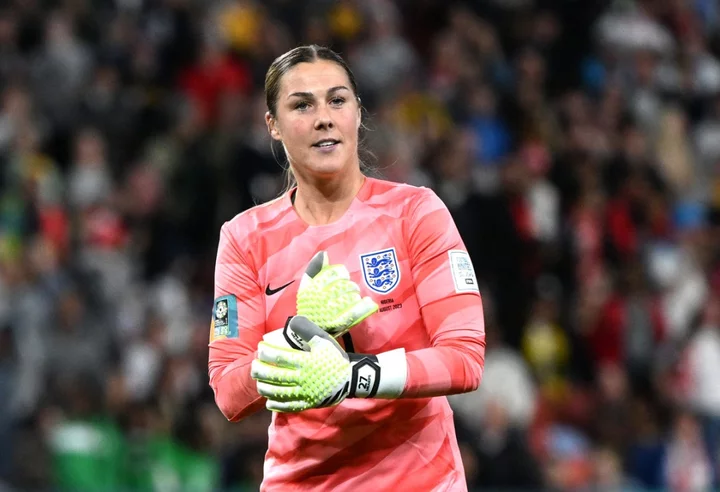
Petition to force Nike to sell Mary Earps goalkeeper shirt nears 35,000 signatures
A petition to force Nike to make the kit of England goalkeeper Mary Earps available for public purchase during the Women’s World Cup has reached almost 35,000 signatures. England’s home and away replica kits are available for fans to buy but the Lionesses goalkeeper jerseys have not been put up for sale by clothing giant Nike – the team’s kit supplier. This is despite Earps being a genuine superstar of world football and arguably the best goalkeeper in the world – having been the Lionesses’s shot-stopper when they won the Euros last summer and being named Fifa’s Best Women’s Goalkeeper for 2022. The 30-year-old has been instrumental in England reaching the quarter-finals of the ongoing World Cup, making a number of crucial saves during both the 120 minutes of normal play and the penalty shootout in the nervy last-16 win over Nigeria on Monday. In fact, in the four games played by Sarina Wiegman’s side in the tournament so far, she has conceded just one goal – a consolation effort in the 6-1 group-stage thumping on China. England men’s goalkeeper Jordan Pickford’s shirt was available to buy during last year’s men’s World Cup, and Earps’s shirt for club side Manchester United sold well this past season, leading 16-year-old Emmy Somauroo from Northamptonshire to set up a petition demanding Nike produce a replica of the Lioness’s No 1 jersey. The petition on change.org, which has now reached more than 34,000 signatures, expresses the frustration at Nike’s decision: “We need to unite, and demand this decision is overturned. “We need to show togetherness and support Mary and ask Nike to rethink their decision. Let’s make them see just how important our female goalkeepers are. How respected they are and how many young girls aspire to join them in the future. “Any type of exclusion is unacceptable in this day and age and we need to show we will not stand for it. Mary and all female goalkeepers, we love and respect you. You are inspirational and we are behind you.” ITV Anglia also spoke to another young woman supporting the cause, 17-year-old Millie Winslett, from Clacton in Essex, who has written to the sportswear giant to ask the company to think again. “I heard that Nike had completely refused to produce the shirt,” she said. “And I thought I know that I’d like it. My sister would like it. And I was thinking, surely something can be done about it. They can’t just outright refuse to do it.” The letter stated that “every child deserves the right to feel represented by their favourite player, a player that resembles them.” She goes on to say that “you are a multi-billion pound company, even if you only sold one shirt, it would allow for one little girl to feel seen, and that is 100% worth it. We are meant to be moving forwards, not backwards.” Earps was initially alerted to the situation when England captain Millie Bright told her she wanted to buy her kit for her niece, only to find it wasn’t available for purchase. “I can’t really sugar-coat this in any way, so I am not going to try,” Earps told reporters ahead of England’s opening World Cup game against Haiti. “It is hugely disappointing and very hurtful. “My shirt on the Manchester United website was sold out last season. It was the third-best-selling shirt, so who says it is not selling?” “It is the young kids I am most concerned about. They are going to say, ‘Mum, Dad, can I have a Mary Earps shirt?’ and they say, ‘I can’t, but I can get you an Alessia Russo 23 or a Rachel Daly 9.’ “What you are saying is that goalkeeping isn’t important, but you can be a striker if you want.” Popstar Mel B has also since waded into the row, calling Nike’s decision not to stock the shirt “disgusting”. Read More Mel B supports Mary Earps over ‘disgusting’ World Cup kit controversy Mary Earps is an England superstar – even if fans can’t buy her shirt England goalkeeper Mary Earps hits out at Nike for refusing to sell her shirt Reaction as England reach World Cup quarter-finals – Monday’s sporting social Mary Earps: The England goalkeeper and world’s best in profile Mary Earps insists fearless England ready to avoid World Cup banana skin
1970-01-01 08:00

What is ALS and what are the causes?
Sandra Bullock’s longterm partner Bryan Randall has died at the age of 57 after a three-year battle with amyotrophic lateral sclerosis (ASL). His family shared a statement confirming that Randall “passed away peacefully” on Saturday (5 August), adding that he “chose early to keep his journey with ALS private and those of us who cared for him did our best to honour his request”. The statement, sent to People magzine, continued: “We are immensely grateful to the tireless doctors who navigated the landscape of this illness with us and to the astounding nurses who became our roommates, often sacrificing their own families to be with ours.” Bullock and Randall first met in 2015 and made their first public appearance together the following year. The model-turned-photographer’s family has asked for donations to be made to the ALS Association and the Massachusetts General Hospital. ALS affects nerve cells in the brain and spinal cord, its name coming from the Greek and referring to a wasting away of the muscles responsible for controlling voluntary movement caused by a lack of nourishment, the fault of a genetic mutation. As the ALS Association explains: “Motor neurons reach from the brain to the spinal cord and from the spinal cord to the muscles throughout the body. The progressive degeneration of the motor neurons in ALS eventually leads to their demise. “When the motor neurons die, the ability of the brain to initiate and control muscle movement is lost. When voluntary muscle action is progressively affected, people may lose the ability to speak, eat, move and breathe. “The motor nerves affected when you have ALS are the motor neurons that provide voluntary movements and muscle control. Examples of voluntary movements are making the effort to reach for a smartphone or step off a curb. These actions are controlled by the muscles in the arms and legs.” Early symptoms of the disease, according to the US National Institute of Neurological Disorders and Strokes (NINDS), include: muscle twitches in the arm, leg, shoulder or tongue; cramps; tight or stiff muscles; muscle weakness; slurred or nasal speech; and difficulty chewing and swallowing. “The first sign of ALS usually appears in the hand or arm and can show as difficulty with simple tasks such as buttoning a shirt, writing, or turning a key in a lock,” the NINDS explains. “In other cases, symptoms initially affect one leg. People experience awkwardness when walking or running, or they may trip or stumble more often.” There is currently no cure for ALS but the US Food and Drug Administration has approved four drugs to treat the condition and ease the discomfort of sufferers: Riluzole, Nuedexta, Radicava and Tiglutik. It was first discovered by French neurologist Jean-Martin Charcot in 1869 and is also commonly known as Lou Gehrig’s disease in memory of the celebrated New York Yankees baseman (1903-41) who also suffered from it. While ALS affects all demographics, it is most common among people aged between 55 and 75 and, according to some studies, disproportionately affects former members of the armed forces, perhaps because of exposure to harmful toxins during their service careers although this has not been definitively substantiated. The ALS Association reports that, in 90 per cent of cases of ALS, there is no family history of the genetic mutation that causes the disease and, in the 5-10 per cent of cases in which there is, only a 50 per cent possibility exists of its being passed on. For more information, please visit the websites of the ALS Association or the National Institute of Neurological Disorders and Strokes. Read More Roberta Flack announces she has ALS and finds it ‘impossible to sing’ NIH to fund unproven ALS drugs under patient-backed law ALS drug wins FDA approval despite questionable data Brain’s appetite control centre different in overweight or obese people – study Areas with lower bird diversity ‘have more mental health hospital admissions’ Greg Rutherford rushed to hospital ‘screaming and clawing at his skin’
1970-01-01 08:00
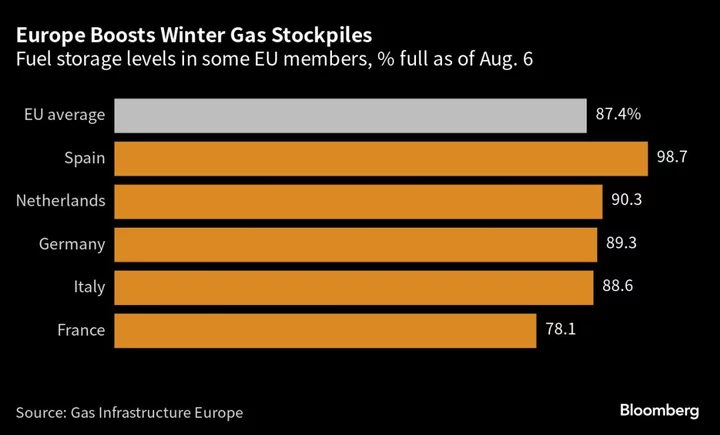
European Gas Prices Ease as Winter Fuel Stockpiles Keep Rising
European natural gas prices eased, with traders weighing ever-rising fuel stockpiles against the risk of supply constraints. Benchmark
1970-01-01 08:00

PFA chief says new approach to added time ‘changing game we fell in love with’
Prolonging matches to tackle time-wasting is “changing the game we fell in love with”, the Professional Footballers’ Association chief executive Maheta Molango has said. Referees in competitions around the world have been instructed this season to more accurately measure time lost to stoppages such as substitutions, goal celebrations, VAR checks and injuries, after the approach was first adopted at last year’s World Cup in Qatar. It has already led to 13 minutes of time being added to the second half of Sunday’s Community Shield between Manchester City and Arsenal, and has sparked criticism from City midfielder Kevin De Bruyne and Manchester United defender Raphael Varane who say the move, combined with an already congested calendar, is pushing players to breaking point. PFA boss Molango says the focus should be on sanctioning individual players and teams who waste time, and told BBC Radio 5 Live: “This is not basketball, this is football. There’s probably a reason why the game was 90 minutes and not 60, and what we’re trying to do here is change the football that we all fell in love with. That’s not, in my opinion, what the fans want to see. “We all agree we need to deal with time-wasting. Whether the solution is to add more minutes to the game, I’m not sure. I think there are other ways to deal with that. The referee has the power to sanction the people who waste time. “If you look at the game on Sunday, these are two teams that do not waste time. There was no time-wasting whatsoever yet in the second half you end up with eight minutes added with two teams who do not waste time. “So you’re thinking when you see teams who use a different type of tactics, how long will the game be?” Molango says many players have echoed Varane’s concerns over the new approach and player workload generally when he has met with them over the summer. He says football must wake up and address the problems with the calendar, which appear set to get worse with UEFA’s club competitions expanding in the 2024-25 season. That campaign will also end with FIFA’s new 32-team Club World Cup in the United States. “This year’s Champions League final is a good example of how saturated the calendar is,” Molango added. “Watching the game as a fan it’s sad to see Kevin De Bruyne not able to finish the first half or to hear after the game Rodri say that they had cramps after 60 minutes. That’s just not what you want to see. What you want to see is players being able to show their best version. Even for those who just see this as a commercial venture, ultimately they are killing the product. Ultimately it will affect the game and viewership. Maheta Molango on football's crowded calendar “Those type of situations need to be a wake-up call to say you’re just not heading in the right direction and we need to do something about that if we don’t want to kill the product. “I’m using the word ‘product’ on purpose because even for those who just see this as a commercial venture, ultimately they are killing the product. Ultimately it will affect the game and viewership.” It has been reported that broadcasters are in talks with the football authorities over the new approach to added time amid concerns it will affect scheduling.
1970-01-01 08:00

Taiwan’s Exports Decline Slows as Surplus Rises to Record High
Taiwan’s exports tumbled for the eleventh straight month in July in a sign that global demand for chips
1970-01-01 08:00

China exports see biggest drop for three years
Global demand for Chinese goods has fallen as the cost of living and rising interest rates bite.
1970-01-01 08:00

Kyle Gordon confirms release date for the full Planet of the Bass song
The parody song-turned-viral sensation ‘Planet of the Bass’ by the comedian Kyle Gordon is finally being released in full and fans are excited. Gordon’s track went viral after a 50-second snippet of the song in a TikTok caught people’s attention thanks to its catchy and hilarious Eurodance influence. The parody track took its inspiration from the 90s style of pop music by acts such as La Bouche and Aqua and has been viewed over 7.2 million times on TikTok. Now, fans of the TikTok video will be pleased to know they are being treated to a full-length version of the song, due to be released on Tuesday 15 August. Sign up to our free Indy100 weekly newsletter The comedian made the announcement in an X post, writing: “Full song make a release next week - Aug 15!” Alongside the tweet, Gordon also shared a new video for the track that features a different female vocalist from the original viral video, replacing the person playing Ms. Biljana Electronica with the TikToker Sabrina Brier. Ahead of the release of the full track, people were obsessed with Gordon’s commitment to the Eurodance bit. One fan wrote: “A different person in every video like he truly understands the essence of Eurodance I’m tearing up.” Another said” “He’s actually doing the bit of having a different girl in each video he posts just like the 90s Eurodance videos he's parodying, this rules.” Someone else argued: “Original girl is still best but this is a wise choice.” A pre-save link for the song on Spotify, Apple, YouTube, Deezer and Amazon is available here. Have your say in our news democracy. Click the upvote icon at the top of the page to help raise this article through the indy100 rankings.
1970-01-01 08:00

Brain’s appetite control centre different in overweight or obese people – study
The brain’s appetite control centre is different in the brains of people who are overweight or live with obesity, a new study suggests. The researchers said their findings add further evidence to the relevance of brain structure to weight and food consumption. Current estimates suggest that more than 1.9 billion people worldwide are either overweight or obese. And, according to the Office for Health Improvement and Disparities, almost two-thirds of adults in the UK are overweight or living with obesity. This increases the risk of developing health issues like type 2 diabetes, heart disease and stroke, cancer and poorer mental health. The last two decades have given us important insights about appetite control and how it may be altered in obesity Professor Paul Fletcher, University of Cambridge A number of factors influence how much people eat and what they eat, including genetics, hormone regulation, and the environment they live in, researchers say. However, it is not entirely clear what happens to the brain to tell us that we are hungry or full. Past studies have shown that the hypothalamus – a small region of the brain about the size of an almond – plays an important role. Dr Stephanie Brown, from the Department of Psychiatry and Lucy Cavendish College, University of Cambridge, said: “Although we know the hypothalamus is important for determining how much we eat, we actually have very little direct information about this brain region in living humans. “That’s because it is very small and hard to make out on traditional MRI brain scans.” Professor Paul Fletcher, the study’s senior author, from the Department of Psychiatry and Clare College, Cambridge, said: “The last two decades have given us important insights about appetite control and how it may be altered in obesity. “Metabolic researchers at Cambridge have played a leading role in this. “Our hope is that, by taking this new approach to analysing brain scans in large datasets, we can further extend this work into humans, ultimately relating these subtle structural brain findings to changes in appetite and eating and generating a more comprehensive understanding of obesity.” The majority of evidence for the role of the hypothalamus in appetite regulation comes from animal studies, which indicate complex interacting pathways within the hypothalamus, with different cell populations acting together to tell us when we are hungry or full. To get around this researchers used an algorithm developed using machine learning to analyse brain scans taken from 1,351 young adults across a range of BMI scores. They looked for differences in the hypothalamus when comparing individuals who are underweight, healthy weight, overweight, or living with obesity. According to the findings, the overall volume of the hypothalamus was significantly larger in the overweight and obese groups of young adults. The researchers describe a significant relationship between volume of the hypothalamus and body mass index (BMI). The differences were most apparent in those sub-regions of the hypothalamus that control appetite through the release of hormones to balance hunger and fullness. While the exact significance of the finding is unclear, one explanation is that the change relates to inflammation, the researchers suggest. Eating a high-fat diet could trigger inflammation of our appetite control centre Dr Stephanie Brown, University of Cambridge Previous animal studies have shown that a high-fat diet can cause inflammation of the hypothalamus, which in turn prompts insulin resistance and obesity. In mice, just three days of a fat-rich diet is enough to cause this inflammation. Other studies have shown that this inflammation can raise the threshold at which animals are full – in other words, they have to eat more food than usual to feel full. Dr Brown added: “If what we see in mice is the case in people, then eating a high-fat diet could trigger inflammation of our appetite control centre. “Over time, this would change our ability to tell when we’ve eaten enough and to how our body processes blood sugar, leading us to put on weight.” More research is needed to confirm whether increased volume in the hypothalamus is a result of being overweight or whether people with larger hypothalami are predisposed to eat more in the first place. It is also possible that these two factors interact with each other, causing a feedback loop, the study published in Neuroimage: Clinical, and supported by the Bernard Wolfe Health Neuroscience Fund, Wellcome and the NIHR Cambridge Biomedical Research Centre, with additional funding from Alzheimer’s Research UK, suggests.
1970-01-01 08:00

Won Breaches Key Support Levels as Sentiment Sours
The won was the worst affected Asian currency amid last week’s bond market turmoil and some analysts expect
1970-01-01 08:00

Areas with lower bird diversity ‘have more mental health hospital admissions’
Areas with lower bird diversity appear to have a higher number of hospital admissions related to mental health conditions, research suggests. Experts analysed data from ebird – an online database of bird observations by citizen scientists – to estimate diversity across the US state of Michigan. The team then combined this with hospital admissions for anxiety and mood disorders in the state. The findings, published in the journal Geo: Geography And Environment, showed lower bird diversity to be a significant predictor of higher numbers of hospital admissions for mental health conditions, highlighting the complex relationship between the disorders and biodiversity crises. It is critical we take a holistic approach to our mental health and nature Dr Rachel Buxton The researchers said that while income and the presence of green spaces were the strongest predictors of anxiety and mood disorder-related admissions, there were also independent “significant associations” between mental health and bird diversity. Lead author Dr Rachel Buxton, assistant professor at the Institute of Environmental and Interdisciplinary Sciences at Carleton University in Canada, said: “Often we consider nature as representing the amount of green space near homes or the distance to the nearest park, but the link between species diversity and health is underexplored. “Our study shows that if species diversity can affect mental health at the severe end of the spectrum (hospitalisations), it is possible that the decline in biodiversity across the globe may be intricately connected with our anxiety and mood on a day-to-day basis. “It is critical we take a holistic approach to our mental health and nature. “Investing in nature should not be viewed as a luxury, but a necessity, and evaluated in the context of the support for wellbeing it offers individuals and communities living in urban or nature-scarce environments. “Restoring and conserving diverse bird communities could be one avenue to improving mental health in cities and factored into urban restoration projects and public health policies.” Last year, researchers from King’s College London found that watching birds or listening to birdsong was linked to mental wellbeing, with effects lasting up to eight hours. The Institute of Psychiatry, Psychology & Neuroscience (IoPPN) team said at that time that the links between birds and mental wellbeing were not explained by co-occurring environmental factors such as the presence of trees, plants or waterways.
1970-01-01 08:00
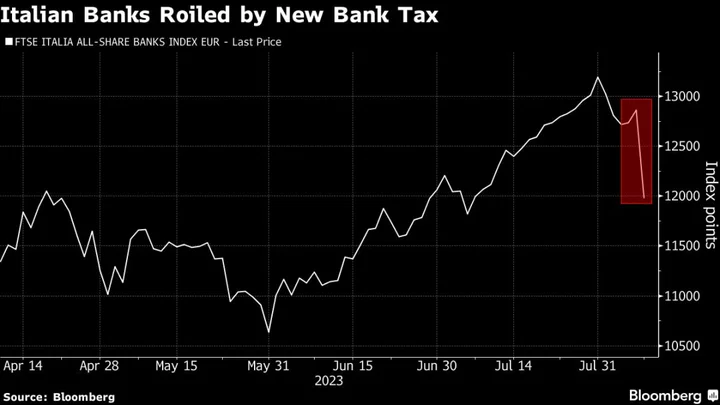
Italy’s Windfall Profits Tax on Banks Spooks Markets
Italy’s right-wing government spooked markets with an unexpected tax on banks’ windfall profits, sending the country’s leading lenders
1970-01-01 08:00
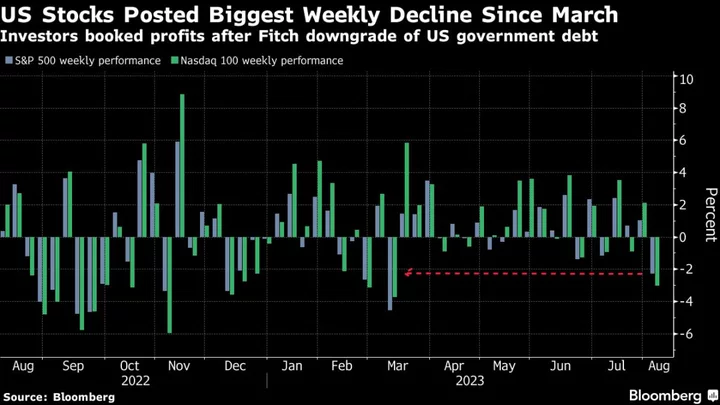
Citi’s Montagu Says US Stocks Can Rise as Positioning Risk Drops
The “orderly” pullback in US stocks last week has reduced the risk of a chaotic selloff and set
1970-01-01 08:00