
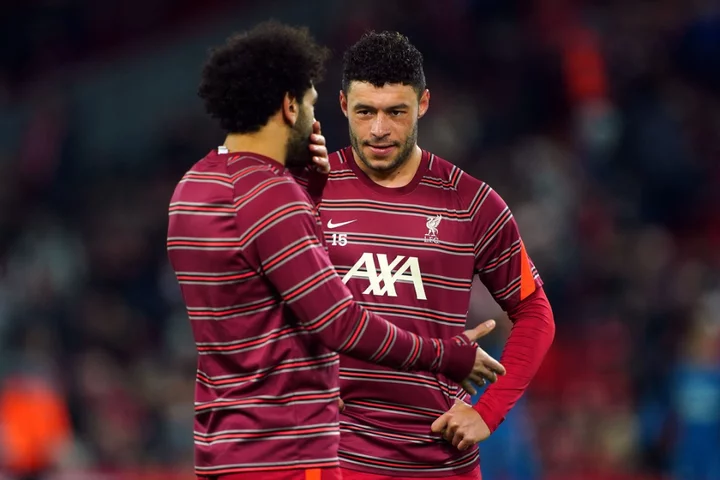
Football rumours: Alex Oxlade-Chamberlain weighs up Saudi Arabia move
What the papers say Former Liverpool midfielder Alex Oxlade-Chamberlain could be the first England international to move to the Saudi Pro League, with the Daily Mail reporting he is considering a lucrative offer to move overseas. The 29-year-old is a free agent after leaving the Reds this summer following seven years at Anfield. However, his ex-Liverpool team-mate Mohamed Salah is likely to turn down a move to Saudi Arabia despite reports linking the prolific 31-year-old Egypt forward to the league, the Mirror said. Tottenham are looking to send an opening offer of £40million to Leicester for their England midfielder James Maddison, but the Telegraph says the recently relegated Foxes want £60million for his services. Newcastle are continuing their recruitment drive and are now entering advanced talks to sign England Under-21 defender Tino Livramento for £15million from Southampton, according to the Telegraph. Aston Villa are also hoping to bolster their defence with manager Unai Emery looking to link back up with his former Villarreal centre-back Pau Torres, the Times reports. Social media round-up Players to watch Harry Kane: Bayern Munich could be in contention to prise the 29-year-old away from Tottenham with Sky Sport Germany reporting the England captain is interested in a move to Germany. Victor Osimhen: Liverpool have joined the likes of Manchester United and Paris St Germain in the race for the 24-year-old Napoli striker, Gazzetta dello Sport reports. Read More Charity boss speaks out over ‘traumatic’ encounter with royal aide Ukraine war’s heaviest fight rages in east - follow live
1970-01-01 08:00

Group B Strep: 8 things every parent should know
Group B streptococcus (GBS) is the most common cause of life-threatening infection in newborn babies, and it can kill within hours – yet the UK doesn’t routinely test pregnant women for it. The charity Group B Strep Support (GBSS) says an average of two babies develop a GBS infection every day in the UK, and while most recover, one baby dies as a result of the infection each week, and one baby a week survives with life-changing disabilities. GBSS says around two to four out of every 10 women in the UK will carry group B strep in their rectum, vagina, or intestines, although most of them won’t experience any symptoms. However, if a woman’s pregnant, group B Strep can affect her baby around the time of birth. Speaking to mark July’s Group B Strep Awareness Month, GBSS chief executive Jane Plumb, who set up the charity in 1996 with her husband Robert after their son, Theo, died from GBS infection aged 17 hours, stresses that raising awareness of Group B Strep can save babies’ lives and minimise the heartache the illness often causes. “Group B strep is the most common cause of severe infection, including sepsis and meningitis, in newborn babies, yet people are not routinely told about it during pregnancy. This isn’t good enough,” she says. Here’s what all parents-to-be and new parents should know about GBS… 1. It can cause meningitis, sepsis and pneumonia As the most common cause of infection in newborns, Plumb says GBS, which affects around 800 babies in the UK every year, can lead to serious conditions including meningitis, sepsis and pneumonia. As a result, around 50 babies will die every year, and 75 will survive with a long-term disability. “Group B strep awareness is a matter of life and death,” says Plumb. “By shining a spotlight on this silent infection, we can save precious lives and spare families from unnecessary heartache.” 2. GBS infections can be prevented in babies Most GBS infections in newborn babies can be prevented, says Plumb, by identifying women with risk factors. “One of the risk factors is carrying the bacteria during pregnancy,” she says, “and then intravenous antibiotics can be offered during labour to minimise the risk of the baby developing a group B strep infection.” 3. A mother carrying GBS doesn’t necessarily mean her baby will be infected GBSS says around 20-25% of women carry GBS in their vagina and/or lower intestines, but if a woman is carrying GBS when she gives birth, the risk of her baby developing early-onset GBS infection is about one in 400 if antibiotics aren’t given in labour, or around one in 4,000 if antibiotics are given. 4. It’s not just newborn babies that get GBS infections Although most GBS infections develop in the first two days of life, they can develop later, though they are rare after the age of three months, says Plumb. “Knowing the key signs is vital – every family needs to know about GBS,” she stresses. 5. Most women who carry GBS don’t have symptoms GBS carriage isn’t associated with symptoms, says Plumb, so most people who carry the bacteria won’t show any signs of it. 6. Antibiotics may be given to some women during labour The Royal College of Obstetricians & Gynaecologists recommends that if GBS is detected in a woman during pregnancy, or if she’s previously had a baby affected by GBS, she should be offered antibiotics in labour to reduce the risk of the baby being infected. 7. There’s no routine GBS testing in the UK The NHS doesn’t currently provide routine testing for GBS, although other high-income countries do. Plumb says UK National Screening, which sets screening policy in the UK, says there isn’t enough evidence to introduce antenatal GBS screening for all pregnant women in the UK, although a randomised control trial is due to report in 2025, and the evidence is then expected to be reviewed. Plumb says: “The evidence shows clearly that antenatal testing is better than a risk-factor strategy for preventing GBS infection in newborn babies, and GBSS think the UK should catch up its peers around the world by introducing this. Most high-income countries do so, including the USA, Canada, Hong Kong and most of Europe – why are we last on the list?” 8. Pregnant women can be tested privately GBSS says pregnant women can be tested privately for GBS, usually at between 35-37 weeks of pregnancy, at some clinics, or by doing a DIY test with a kit, which costs about £40. GBSS helpline 0330 120 0796. Read More Charity boss speaks out over ‘traumatic’ encounter with royal aide Ukraine war’s heaviest fight rages in east - follow live Princess Diana’s ‘black sheep’ jumper predicted to sell at auction for up to £70,000 The best onstage fashion at Glastonbury Sarah, Duchess of York has operation for breast cancer: What to know about mammograms
1970-01-01 08:00
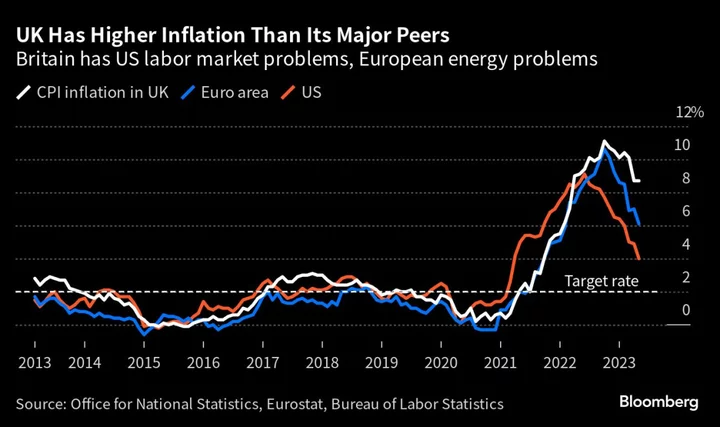
BOE Set to Tip UK Into Recession by Year End, Economists Say
The Bank of England will push the UK into recession by the end of the year in its
1970-01-01 08:00

Pasoori: Bollywood remake of hit Pakistani song divides Indians
Indians are reacting sharply to Bollywood's remake of Pasoori, a popular Pakistani pop sing released last year.
1970-01-01 08:00

Russia Latest: Putin Blames Mutiny Leaders for Stoking Division
President Vladimir Putin said organizers of an attempted mutiny sought to divide Russia and his government took all
1970-01-01 08:00

Asian stocks, yuan perk up on brighter China prospects
By Kane Wu HONG KONG Asian stocks shook off earlier losses on Tuesday, helped by assurances that Beijing
1970-01-01 08:00
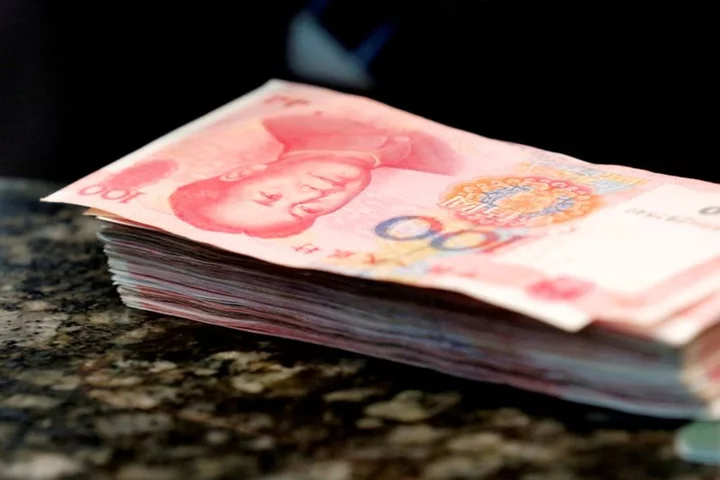
Marketmind: China gets weary of a weakening yuan
A look at the day ahead in European and global markets from Vidya Ranganathan. The U.S. dollar's protracted smile is
1970-01-01 08:00

Umpire Mark Carlson Ends Mariners-Nationals Game on Horrific Strike Call
Mark Carlson with one of the worst strike three calls of the 2023 MLB season.
1970-01-01 08:00
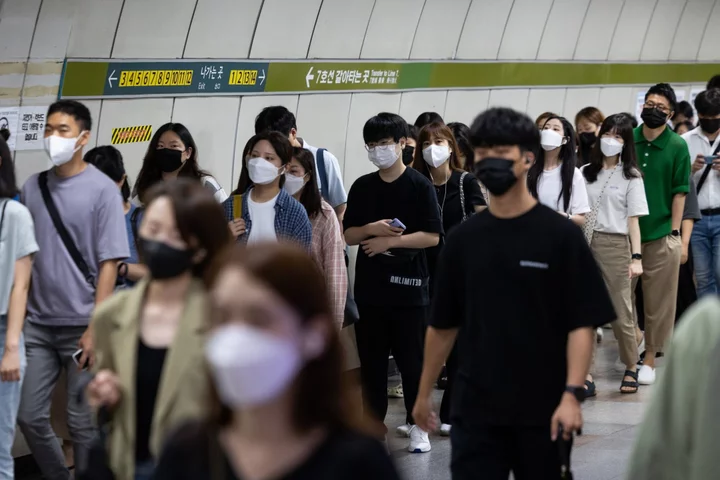
Law Change Makes Everyone a Year or Two Younger in South Korea
South Koreans will become at least a year younger tomorrow as the nation, which traditionally counts newborns as
1970-01-01 08:00
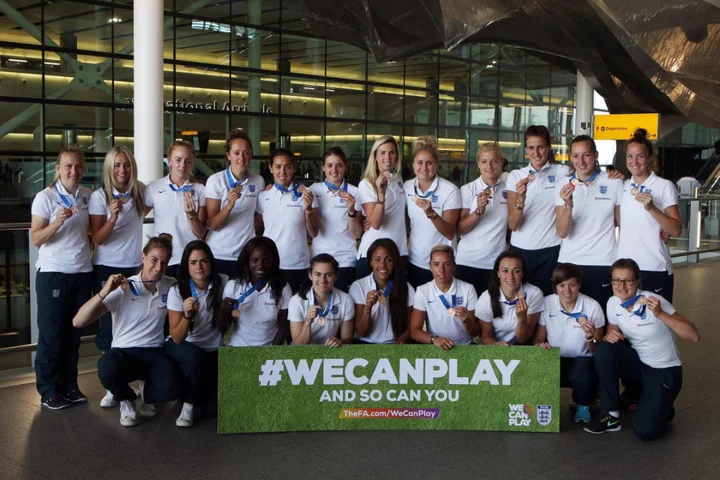
On this day in 2015: England reach Women’s World Cup semi-finals for first time
England reached a Women’s World Cup semi-final for the first time on this day in 2015 after holding on to beat tournament hosts Canada 2-1 in Vancouver. Early goals from Jodie Taylor and Lucy Bronze set the Lionesses up for a historic win, but they were forced to dig deep after Christine Sinclair pulled one back for Canada just before half-time. It was the first time a senior England side – men or women – had reached the World Cup’s last four since 1990. The Lionesses had won a World Cup knockout game for the first time by defeating Norway 2-1 in the last-16 and followed it up against the Canadians in front of a crowd of 54,027 at BC Place. Taylor gave England an 11th-minute lead when she pounced on Canada skipper Lauren Sesselmann’s slip and raced on to drill a low angled finish into the bottom corner. The Lionesses extended their lead three minutes later. Fara Williams’ diagonal free-kick into the penalty area picked out Bronze and the full-back’s header bounced down over the line after hitting the crossbar. Canada lifted the home support by reducing the deficit three minutes before the interval when England goalkeeper Karen Bardsley failed to hold on to Ashley Lawrence’s cross and Sinclair turned home the rebound. Taylor was denied a second goal after the restart as her goal-bound curling effort forced a brilliant save from Canada goalkeeper Erin McLeod. England’s World Cup dream was halted in agonising fashion in their semi-final, as defender Laura Bassett’s stoppage-time own goal clinched a 2-1 win for Japan, who went on to lose 5-2 to the United States in the final. The Lionesses secured a third-place finish after beating fellow semi-final losers Germany 1-0 after extra-time thanks to Williams’ 108th-minute penalty. Read More Charity boss speaks out over ‘traumatic’ encounter with royal aide Ukraine war’s heaviest fight rages in east - follow live
1970-01-01 08:00

The $75 Billion Climate Solution That’s a Bargain
Halting methane releases is one of the most effective ways for the oil and gas industry to combat
1970-01-01 08:00

Leaked Audio of Donald Trump’s Classified Document Tape Ends With Request For Cokes
Donald Trump really wanted Cokes after showing off classified document in leaked audio.
1970-01-01 08:00