

Schwab Says TD Ameritrade Deal Spurring Retail, Advisory Attrition
Charles Schwab Corp. said it’s experiencing temporarily lower net flows of client money as the brokerage sees attrition
1970-01-01 08:00

These Forza Motorsport features won't be available upon launch
'Forza Motorsport' will not have a number of functions available in Feature Multiplayer mode upon its launch.
1970-01-01 08:00

South Park co-op confirmed for 2024
'South Park: Snow Day!' is coming to consoles and PC next year.
1970-01-01 08:00

The Pokémon Company boss discusses quality of games with such regular releases
The Pokémon Company admits it may well have to change the way it works to have constant releases that are high quality.
1970-01-01 08:00

Video Claims to Show PS5 Slim Case
A video posted on Twitter claims to show the case for the rumored PS5 Slim
1970-01-01 08:00
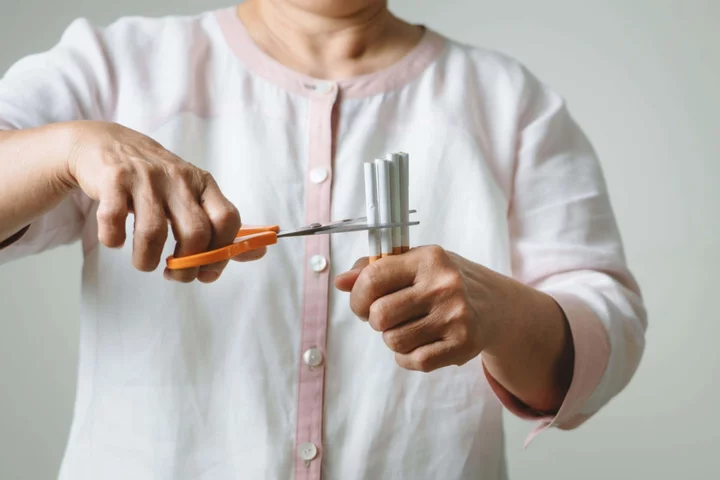
How quitting smoking can boost your health and finances – as Government considers adding messages to cigarette packs
Messages encouraging smokers to quit could be added to cigarette packs. A draft proposal with the suggestion is being considered by the Government. According to the Department of Health, these inserts will highlight the financial and health benefits of giving up smoking and the support available to those trying to quit. The Department of Health hopes the inserts – which have already been used in other countries including Canada and Israel, with Australia also planning to introduce them – could lead to an additional 30,000 smokers giving up, saving up to £1.6 billion in health costs. Smoking is still one of the most preventable causes of illness and death in the UK, with around 76,000 people dying from it every year, according to NHS figures. The consultation launched on Monday and will be running until October. In the meantime, it’s always a good time to try and stop smoking, and focusing on the positive outcomes can help you stay on track too. Here are some of the financial and health benefits of quitting smoking… More disposable income Smoking costs around £17.3 billion a year across England overall, according to the latest 2023 economic data analysis commissioned by public health charity Action on Smoking and Health (ASH). This includes a significant cost to the NHS and social care, with smoking-related admissions and primary treatments reportedly costing £1.9 billion yearly. However, quitting smoking could make a significant difference to people’s individual pockets too – a major incentive to beat the habit. Especially right now, with the cost of living so high. According to Everyone Health, if you get through 20 cigarettes a day, with a packet of cigarettes costing £13.30, that’s a spend of £93.10 per week, or £4,841.20 per year. The average smoker may smoke a bit less than that per day, but this could still add up to serious money. “The average smoker can save around £38 a week by quitting smoking, that’s £2,000 a year, according to the NHS,” said Abbas Kanani, a pharmacist at Chemist Click. What could you do for yourself and your family with that extra money? Better mental and physical healthThe good news is, evidence suggests quitting at any point in life leads to big improvements in your health, including increased life expectancy and lower disease risk. “Stopping smoking is one of the best things you will ever do for your health,” said Kanani. “Quitting smoking improves your physical health, and boosts your mental health and wellbeing after as little as six weeks of being smoke-free. Every time you smoke a cigarette, your body is flooded with thousands of chemicals, many of which are poisonous. “The day you stop, your body starts clearing itself of all those nasty toxins and the repair process begins. People who have quit also have increased positive mood compared with people who continue to smoke,” Kanani added: “Longer-term risks of cancer, lung disease, heart disease and stroke will be significantly reduced too. You will also be less likely to develop type 2 diabetes, bone disease including osteoporosis, eye disease and dementia.” Improved blood circulation “The blood circulation to your heart and muscles can improve, which will make physical activity easier and improve lung function, which leads to reductions in any cough, wheezing or other breathing problems,” continued Kanani. All of this will have a knock-on effect on how energised you feel day-to-day, as well as contributing to better general health in the short and long term. Improved sense of taste and smell Being able to taste and smell food better is another huge bonus to quitting smoking. George Sandhu, deputy superintendent pharmacist at Well Pharmacy, said: “There are a number of almost immediate benefits to stopping smoking, including healthier teeth and gums, fresher breath, and improved sense of taste and smell. In the longer term, you’ll probably find your breathing will improve, and ultimately you’ll probably end up living a longer, healthier life.” Protecting your loved ones from second-hand smoke Second-hand smoking or ‘passive smoking’ is dangerous too. According to the NHS, most of the smoke from a cigarette goes into the air around you and not your lungs – therefore it’s those around you or nearby that will breath it in. And as the World Health Organisation (WHO) highlights, tobacco kills more than 8 million people each year, including 1.3 million non-smokers who are exposed to second-hand smoke. “Quitting means you’ll protect your loved ones from the potential health harms of second-hand smoke too,” said Kanani. If you would like support to help you quit smoking, talk to your GP or local pharmacist. Read More Charity boss speaks out over ‘traumatic’ encounter with royal aide Ukraine war’s heaviest fight rages in east - follow live Is it ever safe to sunbathe? A beginner’s guide to pickling your homegrown fruit and veg Mother tried to cure son of disease by putting him in a hole as a child
1970-01-01 08:00

James Harden Called Daryl Morey a Liar, Said He'd Never Play For Him Again During China Tour
VIDEO: James Harden says Daryl Morey is a liar.
1970-01-01 08:00
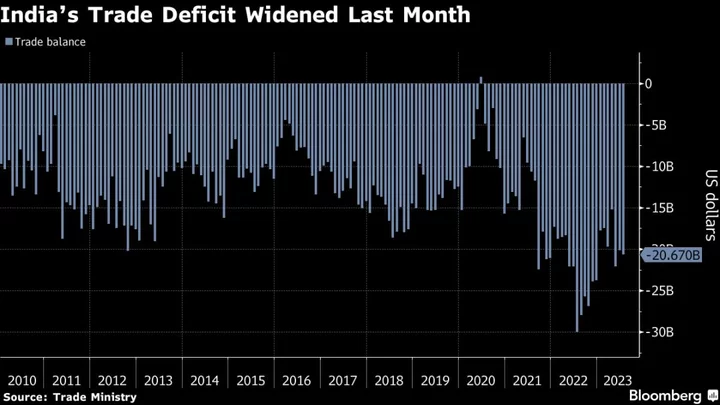
India’s July Trade Gap Widens as Weak Demand Drags Exports
India’s trade deficit widened last month as exports and imports stayed weak on slowing demand. The gap between
1970-01-01 08:00
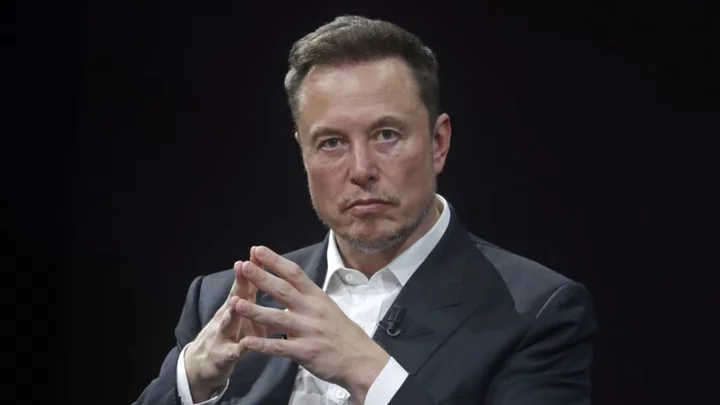
Roundup: Mark Zuckerberg Tells Elon Musk To Get Serious; 'Barbie' Wins Box Office Again; Team USA Beats Spain
Latest on the Maui wildfires ... The Lahaina fire is now the deadliest in modern U.S. history ... Russian shelling kills seven in Ukraine ... CBS News chief reportedly stepping down ... China's worsening economy is hurting corporate America ... The clean energy future is arriving quickly ... Mike Pence continues to attack Donald Trump ... Mark Zuckerberg says Elon Musk isn't serious about fight ... "Barbie" won the box office again ... Jonathan Taylor expected to return to Colts this week ... MLB looks into social media posts involving Wander Franco ... James Harden intends to skip 76ers training camp ... Team USA beat Spain in FIBA World Cup exhibition ...
1970-01-01 08:00
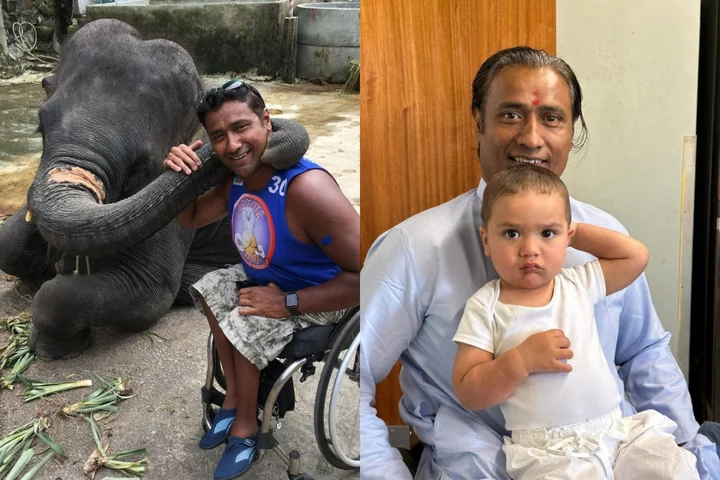
Paraplegic man with polio whose mother tried to cure him by putting him in a hole as a child now flourishing in the UK
A paraplegic man with polio who spent hours of his childhood in a hole in the ground in Mumbai, as his mother believed blood flow to his legs may cure the disease, and was “carried everywhere” until the age of 14, has said “you should never give up” as he defied the odds to become a professional wheelchair sportsman and father a child in his 50s. Jignesh (Jig) Vaidya, 52, who was born in Mumbai, India, but now lives in Leicester, contracted polio aged two as he was not “vaccinated at the right time” because his family could not afford it. This resulted in him being paralysed from the waist down, and he was hospitalised for at least six months at the age of four, with his legs in plaster to keep them straight. After this, Jignesh’s doctor said “there’s nothing we can do”, and since his family could not afford a wheelchair or further treatment, and his access to education was limited due to his disability, he remained at home for several years, with his mother Nirmala, now 83, “doing everything for him” – washing, feeding, changing and carrying him. Defying his difficult beginnings, Jignesh has spent his life moving across the world, becoming a professional wheelchair basketball player and enjoying a successful career, currently working as a project assistant at Maximus UK and broadcast assistant at the BBC, all before the birth of his now 20-month-old son, Jesse. He has not forgotten where his life began, however, and told PA Real Life: “As an Indian remedy, (my mother) dug a hole outside our house in the sun and put my whole body in it for six hours every day, neck down, in 30-degree heat. “She put really heavy bangles on both my legs and asked me to sit on the wall for three, four hours a day, dangling them, as she thought, ‘Jignesh will walk one day’.” Jignesh said his mother believed in Indian medication and thought the blood flow may help to cure his polio – a serious infection caused by a virus – but Jignesh described it as “hell”. From that point on, he thought, “this is going to be my life, this is it for me, it’s not going to get any better”. “I thought, ‘I’m going to be a loser – I hate to say that word – I’m not going to have any friends, and I’m going to be asking people for help all my life’,” he added. At the age of 14, Jignesh was given a wheelchair after his community rallied to raise some funds and he was finally able to go to school. He said he had to “catch up to the people who were ahead of (him)”, but he loved having some independence and no longer having to be carried by his family or others. He experienced a major setback when he moved to Dubai at 16, as he gave up his wheelchair to support another young boy with polio in Mumbai, and this left him in a dark place, mentally, as he had no “freedom”. Since then, however, he has moved to Leicester, received an “amazing education”, competed as a professional wheelchair basketball player, skydived, and fathered a son called Jesse, despite doctors saying this would not be possible. Jignesh said: “You should never give up in this life, and don’t be afraid to open up and ask for help. “Do what you’re best at and, if you work at something every day, whatever your goal is in life, you will get there. “It may take some time, maybe even years – it took me until the age of 20 to learn how to write my name in English – but I didn’t give up and look at me now.” From the age of 14, when Jignesh received his first wheelchair in Mumbai, he said he started to “flourish” and enjoyed going to school. However, he was subjected to discriminatory comments by his teachers, with one saying: “He’s handicapped, he can’t go at the front, put him in the back.” Since Jignesh’s late father Laxmikant, 66, was working in Dubai at the time, he ended up moving out there for two years at the age of 16 – but because his family could not afford to send him to school and he no longer had his wheelchair, he said he spent two years “looking out the window, watching people go by”. He said “there was nothing for (him)”, apart from a taxi ride once a month, and this significantly impacted his mental health, as he felt this had reversed all the progress he had made. “There was one point in my life, in those two years, where I was going to dark places and crying all the time,” he said. “I thought, ‘If mum’s not here, I could jump out the window and nobody will know. I can end it’, because I thought, ‘This is it, I can’t go back to what I had, I’m stuck’.” After his father earned enough money from those two years in Dubai, he and his family moved to the UK in 1988, when he was 18, and this is when everything changed. He received a new wheelchair in March 1989, aged 19, and started full-time education in September 1990, aged 20, where he learned English, maths, and how to use computers – and given he had impressive upper body strength and speed, he started playing sports as well, including wheelchair hockey and basketball. “I was a coloured person, a new arrival, couldn’t speak the language, and yet I was treated like everyone else,” he said. “I just thought, ‘Wow, I’m a part of society, I’m not being treated like a dog, like I was in Mumbai’, and if an opportunity comes in, I will take it, as there’s no going back. “When I started playing sports, I knew there and then that this is it, this is my life, this is my path.” Jignesh has since gone on to compete as a professional wheelchair basketball player internationally in places such as France, play for teams including MK Aces Wheelchair Basketball Club and Leicester Cobras, coach at the Coventry Crusaders club, skydive, and father Jesse with his partner Julie, 40, a teacher – confounding doctors. He goes to his local Nuffield Health gym every day, completing workouts and classes which have been adapted for him, and this helps to slow the progression of his polio as muscle weakness can increase over time. He “cherishes” being able to work with the “amazing” staff, including his personal trainer Matthew Molloy, in an inclusive environment where he is part of a team, supported, and everyone can “flourish”. Looking back, Jignesh realises why his mother, who he now cares for, would say, “everything happens for a reason”, and he is extremely grateful for his family’s love and support. He is excited to watch Jesse grow up, and he wants to continue encouraging disabled people to stay active, fight for their rights, and “never give up”. “I never thought that when I was in that hole, or when I was in Dubai and had nothing, that I’d be where I am today,” he said. “Sometimes, when I’m driving, I think, ‘This could be a movie; I’m going to wake up and be back in Mumbai’, so every day now, I pray and say, ‘Thank you’.” To find out more about Nuffield Health, visit: nuffieldhealth.com Read More Trypophobia: ‘Mushrooms, Beanie Babies and Doja Cat - I lived in fear for 30 years’ Lucozade addict drinks eight bottles a day and says it’s harder to quit than class-A drugs Charity boss speaks out over ‘traumatic’ encounter with royal aide Ukraine war’s heaviest fight rages in east - follow live
1970-01-01 08:00
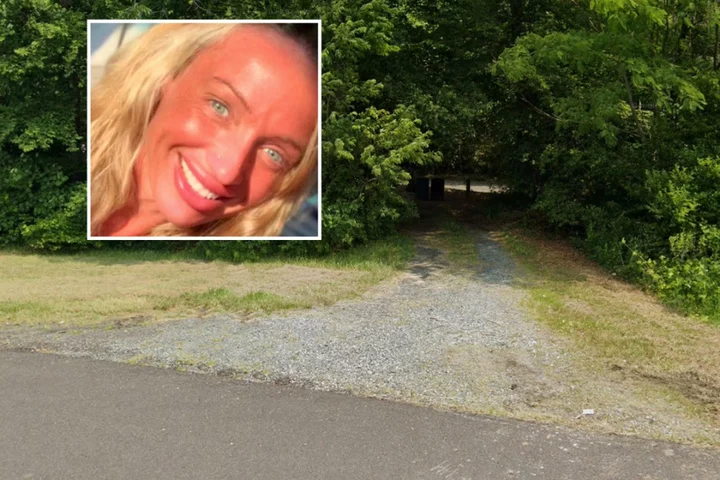
Rachel Morin case – latest: Potential witnesses on Ma & Pa trail where ‘devoted mom’ was killed come forward
A group of potential witnesses seen on the hiking trail where Rachel Morin was killed have now come forward, according to authorities. On Thursday, Harford County Sheriff’s Office said investigators had been made aware of potential witnesses who may have seen Morin on the Ma & Pa Trail in Bel Air on Saturday. The witnesses – either three men, two women and two dogs or two men, three women and two dogs – were urged to come forward. In an update, officials said that these individuals had been identified and were contacted by investigators. This comes as more than a week has now passed since Morin’s murder and no arrests made. Morin, 37, was last seen heading to the Ma & Pa Trail at around 6pm Saturday. Her boyfriend Richard Tobin reported her missing that night after she failed to return home and her body was found the following day. Her death is being investigated as a homicide. Morin’s family has now invited members of the community to join a walk on the trail in the slain mother-of-five’s memory this week. Read More Rachel Morin was found dead on a popular Maryland hiking trail. Her sister says she ‘did not go willingly’ Rachel Morin’s mother breaks silence on daughter’s killing Man who described grisly state of Rachel Morin’s body never actually saw it, sheriff says
1970-01-01 08:00

BRICS Isn’t Competing With Any Bloc, South African Diplomat Says
The BRICS group of emerging-market nations will discuss deepening the use of local currencies in trade between member
1970-01-01 08:00