
Scientists are claiming an alien spaceship crashed straight into Mars
Is there life on Mars? Well, according to new research, an alien crash landing there could explain puzzling new findings on the surface of the Red Planet. It comes after Nasa’s Curiosity Rover captured images of spiked protrusions on the surface back in April. The strange formations captured in the pictures seem to show a row of spikes and sharp angles emerging from rocks at the base of the Gale Crater, which is 154km long. The odd discovery has put scientists on high alert and it marks one of the most peculiar things ever recorded on the surface of Mars. Sign up to our free Indy100 weekly newsletter Astrobiologist Dr Nathalie Cabrol, who is from the NASA Ames Research Centre and Search for Extraterrestrial Intelligence (SETI) Institute, even said that it’s the “most bizarre” rock she’s seen in 20 years of studying the planet. The findings are so irregular, in fact, that experts cannot rule out the idea that they’re extraterrestrial in origin. “A fragment from an extraterrestrial or terrestrial spacecraft cannot be discounted with absolute certainty” the authors of new research published in the Journal of Astrobiology stated. The odd protrusions could be “sand spikes”, which form in certain sands as a result of strong earthquakes. Another theory posits that the formation could be debris from crashed spacecraft, and authors of the study have not ruled out that it could be the result of crafts launched by humans landing on the surface. "Given that possibly 10 or more craft have crashed upon the surface, coupled with the jettison of equipment associated with landing the rovers, it is possible the spikes and its substrate are human-made and consist of debris that fell onto the surface of Gale Crater," the paper reads. “Nevertheless, no debris field is evident and no evidence of any additional debris that may have originated on Earth. “Given its small size and that there are no known human-made analogs and no logical explanation as to what purpose these spikes may serve, it does not seem likely these specimens are the remnants of craft or equipment that fell into Gale Crater. One can only speculate about extraterrestrial origin." However, speaking to The Telegraph, Prof Richard Armstrong, of Aston University, Birmingham said: “There is no way of proving for certain what the spikes are but the balance of the evidence would suggest ‘sand spikes’ resulting from seismic activity on Mars.” Have your say in our news democracy. Click the upvote icon at the top of the page to help raise this article through the indy100 rankings.
1970-01-01 08:00

TurnOnGreen Expands Electric Vehicle Charging Infrastructure to 3 Best Western Affiliated Properties in Eastern Canada
MILPITAS, Calif.--(BUSINESS WIRE)--Jul 25, 2023--
1970-01-01 08:00

Safe & Green Holdings Announces Partnership With Bearcat Academy and Ice Hockey Innovations, a Collective Elite Youth Hockey Organization
MIAMI--(BUSINESS WIRE)--Jul 25, 2023--
1970-01-01 08:00

Marriott Vacations Worldwide Appoints Jason Marino as Chief Financial Officer
ORLANDO, Fla.--(BUSINESS WIRE)--Jul 25, 2023--
1970-01-01 08:00

American Solar: TVA Secures First Solar Technology for Alabama Project
KNOXVILLE, Tenn. & TEMPE, Ariz.--(BUSINESS WIRE)--Jul 25, 2023--
1970-01-01 08:00

Brazil to begin taxing sports betting, aiming to boost revenues
BRASILIA Brazil's government issued an executive order on Tuesday to initiate taxation on sports betting, in line with
1970-01-01 08:00
Everything you need to know about using a defibrillator
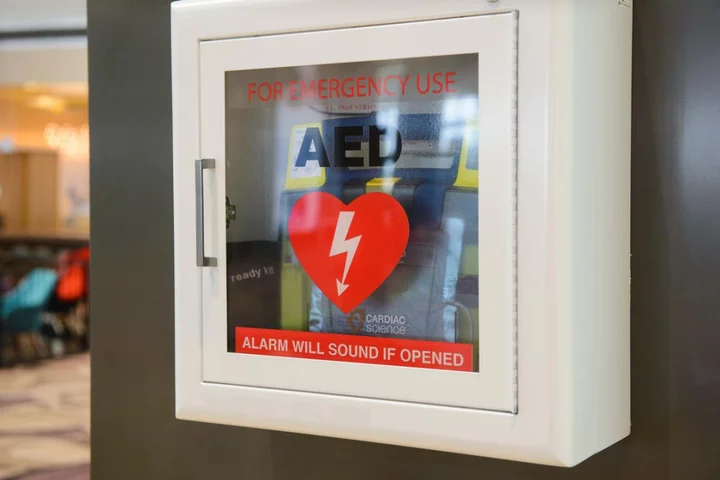
In a huge step for first aid in the UK, more than 20,000 defibrillators – which are devices that give an electric shock to the heart of a person who is in cardiac arrest – have been delivered to state schools across the country since January. Cardiac arrest can affect anyone, of any age, but according to St John Ambulance research, when a defibrillator is used within the first three minutes of a cardiac arrest, the chances of survival increase by up to 70%. Knowing how a defibrillator works could save someone’s life, but what should you know before using one? What is a defibrillator? “A defibrillator is an electrical device that provides a shot across the heart to help bring people out of cardiac arrest,” explains James McNulty-Ackroyd, head of clinical projects and paramedic at St John Ambulance. They are often labelled as an AED which is “an automated external defibrillator, and it recognises when using one would be beneficial for the patient. When we talk about cardiac arrests, we talk about shockable and non-shockable, and an AED is useful when the heart is in particular shockable rhythms”, he says. When used, the electrical shock stuns the heart to send it back to its normal function “from the right shoulder down to the left armpit”. The AED knows when it should work after the pads have been applied, because it “recognises the rhythm like an ECG automatically, and it will not shock if the heart is not in one of the relevant rhythms”. When should you use one? You only need a defibrillator in an incident of cardiac arrest. “They should only be used when the patient is not breathing normally, or the heart has stopped,” explains McNulty-Ackroyd. “Their breathing may be like a fish out of water, there is no rhythm to it, there is no real air entry, or non-purposeful gasping. “The heart is not pumping in that situation – it is not working, but there is some movement. They need a defibrillator and high-quality CPR (cardiopulmonary resuscitation).” What should you be wary of? The good news is, there’s not much to worry about when using one. “Ideally, you should not have anyone touching the patient when you press the big red button, but there are lots of different devices on the market and most have written and audible instructions, and tell you what to do, so it will say to stand clear and tell you what to press and when,” he explains. You need to take or cut the person’s shirt off, though. “There is quite a lot of disinformation about taking someone’s bra off. If you do not take their bra off, you cannot get the pads in the right place. Cut down the middle of the bra, and let it fall open.” What do you actually do? So, you have seen someone go into cardiac arrest or found someone who has collapsed. What do you do? “If you find someone who you think is in cardiac arrest, start CPR, shout for someone to bring you a defibrillator, and ask them to call for help,” advises McNulty-Ackroyd. “The first thing the ambulance service will ask is, ‘Are they breathing?’ They will ask if they’re awake and you will say ‘no’, as they are in cardiac arrest. “An ambulance will be sent as the highest priority in that area. In the meantime, you should be using an AED and performing CPR. “When you ring 999, they will tell you how to do CPR. Do not worry about hurting someone you are doing CPR on. That person is dead, they cannot feel pain, if they sit up and go ouch, they are not in cardiac arrest.” When using the defibrillator, “the first pad goes on the upper right, touching the clavicle [bone of the pectoral arch], and the other into the left armpit, nice and high”, he explains. Every minute you don’t shock that abnormal rhythm, the person loses a chance of life, so use a defibrillator and perform CPR if you are in any way worried about someone who has collapsed. Read More Charity boss speaks out over ‘traumatic’ encounter with royal aide Ukraine war’s heaviest fight rages in east - follow live What you need to know about the massive LVMH deal with the Paris Olympics Bisexual people ‘experience worse health than other adults’ What’s the coolest bedding to survive summer heat and night sweats?
1970-01-01 08:00

Arkansas man who beat officer with flagpole on January 6 sentenced to 4 years in prison
A 44-year-old Arkansas man who beat a police officer with a flagpole during the January 6 riot at the US Capitol was sentenced Monday to four years in prison.
1970-01-01 08:00

Simple Mills is Recruiting its First Chief Cheese Officer in Honor of Its Cheesiest Launch to Date, Cheddar Pop Mmms™ Veggie Flour Baked Snack Crackers
CHICAGO--(BUSINESS WIRE)--Jul 25, 2023--
1970-01-01 08:00

loanDepot names Melanie Graper Chief Human Resources Officer
IRVINE, Calif.--(BUSINESS WIRE)--Jul 25, 2023--
1970-01-01 08:00

Twitter's rebrand is the next stage in Elon Musk's vision for the company. But does anyone want it?
Elon Musk's move over the weekend to rebrand Twitter and replace its iconic bird logo with an X is just the latest step in his effort to make over the billionaire's longtime favorite platform in his image.
1970-01-01 08:00

Exclusive-U.S. SEC readies penalty for DWS in greenwashing probe by end September -sources
By Chris Prentice and Tom Sims NEW YORK/FRANKFURT The U.S. Securities and Exchange Commission is preparing to resolve
1970-01-01 08:00