

Ryan Stanek Freaked Out on Umpire Junior Valentine After a Game-Deciding Balk Call
VIDEO: Ryan Stanek freaked out after he was called for a balk. The call resulted in the game-winning run.
1970-01-01 08:00

Mark Rylance says he initially took a ‘distilled garlic solution’ instead of Covid vaccine
Mark Rylance has revealed “alarm bells” rang for him when the British population was encouraged to get the Covid vaccine in 2021. In a new interview, Rylance, 63, said he wasn’t convinced he needed the vaccine, adding that “science started to sound like religion” during the pandemic. Speaking to The Sunday Times, the Dunkirk star explained he relied on taking a “very distilled garlic solution”, along with vitamin C. “And I sailed through Jerusalem,” he said. Rylance reprised one of his most well-known roles, as Johnny “Rooster” Byron, in last year’s revival of the 2009 Jez Butterworth play Jerusalem. He told the publication he finally took the Covid vaccine when he travelled to visit his father in the US. Rylance’s comments were made in the context of his forthcoming play Dr Semmelweis, based on the life of maverick Hungarian doctor Ignaz Semmelweis. The British actor reportedly wrote Dr Semmelweis with playwright Stephen Brown before the pandemic began. Rylance said he was researching alternative cancer treatments at the time, adding that he’s sceptical about the effects of chemotherapy. He recalled how a friend allegedly “broke up the cells of a tumour” by using the vibrations from a Tibetan sound bowl. Rylance added: “The body knows how to heal itself. “We don’t need to go in and bombard it with poison. It’s like bombing a city to try and get rid of a little sect of terrorists. You may wipe them all out, but you’re going to breed 25 or 30 [more].” Earlier this month, Rylance revealed that his brother, Jonathan Waters, had died in a cycling accident, aged 60. “I am so sorry to tell you that on the 28 May, my dear brother Jonathan Waters was knocked from his bicycle and tragically died of his injuries,” the statement read. Rylance, who was very close to Waters, said the loss made him question the point of life. “It just makes everything that follows a little bleak. But also that hollowness can be a positive thing, a kind of grail or cup or vessel,” he continued. Rylance also said he believes in life after death, adding: “I think you really can have a very healthy conversation with a soul who has passed over.” The actor said he has spoken to his late grandmother and step-daughter Nataasha van Kampen, using a medium. He admitted that while his views may not be conventional or mainstream, but “don’t cause any harm”. Dr Semmelweis opens at the West End this Thursday 27 June. Read More Billy Nomates asks BBC to take down Glastonbury footage after wave of ‘personal abuse’ Guns N’ Roses review, Glastonbury 2023: Frontrunners for the worst Glasto headline set of all time Wes Anderson took a cast of stars to the Spanish desert and made his best film in years Too cool to love these acts 10 years ago? This year’s Glastonbury is for you Yellowstone creator Taylor Sheridan breaks silence on Kevin Costner’s dramatic exit
1970-01-01 08:00

USMNT news: Pulisic to Lyon, McKennie to Roma, Gold Cup draw
Today's USMNT news includes reports linking Christian Pulisic to Olympique Lyonnais and Weston McKennie to AS Roma. We also round up the Stars and Stripes' draw with Jamaica in their opening game at the Gold Cup.USMNT news: Christian Pulisic to Olympique LyonnaisChristian Pulisic is ex...
1970-01-01 08:00

The secret queer history of flowers
LGBTQ communities have historically used the subtle language of flowers, such as lavender and green carnations, to communicate solidarity and belonging.
1970-01-01 08:00
Pakistan's parliament approves revised budget to clinch IMF deal
By Asif Shahzad ISLAMABAD Pakistan's parliament on Sunday approved the government's 2023-24 budget which was revised to meet
1970-01-01 08:00

Thai rates still low, tightening to be gradual, says central bank official
BANGKOK Thailand's policy interest rate remains low and further tightening will be gradual to curb inflation risks as
1970-01-01 08:00

China must act fast to bolster recovery, says senior economic official
BEIJING China needs to step up measures as soon as possible to bolster a faltering post-COVID recovery in
1970-01-01 08:00

Mikel Arteta speaks out on Arsenal's interest in Declan Rice & Kai Havertz
Manager Mikel Arteta discusses Arsenal's interest in both Declan Rice & Kai Havertz.
1970-01-01 08:00

Pope offers prayers to family of 'Vatican girl' who went missing 40 years ago
VATICAN CITY Pope Francis on Sunday offered prayers and solidarity to the family of a Vatican schoolgirl who
1970-01-01 08:00
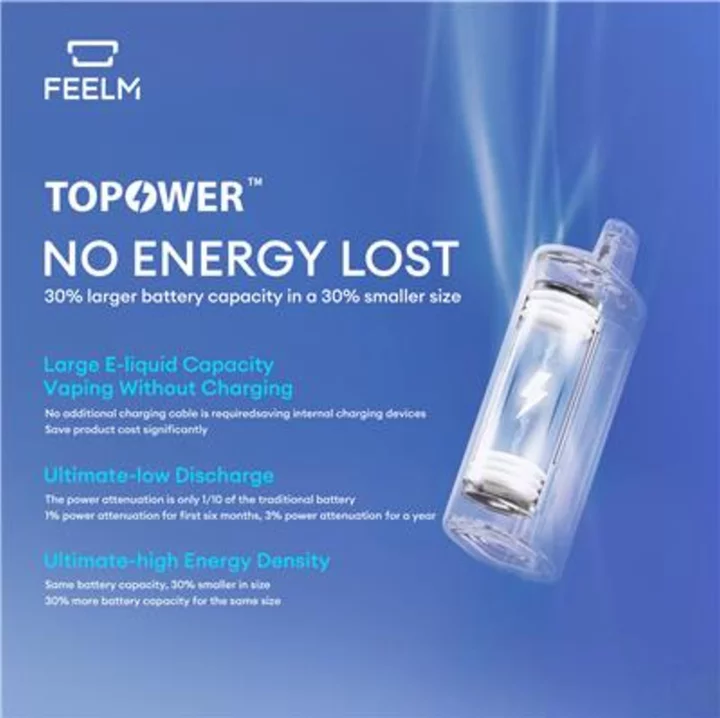
World’s Highest Puffs Charge Free Battery Technology “TOPOWER” — Real Disposables Exhibited in Dubai
DUBAI, United Arab Emirates--(BUSINESS WIRE)--Jun 25, 2023--
1970-01-01 08:00
Are investors ignoring the Federal Reserve's warning?
Stocks fell last week as several signs pointed to the Federal Reserve continuing to hike rates this year.
1970-01-01 08:00

Scientists have come up with a new meaning of life – and it's pretty mind-blowing
The meaning of life is the ultimate mystery – why do we exist? And is there a point to… well… anything? These are questions to which we may never find answers, but at least we can define what “life” means in scientific terms. And yet, our understanding of what life is is changing all the time, thanks to space exploration. As scientists continue to hunt for life beyond our own world, biologists are having to rethink the meaning of the word “life” itself. Sign up for our free Indy100 weekly newsletter Generally, biologists explain “life” as connoting a self-sustaining chemical system which is capable of performing functions such as eating, metabolising, excreting, breathing, moving, growing, reproducing, and responding to external stimuli. This definition works pretty well here on Earth (although there are some important exceptions, such as viruses), but experts have pointed out that if life exists elsewhere in the universe, it may not display the same properties that we’re used to. Indeed, it might be unrecognisable as life as we know it (forget those little green men). In which case, how will we spot it if it ever crosses our path? Astrobiologist Sara Imari Walker and chemist Lee Cronin think they’ve come up with a solution. The pair are now arguing that highly complex molecules found in all living creatures can’t exist thanks purely to chance. Therefore, they say, the universe must have a way of creating and reproducing complex information and retaining a “memory” of all of this.. In an interview with New Scientist, Walker, of Arizona State University, explained their radical idea on how objects come into existence. The concept, known as Assembly Theory, explains why certain complex objects have become more abundant than others by considering their histories. If the theory proves correct, it will redefine what we mean by “living” things and show that we’ve been going about the search for extraterrestrial life all wrong. In the process, we could even end up creating alien life in a laboratory, she stressed. In her discussion with New Scientist, Walker pointed out: "An electron can be made anywhere in the universe and has no history. You are also a fundamental object, but with a lot of historical dependency. You might want to cite your age counting back to when you were born, but parts of you are billions of years older. "From this perspective, we should think of ourselves as lineages of propagating information that temporarily finds itself aggregated in an individual." Assembly theory predicts that molecules produced by biological processes must be more complex than those produced by non-biological processes, as Science Alert notes. To test this, Walker and her team analysed a range of organic and inorganic compounds from around the world and outer space, including E. coli bacteria, urine, meteorites and even home-brewed beer. They then smashed up the compounds into smaller pieces and used mass spectrometry to pinpoint their molecular building blocks. They calculated that the smallest number of steps required to reassemble each compound from these building blocks was 15. And whilst some compounds from living systems needed fewer than 15 assembly steps, no inorganic compounds made it above this threshold. "Our system … allows us to search the universe agnostically for evidence of what life does rather than attempting to define what life is," Walker, Cronin, and others wrote in a 2021 Nature Communications article. The handy thing about this building block system – which they’ve dubbed the “'molecular assembly index” – is that it doesn’t rely on carbon-based organic materials to be identified. In other words, an alien could be made of entirely different stuff entirely and we’d still be able to spot it as life using the index. It also works regardless of what stage of “life” an extraterrestrial being is in – whether it is still in its infancy or has moved into a technological stage beyond our understanding. That’s because all of these states produce complex molecules which couldn’t exist in the absence of a living system. If all of this is hurting your head, let’s just get back to the basics: if there is a secret to life, it might all be down to what we do, not what we are. Have your say in our news democracy. Click the upvote icon at the top of the page to help raise this article through the indy100 rankings.
1970-01-01 08:00