
Evan Gershkovich fell in love with Russia. He now faces 20 years in prison for espionage
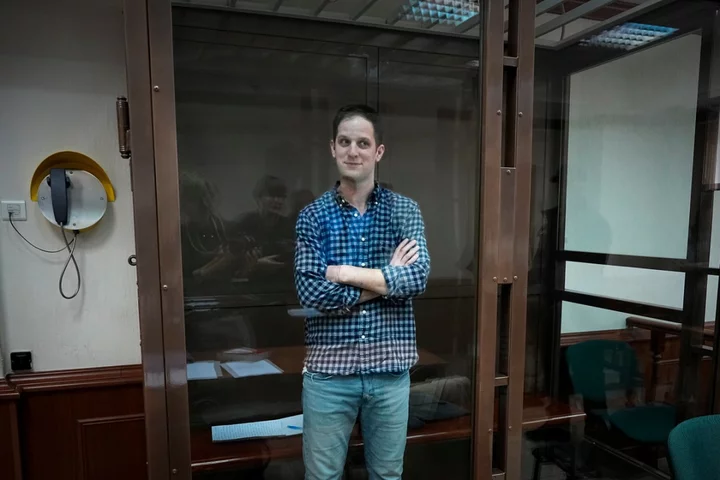
Evan Gershkovich appeared tense as he paced back and forth inside a glass cage in the Moscow City Court on 22 June. Gershkovich, 31, had been arrested and detained in Yekaterinburg, Russia, nearly three months earlier on 29 March on suspicion of espionage while on assignment for The Wall Street Journal. Wearing a black T-shirt and light blue jeans, Gershkovich was briefly paraded before cameras inside the courtroom box known as an “aquarium”, a relic of Soviet show trials. After the media was ushered out, he chatted to his parents in the public gallery while waiting for a judge to rule on an appeal challenging his pre-trial detention, according to an Associated Press report. The appeal was quickly dismissed, and Gershkovich was returned to the feared Lefortovo prison where he has reportedly been kept in solitary confinement since his arrest. “Evan continued to show remarkable strength and resiliency in these very difficult circumstances,” US Ambassador Lynne Tracy, who was present in court, told reporters afterward. Now in his fourth month in captivity on charges that have been widely condemned as spurious and politically motivated, diplomatic efforts to secure Gershkovich’s release are intensifying. On Thursday 13 July, President Joe Biden confirmed that US officials were in talks with their Russian counterparts to secure a prisoner swap for Gershkovich. “I’m serious about doing all we can to free Americans being illegally held in Russia or anywhere else for that matter,” Mr Biden said during a press conference in Helsinki. “And that process is underway.” In the meantime, Gershkovich’s contact with the outside is limited to a handful of visits from family, US officials and advocates, and weekly letters to his sister and close friends. The Federal Security Service (FSB), Russia’s top security agency and successor organisation to the KGB, has claimed that Gershkovich had been caught collecting information on “the activities of one of the enterprises of the military defence complex”. The Journal, Secretary of State Anthony Blinken and the US Congress have denied the allegations and demanded his immediate release. The State Department has since designated Gershkovich as “wrongfully detained”, allowing its Office of the Special Presidential Envoy for Hostage Affairs to lead the case for his release. Who is Evan Gershkovich? The son of Jewish immigrants from the Soviet Union who grew up speaking Russian at home in Princeton, New Jersey, Gershkovich graduated from the prestigious Bowdoin College in Maine. He later embarked on a career in the media and moved to Russia in late 2018, working for The New York Times, then The Moscow Times and then Agence France-Presse. In 2022, he joined the WSJ, where he began covering Russian affairs just a month before the invasion of Ukraine last year. The accomplished reporter “fell in love” with his parent’s homeland, according to the Journal. He was determined to tell important stories at a crucial juncture for the country, despite the risk. He would spend his weekends chatting to friends about news, politics and sport in saunas, and hanging out with punk bands in Moscow dive bars. At the time of his arrest, Gershkovich was reporting on the impact of sanctions on the Russian economy from the Ural mountains. His final report, published the day before his arrest, was headlined Russia’s Economy Is Starting to Come Undone. Gershkovich wrote that the Russian economy was feeling the heat of Western sanctions and faced a slowdown, adding that the government’s revenue was “being squeezed”. The arrest Evan Gershkovich was arrested in the Urals city of Yekaterinburg on spying charges, the FSB announced on 29 March. According to the Journal, Gershkovich texted a colleague at about 4pm that day to say he had just arrived at a steakhouse in the city. The first sign of trouble came in a vague Telegram post that FSB agents had arrested a diner at a restaurant in the city. Concerned colleagues tried desperately to reach Gershkovich. The next day, the FSB said it had “stopped the illegal activities” of a US citizen it identified as “Gershkovich Evan... who is suspected of spying in the interests of the American government”. Images on Russian state media showed the journalist being led from the restaurant surrounded by plain clothes FSB officers. The FSB claimed Gershkovich had been tasked “by the American side” with gathering information about “the activities of one of the enterprises of the military defence complex”, believed to refer to a factory, although the FSB declined to name the facility or its exact location or provide any documentary or video evidence of Gershkovich’s guilt. The journalist had reportedly been visiting Nizhny Tagil, the site of Russian battle tank producer Uralvagonzavod, according to Russian news website Meduza, which is based in Latvia. Dozens of companies producing weapons are based in the city. Russian foreign ministry spokesperson Maria Zakharova claimed that Gershkovich’s activities in Yekaterinburg were “not related to journalism”. The arrest sent a chill through other western journalists based in Russia. The Kremlin’s bullish spokesman Dmitry Peskov said other journalists working in Russia could remain provided they had the right credentials, adding: “Those carrying out normal journalistic activity will obviously keep working, if they have proper accreditation. There will be no problems with that.” What an authoritarian regime chooses to consider “normal journalistic activity” or otherwise, however, is open to question. Since Russia’s invasion of Ukraine, many foreign journalists have pulled out of the country, particularly after Vladimir Putin’s administration enacted laws to punish anyone who discredits its forces taking part in the conflict. The State Department had repeatedly advised all Americans to leave Russia. Of the foreign correspondents still operating from Moscow, many remain uncertain about where precisely the line is, but saying anything critical about the Russian military or the economy being in a state of decline appears to carry a severe risk. Punishment without crime The detained journalist made his first court appearance at a closed hearing on 30 March, where he was ordered held in pre-trial detention until 29 May. Daniil Berman, a lawyer representing Gershkovich, said he would be taken to Lefortovo, the 19th century central Moscow jail notorious for torture and executions during Soviet-era purges. When Josef Stalin began the “Great Terror” of mass arrests in the 1930s, Lefortovo was one of the main holding centres for designated “enemies of the people”. Prominent former inmates at the prison included members of the attempted 1991 coup d'état, and Alexander Litvinineko, the Russian dissident who was poisoned by FSB agents with polonium-210 in London in 2006. “Lefortovo is the most isolated place to be, and this is the torture,” Litvinenko’s wife Marina told the Journal in April. Gershkovich pleaded not guilty to the espionage charges, but as the case was marked “top secret”, authorities have still not produced any evidence against him. Most espionage trials are carried out in secret in Russia, and almost always result in conviction. The Journal said it was “deeply concerned” for his safety and that it “vehemently denies the allegations from the FSB and seeks the immediate release of our trusted and dedicated reporter”. The White House echoed those sentiments, saying in a statement that the “targeting of American citizens by the Russian government is unacceptable”. It added: “We condemn the detention of Mr Gershkovich in the strongest terms. We also condemn the Russian government’s continued targeting and repression of journalists and freedom of the press.” Asked on 31 March about the matter, US President Joe Biden urged Russia to release Gershkovich. “Let him go,” he told reporters in Washington when asked if he had a message for the Kremlin. A Russian state prison monitor, Alexei Melnikov, revealed on 3 April that Gershkovich was in a quarantine cell while undergoing medical checks, had been reading a book from the prison library and had access to a TV, radio and refrigerator. On 4 April, lawyers were allowed to see the defendant for the first time. “Evan’s health is good, and he is grateful for the outpouring of support from around the world. We continue to call for his immediate release,” WSJ’s editor-in-chief, Emma Tucker, said in a note to her newsroom, adding that the newspaper was encouraged by the visit. Gershkovich’s family, she said, “are relieved to know we finally have contact with Evan.” His first meeting with a US official following his detention came on 17 April when Ambassador Tracy was granted access. “He is in good health and remains strong,” she told reporters after her meeting. On 18 April, Gershkovich appeared at a hearing on his appeal, where the Moscow City Court upheld his detention. Appearing before cameras inside the “aquarium”, Gershkovich smiled and appeared to be in good spirits. His wrists bore marks showing he appeared to have been kept in handcuffs. The court denied requests to grant Gershkovich bail, move him to another jail or put him on house arrest. On 23 May, Russian media reported that Gershkovich’s detention had been extended until 30 August. The court hearing where that decision was made had not been announced in advance and details remain scant. The next week, a Russian court upheld his pre-trial detention until at least 30 August. “Although the outcome was expected, it is no less an outrage that his detention continues to be upheld,” the Journal said in a statement at the time. The US House of Representatives has since passed a bipartisan resolution calling for Gershkovich’s immediate release. Potential prisoner swap As Gershkovich spent his 100th day in prison on 7 July, officials in both the United States and Russia confirmed they had been in talks about a possible prisoner swap. “We are prepared to do hard things in order to get our citizens home, including getting Evan home,” National Security Adviser Jake Sullivan said. “I do not want to give false hope.” His comments came two days after Kremlin spokesman Dmitry Peskov confirmed talks had been going on behind the scenes. “We have said that there have been certain contacts on the subject, but we don’t want them to be discussed in public,” Peskov said in a conference call with reporters, according to the Associated Press. “They must be carried out and continue in complete silence.” The AP noted that Russian officials had carried out consular visits with Vladimir Dunaev, a Russian citizen in US custody on cybercrime charges. Hopes were raised further on 13 July, when President Biden said he was seriously considering a prisoner exchange during a joint press conference with Finnish president Sauli Niinistö in Helsinki. Gershkovich’s sister Danielle, speaking at a panel discussion at the National Press Club in Washington DC on 13 July, said she received a letter from her brother about once a week. “I’m so proud of him…I don’t know how he’s staying so brave,” Ms Gershkovich said. Speaking to ABC News this month, Gershkovich’s parents Mikhail Gershkovich and Ella Milman said that Mr Biden had promised to do “whatever it takes” to bring their son home. The precedent Gershkovich’s arrest makes him the first American reporter to be arrested on espionage charges in Russia since 1986, when Nicholas Daniloff of The US News and World Report was arrested by the KGB. Daniloff was released without charge 20 days later in a swap for an employee of the Soviet Union’s UN mission, who had been arrested by the FBI, likewise on spying charges. But he is not the only American currently being held on spying charges by Russia. Former Marine and corporate security executive Paul Whelan was arrested on dubious espionage charges in 2018 and has since been convicted, although the US government and his family believe they are trumped-up and have called for his release. Brittney Griner was exchanged in December last year for arms dealer Viktor Bout after being jailed on spurious drug charges relating to the possession of cannabis vape oil. She has since called for Gershkovich’s release. Gershkovich is one of at least 59 American citizens wrongfully detained or held hostage abroad, according to the James W. Foley Legacy Foundation. The tributes The Reporters Without Borders group said it was “alarmed” by the arrest of Gershkovich and that it “looks like a retaliation measure of Russia against the United States”. Friends and colleagues were shocked by the news and took to social media to describe the defendant as a committed journalist, dismissing the allegations as bogus and ridiculous. “Journalism is not a crime,” they posted. Henry Foy, The Financial Times’ European diplomatic correspondent based in Brussels, tweeted: “Evan is an exemplary foreign correspondent, a brilliant reporter and a wonderful, kind-hearted friend.” Joshua Yaffa, a Russia-Ukraine reporter for The New Yorker, posted: “Evan was not unaware or naïve about the risks. It’s not like he was in Russia because no one bothered to tell him it was dangerous. He is a brave, committed, professional journalist who travelled to Russia to report on stories of import and interest.” Oliver Carroll, a foreign correspondent for The Economist and formerly of The Independent, tweeted that he hopes Gershkovich’s bravery “carries through in these very dark hours. It’s something you wouldn’t wish on your worst enemy. Let alone Evan, who is one of the nicest guys in journalism.” Read More The Body in the Woods | An Independent TV Original Documentary The harrowing discovery at centre of The Independent’s new documentary Biden says he’s ‘serious’ about prisoner exchange with Russia for Wall Street Journal reporter Blinken says WSJ reporter 'wrongfully detained' by Russia Biden adviser says US is pressing for the release of reporter who has spent 100 days in Russian jail Lawyers meet with jailed American reporter in Moscow prison
1970-01-01 08:00
Texas football 2024 schedule: 3 games Longhorns can prove they belong in SEC
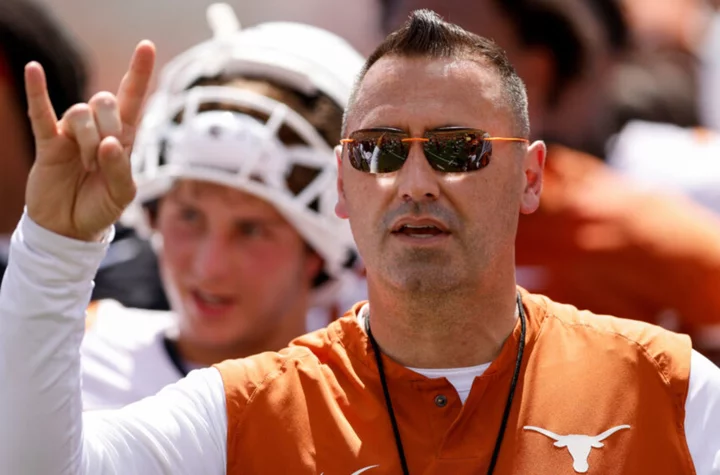
The Texas football schedule for the 2024 season and first year in the SEC is out, and these three games will help the Longhorns prove they belong.Unless you’ve been living under a rock, the fact that Texas and Oklahoma are moving from the Big 12 to the SEC in the 2024 college football seas...
1970-01-01 08:00
Ukraine Recap: US Intel Official Says Conflict at ‘Stalemate’
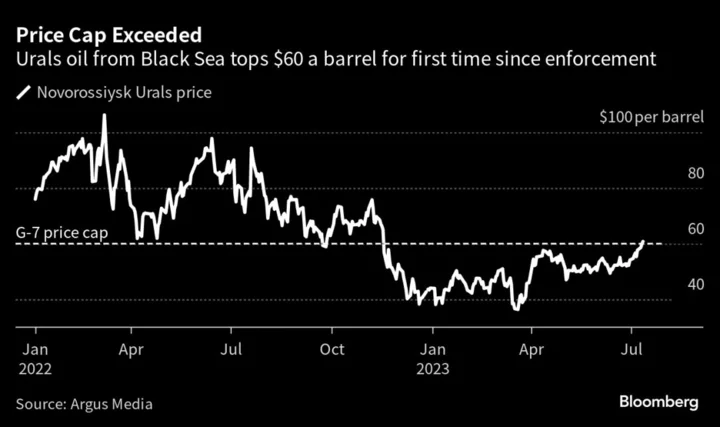
The conflict between Ukraine and Russia has reached a stalemate, a senior US intelligence official said, offering a
1970-01-01 08:00
Packers rookie already labeled a bust, but is that fair?
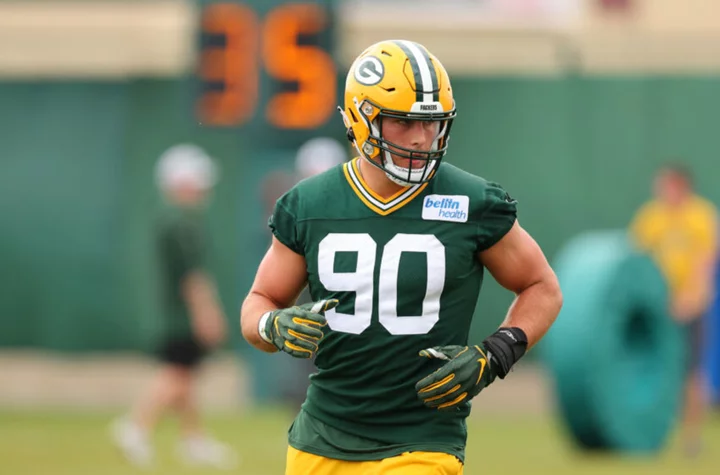
One NFL pundit predicted bust status for Green Bay Packers rookie Lukas Van Ness. Let's pump the breaks.With Aaron Rodgers' departure, the storied Green Bay Packers franchise is embarking on a new chapter. It may take some time to figure out the direction of this new team. Jordan Love ...
1970-01-01 08:00
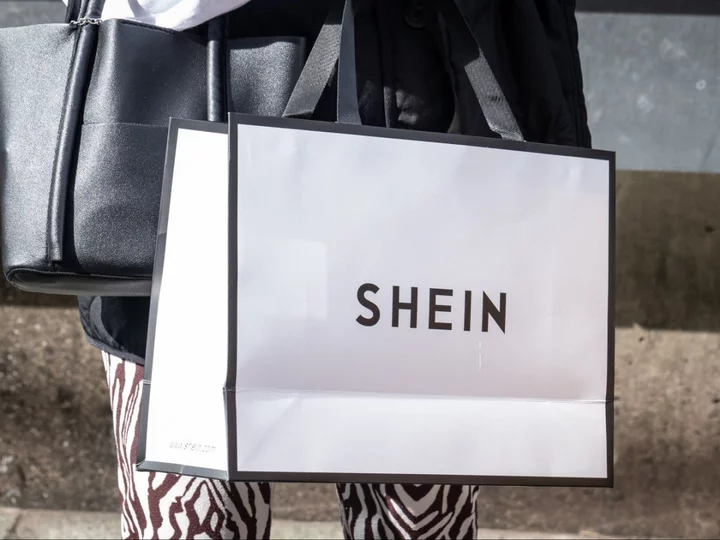
Fast fashion retailer Shein accused of racketeering and copyright infringement in lawsuit
Fast fashion retailer Shein has been accused by independent designers of infringement-related racketeering activities in a new lawsuit. According to The Fashion Law, a lawsuit was filed on Tuesday (11 July) in California federal court that accused the clothing giant of using a “secretive algorithm” to identify trending art and allegedly reproducing the independent designs for its fast fashion website. The three independent artists suing Shein – Krista Perry, Larissa Martinez, and Jay Baron – claimed both Shein and its parent company, Zoetop Business Company, Ltd, engaged in “produc[ing], distribut[ing], and selling exact copies of their creative works,” which they allege is “part and parcel of Shein’s ‘design’ process and organizational DNA.” In the suit, Perry, Martinez and Baron claim Shein replicated “truly exact copies of [their] copyrightable graphic designs” such as Berry’s artwork titled “Make It Fun” and Blintz’s “Orange Daises” design. Barron’s “Trying My Best” artwork, which they claim was also copied by Shein, is not only a registered copyright but the phrase was also trademarked by Barron. As a result, the plaintiffs argue that they “have suffered and will continue to suffer substantial damage” to their businesses and “a diminishment in the value of their designs and art, their rights, and their reputations”. In the complaint, the plaintiffs allege that Shein created a “secretive algorithm” to identify growing fashion trends and “produce very small quantities of [its] item for sale” – as 100-200 units per SKU – in the case that an artist claims “the design was stolen”. “The brand has made billions by creating a secretive algorithm that astonishingly determines nascent fashion trends – and by coupling it with a corporate structure, including production and fulfillment schemes, that are perfectly executed to grease the wheels of the algorithm, including its unsavory and illegal aspects,” the artists argue in the suit. “When Shein copies a small or independent designer, the most likely outcome (without brand protection specialists and specialized software on the lookout) is that the infringement will go unnoticed,” the complaint reads. The lawsuit named Chris Xu as the maker behind the algorithm, a “mysterious tech genius” who has allegedly made Shein “the world’s top clothing company through high technology, not high design.” While Shein has faced many lawsuits in recent years, the newest complaint is notable for its Racketeer Influenced and Corrupt Organizations Act (RICO) claim. RICO is a federal law designed to combat organized crime in the United States, and individuals or organisations can use the RICO Act to file civil claims against racketeering activities performed as an ongoing criminal enterprise. Another requirement to file a RICO claim is that the offending party is not just an individual or business but a criminal organization, as the suit claims Shein’s alleged infringement activity is “committed not by a single entity, but by a de-facto association of entities.” The plaintiffs claim that Shein’s “confusing corporate structure” allows the company to “avoid liability” in the case of intellectual property infringement, adding that the brand’s “first line of defense” when facing a copyright or trademark cease and desist is “removing the product from its sites with blaming the misconduct on another [Shein entity] actor (implying such actor is independent).” As a result, the artists have accused Shein of “multiple acts of racketeering and criminal copyright infringement” and are seeking past and future damages, as well as compensation for legal fees and injunctive relief to “prevent further racketeering activity”. This is not the first time Shein has faced accusations of infringement. In May, artist Maggie Stephenson settled with Shein for an undisclosed amount after she filed a $100 million lawsuit last year. That same month, Italian fashion designer Giuliano Calza claimed the retailer stole shoe designs from his streetwear label, GCDS. The new lawsuit comes after a Shein-sponsored influencer trip made headlines for promoting Shein’s factory in Guangzhou, China. The influencers were invited to tour Shein’s “innovation factory”, as they posted videos showing a clean, brightly lit factory with automated bots assisting in processing and packaging orders. However, the influencer trip faced backlash as many pointed out the fast fashion company’s accusations of labour abuse and its negative impact on the environment. The Independent has contacted Shein for comment. Read More Italian designer launches scathing attack on Shein over ‘stolen ideas’: ‘Maybe I am the fool’ Influencers face backlash for promoting Shein factory during PR trip in China Parent company of fast-fashion brand Shein to pay New York state $1.9m for data breach Barbie premiere: All the best pink carpet looks as Margot Robbie film shows in London Why these women are – and aren’t – shaving their armpits this summer These are the summer bag trends you need to know about
1970-01-01 08:00
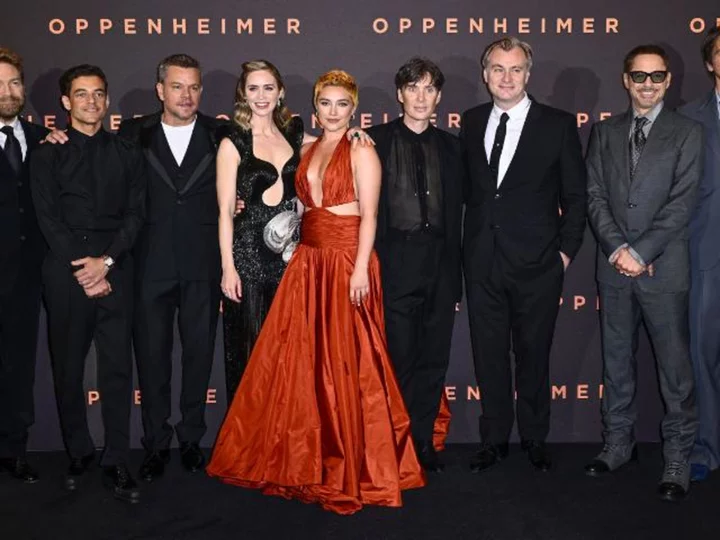
'Oppenheimer' cast walk out of UK premiere ahead of SAG strike
The cast of director Christopher Nolan's hotly anticipated war-era drama "Oppenheimer" is standing united in the effort to support the SAG-AFTRA strike.
1970-01-01 08:00
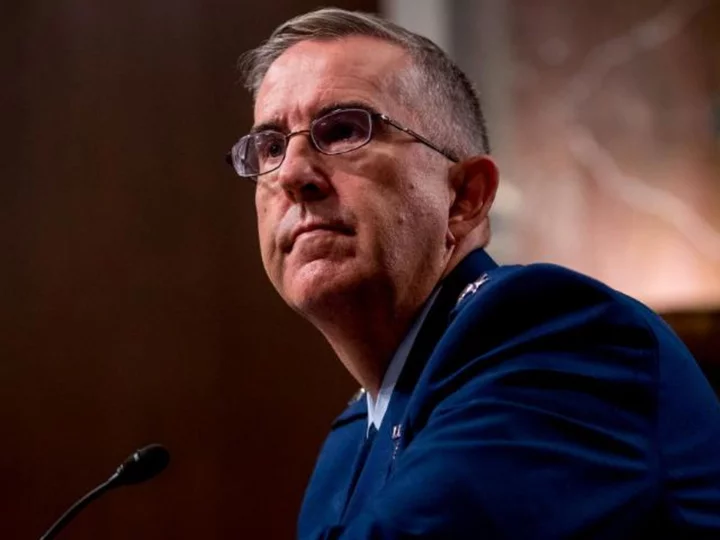
US government to pay out $975,000 to settle civil sexual assault case against former senior general
A yearslong court civil suit involving sexual assault allegations against former Vice Chairman of the Joint Chiefs of Staff Gen. John Hyten has been settled for $975,000, according to court records.
1970-01-01 08:00

Aston Villa rebuffed with opening offer for Moussa Diaby
Aston Villa make opening bid for Moussa Diaby.
1970-01-01 08:00
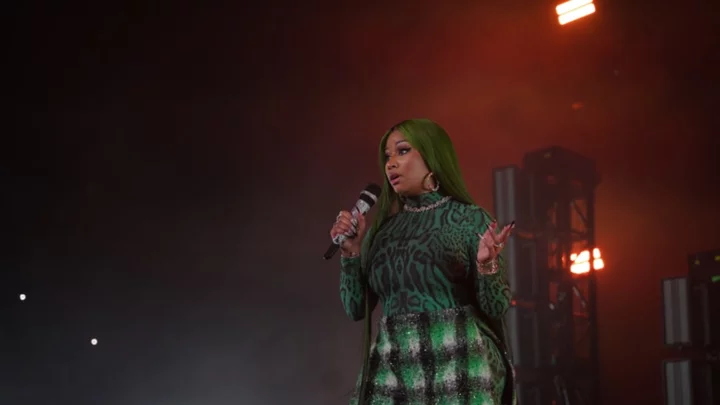
Warzone 21 Savage and Nicki Minaj Operators Datamined
21 Savage and Nicki Minaj Operators and cosmetics are coming to Call of Duty; Warzone Season 5 according to dataminers.
1970-01-01 08:00
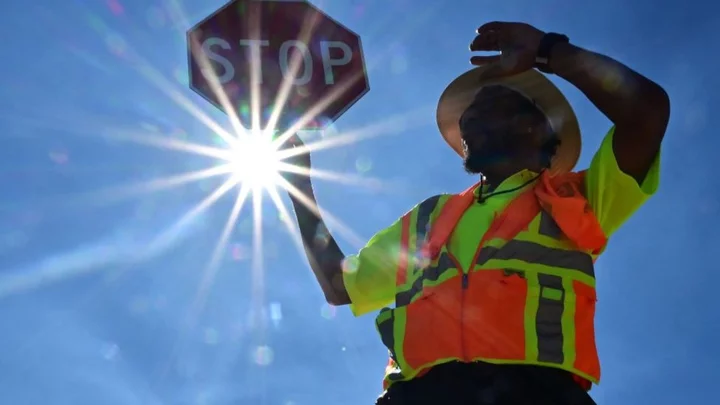
Excessive heat scorches millions across US southwest
Cities including Phoenix and El Paso are expected to see an unusually long stretch of intense heat.
1970-01-01 08:00

Shippers, Union Reach Deal to End Strike That Snarled Canadian Ports
A 13-day strike that disrupted shipments at Canada’s western ports is set to end after the dockworkers’ union
1970-01-01 08:00
U.S. Treasury posts sharply higher $228 billion June deficit
By David Lawder WASHINGTON The U.S. government posted a $228 billion budget deficit for June, up 156% from
1970-01-01 08:00