

Who is Alex Morgan? The prolific USA Women’s Team striker looking to win her third Women’s World Cup
US Women’s National Team (USWNT) striker Alex Morgan, 34, is one of the biggest stars in women’s football, already an Olympic gold medallist and a two-time World Cup winner. The American is heading into her fourth FIFA Women’s World Cup and ranks in the top 10 in USWNT history in goals, assists and multi-goal games. Morgan first caught the eye a decade ago at the 2011 World Cup in Germany when she was the youngest player in the American squad but, undaunted by the international spotlight, scored in both the semi-final and final as the US finished runners-up to Japan. Since then, she has gone from strength to strength, shrugging off her old nickname of “Baby Horse” to be described as a “full-on stallion” by her international teammate Megan Rapinoe. Morgan has become an icon and an inspiration to young girls around the world and is also a New York Times Best-Selling author and film star, playing herself in Alex and Me (2018), even serving with the US State Department on a diplomatic mission to Tanzania in 2017. She has not entirely avoided controversy, however, having been kicked out of the Epcot theme park at Walt Disney World resort in Bay Lake, Florida, in October 2017 along with a group of friends said to be “highly impaired” and “verbally aggressive”, an incident for which she swiftly apologised. Morgan also raised eyebrows at the 2019 World Cup in France when she scored against England in the semi-final and celebrated with a tea-sipping celebration, appearing to mock her opposition, although she has since claimed the gesture was misunderstood. Born in the California suburb of Diamond Bar near San Dimas on 2 July 1989, Morgan was a multi-sport athlete known for her speed at high school and did not begin playing football exclusively until she was 14 and joined local club side Cypress Elite. Get all the latest Women’s World Cup odds here She was soon playing for the Olympic Development Program’s regional and state teams as well, which she credits as integral to her development, and was called up to the US under-20 women’s team at 17, only for an anterior cruciate ligament injury to set back her progress. Morgan subsequently attended UC Berkeley, taking a degree in Political Economy while playing for the California Golden Bears from 2007 to 2010, finishing her college career with an impressive haul of 46 goals. Turning professional in 2011, the same year she announced her arrival at the World Cup, Morgan played for Western New York Flash, before moving to Seattle Sounders for a season, where she played with international teammates Hope Solo and Rapinoe, before being transferred again and spending two years with Portland Thorns FC. In 2015, she joined Orlando Pride in Florida, where she has been even since, barring short spells with Lyon in France in 2017 and Tottenham in England in 2020, where she made just four appearances but scored twice as she continued her return to match fitness after taking time away from the game to give birth to her first child, a daughter, Charlie Elena Carrasco, on 7 May 2020. She subsequently returned to Orlando Pride before signing for San Diego Wave in 2022, scoring an impressive 20 in 28 games so far. Her husband, Servando Carrasco, whom she met at university and married in 2014, is also a footballer, currently playing as a defensive midfielder for Fort Lauderdale FC. Morgan helped Team USA capture gold at the 2012 London Olympics highlighted by her goal in the semi-final win against Canada and subsequently picked up a bronze at the Tokyo 2020 Games, winning the 2015 and 2019 World Cups with the USWNT either side of those honours. Read More FIFA Women’s World Cup fixtures and full schedule Women’s football world rankings: Who could take No 1 at the World Cup? Women’s World Cup TV schedule: How to watch every match today Trinity Rodman: The emerging USWNT talent with a famous father in profile World Cup updates and final score from USWNT and Vietnam Rice makes Arsenal debut and Crawley hits Ashes ton – Thursday’s sporting social
1970-01-01 08:00

Will Twitch unban IShowSpeed? Kai Cenat and AMP group's dinner with CEO Dan Clancy sparks speculations
During a recent livestream featuring Kai Cenat, YouRage, and the AMP housemates, a surprising encounter took place
1970-01-01 08:00

When Joe Rogan felt ‘disgusted’ looking at Jan Blachowicz’s leg during UFC 291
Alex Pereira appeared to be a man on a mission that night, putting as many powerful blows as he could on the immensely tough Jan Blachowicz
1970-01-01 08:00

Who is Sydney Martin? 'Euphoria' star Angus Cloud's rumored girlfriend puts up sad post after actor's death
Angus Cloud was found dead in his Oakland home on July 31
1970-01-01 08:00

UK House Prices Fall Most Since 2009 as Borrowing Costs Rise
Britain’s house price slump deepened after a jump in borrowing costs and the threat of worse to come
1970-01-01 08:00

Psoriasis Awareness Month: Everything you need to know
Psoriasis has been a hot topic in the health world in recent years, thanks in part to one very vocal – and very famous – celebrity. Kim Kardashian has shared the ups and downs of her experience with the skin condition on TV and social media, and penned a piece on the subject for her sister Kourtney’s website Poosh. “When I was 25, I had my first psoriasis flare-up,” the reality star and entrepreneur wrote. “I got a common cold, and since psoriasis is an autoimmune condition, this triggered it. It was all over my stomach and legs.” After an injection of cortisone recommended by a dermatologist, the symptoms went away for five years, but came back when Kardashian was in her 30s. “Psoriasis can start at any age, but most often develops in adults between 20 and 30 years old, and between 50 and 60 years old,” says Dr Nisa Aslam, a GP from Typharm’s Skin Life Sciences Foundation. “The severity varies greatly. For some people, it may be relatively minor, whilst for others, psoriasis has a huge impact on quality of life.” In the case of Kardashian, her psoriasis – which has no known cure – also went away during her two pregnancies, but came back after and has fluctuated ever since. “I’ve become extremely comfortable with my psoriasis,” she continued in her essay, revealing that sometimes she covers it up with body make-up and sometimes she doesn’t. “I hope my story can help anyone else with an autoimmune disease feel confident that there is light at the end of the tunnel.” To mark Psoriasis Awareness Month in August, these are the key facts you need to know about the chronic condition… What are the symptoms of psoriasis? “Psoriasis is a type of skin disease that affects about 2% of the population of the UK,” says consultant dermatologist Dr Natalia Spierings, author of Skintelligent: What You Really Need To Know To Get Great Skin. “Patients develop thickened red plaques of skin with thick silvery white scale over the top.” The most common places for plaques to appear are the backs of the elbows, the front of the knees, the scalp and the lower back. They may be itchy or painful. “On brown and black skin, the patches can also be purple or dark brown in colour, and the scales may look grey,” says Aslam. Psoriasis is also linked with an inflammatory form of arthritis, known as psoriatic arthritis, which Kim Kardashian was diagnosed with in 2019. Aslam explains: “Psoriatic arthritis affects the nails, joints and can affect the eyes, the cardiovascular system and may cause insulin resistance, leading to diabetes.” What is it caused by? “Psoriasis is an ‘immune-mediated’ disease, which means that the skin is inflamed, due to a dysfunction or abnormality in how the immune system works,” Spierings says. Doctors believe that an overactive immune system speeds up skin cell turnover, which causes plaques. “Normal skin cells will grow and then shed off the top of the surface of the skin in a cycle which takes approximately a month,” Spierings continues. “In psoriasis, this process is sped up to only three or four days, so the skin doesn’t have time to shed off, and therefore the scale builds up on the skin.” Diet and lifestyle factors can cause flare-ups of the condition. “Known triggers include drinking excessive alcohol; family history; smoking; stress and hormonal changes, for instance during puberty and menopause,” says Aslam. “Plus certain medicines such as betablockers, used to treat high blood pressure; throat infections; other immune disorders and skin injuries. Obesity has been shown to double the risk of psoriasis.” What treatments are available? While there is no cure for the chronic condition, it is possible to treat the symptoms during flare-ups. “There are a variety of effective prescribed skin treatment options, from steroid ointments and creams, to the development of new formats like medicated tapes such as Fludroxycortide tape,” says Aslam. “This is a transparent medicated surgical tape impregnated with the steroid Fludroxycortide, which can be cut to size. When applied to the skin, it helps to reduce redness, swelling and itching.” UV light or sun exposure has also been shown to help psoriasis. “But remember that uncontrolled sun exposure also increases your risk of skin cancer and premature ageing,” says Spierings. “If you want to use sunlight therapy for your psoriasis, it is best to do this via a dermatologist using special machines to deliver the UV treatment.” Because it’s an inflammatory condition, psoriasis can be affected by what you eat. “Certain foods, particularly ultra-processed foods high in fat, salt and sugar may cause an inflammatory response,” says Aslam. “It’s important to stick to a healthy diet with plenty of vegetables, fruits, wholegrains, beans and lentils, and oily fish with small amounts of lean meat, and small amounts of dairy if liked.” She adds: “Finding the most effective therapy is often a matter of trial and error, so it’s important to keep going back to your doctor, or dermatologist, for advice.” Psoriasis and mental health It’s important to note that skin conditions like psoriasis can have a detrimental impact on mental health. “A recent Typharm survey found that 23% of those surveyed think others believe they are infectious and 19% think they are perceived as unhygienic,” Aslam says. However, it is not contagious or caused by poor hygiene. “Patients with psoriasis have a high risk of developing depression because of their skin problem,” says Spierings. “It is incredibly important to seek proper treatment if you have psoriasis or think you may have it.” Read More Charity boss speaks out over ‘traumatic’ encounter with royal aide Ukraine war’s heaviest fight rages in east - follow live How to dress in rainy summer weather How to make the Prince of Wales’s Earthshot burger 13 potential cancer symptoms you should get checked out
1970-01-01 08:00

BP Returns More Cash to Shareholders Despite Profit Miss
BP Plc raised its dividend by 10% and said it would buy back another $1.5 billion of shares,
1970-01-01 08:00

Crypto Market Unnerved by DeFi Exchange Curve’s Sinking CRV Token
A tumble in the native token of key decentralized cryptocurrency exchange Curve Finance sapped sentiment toward digital assets
1970-01-01 08:00

Diageo Revenue Growth Cools, Restrained by Weak US Demand
Diageo Plc’s sales growth cooled, especially in North America, after a post-pandemic boost wore off. Sales advanced 6.5%
1970-01-01 08:00

UK house prices drop by most since 2009: Nationwide
LONDON (Reuters) -British house prices fell by 3.8% in annual terms in July, the largest drop since July 2009, mortgage
1970-01-01 08:00

Will Logan Paul appear on Joe Rogan's 'JRE' podcast? WWE superstar says 'I have certain things that I’ve never said'
Logan Paul plans to appear on Joe Rogan's podcast, but not rushing for an invite
1970-01-01 08:00
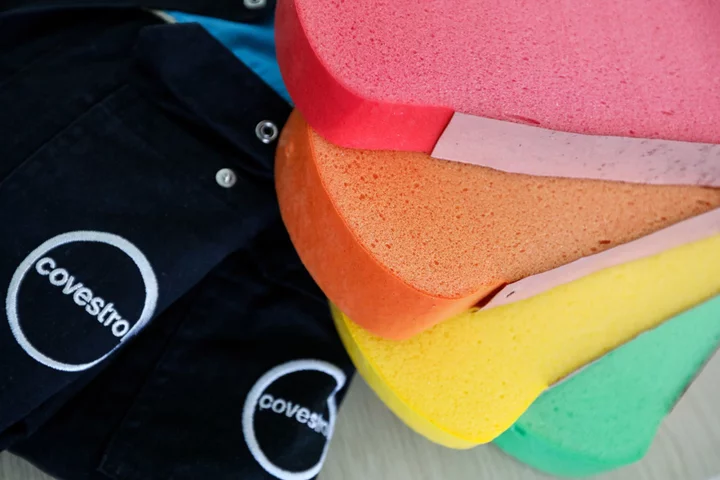
Covestro Sees Earnings in Lower Half Amid Takeover Talks
Covestro AG said full-year profit is expected to come in at the lower half of its guidance range
1970-01-01 08:00