

Nissan Heisman House returns for 13th season, opens doors to fans in new ways
NASHVILLE, Tenn.--(BUSINESS WIRE)--Aug 31, 2023--
1970-01-01 08:00

PICKUP Now Joins OneRail to Provide Big and Bulky Delivery Services Nationwide
ORLANDO, Fla.--(BUSINESS WIRE)--Aug 31, 2023--
1970-01-01 08:00

UCLA Quarterback Chase Griffin Partners with Groundswell to Support Los Angeles Regional Food Bank
LOS ANGELES--(BUSINESS WIRE)--Aug 31, 2023--
1970-01-01 08:00

Merz Aesthetics® Expands Upon NEOCUTIS® Skincare Line with Launch of New ‘Neo Restore Post Treatment Nourishing Sheet Mask’
RALEIGH, N.C.--(BUSINESS WIRE)--Aug 31, 2023--
1970-01-01 08:00

Pixee Medical: Revolutionizing Total Shoulder Arthroplasty with Cutting-Edge Mixed Reality Guidance
BESANÇON, France--(BUSINESS WIRE)--Aug 31, 2023--
1970-01-01 08:00

PagerDuty Expands Generative AI Offerings and Enhances Analytics Capabilities
SAN FRANCISCO--(BUSINESS WIRE)--Aug 31, 2023--
1970-01-01 08:00

Dollar General cuts annual forecasts on weak traffic, discretionary spending slowdown
Dollar General cut its annual sales and profit forecasts on Thursday, hurt by a decline in store traffic
1970-01-01 08:00

Luis Rubiales' unwanted kiss labeled 'inappropriate' by UEFA president Aleksander Čeferin
UEFA president Aleksander Čeferin has condemned Luis Rubiales' unwanted kiss on Women's World Cup winner Jennifer Hermoso, describing it as "inappropriate" in an interview with French outlet L'Equipe on Wednesday.
1970-01-01 08:00

PGT Innovations Announces $11M+ Grant of Equity to More Than 5,000 Team Members
NORTH VENICE, Fla.--(BUSINESS WIRE)--Aug 31, 2023--
1970-01-01 08:00

What to expect from Friday's jobs report: Steady, but slower, growth
Last month, the Bureau of Labor Statistics delivered a jobs report that only Baby Bear could offer: not too hot, not too cold, but just right.
1970-01-01 08:00

Meg Ryan is still single as rom-com star set to return with 'What Happens Later' after 8-year break
Once married to Dennis Quaid before splitting after nearly a decade, Ryan dated John Mellencamp on and off for 8 years with a brief engagement in 2018
1970-01-01 08:00
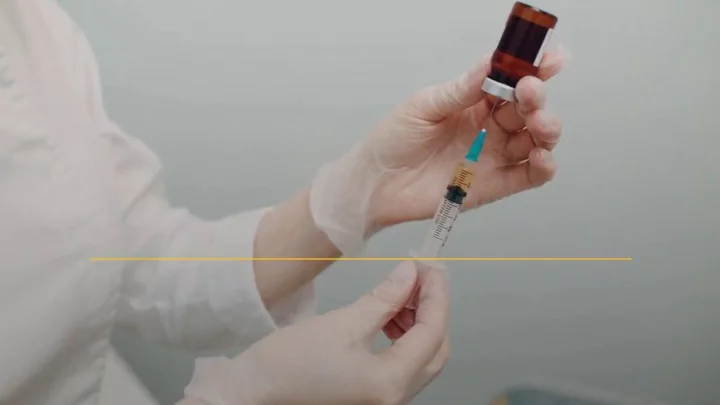
Scientists may have just found a cure for alcoholism
Alcohol addiction ruins millions of lives every year, but scientists may have found a cure for this terrible affliction. A new treatment for alcohol use disorder (AUD) has been trialled in monkeys with impressive results and, if these translate to human trials, the impact could be monumental. A team of neuroscientists and physiologists from across the US tested a new type of gene therapy to see if they could directly target the underlying brain circuitry associated with sustained heavy drinking. As they noted, in the journal Nature Medicine, people suffering from AUD commonly return to alcohol use even if they attempt to quit. This is largely to do with what’s known as mesolimbic dopamine (DA) signalling – meaning how the central nervous system circuit communicates the feelgood neurotransmitter dopamine. A protein called glial-derived neurotrophic factor (GDNF) is key to keeping these neurons in this reward circuitry functioning. However, experts have found that levels of GDNF are reduced in people with AUD during periods of alcohol abstinence, most notably in a region of the brain called the ventral tegmental area (VTA), as IFLScience notes. Therefore, the researchers decided to test whether using gene therapy to deliver more GDNF to the VTA could help reinforce this crucial dopaminergic signalling and prevent patients from suffering an alcoholic relapse. The team of scientists explained how alcohol consumption in non-addicts prompts the release of dopamine, creating a pleasurable buzz feeling, but chronic alcohol use causes the brain to adapt and stop releasing so much dopamine. “So when people are addicted to alcohol, they don’t really feel more pleasure in drinking,” Dr Kathleen Grant, a senior co-author of the study, said in a statement. “It seems that they’re drinking more because they feel a need to maintain an intoxicated state.” For their research, Dr Grant and her colleagues used eight rhesus macaque monkeys, who were exposed to increasing concentrations of alcohol over four 30-day “induction” periods. The monkeys then had free access to alcohol and water for 21 hours a day for six months, during which they developed heavy drinking behaviours. This was then followed by a 12-week abstinence phase, with the GDNF treatment performed four weeks in for half of the subjects. The gene therapy was delivered using a a viral vector containing a copy of the human GDNF gene injected directly into the primate’s VTA, according to IFLScience. And the results were truly jaw-dropping. “Drinking went down to almost zero,” Dr Grant said. “For months on end, these animals would choose to drink water and just avoid drinking alcohol altogether. They decreased their drinking to the point that it was so low we didn’t record a blood-alcohol level.” The most exciting aspect of their findings is the suggestion that gene therapy could offer a permanent solution for people with the most severe cases of AUD. This will be a welcome glimmer of hope to many, given that some 29.5 million people were diagnosed with AUD in the US alone in 2021, according to the National Institute on Alcohol Abuse and Alcoholism. Of these 29.5 million sufferers, almost a million (894,000) were aged between 12 and 17. It’ll likely be some time before we know for sure whether the gene therapy can be rolled out in humans, but it’s an important first step in tackling this devastating disorder. Sign up for our free Indy100 weekly newsletter Have your say in our news democracy. Click the upvote icon at the top of the page to help raise this article through the indy100 rankings.
1970-01-01 08:00