

Zelis® Launches Reference-Based Pricing Solution that Prioritizes Members, Aligns Member Experience and Cost Containment
BEDMINSTER, N.J.--(BUSINESS WIRE)--May 15, 2023--
1970-01-01 08:00

Trinseo Starts Up Polycarbonate Dissolution Pilot Facility in the Netherlands
WAYNE, Pa.--(BUSINESS WIRE)--May 15, 2023--
1970-01-01 08:00

Norgren showcasing motion control solutions at Automate 2023
LITTLETON, Colo.--(BUSINESS WIRE)--May 15, 2023--
1970-01-01 08:00

Calm Waters AI Announces Partnership with OrthoCarolina
NASHVILLE, Tenn.--(BUSINESS WIRE)--May 15, 2023--
1970-01-01 08:00

Satish Dhanasekaran Joins Zebra Technologies Board of Directors
LINCOLNSHIRE, Ill.--(BUSINESS WIRE)--May 15, 2023--
1970-01-01 08:00

Aerobotix and FerRobotics to exhibit new Active Taping Kit (ATK) tool at Automate 2023
HUNTSVILLE, Ala.--(BUSINESS WIRE)--May 15, 2023--
1970-01-01 08:00

C&W Networks and C&W Business in Latin America Come Together to Rebrand as Liberty Networks to Shape the Future of Digital Connectivity
MIAMI--(BUSINESS WIRE)--May 15, 2023--
1970-01-01 08:00
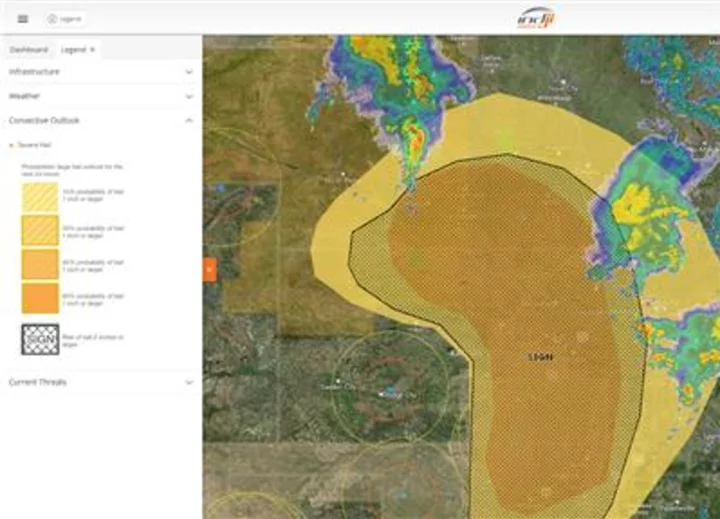
Indji Systems Launches Cutting-Edge Hail Detection Technology for the Solar Industry
LOS ANGELES--(BUSINESS WIRE)--May 15, 2023--
1970-01-01 08:00

Ex-ByteDance employee claims China had 'supreme access' to all data
China's Communist Party had "supreme access" to all data held by TikTok's parent company Bytedance, including on servers in the United States, a former employer who is bringing a wrongful termination lawsuit has alleged.
1970-01-01 08:00
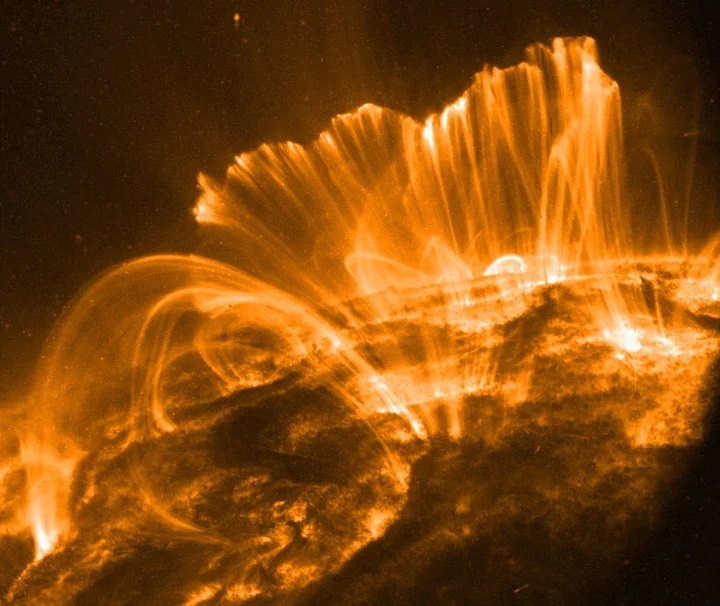
Nasa’s new AI gives ‘30 minutes of advance warning’ before killer solar superstorms strike Earth
Nasa has built an artificial intelligence model to predict where on Earth an impending solar storm would strike, a new system that scientists said can provide “30 minutes of advance warning”. The AI model analyses Nasa satellite data to raise the alarm on dangerous space weather, said researchers from the American space agency’s Goddard Space Center. The warning may provide just enough time for countries to prevent severe impacts of these storms on power grids and other critical infrastructure, according to the new study published recently in the journal Space Weather. Solar storms are caused when the Sun emits a burst of electrically charged plasma in what is called a coronal mass ejection. These charged particles create so-called geomagnetic storms that may cause blackouts and technological malfunctions of instruments on Earth as they interfere with the protective magnetic field around the planet. While these storms range from mild to extreme, their effects could become increasingly disruptive in a technologically dependent world. For instance, a solar storm in 1989 caused blackouts across Quebec, Canada for 12 hours, plunging millions into the dark and closing schools and businesses. Another popular solar superstorm event known as the Carrington Event sparked fires at early telegraph stations in 1859 that prevented messages from being sent. Scientists warned that the risk of such a devastating solar storm is increasing as we approach the next “solar maximum” – a peak in the Sun’s 11-year activity cycle. To prevent such a devastation, Nasa scientists developed the new AI model to identify links between solar wind measurements from previous Sun missions and geomagnetic disturbances observed at ground stations across Earth. The computer model they developed, called DAGGER, can quickly and accurately predict geomagnetic disturbances worldwide, “30 minutes before they occur,” researchers said. When they tested the model against two geomagnetic storms that happened in August 2011 and March 2015, it was able to “quickly and accurately” forecast the storm’s impacts around the world. The new prediction system is the first to combine swift analysis of AI, with real measurements from space and across Earth to generate frequently updated predictions. Scientists believe the early warning provided by the system can help take action to protect infrastructure from an impending solar storm, such as temporarily taking sensitive systems offline or moving satellites to different orbits. Read More Stunning aurora lights up skies over Australia: ‘Brightest one I’ve ever seen’ How a severe solar storm could leave a lasting impact on our world The world is not yet ready to overcome a once-in-a-century solar superstorm, warn scientists Astronomers find ‘objects that no one has ever seen before’ Saturn’s rings are no more than 400 million years old – study Strange sounds recorded by balloons in stratosphere leave scientists puzzled
1970-01-01 08:00
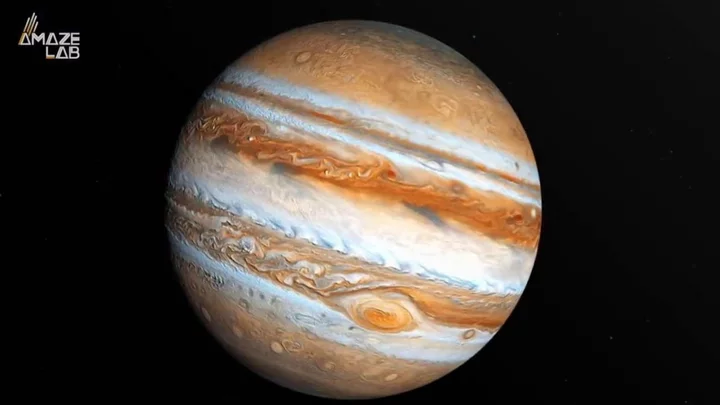
Rare 'ocean' planet found that is twice the size of Earth
A rare planet has been discovered hundreds of light years away, and it could prove key to our understanding of planetary formations out there in the universe. There have been more than 5,300 exoplanets discovered, but few match the description of the newly recorded TOI-733b. Found 245 light-years away, TOI-733b is almost twice the size of Earth and orbits a sun slightly smaller than our Sun. While there are many exoplanets, there are a surprisingly small number which sit between one and a half and two times the radius of the Earth, and it's the size that makes it so interesting to scientists. Sign up to our new free Indy100 weekly newsletter The research was conducted by a team of astronomers led by Iskra Georgieva of Chalmers University of Technology in Sweden. It was accepted for publication in Astronomy & Astrophysics. The team focused on TOI-733b after data on the planet was collected by NASA's telescope TESS. The density of the planet suggests two things – it’s either totally covered in water, or it’s lost its atmosphere altogether. Clues point to the idea of TOI-733b’s atmosphere slowly depleting. That’s due to the proximity of the planet to its star, which it orbits in the space of just 4.9 days. If the atmosphere is being burned away, it means it could soon be transformed into a rock planet. The other possibility points to the planet having lost its hydrogen and helium, while retaining an atmosphere packed with water vapour. "Answering the question of whether TOI-733b has a secondary atmosphere or is an ocean planet boils down to differentiating between a Neptune-like planet that lost its ∼10 per cent of H/He to leave behind a steam atmosphere of heavier volatiles, and one that formed and remained relatively the same throughout its evolution," the research reads. "While being beyond the scope of this paper, finding an answer to this question will have broad implications on our understanding of exoplanets." The team went on to write: "By all accounts TOI-733 b looks to be an interesting planet and holds the potential of being a small but key piece to solving big puzzles in exoplanet science. "With ever increasing in-depth theoretical analyses and the promise of high-precision follow up by present and upcoming facilities, we seem to be well on the way to finding answers to major questions relating to planet formation and evolution." Have your say in our news democracy. Click the upvote icon at the top of the page to help raise this article through the indy100 rankings.
1970-01-01 08:00

Mushrooms appear to have 'conversations' with each other after it rains
What do you reckon the chattiest vegetable is? The answer may be mushrooms, as according to a new study from scientists in Japan, rain may prompt some fungi to communicate using underground electrical signals. In a study published in Fungal Ecology , researchers monitored small, tan mushrooms known as bicoloured deceivers in the mixed forest at the Kawatabi Field Science Center of Tohoku University in Japandorm. They looked at the 'shrooms electrical potential, measured in megavolts (mV), for about two days in late September and early October 2021. The study site was initially sunny and dry, and the second was during rain - at which point the mushrooms showed some electrical potential and signal transport between each other. Microbial ecologist Yu Fukasawa of Tohoku University said: "Our results confirm the need for further studies on fungal electrical potentials under a true ecological context." Sign up to our free Indy100 weekly newsletter Previously, scientists had found that these mushrooms make subterranean "sheaths" around the exterior of a tree's roots. These sheaths are made of hyphae and when they link underground they form interconnected systems known as mycorrhizal networks that allow forests communicate via chemical signals down tree roots and mycorrhizal fungi. And a 2022 study found patterns of nerve-like electrical activity in some fungi that seem comparable to the structure of human speech. The study identified up to 50 different "words," or groups of spikes in electrical activity, generated by fungal networks. Earlier research has also found that plants can send secret electrical signals underground, possibly even without help from mycorrhizal fungi. Who knew mushrooms had so much to say? Have your say in our news democracy. Click the upvote icon at the top of the page to help raise this article through the indy100 rankings.
1970-01-01 08:00