

Ed Sheeran releases Autumn Variations
Ed Sheran has released the first of his seasonal albums, 'Autumn Variations'.
1970-01-01 08:00

ABBA's Agnetha Faltskog and Gary Barlow share new version of I Should’ve Followed You Home
Agnetha Faltskog and Gary Barlow first released the song a decade ago.
1970-01-01 08:00

Exclusive-Deutsche Boerse has started CEO search, chairman says
By Tom Sims FRANKFURT (Reuters) -German stock exchange operator Deutsche Boerse has begun the search for a new chief executive
1970-01-01 08:00

Alessia Russo to Mary Fowler – five Women’s Super League players to look out for
A busy summer transfer window saw one of the biggest names in the Women’s Super League switch sides, while a Japanese World Cup standout is set to play English top-flight football for the first time. Here, we pick five players to look out for in the WSL as the new campaign gets under way. Alessia Russo (Arsenal) Arsenal tried and failed – with a rumoured world-record bid – to reach an agreement with Manchester United to sign England forward Russo during the January transfer window, but the Gunners finally landed their coveted target on a free transfer in July. Russo hit 10 goals in the WSL last season as United finished runners-up to champions Chelsea and was boss Sarina Wiegman’s first-choice centre forward for the World Cup, where she netted three times for the runners-up. With Beth Mead and Vivianne Miedema also set for imminent returns from their respective anterior cruciate ligament (ACL) injuries, head coach Jonas Eidevall will boast an intimidating wealth of options in attack. Hinata Miyazawa (Manchester United) While Brazil international Geyse, a Champions League winner last season with Barcelona, will likely be seen as the most direct replacement for Russo, boss Marc Skinner will also be buoyed by the arrival of Japan international Miyazawa from WE League side MyNavi Sendai. Versatile Miyazawa’s five goals in four games at the World Cup were good enough to secure her the tournament’s Golden Boot, and her breakthrough performance also landed the 23-year-old nominations for both the Ballon d’Or and FIFA Best Women’s Player of 2023. With United playing more matches this season after securing a Champions League berth for the first time, Miyazawa adds pivotal depth to Skinner’s squad. Mary Fowler (Manchester City) While Fowler is not a new face at Manchester City, where she signed a four-year deal last June, the forward may find herself under a much brighter spotlight this season after helping Australia reach a first-ever semi-final in a Women’s World Cup. Fowler was instrumental in ensuring the Matildas secured safe passage out of the group stage even without prolific striker and skipper Sam Kerr, who returned for the knockouts following a calf injury. The 20-year-old netted in Australia’s 4-0 group stage victory over Canada, teed up Caitlin Foord with a brilliant through ball in her side’s last-16 victory over Denmark and scored a perfect penalty against France in a nervy quarter-final shootout – the longest in Women’s World Cup history – to solidify her status as one to watch. Catarina Macario (Chelsea) Macario became one of the many victims of the ACL injury crisis plaguing women’s football whilst playing for Lyon in June 2022 and has yet to return to action – but that did not stop WSL title-holders Chelsea from signing the 23-year-old to a three-year deal in July. Though still in the early stages of her career, the American forward, who joins the Blues after two seasons with Lyon, has already accomplished something her decorated new boss Emma Hayes has not: winning a Champions League trophy. Macario, who can play as a central striker or an attacking midfielder, scored 23 goals in 33 games for Lyon in 2021/22 and could prove a key component of Hayes’ European plans once deemed fit to return. Daphne van Domselaar (Aston Villa) Aston Villa boss Carla Ward was in search of a new goalkeeper after former first choice Hannah Hampton, whose contract had expired, also joined Hayes’ ranks over the summer. Villa, who finished fifth last season, have signalled their intent to take on the league’s top sides with a busy transfer window and were delighted after beating big European challengers to secure the services of Netherlands goalkeeper Daphne van Domselaar from FC Twente for the next three years. The three-time Eredivisie Vrouwen winner, who joins Villa from FC Twente, was also the Netherlands’ first-choice shot-stopper at the World Cup. Read More Can anyone stop dominant Chelsea? – WSL talking points ahead of new season Aston Villa women ‘dreading’ WSL opener due to ‘wet kit’ design error Women’s football sees ‘wild’ record transfer spending ahead of new WSL season Changes on and off the pitch as a new era approaches for Women’s Super League Jose Mourinho ruing ‘worst start’ of his career after Roma thrashed 4-1 at Genoa Barcelona and Spanish refereeing committee under investigation for ‘active bribery’
1970-01-01 08:00
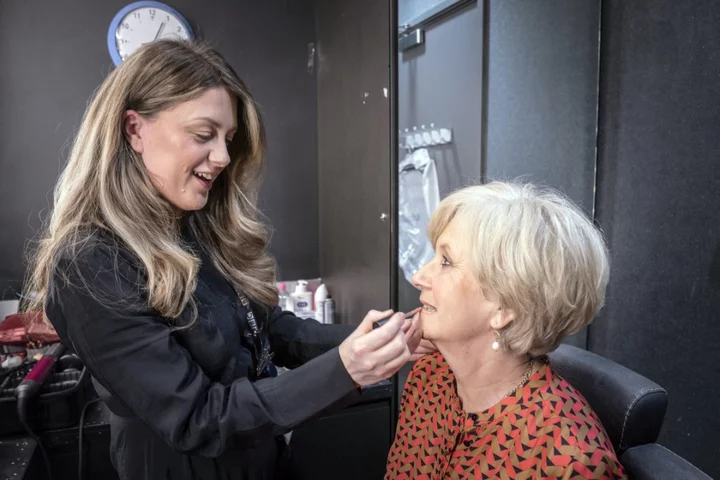
This is how your make-up needs change as you age
Whether you’re in your 30s or your 60s, your skin probably doesn’t look and feel like it did at the age of 20 – and that’s OK. But if you’ve barely upgraded the make-up you’ve been using for years, it might be time to do so. “As we age, our skincare and make-up needs change, and it’s important to adapt our beauty routines to address the specific concerns that come with each decade,” says Co. Kildare-based make-up artist Suzie O’Neill, owner of vegan cosmetics company Ayu. Over time, your skin loses elasticity and oils, so in all age groups solid skincare is key. “Regardless of age, a good skincare routine is essential for a smooth make-up application,” O’Neill says. “Prioritise moisturising and using sunscreen daily.” She advises using products rich in vitamins A, C and E – to protect the outermost layer from water loss in your 30s, a decade where “skin becomes more delicate and cell turnover is slowing down, making your complexion look dull”. So how should we switch up our make-up in our 40s and beyond? In your 40s Collagen and elastin production naturally decrease during this period, leading to a reduction in skin firmness and elasticity in your 40s, O’Neill says. To combat this, she recommends incorporating a serum with ingredients like hyaluronic acid, peptides and retinol, which can help stimulate collagen production. Foundation is the most important make-up upgrade to make at this period of your life. “Your 40s are the ideal time to switch to a foundation that is more hydrating and lighter than what you might have used in your 20s and 30s. Heavy, matte foundations tend to settle into fine lines and wrinkles, which can accentuate them. A hydrating and lighter foundation is a better choice as your skin may become drier and more mature.” O’Neill advises using a moisturising lipstick or balm to keep lips hydrated, as they can start to become drier at this time in our lives. “The cumulative effects of sun exposure can become more apparent in your 40s, leading to pigmentation issues, fine lines and potential sunspots,” she adds. So a broad-spectrum sunscreen is “non-negotiable”. In your 50s When it comes to make-up, your 50s may be a time when you opt for a more natural look. “A light to medium coverage foundation or a tinted moisturiser [will] not only provide a subtle, youthful glow, but also allow the natural character of the skin to shine through,” notes O’Neill. “Less is often more at this stage.” She recommends focusing on techniques that lift and brighten the eyes. “For example, tight-lining – applying eyeliner to the upper waterline – can make lashes appear thicker and eyes more prominent. Apply eye make-up with a light hand and choose softer, neutral shades that open up the eyes and give them a more refreshed appearance.” It’s common for lips to appear to lose volume by our 50s, so O’Neill suggests using a lip liner in a shade closely matching your natural lip colour. “It can work wonders by creating the illusion of fuller, more voluptuous lips. “Eyebrows and eyelashes tend to thin out as we age; filling in sparse brows with a brow pencil or powder and using volumising mascara can help restore the appearance of full, youthful brows and lashes.” In your 60s and beyond As you enter your 60s, you could opt for warmer hues. “As our skin naturally loses some of its warmth and pigmentation, opting for a foundation with warmer undertones can help counteract any sallowness that may occur,” says O’Neill. “[But] choosing a foundation that matches your skin tone as closely as possible is essential.” You also might notice an increase in pigmentation irregularities on your skin. “To even out pigmented skin, I’d recommend using a colour-correcting concealer for spots and discolourations (orange or peach-toned concealers can help neutralise dark spots) followed by a lightweight foundation or BB cream to even out skin tone,” she says. “Use setting powders sparingly as they can emphasise fine lines. Opt for a finely milled, translucent powder applied lightly only where needed.” And don’t be afraid to experiment with colour in your 60s. “Using more colour can be a great way to combat dullness that often accompanies ageing skin. “Brighter shades of make-up, such as lipsticks, eyeshadows, and blush, can help liven up your complexion.” Blush can help brighten up your skin, with O’Neill recommending cream versions as “they tend to blend more seamlessly and provide a dewy, hydrating finish”, and can be easily applied with your fingers. “Just remember to choose shades that complement your skin tone and apply them sparingly for a natural flush,” she adds. As you age, splurging on make-up isn’t a must, she says, but investing in high-quality make-up products that cater to your specific needs can be beneficial. “Look for products that provide essential hydration [and] achieve a luminous glow. “The key is to enhance your natural beauty rather than mask it.” Read More Charity boss speaks out over ‘traumatic’ encounter with royal aide Ukraine war’s heaviest fight rages in east - follow live Victorian dahlia show recreated at Stonehenge with thousands of flowers Daily activities could help lower heart attack risk, study suggests From tiredness to sweating – subtle warning signs something could be wrong with your heart
1970-01-01 08:00

Football transfer rumours: Al Ittihad ready record Salah offer; Barcelona plot Martial bid
Friday's football transfer rumours, with updates on Mohamed Salah, Anthony Martial, Victor Osimhen, Jadon Sancho & more.
1970-01-01 08:00

Evergrande: Anxious Chinese home buyers reel from crisis
As China's housing crisis grows, so have fears that dreams of home ownership have been bulldozed.
1970-01-01 08:00

Daily activities could help lower heart attack risk, study suggests
Everyday activities like walking up the stairs or playing with children could help lower the risk of heart attack, stroke and even premature death, new research suggests. The experts found that although short bouts of incidental activity are good for you, the how long you do them for, and how vigorously makes a difference. The findings may make physical activity much more accessible to people who are unwilling or unable to take part in structured exercise, researchers say. They found that the longer the bouts of activity, the better, regardless of total activity levels. The large majority (97%) of this everyday physical activity, like walking to the bus stop or household chores, was made up in bouts lasting less than 10 minutes. In a group of people who said they did not take part in exercise or sport, short bouts of less than 10 minutes at a moderate to vigorous intensity were associated with a steep decrease in heart attack and stroke, and death by any cause. According to the findings, moving consistently for at least one to three minutes was linked to significantly more benefit (29% lower) than very short bouts of movement that lasted less than one minute. Senior author Professor Emmanuel Stamatakis from the University of Sydney’s Charles Perkins Centre, in Australia, said: “From walking up the stairs to speedily mopping the floors, in recent years we’ve come to understand that it is not just structured exercise that is good for our health, but we know very little about how these short bouts of incidental activity translate to health benefits.” He added: “The take-home message here is any type of activity is good for your health, but the more effort you put into those daily tasks and the longer you keep up that energy, the more benefits you are likely to reap. “If you are huffing and puffing and unable to hold a conversation for some of that time you have hit the sweet spot.” Lead author Dr Matthew Ahmadi said: “The idea of accruing short bouts of moderate to vigorous activity through daily living activities makes physical activity much more accessible to people who are unwilling or unable to take part in structured exercise. But as we see in this data, the length and the vigour people put into these incidental activities matters.” The risk of all-cause death and major cardiovascular events (heart attack or stroke) was 29-44% lower for activity periods of five minutes to less than 10 minutes, than bouts of less than one minute. The study, published in The Lancet Public Health, also found that the higher the amount of vigorous activity in each bout the better. People who huffed and puffed for at least 15% of the activity period (10 seconds per minute) saw the greatest benefit. Bouts of less than one minute were also associated with benefits if the above 15% vigorous activity rule was applied, researchers found. The researchers used data from wrist devices worn by 25,241 people aged 42 to 78, in the UK Biobank database, and artificial intelligence to analyse the seven-day physical activity patterns in people who said they did not exercise. The study linked these physical activity patterns with health records, following people for close to eight years to identify how length and intensity of physical activity bouts were linked to health status. Dr Ahmadi added: “This study suggests people could potentially reduce their risk of major cardiac events by engaging in daily living activities of at least moderate intensity where they are ideally moving continuously for at least one to three minutes at a time. “In fact, it appears that this can have comparable health benefits to longer bouts lasting five to 10 minutes.” Read More Charity boss speaks out over ‘traumatic’ encounter with royal aide Ukraine war’s heaviest fight rages in east - follow live From tiredness to sweating – subtle warning signs something could be wrong with your heart Breast Cancer Awareness Month: 9 brilliant beauty buys supporting good causes Smokers 2.6 times more likely to give birth prematurely
1970-01-01 08:00

Aston Villa women ‘dreading’ WSL opener due to ‘wet kit’ design error
Aston Villa’s women’s team are “dreading” playing in the club’s new home shirt this weekend after players complained the kits were retaining sweat and creating a “wet look”. Villa’s men’s team have reported the issue to the club, saying that the design produced by kit manufacturer Castore makes the shirt “heavy” and “clingy”, according to the Daily Telegraph. The club’s claret and blue home shirts have noticeably been changing colour this season and players say they are uncomfortable while playing in them. Concerns have also been raised among the women’s team ahead of Sunday’s Women’s Super League opener against Manchester United, in a match that will be shown live on BBC Two. The BBC commentator Jacqui Oatley told Newsbeat: “Normally they’d absolutely relish those games and look forward to them. But they’re actually dreading it because they’re really conscious about how they’re going to look in this wet, clingy kit - for obvious reasons." Villa’s women’s team wore the kit in pre-season and although reports suggest no complaints were officially made at the time, Villa and Castore are now working to improve the kit’s design. Villa’s men’s team have worn the shirts twice this week, away at Chelsea on Sunday and at home to Everton on Wednesday, and on both occasions players were left looking soaked in sweat. Villa signed a contract with British company Castore, who have also produced kits for Newcastle, Wolves and Rangers this season, in 2022 and there were no issues with the design on last season’s kit. The Independent has approached Castore for comment Read More Aston Villa women ‘dreading’ WSL opener due to ‘wet kit’ design error Can United, City or Arsenal dethrone champions Chelsea? – WSL talking points Nicolas Jackson strike earns Chelsea much-needed cup victory over Brighton
1970-01-01 08:00

Billionaire Agarwal Plans Shake-Up of Vedanta’s Zinc Unit
Billionaire Anil Agarwal is exploring an overhaul of his Indian zinc operation that could create separate entities for
1970-01-01 08:00

Man Utd and Brighton lead chase for Brazilian starlet Lorran
Manchester United and Brighton & Hove Albion are in the driving seat to sign promising Flamengo teenager Lorran.
1970-01-01 08:00

Credit Suisse Flags $2.2 Billion Loss as Wind-Down Proceeds
Credit Suisse said it may incur $2.2 billion in losses in the third quarter as it exits more
1970-01-01 08:00