
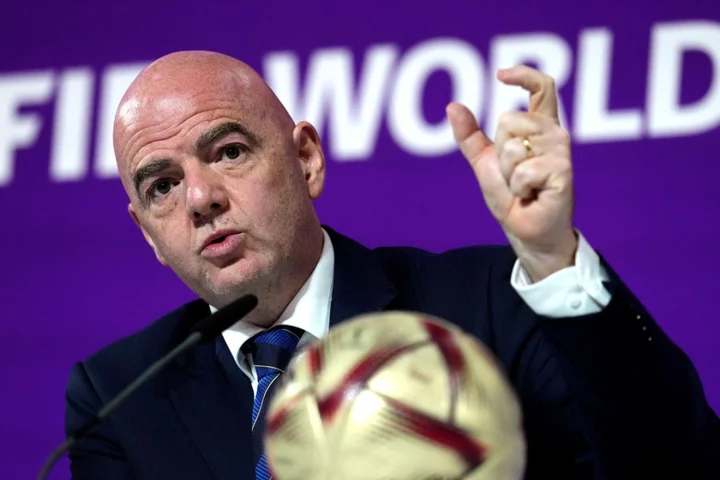
FIFA stress ‘zero-tolerance policy’ as friendlies abandoned over racism claims
FIFA will take a “zero tolerance” approach if allegations of racism which led to the abandonment of two friendly matches played on Monday are found proven. The Republic of Ireland Under-21s’ match against Kuwait Under-22s in Austria was called off after an allegation that a Kuwaiti player racially abused one of Ireland’s substitutes. The senior international between New Zealand and Qatar, also in Austria, was cut short after the New Zealand Football Association said one of its players, Michael Boxall, had a racist remark directed at him in the first half by a Qatari opponent. A FIFA spokesperson said: “FIFA is awaiting the official reports before deciding on next steps. “FIFA has a zero-tolerance policy against any forms of discrimination as stressed last week by the FIFA president.” Gianni Infantino said last week that referees should stop matches if incidents of discrimination occur. “It’s very important not just to talk about racism and discrimination, but to take action in a decisive and convincing manner – zero tolerance,” Infantino said. “There is no football if there is racism – so let’s stop the games. “The referees have this opportunity in FIFA competitions as we have this process for stopping the game, and actions have to be taken at every level, at national level as well. Infantino made the remarks after meeting with the Brazil squad in Barcelona, including Real Madrid forward Vinicius Junior who has been on the receiving end of repeated racial abuse in Spain this year. Read More Charity boss speaks out over ‘traumatic’ encounter with royal aide Ukraine war’s heaviest fight rages in east - follow live
1970-01-01 08:00

Engine Durability Remains in Focus at Air Show: Paris Update
Aviation executives gathered for a second day at the Paris Air Show, the first time the event takes
1970-01-01 08:00
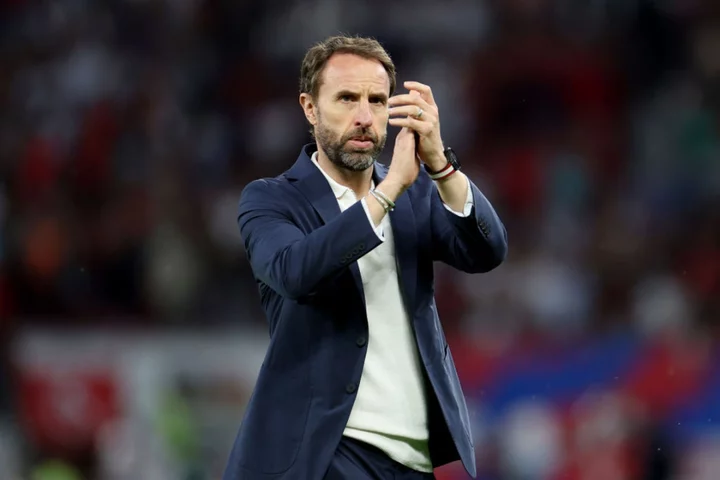
Why England will head into 2024 with their sense of optimism restored
In 2023, as in 2022, a marathon season ended for England’s players in June, north of their Wembley home, against eastern European opposition. And there, it is fair to say, the similarities ended. A year ago came the historic low, the 4-0 loss to Hungary at Molineux that was England’s heaviest home defeat since 1928, the night Gareth Southgate was told he did not know what he was doing and when both he and many another concluded his reign was nearing an undignified end. Twelve months and five days later, a 7-0 thrashing of North Macedonia at Old Trafford capped a restorative spell. Euro 2024 beckons, a broadly positive World Cup has been followed by a quartet of qualifying wins and the feel of Southgate’s reign, of youthful progressiveness, has largely been restored. The torrid June of 2022 has started to look like the anomaly, not the start of the slide. The encouraging June of 2023 has more in keeping with most of Southgate’s tenure. “We look back at last summer, with four matches, [playing] behind closed doors for two and we needed to look at new players,” he reflected. “There were a lot of circumstances around those.” A year on, England could have been forgiven for suffering from a similar tiredness. Yet if the fixtures were easier now, there was a relish and a sharpness. Southgate fielded a forward line with three of the outstanding players of the Premier League campaign, in Harry Kane, Bukayo Saka and Marcus Rashford: they scored six of the seven goals to take their combined tally to 96 goals for the season for clubs and country. They were emblematic of a side who still showed a sharpness. “Post World Cup, we have hit a sweet spot,” Southgate said. The most seismic result of England’s season was actually the victory over Italy in Naples but, after the 6-2 demolition of Iran in the World Cup, North Macedonia can testify that teams with the ability to get excellent results can find themselves eviscerated by England. “We have a hunger to go further than we’ve been and keep pushing forward, confidence from big nights we’ve been involved in,” Southgate said. “It’s a good place but we have to keep pushing. We have set a standard in the last four games where anything possible. There is a brilliant feel around the squad and that creates a strong team.” Few players are better at engendering a positivity feeling than Saka with his infectious enthusiasm. “He’s talented, he’s humble, he’s incredibly popular,” said Southgate. There was a certain symbolism to Saka’s hat-trick. There has seemed something of a changing of the guard over the last year. Southgate has been a loyalist to the core of the team who gave him breakthrough tournaments in 2018 and 2021 but he has also recognised talent when it has emerged. England’s player of the World Cup was Jude Bellingham. Even though he missed their June fixtures, Real Madrid’s newest signing may have been their outstanding individual of the season. But if not, then Saka has a compelling case. When the campaign began, perhaps neither was an automatic choice. Now each is. Bellingham shifted the equation in the World Cup, to the detriment of Mason Mount; if Southgate plays 4-3-3 – as he does now, though last summer it still felt as though he wanted the security blanket of a third centre-back – then the Bundesliga player of the year suits the role as the most attacking midfielder. In attack, if Raheem Sterling used to be the guaranteed starter on the flanks now it should be Saka; it helps that he has become a regular scorer. A third player of rare gifts may yet join them in the strongest side. Trent Alexander-Arnold had felt the conundrum Southgate could not solve; until Jurgen Klopp gave him a helping hand, anyway. The Liverpudlian’s end-of-season shift into midfield for his club led to two encouraging performances for his country. A remarkable pass for Saka’s terrific second goal, the kind of 50-yard ball that invokes mentions of quarterbacks, was an illustration of his passing range. It was nevertheless notable that Southgate singled out another Liverpool player for praise. “Our senior players set a brilliant tone. [Jordan] Henderson won’t get the headlines but the way he set the tone, mixing the game up was really important.” Yet the thought of a midfield trio of Bellingham, Alexander-Arnold and Declan Rice is tantalising. A department where England felt short of options in the 2018 World Cup could be one where they boast enviable class. It helps, too, to have players on the rise. Saka, Rashford and Bellingham have just had the best seasons of their careers so far. Five of their England teammates did a treble for their club. If a theme of Southgate’s reign has been to give the national team back a feelgood factor and a sense of optimism, it has been a feature of the last year, too. Southgate won’t be defined by the summer of 2023, but nor will he be by the summer of 2022. But now he can get for the summer of 2024 with renewed hope of a defining achievement. Read More Bukayo Saka cements his place as England’s next leading man with first career hat-trick ‘Exceptional’ Bukayo Saka lauded by Gareth Southgate after England hat-trick England vs North Macedonia LIVE: Euro 2024 qualifier result and reaction Bukayo Saka cements his place as England’s leading man with first career hat-trick Marcus Rashford’s complicated England relationship could be at turning point
1970-01-01 08:00

Regular napping could be good for brain health, research suggests
Regular daytime naps could be good for brain health, new research suggests. Daytime napping could slow the rate at which brains shrink as we age, the study led by researchers at UCL and the University of the Republic in Uruguay found. The researchers hope their findings into the health benefits of sleeping during the day will reduce any stigma that still exists around daytime napping. The study suggests the average difference in brain volume between people programmed to be habitual nappers and those who were not was equivalent to 2.6 to 6.5 years of ageing. Our findings suggest that, for some people, short daytime naps may be a part of the puzzle that could help preserve the health of the brain as we get older Dr Victoria Garfield, UCL Senior author Dr Victoria Garfield, MRC Unit for Lifelong Health & Ageing at UCL, said: “Our findings suggest that, for some people, short daytime naps may be a part of the puzzle that could help preserve the health of the brain as we get older.” The study, published in the journal Sleep Health, analysed data from people aged 40 to 69. Past research has suggested people who have had a short nap perform better in cognitive tests in the hours afterwards than those who did not nap. The new study looked at whether there was a causal relationship between daytime napping and brain health. Researchers looked at 97 snippets of DNA thought to determine people’s likelihood of habitual napping. They compared measures of brain health and cognition of people who are more genetically programmed to nap with people who did not have these changes in DNA, using data from 378,932 people from the UK Biobank study. They found that, overall, people predetermined to nap had a larger total brain volume. The genetic variants – DNA changes – influencing the likelihood of someone to nap were identified in an earlier study looking at data from 452,633 UK Biobank participants. But the researchers did not find a difference in how well those programmed to be habitual nappers performed on three other measures of brain health and cognitive function. Lead author and PhD candidate Valentina Paz, University of the Republic (Uruguay) and MRC Unit for Lifelong Health & Ageing at UCL, said: “This is the first study to attempt to untangle the causal relationship between habitual daytime napping and cognitive and structural brain outcomes. “By looking at genes set at birth, Mendelian randomisation avoids confounding factors occurring throughout life that may influence associations between napping and health outcomes. “Our study points to a causal link between habitual napping and larger total brain volume.” Garfield added: “I hope studies such as this one showing the health benefits of short naps can help to reduce any stigma that still exists around daytime napping.” Read More Charity boss speaks out over ‘traumatic’ encounter with royal aide Ukraine war’s heaviest fight rages in east - follow live Dramatic rise in the number of women freezing their eggs 9 glorious gardens to visit this summer How to keep flying insects out of your home
1970-01-01 08:00

Morocco country profile
Provides an overview of Morocco, including key dates and facts about this north African country.
1970-01-01 08:00

Morocco media guide
An overview of the media in Morocco, including links to broadcasters and newspapers.
1970-01-01 08:00

Dramatic rise in the number of women freezing their eggs
There has been a dramatic rise in the number of women freezing their eggs in the UK, while more single people are now opting for IVF, new figures show. A report from the Human Fertilisation and Embryology Authority (HEFA) found that more people than ever before are undergoing procedures, with egg and embryo freezing now the fastest growing fertility treatments in the UK. Egg freezing and storage increased from 2,576 cycles in 2019 to 4,215 in 2021 (a 64% rise), while embryo storage also rose. Some experts have said the Covid-19 pandemic had a big impact on the numbers of women wanting to freeze their eggs in the hope of preserving their fertility. Restrictions on socialising may have prompted some women to think more about their fertile window, and decide to try to increase their reproductive choices Sarah Norcross, Progress Educational Trust Sarah Norcross, director of the Progress Educational Trust, said of the latest data: “The dramatic rise in the number of egg freezing cycles could be linked to the pandemic. “Restrictions on socialising may have prompted some women to think more about their fertile window, and decide to try to increase their reproductive choices.” The HFEA data also shows there was a 10% rise in IVF and donor insemination cycles between 2019 and 2021 (around 7,000 more cycles). Meanwhile, the average age at which women have fertility treatment with IVF has risen – to 36. This compares to an average age of almost 31 for women who conceive naturally. The regulator’s report shows that patients in heterosexual relationships accounted for around 90% of all IVF patients in 2021. Meanwhile, the number of IVF patients in female same-sex relationships increased from 1,649 in 2019 to 2,201 in 2021 (a 33% rise) and single parents rose from 2,001 in 2019 to 2,888 in 2021 (a 44% rise). This means that single patients and patients in female same-sex relationships had the biggest increase in IVF use from 2019 to 2021. When it comes to success in getting pregnant using own eggs, the average overall IVF pregnancy rate using fresh embryos increased from 10% per embryo transferred in 1991 to 29% in 2021. Patients aged 18 to 34 had the highest pregnancy rate per embryo transferred at 41% in 2021. Meanwhile, pregnancy rates per embryo transferred increased from 8% in 1991 to 33% for patients aged 35 to 37, and was 25% for patients aged 38 to 39 in 2021. For patients aged 40 to 42, the pregnancy rate per embryo transferred increased from 6% in 1991 to 16% in 2021. Our report shows that the average age of IVF patients has increased to 36, around five years older than mothers who get pregnant naturally and these aftershocks could mean that the average age of an IVF patient continues to rise Julia Chain, HFEA For patients aged 43 to 50, the pregnancy rate per embryo transferred increased from 1% in 1991 to 6% in 2021. Live birth rates per embryo transferred have increased from 7% in 1991 to 25% in 2021 for patients aged 35 to 37 and from 6% in 1991 to 17% in 2021 for patients aged 38 to 39. For those aged 40 to 42, the live birth rate per embryo stands at 10%, but plummets for women aged 43 and over. Meanwhile, the average IVF pregnancy rate using frozen embryo transfers has increased from around 7% in the 1990s to 36% in 2021. The average IVF birth rate using frozen embryo transfers also increased from around 6% in the 1990s to 27% in 2021. Julia Chain, chairwoman of the HFEA, said: “Overall, the new HFEA report paints a promising picture. It shows treatment numbers are back at pre-pandemic levels and thanks to improved clinical and laboratory practice, over time pregnancy rates are increasing. “Despite the pandemic being declared officially over, the aftershocks are still being felt as delays across other areas of healthcare prevent some patients accessing fertility services. “Our report shows that the average age of IVF patients has increased to 36, around five years older than mothers who get pregnant naturally and these aftershocks could mean that the average age of an IVF patient continues to rise. “Although pregnancy rates have increased, the likelihood of success decreases with age. “For some patients, this may mean they never get the baby they hoped for and that’s heartbreaking.” More patients than ever before are paying privately for IVF. The number of IVF cycles funded by the NHS continued to vary across the UK with an overall 16% decrease to 20,000 cycles in 2021 from around 24,000 in 2019.
1970-01-01 08:00

Adam Idah confident Republic of Ireland can cause Euro 2024 qualifying shock
Adam Idah is confident the Republic of Ireland have a shock result in them after belatedly igniting their Euro 2024 qualifying campaign. Monday night’s 3-0 victory over Gibraltar was their first in three attempts and came three days after a disappointing display in defeat by Greece in Athens. They sit third in the group having played a game more than the Netherlands, whom they face in September after the little matter of beaten World Cup finalists France in Paris, but Norwich striker Idah is refusing to give up hope. Asked if the big wins they need are possible, the 22-year-old said: “Of course, I think everyone saw it last time we played France. We were outstanding. “I know we didn’t win, but we showed we can put up a test against these big teams. It’s up to us at the end of the day to finish that. “I believe – and I think everyone else believes – we can go and do it. The next step is to go and show what we are about.” I believe - and I think everyone else believes - we can go and do it Republic of Ireland striker Adam Idah If victory over Gibraltar, who are ranked 201st in the world by FIFA, was expected, it did not come easily with the sides heading for the dressing rooms at half-time with the deadlock unbroken. However, the introduction of Celtic winger Mikey Johnston and the switch to a back four after the break paid dividends, Johnston opening the scoring with his first goal for Ireland within seven minutes of his arrival before Evan Ferguson doubled the advantage. There was relief too for late substitute Idah, who finally opened his account at the 16th attempt in stoppage time, in the process ending talk of matching the feat of former Ireland frontman John Aldridge, who broke his duck in his 19th appearance. Idah said: “It’s tough when you haven’t scored and played a lot of games. But I’ve spoken to people and the main thing was to stay patient, goals will come. “My job is to score goals and that’s probably the toughest part about it, not scoring. I’ve scored and got off the mark and now I’ll try to keep scoring.” For manager Stephen Kenny, who went into the game under extreme pressure as a result of the defeat in Greece, Idah’s exploits represented reward for the faith he has invested in a player promoted from the Under-21 ranks. The frontman said: “I have been with Stephen since 18 years old. He has shown great faith in me. “I haven’t scored in a lot of games. For him to keep playing me and bringing me on gives me great confidence and belief. I’m delighted to score and to repay him for all he’s done for me. I’m very appreciative for what he has done.” James McClean, who became the seventh man to win 100 caps for Ireland, had voiced his support for Kenny during the build-up to the game, and 18-year-old Ferguson insisted afterwards the players remain firmly behind the manager. The Brighton striker, who described his last six months for club and country as “mad”, said: “I don’t think anyone’s going against the manager. We’re all behind him and we’ve all got trust in him.” Read More Charity boss speaks out over ‘traumatic’ encounter with royal aide Ukraine war’s heaviest fight rages in east - follow live Football rumours: Marcus Rashford set to sign long-term Man United deal Day five of first Ashes Test: Thrilling finale in store at Edgbaston Stephen Kenny says ‘nothing is impossible’ ahead of France and Netherlands tests
1970-01-01 08:00

Google Seeks Suppliers to Move Some Pixel Production to India
Alphabet Inc.’s Google is scouting for suppliers in India to assemble its Pixel smartphones as it borrows from
1970-01-01 08:00
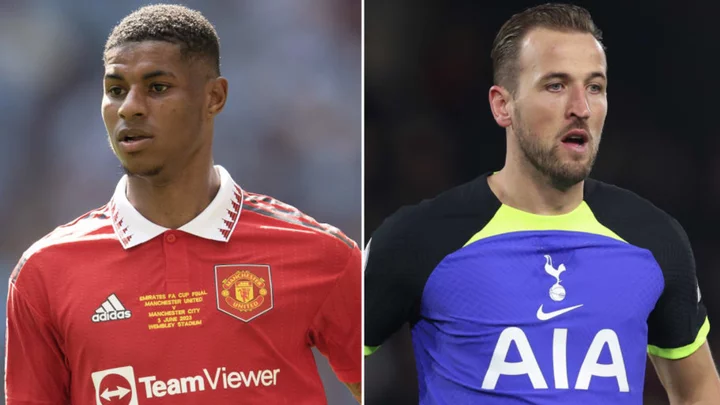
Football transfer rumours: Rashford makes decision on future; PSG return for Kane
Tuesday's roundup of transfer news includes updates on Marcus Rashford's Manchester United contract talks, PSG's interest in Harry Kane, Declan Rice's Arsenal decision and more.
1970-01-01 08:00

UBS to Face Fresh Penalties Over Credit Suisse’s Archegos Fiasco
UBS Group AG faces hundreds of millions of dollars in regulatory fines over Credit Suisse Group AG’s dealings
1970-01-01 08:00

The family of Keenan Anderson, who died after being tased by LAPD officers, has filed a wrongful death lawsuit
The family of a 31-year-old father who died after being tased by Los Angeles police officers is suing the city and members of the department over his death, their attorneys announced on Monday.
1970-01-01 08:00