

Wolves stun Tottenham with two stoppage-time strikes
Wolves’ stunning late show rocked Tottenham and denied Spurs the chance to return to the top of the Premier League. Pablo Sarabia and Mario Lemina scored in stoppage time to snatch a thrilling – but deserved – 2-1 victory. Brennan Johnson’s early strike – his first Spurs goal – had given the visitors the lead and they looked on course for a smash-and-grab win at Molineux. Tottenham rode their luck as Wolves constantly let them off the hook until Sarabia and Lemina sparked a sensational finish. They were heading two points clear at the top of the table but have now suffered successive defeats. Wolves, meanwhile, hit back from their controversial 2-1 loss at Sheffield United to underline the clear progress they are making under Gary O’Neil. Spurs suffered their first wobble under Ange Postecoglou in their 4-1 defeat to Chelsea having also lost James Maddison and Micky van de Ven until January with injuries. Suspensions to Cristian Romero and Destiny Udogie compounded their issues before arriving at Molineux yet they initially showed no scars from Monday’s chaos and took the lead after just three minutes. It was poor from Wolves, Rayan Ait-Nouri and Joao Gomes were hoodwinked by Dejan Kulusevski’s cute drag and flick which allowed Pedro Porro to cross low for Johnson. He had run on the blindside of Nelson Semedo and, with the defender caught out, tapped in from close range. It was the Wales international’s first goal since April – which also came against Wolves. Far from being shellshocked, the hosts responded well and Ben Davies blocked a shot from the rampaging Ait-Nouri as Wolves’ tenacity left Spurs flustered. Tottenham were needlessly tentative at the back, perhaps from Monday’s carnage, but continued to survive with Wolves’ final ball consistently failing them. They still needed Guglielmo Vicario to save well from Lemina before the midfielder had a header deflect over and the goalkeeper also gathered Toti Gomes’ effort in stoppage time. Wolves emerged after the break in the same combative fashion and Jean-Ricner Bellegarde ballooned over with Matheus Cunha also curling wide. The hosts were getting closer and should have levelled after 54 minutes when Hwang Hee-Chan missed a golden chance. A poor corner eventually fell to Gomes and his shot deflected into the path of Hwang but, with just Vicario to beat, the seven-goal forward scuffed wide. Without star man Pedro Neto Wolves lacked a killer touch, similar to Tottenham – missing main schemer Maddison – who had created nothing since their early opener. The hosts’ dominance had nullified Spurs but they were still behind and their desperation for a leveller began to leave spaces, with Johnson curling wide after a rare break. Wolves looked to be running out of ideas with time ticking by, although Sasa Kalajdzic wastefully headed over, and Giovani Lo Celso almost snatched an undeserved second with two minutes left but Jose Sa turned his effort over. Little suggested the drama to come but Wolves then turned the game on its head in stoppage time. O’Neil’s side finally got the leveller they deserved when substitute Sarabia, on the pitch for just two minutes, collected Cunha’s clipped ball and smashed past Vicario. Then, in the seventh minute of stoppage time, Sarabia was sent scampering after a quick free-kick and he found Lemina to turn in and send Molineux wild. Read More Ben Stokes and Joe Root give England hope of ending World Cup on a high From Covid to the Copper Box: Maia Lumsden relishes her ‘unbelievable’ return On this day in 2015: Stuart Lancaster resigns as England head coach Mauricio Pochettino: Easier for new players at Man City than ‘evolving’ Chelsea Don’t worry about it – Ange Postecoglou brushes off series of Spurs setbacks Harry Maguire ‘showing he can do the job’ – Erik ten Hag
1970-01-01 08:00

Wolves 2-1 Tottenham: Player ratings as stoppage-time double breaks Spurs hearts
Player ratings and match reaction from Wolves' Saturday lunchtime clash with Tottenham in the Premier League.
1970-01-01 08:00

Trump Steps Up Iowa Push, Looking to Lock Up Nomination Early
Donald Trump is stepping up his campaign in Iowa just two months before the nation’s first nominating contest
1970-01-01 08:00

One Year After FTX Imploded, Here’s How Crypto Is Changing
For many who trade cryptocurrencies for a living, the events of a year ago are forever etched in
1970-01-01 08:00

Scholz Backs Spain’s Calvino to Become First Female EIB Head
German Chancellor Olaf Scholz threw his support behind Spain’s acting Economy Minister Nadia Calvino in her bid to
1970-01-01 08:00

Fisker Opens Fisker Lounge NYC, Invites Customers to Experience the All-Electric Fisker Ocean SUV
LOS ANGELES--(BUSINESS WIRE)--Nov 11, 2023--
1970-01-01 08:00
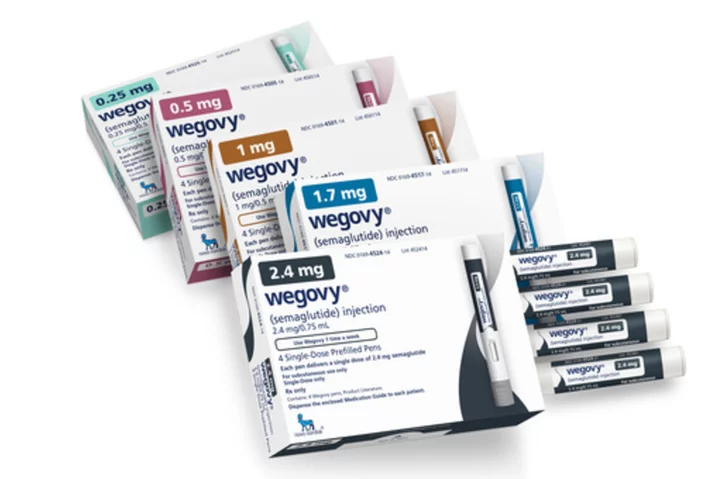
Obesity drug Wegovy cut risk of serious heart problems by 20%, study finds
A new large study finds that the popular weight-loss drug Wegovy reduced the risk of serious heart problems by 20% in certain patients
1970-01-01 08:00
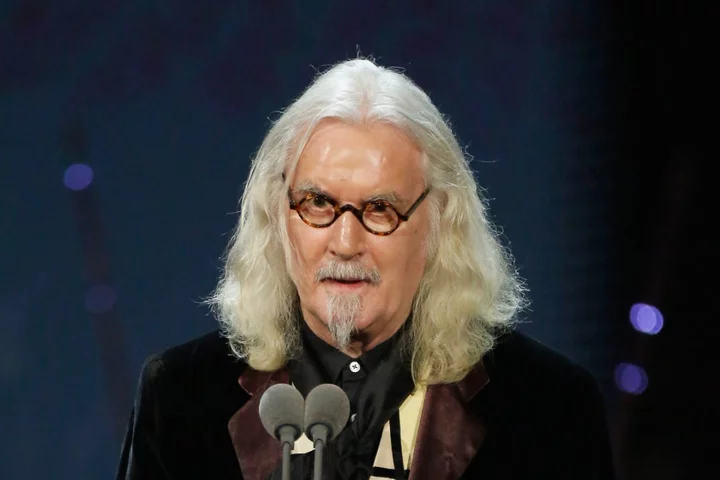
Billy Connolly shares health update on Parkinson’s disease: ‘Every day it gets stranger and more different’
Billy Connolly has said that every day spent living with Parkinson’s disease “gets stranger”, as he shared an update on his health. The Scottish actor, 80, has been living with the condition since 2013, and said that the symptoms and lifestyle impacts of the disease often “creep up” on him. Parkinson’s is a brain disorder that causes unintended or uncontrollable movements, such as shaking, stiffness, and difficulty with balance and co-ordination. Often, the disease can become more severe over time. “Every day it gets stranger and more different,” the retired stand-up comedian told The Times. Connolly said that his newfound love for making drawings, painting and sculptures has helped him navigate the mental health toll of living with the condition. “I don’t know how I would have coped without drawing. It’s taken me out of the scene and put me somewhere else, where I can survey it from a different angle,” he said. “Art has made my life magical at a time when I thought it would be unbearable.” It’s been a decade since Connolly received his Parkinson’s diagnosis. The comedian was walking through the lobby of a Los Angeles hotel in 2013 when a fellow guest, a doctor, stopped him and said he shows physical signs of Parkinsons. This prompted Connolly to visit his doctor. “I’ll never forget what he said: ‘You have the gait of a Parkinson’s man,’” Connolly told the publication. According to Parkinson’s UK, Bradykinesia, which is a common condition among people with Parkinson’s, means slowness and a reduced range of movement when walking. It can make your steps smaller and it can take more time and effort to get around. When Connolly received his official diagnosis, he was also diagnosed with prostate cancer and gallstones in the same week. “It was a helluva week,” he said. “It got funny. My daughter Scarlett was with me in the ambulance on the way to the gallbladder surgery through Manhattan. The sirens were going – nee-naw nee-naw – and she said to me, ‘Is this your first Caribbean cruise?’ That’s a line I always said to her to make her laugh when her surroundings were awkward or boring.” During an interview published in September, it was revealed that Connolly had suffered “a couple of serious falls” and once broke his hip as a result of deteriorating balance. He no longer drives. Despite these growing physical challenges, the What We Did on Our Holiday star maintains a positive outlook on his health. In his memoir, Rambling Man: Life on the Road, which was released earlier this year, Connolly clarified that he doesn’t feel “close to death”. “You see, reports of my recent demise have been greatly exaggerated,” he stated in an extract shared with The Telegraph. “There was a week a few years ago where on Monday I got hearing aids, Tuesday I got pills for heartburn, and Wednesday I received news that I had prostate cancer and Parkinson’s disease. But despite all that, I never ever felt close to dying.” Rambling Man: Life on the Road is available now. Read More What are the symptoms of Parkinson's disease and how can it be treated? Tracey Emin says she ‘totally accepted death’ following cancer diagnosis Nicky Hilton calls out critics who made negative comments about nephew Phoenix’s head What are the symptoms of Parkinson's disease and how can it be treated? Tracey Emin says she ‘totally accepted death’ following cancer diagnosis Nicky Hilton calls out critics who made negative comments about nephew Phoenix’s head
1970-01-01 08:00
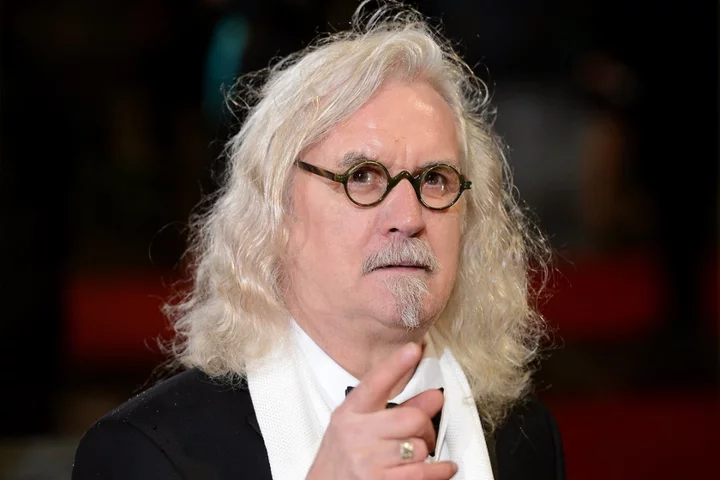
What are the symptoms of Parkinson’s disease and how can it be treated?
Parkinson’s disease is the world’s second most common neurodegenerative disorder, behind Alzheimer’s disease. While it’s unknown exactly why people develop the condition, according to Parkinson’s UK, experts believe its a combination of genetic and environmental factors that contribute to the damage of nerve cells in the brain. So what are the symptoms of Parkinson’s disease and how can it be treated? Here’s everything you need to know. What is Parkinson’s disease? Parkinson’s disease is a degenerative neurological condition. This means that over time the brain of an individual living with the disease becomes more damaged, the NHS explains. A person living with Parkinson’s disease doesn’t have enough of the chemical dopamine in their brain, the Parkinson’s Foundation states. Dopamine is responsible for transmitting signals between nerve cells in the brain. When an individual experiences a loss of nerve cells in the brain, this causes a reduction in the quantity of dopamine in the brain. What are the symptoms? The main symptoms of Parkinson’s disease include involuntary shaking (otherwise known as tremors), movement that’s slower than usual and stiffness in the muscles, the NHS outlines. Other symptoms may include difficulty balancing, nerve pain, incontinence, insomnia, excessive sweating, depression and anxiety. For more information about the symptoms of Parkinson’s disease, visit the NHS here. How many people does it affect? Around 145,000 people in the UK are affected by Parkinson’s disease, Parkinson’s UK explains. This means that around one in every 350 adults is living with the degenerative condition. According to the NHS, symptoms of Parkinson’s usually develop after the age of 50. However, for every one in 20 people affected by the disease, symptoms may appear when they’re under the age of 40. The Parkinson’s Foundation outlines that men are 1.5 more likely than women to be affected by the condition. High-profile individuals to have been diagnosed with Parkinson’s include former US president George H. W. Bush, Back to the Future star Michael J. Fox and The Chase star Paul Sinha. How can it be treated? While there is no known cure for Parkinson’s disease, symptoms may be controlled through treatment. The most common form of treatment used for the condition is medication, Parkinson’s UK states. “Drug treatments aim to increase the level of dopamine that reaches the brain and stimulate the parts of the brain where dopamine works,” the charity explains. The medication used to treat Parkinson’s disease varies according to each patient. This is because as symptoms of the disorder progress, the drugs used to treat the condition may need to be changed. While drug treatment may help to manage Parkinson’s symptoms, it cannot slow the progression of the disease. The NHS explains that those living with Parkinson’s disease may also undergo physiotherapy, occupational therapy, and, in rare cases, brain surgery to treat the condition. For more information about Parkinson’s disease, visit Parkinson’s UK. Read More What are symptoms of coronavirus – and where has it spread? Latest travel updates as coronavirus continues to spread Can face masks really protect you against coronavirus or flu? The dirty truth about washing your hands Billy Connolly shares health update on Parkinson’s disease: ‘Every day gets stranger’ Tracey Emin says she ‘totally accepted death’ following cancer diagnosis Nicky Hilton calls out critics who made negative comments about nephew Phoenix’s head
1970-01-01 08:00

Giant Dangote Refinery Secures Permit to Process Nigerian Oil
Billionaire Aliko Dangote, Africa’s richest person, said his refinery has secured a license to refine more than 300,000
1970-01-01 08:00

The Diamond World Takes Radical Steps to Stop a Pricing Plunge
When the world’s most important diamond buyers arrived at De Beers’ offices in Botswana late last month, they
1970-01-01 08:00
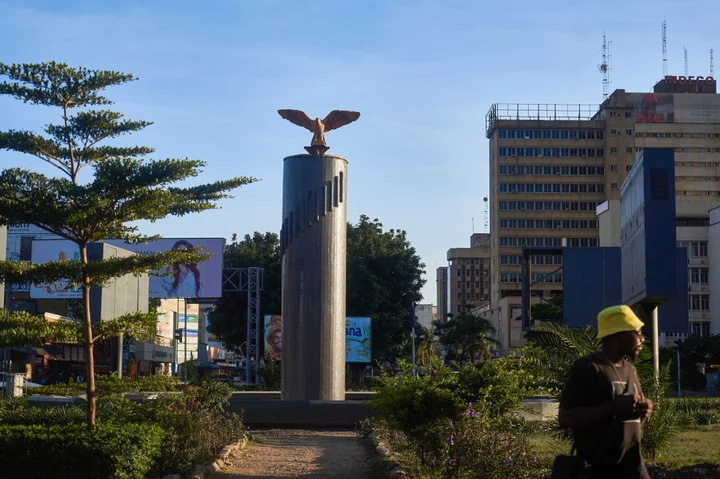
Zambia Bondholder Deal Needs Changes to Align with IMF Program
Zambia must refine an initial debt-restructuring deal it announced with holders of $3 billion in eurobonds, the International
1970-01-01 08:00