

FIFA 23 Shapeshifters Kyle Walker Leaked
FIFA 23 Shapeshifters Kyle Walker has been leaked as a goalkeeper by FutSheriff.
1970-01-01 08:00
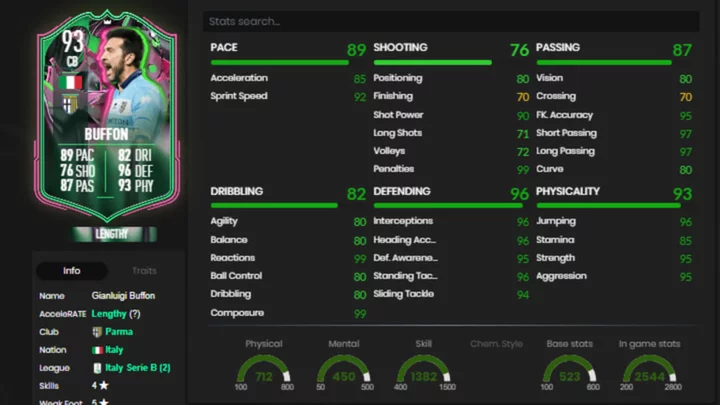
Gianluigi Buffon FIFA 23: How to Complete the Premium Shapeshifters SBC
Gianluigi Buffon FIFA 23 Premium Shapeshifters SBC is now live. Here's how to complete the SBC and if it's worth it.
1970-01-01 08:00

Pete Davidson reportedly enters rehab amid mental health struggles
Pete Davidson has reportedly checked into a rehabilitation center amid ongoing struggles with his mental health. The Saturday Night Live alum, 29, is receiving treatment for his previously diagnosed borderline personality disorder and post-traumatic stress disorder, Page Six initially reported. According to People, sources said Davidson “should be getting out” of the in-patient treatment center “pretty soon”. “Pete will often check himself into rehab to work on these issues,” another source told the outlet. “His friends and family have been supportive during this time.” Davidson has previously been open about his mental health struggles. In 2017, the King of Staten Island actor shared he had been diagnosed with borderline personality disorder (BPD) during an appearance on the WTF With Marc Maron podcast. He explained that he had checked into a rehabilitation center in December 2016 after struggling with symptoms of the disorder. “I started having these mental breakdowns where I would, like, freak out and then not remember what happened after. Blind rage,” the comedian said, noting that he originally thought smoking weed caused his extreme mood swings. He stopped smoking weed and entered rehab, though he resumed the habit and soon had a “really bad mental breakdown”. Davidson was eventually diagnosed with BPD several months later. “I found out I have BPD, which is borderline personality disorder,” he said. “One of my psychiatrists… He was always saying before this big meltdown, ‘You’re probably bipolar or borderline, we’re just going to have to figure it out.’” The Bupkis star also admitted that he was “depressed all the time” but praised therapy for improving his mental health. “It is working, slowly but surely,” he said. “I’ve been having a lot of problems. This whole year has been a f***ing nightmare. This has been the worst year of my life, getting diagnosed with this and trying to figure out how to learn with this and live with this.” That same year, he went on SNL’s “Weekend Update” to further discuss his diagnosis and urge others to seek medical treatment if they think they have depression. “As some of you may know, I was recently diagnosed with borderline personality disorder — a form of depression,” Davidson told viewers. “Depression affects more than 16 million people in this country and there’s no cure, per se. But for anyone dealing with it, there are treatments that can help. “First of all, if you think you’re depressed, see a doctor and talk to them about medication. And also be healthy: eating right and exercise can make a huge difference.” Bipolar personality disorder (BPD) is a type of a mental disorder characterised by unstable moods, behaviour, and relationships. It’s estimated that 1.6 per cent of the US population have BPD. In an interview with Variety in 2019, Davidson shared that he’s been “in and out of mental health facilities” since he was nine years old. His father, Scott Matthew Davidson, was a firefighter who died at the World Trade Center during the September 11 attacks in 2001, when Davidson was just seven. Speaking with Jon Bernthal on his Real Ones podcast last March, Davidson said that the event had an impact on his “fear of abandonment” as well as his PTSD. More recently, he underwent “trauma therapy” in April 2022 due to online harassment from Kanye West while Davidson was dating West’s ex-wife Kim Kardashian. “The attention and negativity coming from Kanye and his antics is a trigger for [Pete], and he’s had to seek out help,” a source told People at the time. Pete Davidson’s latest stint in rehab comes after he was charged with reckless driving in connection with a Beverly Hills car accident, in which he and current girlfriend Chase Sui Wonders crashed into the side of a house. He was reportedly driving in the affluent Los Angeles neighbourhood when his vehicle went over the curb, hitting a fire hydrant and collided into the home. He is expected to be arraigned in court on 27 July. The Independent has contacted Pete Davidson for comment. Read More Pete Davidson charged with reckless driving in connection with Beverly Hills car crash Pete Davidson opens up about borderline personality disorder diagnosis: ‘The weight of the world feels lifted’ Pete Davidson says he learned his firefighter dad died on 9/11 while watching TV
1970-01-01 08:00
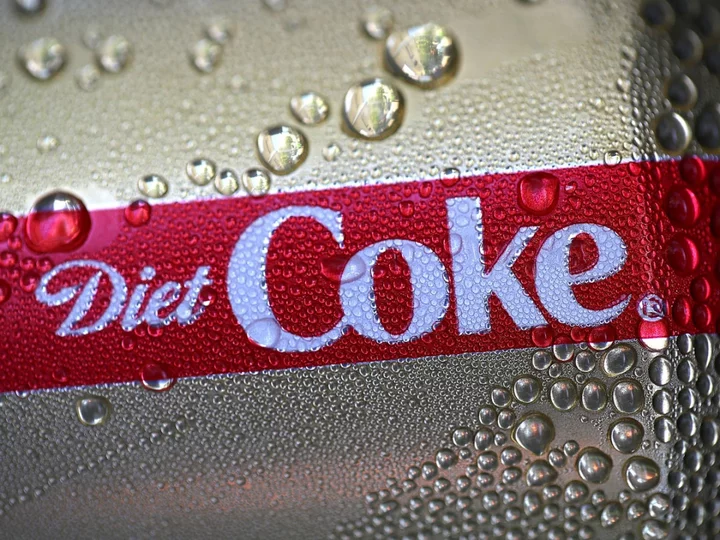
Diet Coke fanatics react to forthcoming WHO announcement on ‘possibly cancerous’ aspartame: ‘The final straw’
Fans of Diet Coke have reacted with despair at reports that the World Health Organisation (WHO) may catagorise aspartame – an artificial sweetener in the drink – a potential carcinogen. It was reported on Thursday (29 June) that the health organisation’s cancer research unit, the International Agency for Research on Cancer (IARC), is preparing to label aspartame as potentially cancerous from July. Aspartame is a low-calorie artificial sweetener that is approximately 200 times sweeter than sugar and is used in a huge number of soft drinks, including Diet Coke, Pepsi Max, Diet Irn Bru, and Sprite Zero, among others. It is also used in foods such as chewing gum, candy, breakfast cereal, frozen desserts and puddings, and gelatins. Although the IARC’s ruling on the sweetener remains confidential until July, Diet Coke fans are already wondering if they might have to give up their favourite fizzy drink. “If they interfere with Diet Coke it will be the final straw for me I’m afraid,” one person warned. Another joked they have already “drunk the Diet Coke equivalent of swimming at a superfund site” in their lifetime. “You can take away my Diet Coke when you pry it out of my cold dead hands,” a third mordantly added. “Listen, if you’re going to take away Diet Coke from us, you better be prepared for 72 per cent of women aged 25-45 to quit their jobs,” another person claimed. “That’s all I’m saying. *Cracks open third Diet Coke before noon*” Others appeared smug that they had never switched from regular full-fat Coke – which contains around 10.6g of sugar per 100ml, equating to 35g per 330ml can – to the low-sugar version. One person referred to a scene from hit series Friends that showed Chandler (Matthew Perry) shouting: “I knew it!” Another said: “I told you all that Diet Coke was just as bad as regular Coke.” The IARC is expected to make its decision over aspartame public on 14 July, the same day as the Joint WHO and Food and Agriculture Organisation’s Expert Committee on Food Additives (JECFA), which is also reviewing aspartame use this year. JECFA has said it is safe to consume aspartame within accepted daily limits since 1981. An adult weighing 60kg (132 pounds) would have to drink between 12 and 36 cans of diet soda every day to be at risk, a view widely shared by national regulators. The additives committee “conducts risk assessment, which determines the probability of a specific type of harm (eg., cancer) to occur under certain conditions and levels of exposure”. The review of aspartame comes after a study conducted by experts from the French National Institute for Health and Medical Research, and Sorbonne Paris Nord University, published on March 2022, claimed it could increase the risk of cancer in people who consume it. But previous large-scale studies on humans have not revealed similar associations. A separate study published last December found that aspartame was linked to anxiety in mice. The deputy chief scientific adviser of the UK’s Food Standards Agency, Rick Mumford, commented on reports and said: “Our view is that the safety of this sweetener has been evaluated by various Scientific Committees and it is considered safe at current permitted use levels. “The IARC report has not yet been published and, when it is, it will be examined by the JECFA, who will put together a risk assessment by the end of July. We will closely study JECFA’s report and decide whether any further actions are needed.” The Independent has contacted Coca-Cola for comment. Read More Walk this way... but not like that: How men’s walks became sexualised Colleen Ballinger: Everything we know about the ‘grooming’ allegations against YouTuber Miranda Sings Kevin Costner’s estranged wife says she’ll move out of their $145m home on one condition ‘My small rash turned out to be a parasite living in my leg after a beach trip’ Chrissy Teigen welcomes fourth child – how does surrogacy actually work? Heart disease digital check-ups for over 40s being rolled out
1970-01-01 08:00

From behind bars, Greek far-right populist propels ultra-nationalists
By Michele Kambas and Renee Maltezou ATHENS With backing from a politician jailed for leading a party declared
1970-01-01 08:00

You Can Book Barbie’s Malibu DreamHouse on Airbnb—For Free
Airbnb is celebrating the upcoming Barbie movie with the Barbie DreamHouse sleepover of your dreams.
1970-01-01 08:00

Bjork’s controversial swan dress to go on display in new exhibition
The swan dress worn by Icelandic singer Bjork to the 2001 Oscars will be part of a new exhibition celebrating rebellious fashion. The outfit – by Macedonian designer Marjan Pejoski – was controversial at the time, as it was a huge departure from the black tie gowns normally seen on the red carpet. It’s gone on to take a prominent place in fashion and pop culture history, and this will be the first time it’s been seen in the UK, since it was created over 20 years ago. The swan dress will join ensembles worn by Harry Styles, Rihanna and Sam Smith at a new exhibition at the Design Museum called Rebel: 30 Years of London Fashion. The exhibition will feature nearly 100 looks from designers who have taken part in the NewGen initiative – a scheme run by the British Fashion Council (BFC) that supports emerging fashion talent. It will include trousers made from deadstock materials designed by Steven Stokey Daley and worn by Harry Styles for his 2020 music video Golden, as well as a replica of the inflatable latex jumpsuit worn by Sam Smith at the 2023 Brit Awards, designed by Harri. Other looks include the voluminous blue ruffled dress by Molly Goddard – worn by Rihanna in 2017 in an Instagram post which garnered 1.7 million likes – and a Nasir Mazhar headpiece modelled by Lady Gaga. Covering the last 30 years of fashion, the exhibition isn’t organised chronologically – instead, each room will cover themes, including colour (featuring work from Ashish, Richard Quinn and Mary Katrantzou), art school (Molly Goddard and S. S. Daley) and the club scene (with pieces from Halpern and Gareth Pugh). One room will be entirely dedicated to trailblazing designer Alexander McQueen, who was one of the first recipients of NewGen support. “It is impossible to underestimate the influence London has on Britain’s fashion talent, a city that produces wave after wave of young designers that value originality, wearing what you believe in, and tackling social issues to make a better world,” said Sarah Mower, BFC ambassador for emerging talent and guest curator of Rebel. The exhibition shows pieces from when each designer was taking part in the NewGen scheme – and some of them are now household names, such as Erdem and Northern Irish designer JW Anderson. “Only showing looks and accessories and supporting materials that were produced while the designer was receiving NewGen support has meant that we have the most extraordinary insight into early careers of designers that are incredibly familiar today,” said Rebecca Lewin, Design Museum curator. The exhibition will open in September, to coincide with the new season of London Fashion Week and to celebrate 30 years of the NewGen programme, which has supported more than 300 designers over the years. Rebel: 30 Years of London Fashion sponsored by Alexander McQueen will open at the Design Museum in London on September 16 and will run until February 11, 2024. Read More Charity boss speaks out over ‘traumatic’ encounter with royal aide Ukraine war’s heaviest fight rages in east - follow live Chrissy Teigen welcomes fourth child – how does surrogacy actually work? 11 ways to work the colour clash trend at home Heart disease digital check-ups for over 40s being rolled out
1970-01-01 08:00

The family of Irvo Otieno is requesting a federal investigation into his death at a Virginia mental health facility
The family of Irvo Otieno -- who died in March while being admitted to a Virginia mental health facility -- is asking the Department of Justice for a federal investigation into his death, their attorneys announced Wednesday.
1970-01-01 08:00

Factbox-Policy measures China's central bank could use to stem yuan weakness
China has ramped up its effort to slow the depreciation of the yuan against the dollar this week
1970-01-01 08:00
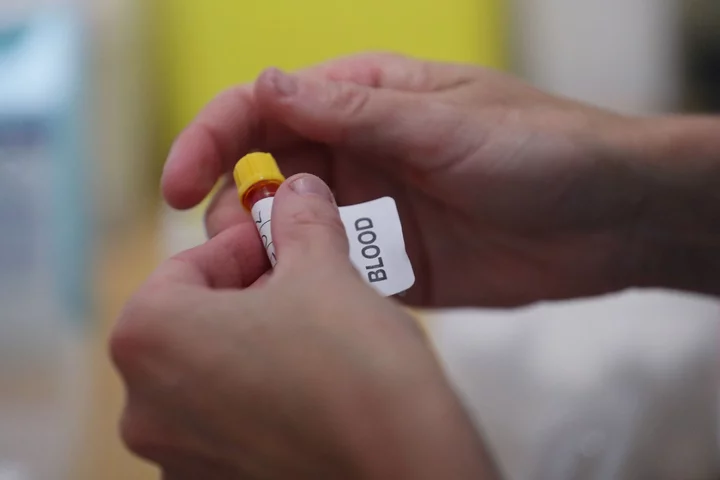
Heart disease digital check-ups for over 40s being rolled out
People over 40 in England will be sent a blood test to carry out at home in a bid to reduce heart disease and obesity. Digital NHS health checks, which will also include an online health questionnaire, will be launched next spring for people aged 40 to 74. Around 15 million people will be eligible, with around one million online checks expected to be carried out over the next four years. Health and Social Care Secretary Steve Barclay said: “Thousands of heart attacks and strokes could be prevented every year through simple health checks, which could save lives and ease pressure on the NHS. “This new digital check-up will mean people can do simple tests and get tailored advice from homes while reducing pressure on GP services.” The home blood test will check cholesterol levels with patients asked to take a blood pressure test at a pharmacy, alongside the online assessment covering details such as weight, height, diet, alcohol intake and exercise levels. Results will be made available online with help available to anyone showing early signs of issues such as diabetes or heart disease, as well as referrals to weight-loss clinics or medication. The online questionnaire will be available via phone, tablet or computer and the Government believes each check will save 20 minutes of NHS time. This could play an important role in helping people live healthier for longer and saving lives in the coming years, while reducing pressure on the NHS Professor Sir Nilesh Silemani Cardiovascular disease is the second biggest killer in England, affecting around 6.4 million people. The Government says the new digital check will help to identify 200,000 people who could benefit from the use of statins, 30,000 cases of hypertension and prevent around 400 heart attacks and strokes over the first four years. Professor Sir Nilesh Samani, medical director at the British Heart Foundation, said: “This initiative will help to reach more people and encourage them to get their blood pressure and cholesterol levels checked so that, where necessary, healthcare professionals can work with them to manage their condition. “This could play an important role in helping people live healthier for longer and saving lives in the coming years, while reducing pressure on the NHS.” Existing NHS health checks for people in the same age group take place face-to-face with a GP and concerns have been expressed that elderly people are not left behind if they struggle with technology. David Baines, vice chair of the Local Government Association, told The Times: “Making more digital health checks available is a useful tool to detect certain illnesses but it should be treated as an addition to, not a replacement for, a physical health check.”
1970-01-01 08:00

What is colour analysis and why is TikTok obsessed with it?
The latest fashion trend to go viral online doesn’t involve a hot new denim style or designer handbag – it’s about overhauling your entire wardrobe with the help of colour analysis. Professional stylists and amateur enthusiasts alike have been sharing videos of fashionistas swathed in swatches of fabric as they endeavour to discover the palette of colours that suits them best. Also known as ‘finding your colours’, the topic is exploding on social media, with millions of video views on TikTok and 100k posts under #colouranalysis on Instagram. “TikTok users love educational content and transformation stories,” says Cliff Bashforth, managing director of Colour Me Beautiful, which provides personal colour consultations. “Colour analysis provides a captivating narrative, and the system can be proven by displaying ‘before and after’ makeovers, good and bad colours on an individual and colour combinations.” While trends like this year’s ubiquitous Barbie pink will keep popping up from time to time, consumers are increasingly rejecting the idea of ‘must-have’ pieces and adopting a more personalised approach. “With the general conscience turning away from fast fashion, colour analysis is a good way to ensure you’re buying something that will suit you perfectly and last a lifetime,” says Megan Watkins, head stylist at SilkFred. What are the benefits of colour analysis? “For many people, finding their most flattering shades of clothing (and make-up) is a life-changing experience,” says Bashforth. “Wearing your best shades of clothing enhances your natural colouring, brings out your individuality, boosts confidence, and ensures you always look your best, effortlessly expressing your personal style.” As well as guiding how you buy and style clothes, colour analysis can suggest flattering make-up and hair shades. Watkins says: “Finding the right colour palette for you will elevate your entire aesthetic and can even help with making your skin look brighter and minimise dark circles.” What happens at a colour analysis appointment? “It is a common misconception that ‘finding your colours’ is down to your hair colour or eye colour – it’s all about your skin,” says Watkins. “Your skin undertone stays the same no matter your age or how long you’ve been in or out of the sun, so assuming the colour analysis is done correctly, your colour palette will stay the same for the rest of your life.” At a professional colour analysis session, which can last up to two hours, a stylist will look at how different groups of shades look against your face. “Larger coloured swatches – known as ‘drapes’ in the trade – are used to test for the undertone, depth and clarity of the individual’s colouring,” Bashforth explains. “Some companies also use the seasonal method and categorise people into spring, summer, autumn, or winter. “At Colour Me Beautiful we start by explaining our 24-palette system so the client fully understands why he or she falls into a certain colouring type.” The stylist will talk through colour combinations, outfit ideas and make-up suggestions, and you’ll be given a fabric swatch to use as a guide for shopping. “No longer is an individual told ‘what colours to wear’,” Bashforth adds. “Instead a flexible approach has been adopted which means a client is shown ‘how to wear colour’ – it’s more about the shades of a hue, rather than the hue itself.” Can you do it yourself? While a thorough consultation with a specialist is the best way to find your perfect palette, there are some principles you can borrow to try some DIY colour analysis. “Gather up a variety of tops, knitwear etc. in warmer and cooler hues,” says Bashforth, starting with no make-up and wearing a top in a basic neutral shade. “In daylight, stand in front of a mirror and hold each garment up to your face, observing whether your complexion is enhanced and looks fresher, or your skin appears dull or pale.” You could also use the ‘vein test’ to see where you fall on the warm/cool divide. “All you need to do is check your wrist and see if your veins appear as a more green shade or if they appear to be a blue/purple hue,” says Watkins. “If you’re on the green side, this is classed as a warm tone, if you’re veering towards blue or purple then you’re on the cooler side of things.” She adds: “If you’re looking for a colour that suits just about everyone, primary red is a good bet as it partners well with every other colour on the colour wheel.” Leem Ruffled-Hem Woven Maxi Dress in Olive, £145, Selfridges Roman Blue Sleeveless Abstract Print Maxi Dress, £60 River Island Pink Ruched Sleeve Blazer, £65; Pink Wide Leg Pleat Trousers, £40 Oliver Bonas Gold & Yellow Striped Midi Dress, £79.50 Read More Charity boss speaks out over ‘traumatic’ encounter with royal aide Ukraine war’s heaviest fight rages in east - follow live Dementia diagnosis could be sped up thanks to AI Reading for pleasure in childhood boosts brain health in teenage years – study Stan Wawrinka on setbacks, preparing for Wimbledon and friendship with Roger Federer
1970-01-01 08:00
Dementia diagnosis could be sped up thanks to AI
A new artificial intelligence (AI) tool may be able to look for early signs of dementia and Alzheimer’s disease, speeding up diagnosis. The technology, which could help doctors assess the early signs of the condition more efficiently, has been developed by researchers at the University of Sheffield. Known as CognoSpeak, the system uses a virtual character displayed on a screen to engage a patient in a conversation. It asks questions to test memory, inspired by those used in outpatient consultations and conducts cognitive tests, such as picture descriptions and verbal fluency tests. This tool could help patients start treatments sooner, reduce waiting times and give people certainty earlier Dr Dan Blackburn, University of Sheffield After that, the tool uses AI and speech technology to analyse language and speech patterns to look for signs of dementia, Alzheimer’s disease and other memory disorders. Researchers behind the technology suggest it could play a key role in reducing the burden on dementia assessment services, once further testing in GP and memory clinics across the UK is complete. The National Audit of Memory Assessment Services in England and Wales, conducted between January and August 2021 by the Royal College of Psychiatrists and supported by Alzheimer’s Society, found that the average waiting time from referral to dementia diagnosis had increased to 17.7 weeks. This was up from 13 weeks in 2019, with waiting times across services nationwide ranging between zero and 104 weeks (two years), compared to three and 34 in 2019. There are currently around 900,000 people in the UK living with dementia, and this is projected to almost double by 2040, according to the Alzheimer’s Society. Dr Dan Blackburn, from the University of Sheffield’s Department of Neuroscience, said: “Waiting for a possible diagnosis of dementia can be a very anxious time for patients and their families. “This tool could help patients start treatments sooner, reduce waiting times and give people certainty earlier. “The CognoSpeak system could transform how dementia and other memory disorders are diagnosed by speeding up assessments. “This would also free up clinicians’ valuable time and mean that those who need specialist care get access to it as quickly as possible.” Also an Honorary Consultant Neurologist at Sheffield Teaching Hospitals NHS Foundation Trust and researcher at NIHR Sheffield BRC, he added: “There is a real clinical need for this kind of technology. “There are long waiting lists for memory clinics across the UK, but there are also inequalities in accessing the memory clinics service. “The CognoSpeak tool can reduce these inequalities and help make the service more efficient.” The CognoSpeak system could transform how dementia and other memory disorders are diagnosed by speeding up assessments Dr Dan Blackburn Professor Heidi Christensen, from the University of Sheffield’s Department of Computer Science, added: “The way a person speaks can tell us a great deal about their cognitive health and emotional wellbeing, and give us a very early indication of any signs of cognitive decline that may not otherwise have been detected. “The system we’ve developed here at Sheffield uses speech technology to automatically extract these signs and the automation means we can provide a consistent, accurate and fast assessment for everyone. “CognoSpeak is advanced, high tech and based on world-leading research in this field. “We have the biggest collection of data for this type of assessment anywhere in the world, which we’re using to advance the technology and improve its accuracy.” The system is being designed in a way that means once it is fully rolled out, a GP could refer a person with memory complaints to use the technology. CognoSpeak would send the test results back to the GP and then they would decide whether to refer the patient to a memory clinic for further assessment. The programme can be accessed through a web browser – meaning patients are able to take the test in the comfort of their home, rather than having to wait for a hospital appointment to take a pen-and-paper-based assessment. Researchers say early trials have shown the technology is as accurate at predicting Alzheimer’s as the current written tests used to assess or screen for cognitive, memory or thinking impairments. According to the team, previous research has demonstrated accuracies of 90% for distinguishing people with Alzheimer’s from people that are cognitively healthy. Developed by Dr Blackburn and Prof Christensen, the system is still in the research phase, but a £1.4 million National Institute for Health and Care Research (NIHR) grant will allow it to be trialled more widely. The researchers are recruiting 700 participants from memory clinics across the UK to help develop the system further. The tool has been developed in collaboration with Therapy Box – a company specialising in speech and language technology – and the National Institute for Health and Care Research (NIHR) Devices for Dignity MedTech Cooperative (D4D). Read More Charity boss speaks out over ‘traumatic’ encounter with royal aide Ukraine war’s heaviest fight rages in east - follow live Reading for pleasure in childhood boosts brain health in teenage years – study Stan Wawrinka on setbacks, preparing for Wimbledon and friendship with Roger Federer Hacks for saving money on school uniforms
1970-01-01 08:00