
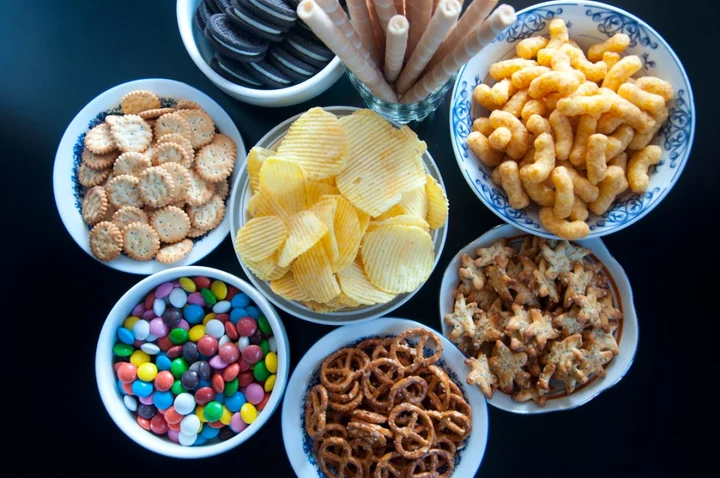
Study links ultra-processed food and drink to risk of depression in women
Consuming large amounts of ultra-processed foods could be linked to depression, according to a new study published in the Journal JAMA. Ultra-processed foods are usually high in salt, sugar, hydrogenated fats and additives. This includes ice cream, sausages, crisps, biscuits and soda. The study looked at the eating habits and mental health of more than 31,000 female nurses as part of the Nurses’ Health Study II, a long-term research project on various aspects of women’s health. To better understand the links between depression and foods, researchers started the study before participants reported any symptoms of depression and then followed them over time. This allowed the team to make a connection between a person’s diet and their mental health. Results showed women who consumed over nine portions a day of ultra-processed foods had a 50 per cent higher risk of developing depression than those consuming four portions or less. Participants who consumed a high amount of foods and drinks that contained artificial sweeteners had a particularly negative outcome, the study found. "Participants with high UPF intake had greater BMI, higher smoking rates, and increased prevalence of comorbidities like diabetes, hypertension, and dyslipidemia and were less likely to exercise regularly," the study said. “Experimental studies have shown that artificial sweeteners may trigger the transmission of particular signalling molecules in the brain that are important for mood,” the authors continued. Professor Andrew Chan, chief of the clinical and translational epidemiology unit at Massachusetts General Hospital and co-author of the research, said: “The strength of our study is that we were able to assess diet several years before the onset of depression,” according to The Guardian. “This minimises the likelihood that our findings are simply due to individuals with depression being more likely to choose ultra-processed foods.” In a 2022 study, researchers linked ultra-processed food and cognitive decline. CNN reported that the study found eating those foods may affect parts of the brain that control executive function — such as the ability to process information and make decisions. The research also found that men and women who ate the most ultraprocessed foods had a cognitive decline rate 28 per cent faster than those who did not eat those foods. They also had a 25 per cent faster decline rate of their executive functions than their peers who did not eat ultraprocessed foods. What are the symptoms of depression? According to the Cleveland Clinic, some of the symptoms of depression include: Feeling very sad, hopeless or worried. Not enjoying things that used to bring joy. Being easily irritated or frustrated. Eating too much or too little — which may result in weight gain or weight loss. Trouble sleeping (insomnia) or sleeping too much (hypersomnia). Having low energy or fatigue. Having a difficult time concentrating, making decisions or remembering things. Experiencing physical issues like headache, stomachache or sexual dysfunction. Having thoughts of self-harm or suicide. Read More Yoghurt could be the cure for bad garlic breath, study finds Study finds link between ultra-processed food and cognitive decline
1970-01-01 08:00

Yamaha YH-WL500 Review
Yamaha's $560 YH-WL500 headphones for musicians are unlike any others we’ve tested: They can simultaneously
1970-01-01 08:00
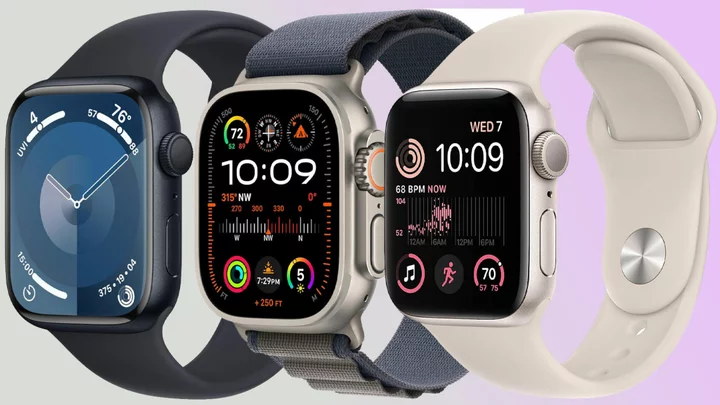
Huge Apple Watch Deals: Discounts on Series 8, 1st Gen Apple Watch SE, More
Once we all started carrying supercomputers around in our pockets, it was only a matter
1970-01-01 08:00
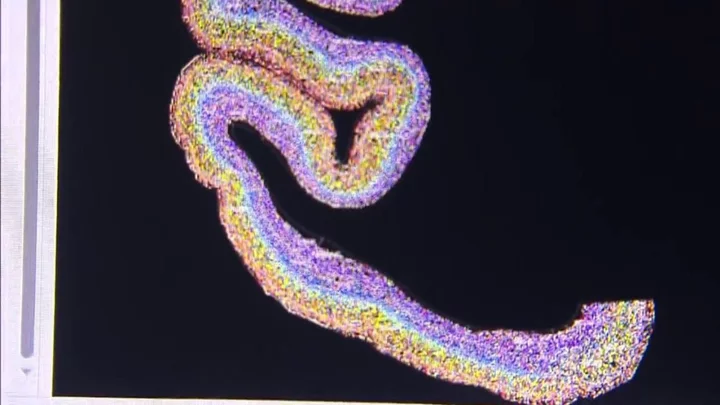
Scientists discover strange 'mathematical pattern' in the human body
The human body is a marvel of science and researchers have discovered a strange reoccurring mathematical pattern within its cells. Our bodies are made up of a massive variety of individual cells with countless different functions, from neurons in our nervous system to the oxygen carriers that all work in harmony to keep us alive. Experts from scientific research institutions in Germany, Canada, Spain, and the US have worked together on a study to determine just how many cells of each type there are in the human body and the results are staggering. They found that most adult males possess around 36 trillion cells, while adult females have in the region of 28 trillion cells. For a 10-year-old child, they have around 17 trillion. Interestingly though, scientists discovered that, regardless of the total number of cells, if they are grouped according to their function, the proportions for each individual remain the same. The researchers explained in their findings: “These patterns are suggestive of a whole-organism trade-off between cell size and count and imply the existence of cell-size homeostasis across cell types.” Scientists believe there is a natural balancing act at play between different cell types with new cells being produced to maintain the balance. The body produces fewer larger cells (such as muscle fibres) and more smaller cells (like blood cells). It is hoped that future studies will be able to uncover exactly how this happens and how bodies seem to naturally regulate cells. They explained that all cells are perfectly sized for their roles and any deviation from their scale can indicate the presence of disease. Experts have made their data, analysis and results public in the hopes that future studies into biology will be able to utilise their research. Sign up to our free Indy100 weekly newsletter Have your say in our news democracy. Click the upvote icon at the top of the page to help raise this article through the indy100 rankings.
1970-01-01 08:00
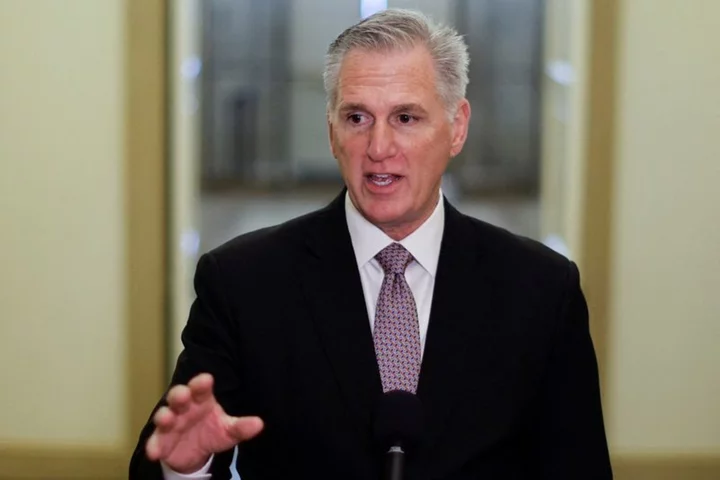
U.S. House Republicans try long-shot strategy to avoid shutdown
By Makini Brice and Richard Cowan WASHINGTON Republicans in the U.S. House of Representatives on Friday turned to
1970-01-01 08:00

US Supreme Court's Thomas attended Koch network donor events -ProPublica
WASHINGTON U.S. Supreme Court Justice Clarence Thomas attended at least two events for the conservative Koch network of
1970-01-01 08:00

David Ross takes embarrassing shot at Pirates after Cubs lose series to Pittsburgh
Frustration is certainly starting to mount as the Chicago Cubs let a good opportunity to get back on track against the Pittsburgh Pirates slip away.
1970-01-01 08:00

4 problems Bears need to fix after Week 2 disaster
Justin Fields is garnering all the bad headlines in Chicago, but the Bears have lots of problems to fix heading into Week 3.
1970-01-01 08:00

The Best Audiophile Headphones for 2023
Audiophile. Just using the word makes some of us cringe because it implies an air
1970-01-01 08:00

Amazon Prime Video will soon start running ads unless you pay a monthly fee
Amazon Prime Video will include advertising during shows and movies starting early next year, joining other streaming services that have added different tiers of subscriptions. Members of Amazon Prime can pay $2.99 per month in the U.S. to keep their service ad-free, the company said Friday. Amazon said limited advertisements will be aired during shows and movies starting early next year so that it can “continue investing in compelling content and keep increasing that investment over a long period of time.” Ads in Prime Video content will start in the U.S., U.K., Germany, and Canada in early 2024, followed by France, Italy, Spain, Mexico, and Australia later in the year.
1970-01-01 08:00

China's Xi calls on West to lift sanctions against war-ravaged Syria
By Joe Cash BEIJING (Reuters) -China's President Xi Jinping called on the West to lift sanctions on Syria and offered
1970-01-01 08:00

ProPublica: Clarence Thomas attended Koch network donor events
Justice Clarence Thomas attended a private dinner in 2018 during a winter donor summit of the Koch network, the political organization founded by libertarian billionaires Charles and David Koch, ProPublica reported Friday.
1970-01-01 08:00