
AI eye scans can detect Parkinson’s up to seven years before symptoms appear, scientists say
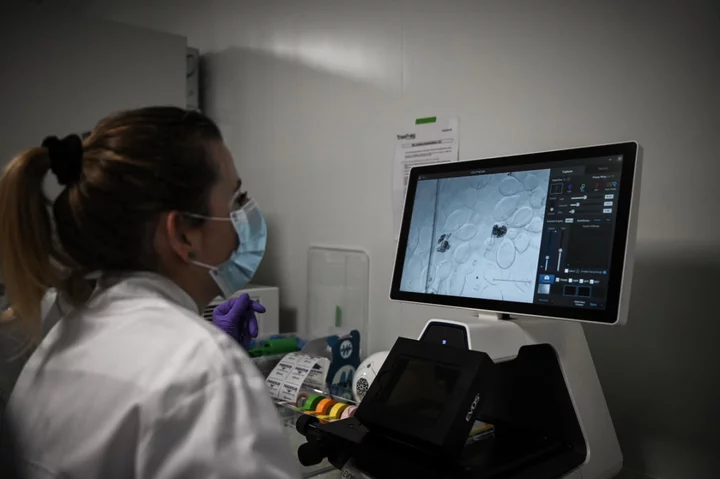
Scientists have developed eye scans that use artificial intelligence to detect markers of Parkinson’s disease seven years before symptoms appear, making it the first time the condition can be detected several years before diagnosis. Parkinson disease’s is a deteriorating neurological condition characterised by a reduction of dopamine. The research, published on Tuesday in the journal Neurology, used two large sets of health data – the AlzEye dataset and the UK Biobank database – to identify these subtle markers, even though Parkinson’s disease has a relatively low prevalence among this population. The AlzEye dataset was formed from the world’s largest database of retinal images and associated clinical data. Post-mortem examination of Parkinson’s patients has found differences in the retina’s inner nuclear layer (INL). Previous studies have shown eye-scan data can reveal signs of other deterioration of neurological conditions like Alzheimer’s, multiple sclerosis and schizophrenia. The studies are part of an emerging field of research called “oculomics”. Eye scan data has also been shown to reveal people’s propensity to high blood pressure, heart disease, stroke and diabetes. Doctors have historically conducted physical eye tests, believing the organ can act as a “window” to the rest of the body, and provide direct insight into many aspects of human health. With high-resolution images of the retina now a routine part of eye care, scientists said the data from these scans can be put to better analysis to gain better insights on patient health. In particular, a type of 3D scan known as optical coherence tomography (OCT) is widely used in eye clinics and by high-street opticians. These scans can produce a cross-section of the retina – the screen of nerves at the back of the eye – in incredible detail down to a thousandth of a millimetre. Images of the retina can be extremely useful for monitoring eye health. But researchers said their value can become much more as a retinal scan is the only non-intrusive way to view layers of cells below the skin’s surface. They found in the new study that a reduced thickness of these cell layers was associated with an increased risk of developing Parkinson’s disease. Scientists have also started using powerful computers and AI technology to accurately analyse large numbers of OCTs and other eye images, in a fraction of the time it would take a human. “While we are not yet ready to predict whether an individual will develop Parkinson’s, we hope that this method could soon become a pre-screening tool for people at risk of disease,” study co-author Siegfried Wagner from the University College London said. “Finding signs of a number of diseases before symptoms emerge means that, in the future, people could have the time to make lifestyle changes to prevent some conditions arising, and clinicians could delay the onset and impact of life-changing neurodegenerative disorders,” Dr Wagner said. Researchers said the OCT method used in the study is also non-invasive of lower cost, more scalable and quicker than brain scans for this purpose. Read More Study could lead to injections that replicate brain benefits of exercise Dementia breakthrough as drug treatment comes one step closer Parkinson’s therapy could be used to tackle alcohol abuse Justin Trudeau slams Facebook for blocking news stories about wildfires Microsoft makes big changes to takeover of Activision Blizzard Meta could finally launch Threads feature everyone is waiting for
1970-01-01 08:00
Everything you need to know about the UK’s first womb transplant
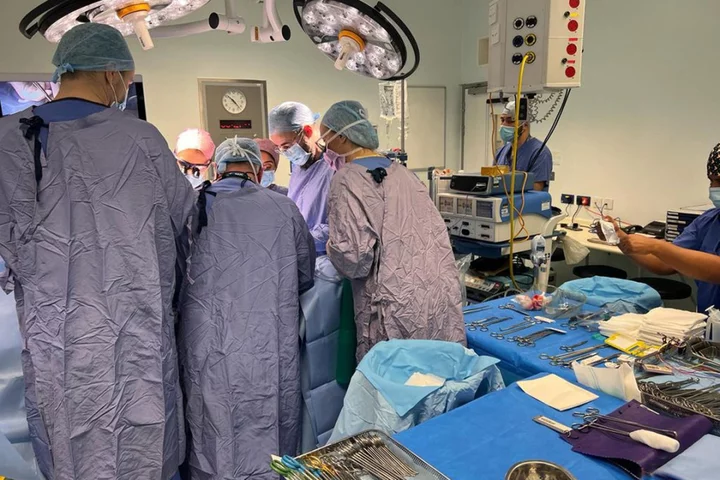
The UK’s first womb transplant means that, in future, dozens of women born without a functioning organ can carry babies of their own. – What has happened? Surgeons have performed the UK’s first womb transplant on a 34-year-old woman whose older sister donated the organ to her. In a complex procedure, the medical team removed the womb from the 40-year-old woman and implanted it directly into her sister. Both women have made a good recovery. – Have any babies been born? Not yet. Experts want to be sure the transplant is stable and the womb is functioning fully before the younger woman undergoes IVF. She has stored eight embryos and will have fertility treatment later this year in central London. The woman hopes to have more than one baby. Once she has completed her family, the womb will be removed to prevent her needing immunosuppressant drugs for the rest of her life. – Has the NHS paid for the operation? No. Each womb transplant costs around £25,000 and is fully funded by the charity Womb Transplant UK. This includes payment to the NHS for theatre time and the patient’s stay on a ward. The operations are only carried out at times when the NHS is not using the operating theatre, so they do not impact on usual NHS waiting lists. Surgeons and medical staff involved in the transplant have not been paid for the operation and have given their time freely. – Have other womb transplants been carried out around the world? More than 90 womb transplants have been carried out internationally, with most operations involving a living donor. The first successful womb transplant took place in Sweden in 2014, with the baby – Vincent – born to a 36-year-old woman who described him as “perfect”. In 2000, a transplant was performed on a 26-year-old woman in Saudi Arabia but the donor womb survived for only 99 days due to problems with its blood supply. To date, womb transplants have been carried out in more than 10 countries, including Saudi Arabia, Turkey, Sweden, the US, China, Czech Republic, Brazil, Germany, Serbia and India. – How successful is the operation? Data from the US shows that more than half of women who received a womb through a transplant in the US went on to have successful pregnancies. Between 2016 and 2021, 33 women received womb transplants in the US and, as of last summer, 19 of them (58%) had delivered a total of 21 babies. In 74% of those receiving a womb, the organ was still functioning one year after transplant and 83% of this group had live-born children. – Will there be more transplants in the UK? Yes. The second British womb transplant is scheduled to take place this autumn and experts believe a maximum of 20 to 30 per year could be carried out in the UK in the future. Transplants could help women born without a functioning womb and those who lose their organ to cancer or other conditions. Estimates suggest there are 15,000 women in the UK of childbearing age who do not have a functioning womb. – Will there be a shortage of donor wombs? Womb Transplant UK is running two programmes, one involving living donors and another with organs from people who have died. The living donor programme in the UK has so far focused on women with relatives who are willing to give their wombs. However, the team believes that in the future, the living donor programme will expand to include friends or altruistic living donors. This is currently more common in the US. The use of deceased donors is assessed by the team on a case-by-case basis. Read More Charity boss speaks out over ‘traumatic’ encounter with royal aide Ukraine war’s heaviest fight rages in east - follow live Why are wellbeing experts concerned about the ‘lazy girl job’ trend? How to check for cancer, as Morrisons puts NHS cancer advice in underwear labels Prostate screening ‘could save lives’ – the symptoms and risk factors you need to know
1970-01-01 08:00

Odey to Shutter Only Fund Run by Female Money Manager
Odey Asset Management is shutting an emerging markets fund as the firm continues to reorganize in the wake
1970-01-01 08:00

Thunderbolts movie is 'not what people are expecting'
The 'Thunderbolts' movie will be different from other films in the Marvel Cinematic Universe (MCU), according to director Jake Schreier.
1970-01-01 08:00

Analysis-UK's handling of Microsoft deal sows doubts over post-Brexit direction
By Paul Sandle and Kate Holton LONDON The long-running battle between Microsoft and Britain over the Activision Blizzard
1970-01-01 08:00

Snap Appoints India Head, Announces Revamp in Growth Push
Snap Inc. is appointing a former Google executive to lead its India operations as it strives to become
1970-01-01 08:00

Suspected Chinese dissident rides jet ski hundreds of miles to South Korea
A jet ski rider detained by South Korea for allegedly entering the country illegally is a prominent Chinese dissident who rode hundreds of miles across the sea to escape from China, activists say.
1970-01-01 08:00

China's Xi unexpectedly skipped a key BRICS event. No one is saying why
Chinese leader Xi Jinping on Tuesday unexpectedly skipped a business forum of the BRICS economic group in South Africa, sending his commerce minister instead to deliver a fiery speech in his name that decried US hegemony.
1970-01-01 08:00

Global Funds Abandon China Blue Chips in $9.3 Billion Selloff
Global investors have been shedding China’s blue-chip stocks in what’s been a record-selling streak, showing even the nation’s
1970-01-01 08:00

Andrew Tate prosecution files reveal graphic claims of coercion ahead of trial
Romanian prosecutors' files, seen by BBC, allegedly show the influencer coercing women into sex acts.
1970-01-01 08:00

How Pakistan rescued cable car school children stranded hundreds of feet above ground
Battling anxiety and nausea, they huddled together in the ruptured cable car, gripped by fear as they dangled precariously hundreds of feet in the air.
1970-01-01 08:00

Hollywood Studios Release Details of Latest Proposal to Writers
Hollywood studios released the details of their contract proposal to film industry’s screenwriters, the latest salvo in their
1970-01-01 08:00