

The Killers apologise for offending fans in Georgia with Russian 'brother' remark
Fans booed frontman Brandon Flowers for asking them to welcome a fan from neighbouring Russia.
1970-01-01 08:00
Vitamin D intake ‘may reduce cancer mortality in the population by 15%’ – study
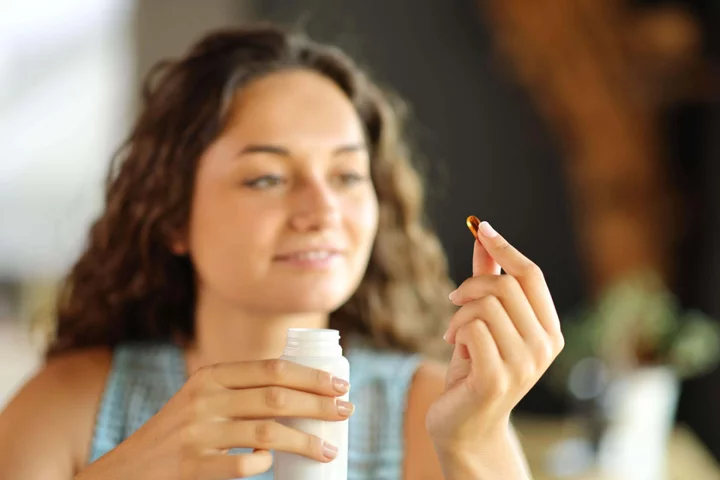
Taking regular Vitamin D supplements may reduce cancer deaths in the population by 15%, according to scientists. Data gathered from the UK Biobank, an online database of medical and lifestyle records of around 500,000 Britons, indicates vitamin D deficiency is linked to an increased cancer mortality risk – particularly in relation to bowel, stomach, prostate, and lung cancers. The researchers said their work, published in Elsevier’s European Journal of Cancer, adds to evidence that vitamin D may have a protective effect against cancer. While the findings do not explain why this happens, the team said one possibility is that vitamin D supplements may induce anti-inflammatory, antioxidant, and DNA damage repair mechanisms, which can thwart mutations that allows tumours to grow. Study author Ben Schottker, an epidemiologist at the German Cancer Research Centre, said: “Our findings identified a statistically significant relationship between vitamin D deficiency and increased mortality among several cancers. “These results can be explained by other studies, which found mechanisms by which vitamin D inhibits cancer growth and metastasis.” The NHS advice is that adults and children over four take a daily supplement containing 10 micrograms of vitamin D throughout the year. According to the Department of Health and Social Care, around one in six adults and almost 20% of children in the UK have vitamin D levels lower than government recommendations. Older people, the housebound and people from black and South Asian communities are more likely to have lower levels of vitamin D. Our findings identified a statistically significant relationship between vitamin D deficiency and increased mortality among several cancers Ben Schottker For the study, the researchers looked at data from more than 400,000 people aged 40–69. In-depth medical information was gathered through blood, urine and saliva samples. A short interview and a questionnaire as used to assess vitamin D consumption as well as lifestyle factors such as alcohol consumption, smoking. Follow-up data on health outcomes were gathered through NHS links as well as care data, cancer screening data, and disease-specific registers. Over a period of nearly 13 years, close to 13,000 people died of cancer. Results showed a majority of the study population had either vitamin D deficiency (21.1%) or insufficiency (34.4%) – used to describe low levels of vitamin D. Of the people involved in the study, only 4.1% regularly took a vitamin D supplement and 20.3% regularly took a multivitamin. Results showed that vitamin D supplement users had 15% lower total cancer mortality and 25% lower lung cancer mortality compared to those who did not take the supplement. The also found researchers found that those with vitamin D deficiency had 42% increased mortality for stomach, 27% for bowel, 24% for lung, and 36% for prostate cancers. Meanwhile those with vitamin D insufficiency were found to have 14% increased bowel cancer mortality and 19% increased lung cancer mortality. The scientists said that the potential to reduce cancer mortality by vitamin D supplementation in populations with low levels should be further explored in new research. Commenting on the study, Dr Jenna Macciochi, senior lecturer in immunology at the University of Sussex, said: “This study adds to the growing body of evidence on vitamin D and cancer. “Vitamin D plays multiple key roles in immune health and the immune system is part of the body’s cancer defence system. “With cancer rates rising and presenting a serious public health issue, its useful to have further insight into the role of vitamin D in the prevention of cancer.” But Dr Macciochi also cautioned that the Biobank data might not be diverse and representative of the whole of the UK population. Alex Ruani, doctoral researcher at University College London and chief science educator at The Health Sciences Academy – who was not involved in the study, said that the exact dosage taken by participants was not ascertained and the risk reduction was not the same for all cancers. She said: “This research doesn’t imply that taking vitamin D3 supplements will for sure lower your risk of death from cancer. “Supplementation may help with consistent vitamin D levels, whereas production from sunlight can be variable and dependent on weather, time of the day, exposure duration, being outdoors or indoors, protective UV wear or sunblock, and many other factors.” She added: “Common food sources of vitamin D3 include full-fat dairy, egg yolks, and fish. “Although toxicity is rare, there is an upper tolerable limit set in the UK, where vitamin D3 supplementation shouldn’t exceed 100 micrograms a day.”
1970-01-01 08:00
'I celebrated my 10th birthday in Changi PoW camp'
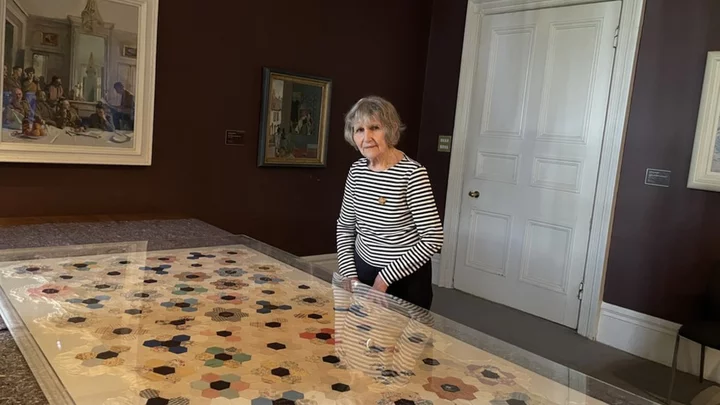
Olga Henderson, 91, has been reunited with a quilt she made with her fellow child prisoners.
1970-01-01 08:00
Men who cycle, jog or swim could cut risk of nine cancers – study
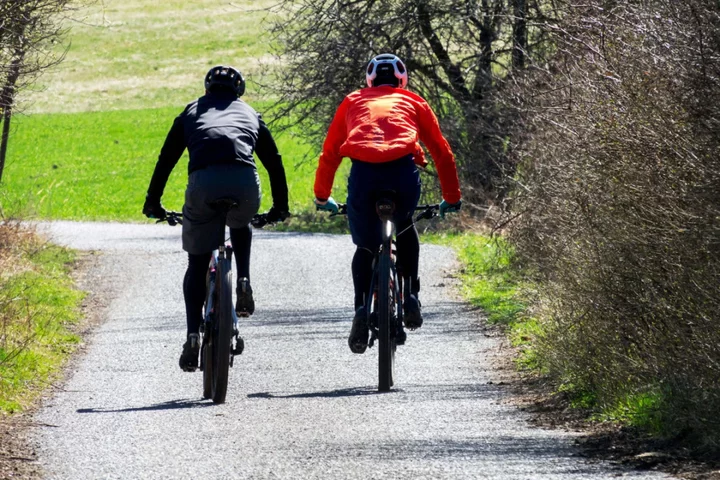
Male joggers, swimmers and cyclists could be cutting their risk of nine cancers, a new study suggests. Researchers found that men with good cardiorespiratory fitness are far less likely to go on to develop cancers of the head and neck, stomach, pancreas, liver, bowel, rectum, kidney, lung and oesophagus. Cardiorespiratory fitness refers to a person’s ability to do aerobic exercise, such as running, cycling and swimming for sustained periods, or even to climb stairs. The new study, published in the British Journal of Sports Medicine, saw experts from Sweden track just over a million men for an average of 33 years. The men involved in the study were conscripted to military service in Sweden between 1968 and 2005. At the start of their conscription the men underwent a battery of tests assessing a number of factors including their height, weight, blood pressure, muscle strength and cardiorespiratory fitness. During the follow-up period, about 84,000 developed cancer. Researchers found that, compared with those with low cardiorespiratory fitness, men with a higher level of cardiorespiratory fitness were: – 19% less likely to develop head and neck cancer.– 39% less likely to develop cancer of the oesophagus (food pipe).– 21% less likely to develop stomach cancer.– 40% less likely to have liver cancer.– 18% less likely to develop bowel cancer and 5% less likely to develop cancer of the rectum– 20% less likely to develop kidney cancer.– 42% less likely to develop lung cancer.– 12% less likely to develop pancreatic cancer. “These results could be used in public health policymaking, further strengthening the incentive for promoting interventions aimed at increasing [cardiorespiratory fitness] in youth,” the authors wrote. The researchers did find that higher cardiorespiratory fitness was linked to a slight (7%) increased risk of prostate cancer and a 31% increased risk of skin cancer. A previous study examining the same data set suggested the slight increase in risk for prostate cancer was not linked to a higher rate of aggressive prostate cancer or prostate cancer death, and could be attributable to increased screening. The authors suggested a higher skin cancer rate could be explained due to “higher UV exposure”. Read More Charity boss speaks out over ‘traumatic’ encounter with royal aide Ukraine war’s heaviest fight rages in east - follow live Why are wellbeing experts concerned about TikTok’s ‘lazy girl job’ trend? Red flags you might be missing about your child’s online safety Rumer Willis says she is ‘grateful’ to her body following birth of daughter
1970-01-01 08:00
Why hostels are having a renaissance amid the cost of living crisis
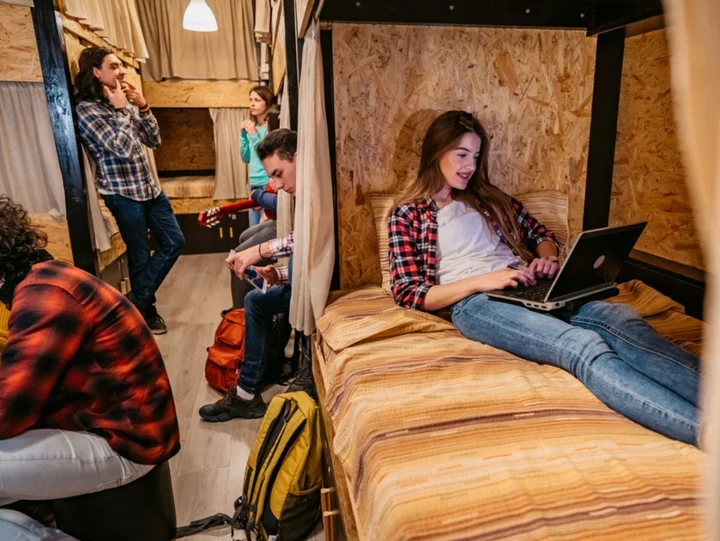
It doesn’t matter how many times an influencer tells you that “courage” is the only thing required to travel – it doesn’t change the fact that you normally need cold, hard cash. Airlines and hotels don’t care about our personal motivations and bucket lists, and travelling is – now more than ever – a luxury. At a time when food banks are bursting at the seams, millions of people have placed travelling in the “maybe next year” category. I’m one of them – I simply can’t afford to go abroad right now. Even a trip to visit my parents in my native Poland must wait till autumn, when Ryanair tickets fall low enough to be within my price range. At the same time, I firmly believe that summer is for fun and making memories. So, one morning in June, I decided to take a day trip from Glasgow to Pitlochry in the Scottish Highlands. I initially planned on using a return ticket, returing home the same evening to cut costs. Then I saw a backpackers’ hostel on the town’s picturesque high street. I couldn’t resist. I had to check-in. Read more on Scotland travel: Take the train for a sustainable Scottish Highlands adventure Best budget hotels in Scotland The best Scotland road trips to travel in your lifetime What comes to mind when you read the word “hostel”? Temporary accommodation for people with no luck? Prison-like conditions? A horror film from 2005? In my case, the answer is community. At the age of 18, I began working in the funky and vibrant hostels of Krakow’s Jewish Quarter. What initially started as a way to escape hellish call-centre work quickly turned into the most fulfilling job I ever had. As a result, my nostalgia-fuelled stay at Pitlochry Backpackers felt magical yet surreal. The pandemic nearly destroyed the industry. Sleeping in one room with multiple strangers simply wasn’t an option at a time when most people were meeting their friends and loved ones in parks for socially distanced walks. Even the award-winning hostels I used to work in didn’t survive, and they were among the best in the world. Hostels aren’t just about a cheap bed; if you choose wisely, yours might be more fun than any fancy hotel. And trust me – I love fancy! But it’s a chance to meet new friends from all over the world, or at least encounter characters you’re unlikely to spot at the local branch of Hilton. The hostels I worked in had a tremendous reputation because the whole team worked hard to provide an unforgettable experience. We showed our guests around the city, partied with them, cooked for them at no extra charge, played games and booked tours together. I’m still in touch with some of my former guests, many of whom I met way back when people on the internet were arguing about the colour of a dress. Nearly a decade later, most of us are scarred after a deadly pandemic and much poorer than we wanted to be. If ever there was a time for a hostel renaissance, it’s now. Hostels aren’t just about a cheap bed; if you choose wisely, yours might be more fun than any fancy hotel I think everyone with a passion for travel should try a proper hostel at least once in their life. There is something harmonious about exploring a new place – whether it’s a Highland forest or the Old Town in Prague – and returning to a communal space filled with personality, where the sound of laughter welcomes you as soon as you cross the threshold. In Pitlochry, I spent the day spotting kingfishers in the forest and listening to Joni Mitchell by the Loch Dunmore. Upon my return, I was greeted by a cheery Australian lad who said we should go for pints later. In the hostel’s kitchen, people were making a casserole together. I ended up solving jigsaw puzzles with two Brazilians at 2am while discussing the Arctic Monkeys and Harry Styles’ newest album. In the digital era, and in the midst of a loneliness epidemic, it’s harder than ever to establish new connections face-to-face. Even asking for a napkin at McDonald’s gives me anxiety. That night in Pitlochry, I was showered with generosity and kindness. Chatting to everyone and learning about their circumstances felt liberating and natural. The process of choosing a hostel is not much different to picking a hotel. Pay attention to reviews; a place with a good rating is likely to be perfectly clean and tidy. A caring management is key. Ideally, you want your hostel to include various references to backpacking and the outdoors. Speaking from experience, if the place is filled with maps, flags, and leaflets, that’s a good start. A hostel should be a warm, authentic place that brings together people who are passionate about visiting new places and learning new things during their adventures. There’s nothing worse than a cold, lifeless hostel with white walls and fragile, aluminium frame beds that squeak and shake every time you take a deep breath. Many hostels offer private bedrooms at prices much lower than budget hotels. Booking one is a best-of-both option for those who would love to experience the social elements of a hostel without having to share a dorm with strangers. If you’re staying in a dorm and the place isn’t fully booked, they will most likely offer to move you to the most comfortable dormitory or bed available. Receptionists are there to tell you about the area, offer recommendations and help you book attractions. In the digital era, and in the midst of a loneliness epidemic, it’s harder than ever to establish new connections face-to-face Pitlochry is a popular Scottish tourist destination, but my stay still cost me a paltry £25. Book a good hostel in Central or Eastern Europe, and you could end up paying half that price. On the other end of the spectrum, some of Europe’s best hostels, such as Majdas Hostel in Mostar, Bosnia and Herzegovina, or the House of Sandeman in Porto, Portugal, charge somewhere between £30 and £45 for a night in a dorm during the summer months. That’s still far cheaper than most hotels, for digs that are arguably far superior. Pitlochry Backpackers helped me find a bit of that 2010s joy in me again. Surrounded by board games, DVDs, musical instruments, and quirky posters reminded me that you don’t have to splurge to have memorable, delight-inducing travel experiences. I might be cash-poor, but I now intend on getting out and exploring more of Britain’s nature while staying in cheap and cheerful backpackers’ hostels. I don’t plan on staying home all summer, and you don’t have to either. It’s time to shake off your British reserve, channel your inner extrovert and swap buttoned-up luxury for the hotel’s more affordable, cooler cousin. Read more of our best Scotland hotel reviews
1970-01-01 08:00

Boeing China appoints new president amid Sino-US tensions
BEIJING Boeing named Alvin Liu head of its China unit on Wednesday, picking a Chinese-born representative recently hired
1970-01-01 08:00

Liverpool's plans for Mohamed Salah and Alisson amid Saudi Arabia interest
Liverpool duo Mohamed Salah and Alisson are subject to interest from clubs in the Saudi Pro League, but the Reds do not intend to sell either of them.
1970-01-01 08:00

Ecuador election: 'I'm wearing a bulletproof vest 24 hours a day'
Andrea González aims to be vice-president in Ecuador after her party's presidential candidate was shot dead.
1970-01-01 08:00

Clean Energy Could Rival Gaming as Economic Engine for US Tribes
Tribal lands have some of the best potential for solar and wind energy in the US, but it’s
1970-01-01 08:00

Battery Giant CATL’s New Fast Power Pack to Tackle Range Anxiety
Battery giant Contemporary Amperex Technology Co. Ltd. unveiled a new superfast-charging battery Wednesday that could be a game-changer
1970-01-01 08:00

Thai key rate near balanced level, politics won't impact policy -central bank chief
By Orathai Sriring and Kitiphong Thaichareon BANGKOK Thailand's current level of the benchmark interest rate was nearly balanced,
1970-01-01 08:00

Why are wellbeing experts concerned about TikTok’s ‘lazy girl job’ trend?
Have you clocked TikTok’s ‘lazy girl job’ trend? It’s all about prioritising work-life balance over a job that drains you dry. A ‘lazy girl job’ is one that pays well enough for you to live comfortably – but doesn’t need to define your entire self-worth and consume too much of your time and energy. On the surface, this all sounds quite healthy, a backlash to the always-on ‘hustle culture’ that’s become ingrained in the modern world. So, why are wellbeing experts concerned? Work-life balance isn’t lazy “Turning your back on hustle culture shouldn’t be deemed ‘lazy’,” Tina Woods, CEO of Business for Health, a business-led coalition focused on improving workforce health, told PA Media. “A healthy work-life balance should be encouraged, rather than shamed, and employees shouldn’t feel guilty or ashamed for prioritising their wellbeing and mental health over their work duties and workload.” So, it’s not so much the concept behind ‘lazy girl jobs’ that’s problematic. Rather, it’s the use of the word ‘lazy’ to describe somebody who works a reasonable number of hours and values their wellbeing, and the reasons we got to this point in the first place. Have we normalised overworking? There may be times when people need or choose to hustle, or devote a larger chunk of their time towards a particular goal. That’s not something we need to sweepingly demonise necessarily. “Just as we shouldn’t shame employees who do set boundaries in the workplace and [want] a healthy work-life balance, there will be some employees who enjoy ‘hustle culture’,” Woods added. “Ultimately, employees should have the choice and flexibility to work how they choose to.” What isn’t good though is how “overworking” has become “expected” as part of modern working culture, she explained. We’re seeing a growing culture of overworking being celebrated... Tina Woods, Business for Health CEO “Hustle culture has grown in popularity since the pandemic, with side hustles on the rise amongst employees, especially Gen Z. However, the notion of pushing yourself and putting your all into your work can cause both physical and mental effects. It can lead to a toxic working pattern and trigger stress and burnout, as well as physical ailments such as disrupted sleep patterns and exhaustion,” said Woods. “More often, we’re seeing a growing culture of overworking being celebrated and, in many situations, expected. Whether this presents itself through staying at the office late, or not taking a lunch break or annual leave, working tirelessly is being rewarded by some seniors, and it shouldn’t become the norm.” What does this mean for young women? The fact the trend has been centred on ‘girls’ is another point of consideration. “Traditionally, women and especially mothers have faced stigma in the workplace. This includes stigma around personality traits, maternity leave and women’s health. As a result, many female employees will feel the need to push themselves harder or work longer hours than their male peers,” said Woods. “Women and parents are more likely to report lower mental health, putting them more at risk for mental health conditions such as anxiety and depression. This, coupled with the pressure women may already feel at work and stigma, such as the latest ‘lazy girl job’ trend, means employers need to ensure they’re creating a supportive work culture and healthy environment.” Culture shift According to Woods, there is a responsibility for employers to drive cultural shifts towards a healthier approach to work with a focus on preventative measures, rather than waiting until employees are encountering problems such as burnout or chronic stress, and then responding. “Setting boundaries that lead to a healthy work-life balance is something that should be encouraged in the workplace. It’s clear that post-pandemic, the boundaries have become blurred, with many adapting to hybrid and remote working. However, this is an issue employers need to make a priority,” said Woods. “By doing so, workplaces will see higher levels of presenteeism, alongside boosted morale, engagement and productivity. In a tight labour market, attracting and retaining employees is also vital. Wellbeing plays a big role in that. “Policies such as ‘Permission to Pause’ can be really powerful in encouraging a healthy work-life balance. They give employees autonomy and the ability to stop and take some time for their wellbeing within the working day, without feeling guilty,” she added. “Perhaps, most importantly of all, employers need to listen and respond to the needs of their own workforce and sector, recognising there is no ‘one size fits all’ solution to health and wellbeing, because everyone is uniquely human. Business leaders, HR managers and line managers can work to better understand the needs of their workforce through pulse surveys, interviews, and open forums.” Read More Charity boss speaks out over ‘traumatic’ encounter with royal aide Ukraine war’s heaviest fight rages in east - follow live Red flags you might be missing about your child’s online safety Rumer Willis says she is ‘grateful’ to her body following birth of daughter Sugary cereals and yoghurts must remove child-friendly packaging – health group
1970-01-01 08:00