
How to shine all summer long in the disco-tastic silver trend
Silver was a major trend on the spring/summer 2023 catwalks, with models at Michael Kors, Dolce & Gabbana and Gucci sashaying down the runway in dazzling eveningwear looks. From glittering, diamante-encrusted maxi skirts to mirror-like metallic gowns and shiny shoes, designers seem to think silver is the colour of the season. Then, in May, Beyonce commenced her long-awaited Renaissance World Tour and the disco-inspired craze really went into overdrive. Queen Bey wore a series of silver looks on the opening night – including holographic and diamante bodysuits – and has continued to introduce more shimmering looks at later concerts. The singer was inspired by house and disco music while creating hit album Renaissance, and her fashion choices reflect the decadent outfits seen during the Studio 54 era. Fans have been getting in on the action too, with fashion resale platform Depop reporting searches for ‘mirror’ going up by 65% and ‘silver’ spiking by 21% when the tour hit the UK. Celebrities have also embraced the look, with actors Sarah Michelle Gellar, Halle Bailey and Jamie Lee Curtis all rocking glittering ensembles on the red carpet. Kim Kardashian sent out a series of silver looks when she art directed the Dolce & Gabbana SS23 show, and wore a pair of gleaming gowns from the brand herself. But you don’t have to don a floor-length gown to get the disco diva look. From party frocks to everyday shoes, here’s how to wear the silver trend this summer… Party dresses For a sensational summer party look, you can’t go wrong with a sassy silver dress. For maximum impact, take a leaf out of the Paris Hilton playbook (who can forget the chainmail Julien Macdonald number she wore on her 21st birthday?) with a sparkly mini dress. To really nail the Beyonce look, add matching heels and handbag, or let your dress do the talking and team it with neutral accessories. Superdry Sleeveless Sequin A Line Mini Dress, £64.99 Belissh Cowl Neck Metallic Mini Dress Silver, £69 Shiny separates For a slightly more laidback take on the trend, silver separates can be dressed up or down. A swishy sequinned coord set is the ultimate cool-girl party outfit, while metallic shorts or trousers are the on-trend alternative to denim. Jigsaw Pewter Sequin Cami, £125; Pewter Sequin Palazzo Trousers, £150, John Lewis and Partners Misirli 1951 Zero Neck Beige Knitwear Crop Top, £58.46 (was £97.43); Metallic Pull On Shorts, £64.40 (were £107.33) Metallic bags In previous years, a silver bag would only be an after-dark accessory, but this season it’s a daytime staple. A Noughties-style metallic shoulder bag is the perfect partner for baggy jeans, relaxed tailoring or preppy skirts. Hvisk Moon Shiny Smooth Shoulder Bag, £42.50 (was £85), John Lewis and Partners Dune London Duchess S Silver Small Quilted Leather Bag, £120 Disco heels No disco diva ensemble is complete without a pair of metallic high heels for dancing the night away. This season the high street is awash with Seventies style ankle-strap heels perfect for teaming with your summer party dresses. Calla Emily II Silver Glitter Leather Shoes, £149 Monsoon Bow Block Heel Sandals Silver, £75 Esska Clara Silver Heeled Sandals, £155, Oliver Bonas Flashy flats Bring a dash of disco into your everyday wardrobe with a pair of metallic flats. Silver trainers or ballet flats elevate even the simplest of outfits, while shiny sandals are a great day-to-night option on holiday. Air and Grace Sadie Silver Metallic Platform Trainers, £189 Heavenly Feet Trudy Silver Casual Sandals, £44.95 Read More Charity boss speaks out over ‘traumatic’ encounter with royal aide Ukraine war’s heaviest fight rages in east - follow live Disability Pride Month: Motor neurone disease diagnosis spurred us on to get married 11 ways to channel seaside vibes at home One in four adults in UK have never boiled an egg, survey reveals
1970-01-01 08:00
Teva Weighs Sale of $2 Billion Active Ingredients Unit
Teva Pharmaceutical Industries Ltd. is weighing options for its active ingredients business, including a possible sale, people with
1970-01-01 08:00
Disability Pride Month: Motor neurone disease diagnosis spurred us on to get married
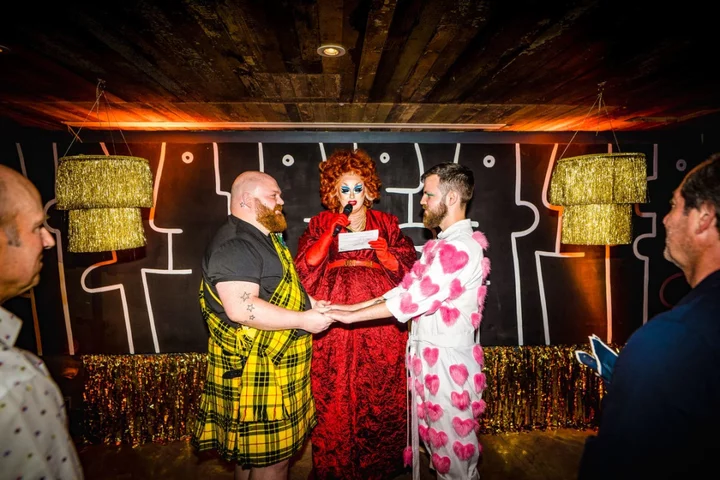
Getting married wasn’t “on the books” for London couple Craig Pollard and Alex Herd for a long time. But that changed when Alex got diagnosed with motor neurone disease (MND) in 2021, aged 30. “We decided to get married as a bit of a consequence of Alex’s diagnosis,” explains Pollard, 35. “It wasn’t something that was on the books for us before, especially as being gay, marriage wasn’t available to us when we were younger, so wasn’t necessarily something we’d aspired to. “But then thinking about the legacy we wanted and how much time we had together, we saw it as a good way of bringing our families together and celebrating something really positive in our life.” MND affects nerves in the brain and spinal cord which send signals to muscles. There is currently no cure, so as muscle loss gets worse over time – affecting movement, speech, swallowing and breathing – it eventually leads to death. It’s uncommon and mostly affects people in their 60s and 70s, although as Herd’s diagnosis shows, MND can occur in younger adults too. The charity Challenging MND, which helps people with MND, has the ‘opportunity to create amazing memories’, funded the couple’s big day last year – a fabulous festival-inspired party officiated by drag queen Just May from RuPaul’s Drag Race UK Season 4. They had already been together for a decade, so the wedding was a “celebration of all the things we’ve enjoyed together over the last 10 years”, Pollard notes (plus “lots of glitter and sparkle – it was perfect”). It was also the last time Herd went a full day without using a wheelchair. “So it was the very last moment we possibly could have done that,” adds Herd, now 32. “And we can look back at that as a really special day.” He first started noticing symptoms in early 2021 – muscle twitching then weakness in his hands and arms, before his legs became increasingly affected. Herd used a manual wheelchair for a while but recently switched to an electric one. “That’s changed my life quite a lot,” says Herd. “While I was in the manual wheelchair and Craig was pushing around, I sort of felt like I didn’t really exist anymore, because everyone would interact with him, and I wasn’t responsible for where I was. But now I’m in control of my movement, I feel like I’m more interacting with people myself.” The diagnosis has been challenging on multiple levels, individually and as a couple. MND doesn’t present with exactly the same patterns for everyone – so there is no guidebook as such, and navigating support services relies on a lot of self-advocating. Things such as specialist physiotherapy and occupational therapy can be helpful, along with home adaptations. “Having MND, you have to get used to things changing,” says Herd. “I mean, I can’t necessarily relate at this point to someone who’s been in their wheelchair for their whole life, but because things keep changing, you can’t really get used to it properly. So it’s very difficult for me to kind of keep hold of my identity.” In a recent survey, Challenging MND found 63% of people living with the MND had felt marginalised or ‘othered’ because of their condition, while 51% felt others see MND as their identity. In addition, 80% said they felt isolated, and 69% worry about being a burden to their family. Feeling ‘othered’ is something Alex found himself thinking about while attending Pride London recently. “It’s almost more like something I’m doing, than something other people are doing – because I’m seeing people doing what I would’ve been doing a year ago, it’s still fairly fresh for me, so I’m still comparing the before and after,” he reflects. “At Pride, lots of people get to see themselves represented in the crowds, and that’s nice. But then I realised how much more of a minority people in wheelchairs are. It made us realise how different our situation is now, our priorities and expectations in general.” Music has been an important way for him to stay connected with his identity. “I’ve been making music for over 10 years, so it’s nice I’m still able to do that. I think as much as possible, people in a situation like this need to try and keep doing the things that made them happy before,” he says. While he can no longer play his guitar, Herd made voice recordings to use an instrument and creates tracks on his computer, using foot pedals as he can no longer click the mouse. Since his diagnosis, he’s actually been finishing a lot more songs. “I have less distractions now!” Herd quips. “But using music as a communication tool, that’s definitely become more important to me.” Challenging MND also supported the couple with a trip to Eurovision – “which was really touching and we made great memories”, says Pollard. They’re also grateful to support from the Motor Neurone Disease Association, who provides a local area liaison, and their local St Christopher’s Hospice has been “really helpful”. These things make a huge difference. “Something I’m very conscious of as an able-bodied person is watching Alex have to come to terms with first of all being disabled, then being visibly disabled, and then being disabled in public – there’s been a lot of different elements we’ve had to really tackle,” Pollard reflects, citing navigating public transport as one of the main everyday challenges. There’s an emotional toll too. “My energy levels are a lot lower than they used to be, and my capacity for stress. I feel like I already have this much higher baseline of anxiety about various things, so it feels much easier to become overwhelmed,” says Herd. “I think the only thing we can really do is just try and focus on the next thing, rather than worrying about everything.” As members of the LGBTQ+ community, there are sometimes other nuances to their experiences. They’ve noticed LGBTQ+ events are doing well with accessibility, but representation can be a more subtle matter. “There’s definitely an element of the community who are very mindful of others and very empathetic, which I think has been where I’ve learned a lot about different people’s experiences in my life,” says Pollard. “But when it comes to the overall society of the community, I think there’s still a large proportion of it based on image, based around being cool and trendy. So it’s quite easy for people with accessible requirements to be kind of ignored in that space.” As for their experiences in public, Craig says: “We have struggled to feel like we can take up space. First of all being LGBT, we often don’t feel that safe in certain spaces, public transport we’ve had trouble on once or twice in the past, so you’re always a bit uneasy. With moving into being more visibly disabled and needing more accessible requirements, that’s something we’ve to discuss and manage.” Thanks to Challenging MND, the couple are banking up the joyful times. “They offered to support our wedding, which was really special, and without them we probably wouldn’t have had it,” says Pollard. “That isn’t just a memory for us, it’s a memory for our families and friends too. It was really special.” Challenging MND aims to support and empower those living with MND to create lasting memories for themselves and their families. To date they’ve granted in excess of £1.1million and supported over 100 families.
1970-01-01 08:00
Currys Shares Fall as UK Retailer Cuts Dividend to Save Up Cash
Currys Plc shares fell after the UK electronics retailer canceled its final dividend and lowered pension contributions in
1970-01-01 08:00
Threads: What it’s like to use Instagram’s new Twitter rival
Threads, Instagram’s answer to Twitter, is finally here. After months of rumours, and amid what seems like it could be the decline of Twitter, Meta has launched its own platform for posting short text updates and replying to those from others. The app arrived overnight and is already picking up momentum, gaining ten million of downloads and signups in its first few hours. But what is it actually like to use, and will it be the thing that finally takes over from Twitter? Here are some first impressions of using the app, in the first few hours it is available. First impressions: Signing up and following people The sign-up process is astonishingly slick, in large part because of the app’s integration with Instagram. (So if you don’t use Instagram already, it won’t be quite so impressive.) This is already an important contrast with other Twitter competitors, such as Mastodon and Bluesky, which have complicated signup processes that could very easily put off potential users. Signing up means downloading the app, clicking your already imported Instagram login, and then choosing which of the accounts you follow there to copy over to Threads. Once that is done, you will be taken to the news feed. From there, everything will look very familiar: it is a combination of Twitter and Instagram, and that’s exactly what it looks like. If you’ve used those apps, you’ll probably already have a perfect sense of how it works, and even if you haven’t then everything is built to be as obvious and intuitive as possible. What is Threads like to use? The Threads app is astonishingly neat, and it already puts Twitter to shame. Everything is nicely sized to ensure that you can read posts and scroll through them, and the news feed is easy to navigate through. It is, mostly, like one of the third-party clients for Twitter, which Elon Musk killed off soon after he took over the site. Just like them, you get the basic functions of Twitter – replies, profiles and so on – but repackaged into a much nicer design. One of the big problems will be deciding who to follow from Instagram. Being able to post nice pictures on there is in no way an indication of a person’s ability to write nice text updates, and many of the best posters on Twitter would have been useless on a picture-focused site. When I open up Threads, for instance, it has a large focus on the kind of organisational account that I tend to follow for their nice pictures on Instagram. Those accounts are not necessarily quite so fun in text form. The other big problem is that the app is a lot less useful until people actually start signing up. If you don’t follow people already, then the feed will instead try to fill itself with posts from others, picked via an algorithm; just as it does on Instagram, that algorithm tends to pick quite boring and not especially relevant posts. An app like Threads – just like Instagram and Twitter before it – are only really as good as the people you follow. For now, there are fewer people to follow, and so it’s hard to say exactly how good or bad the app might end up being. Will Threads kill Twitter? Many apps have tried to succeed Twitter. Many have failed. But Threads is stronger than those that have come before, and Twitter is weaker than it has ever been. So the fact that no app has yet unseated Twitter does not mean that it is doomed. Much of that strength comes in the backing of Meta. It means that the app is slick and highly functional at launch, and comes with an existing network of people imported from Instagram. And much of the weakness of Twitter comes from timing. The site has gone from problem to problem under Elon Musk – but feels particularly troubled at the moment, after a weekend that saw a flurry of technical issues that brought with them an unusual response. However, Twitter has long served an unusual function in society, far beyond its actual size. Celebrities and major organisations have used it to make announcements; the media has used it to report on them. That importance within society meant that it stuck around long after its users became frustrated with it (and was probably the reason Mr Musk bought it in the first place). But that importance has already been disappearing: as a result of technical issues, a falling reputation and more, many of the individuals and organisations that gave Twitter its value have already left. It’s very likely that no other app will ever be able to recreate the combination of societal heft and blazing speed that marked Twitter out at its best. Not even Twitter can really do that anymore. It’s unlikely that Twitter will actually die soon: social networks tend to die not with a bang but with a whimper, and there will be probably be people that stick around long after the site has lost its place in society. But it is safe to say that it is already shrinking, and that Threads could accelerate that. So Threads might eventually kill Twitter: it already has a better design, and is less likely to prove controversial, and looks well set up to take users from its competitor site. But it might also not actually need to kill Twitter, which is dying already and might never be replaced. Read More Threads: What it’s like to use Instagram’s new Twitter rival Meta’s new Twitter rival app Threads gets over 5 million sign-ups How to get and use ‘Threads’, the biggest new social app Mark Zuckerberg launches his ‘Twitter killer’ app called Threads Judge blocks Biden agencies from communicating with social media platforms Meta’s Twitter alternative Threads to be launched this week
1970-01-01 08:00

Annie-Marie sings about being 'happier' after walking away from a toxic relatiosnhip on new single
Anne-Marie has released the new single 'TRAINWRECK' from her upcoming LP 'UNHEALTHY'.
1970-01-01 08:00
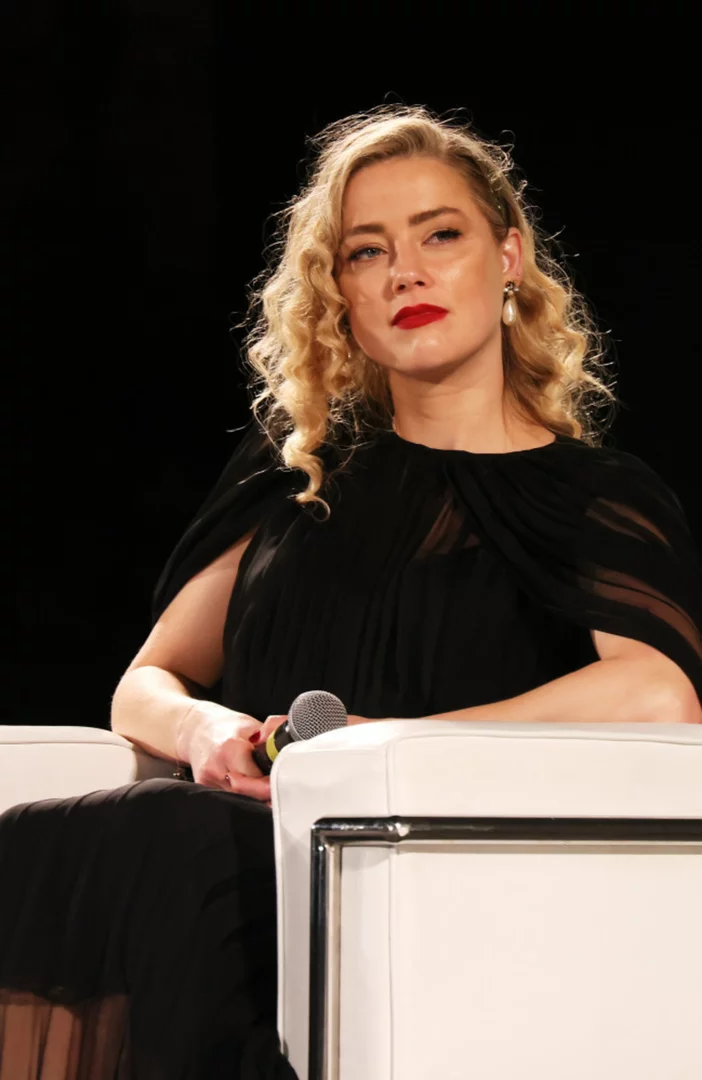
Amber Heard: There's a tonne of pressure on Aquaman 2 to be a success
Amber Heard says a good actor is able to "balance" blockbusters with small independent films.
1970-01-01 08:00

A 65-year-old man is found dead from apparent extreme heat at Death Valley National Park
A 65-year-old San Diego man was found dead apparently from extreme heat at Death Valley National Park in California, where his car had two flat tires and a non-functioning air conditioning system as temperatures soared into the triple digits, park officials said Wednesday.
1970-01-01 08:00

Indonesia pulls out of hosting World Beach Games, months after Israel controversy
The 2023 World Beach Games, scheduled to take place in Bali next month, have been canceled after hosts Indonesia suddenly withdrew from the tournament.
1970-01-01 08:00

Hong Kong police arrest 4 for allegedly aiding dissidents abroad
Hong Kong police have arrested four people on suspicion of financially aiding activists abroad, just days after they offered bounties for information leading to the arrest of eight pro-democracy figures living in self-imposed exile.
1970-01-01 08:00

Philadelphia mass shooting was 'obviously planned,' DA says. But investigation could still take months
The man facing murder charges in the shootings of five people in a Philadelphia neighborhood earlier this week "obviously planned" the rampage, but the investigation into other factors of the case could take months as authorities dig for more details, a district attorney said.
1970-01-01 08:00

Moderna inks deal to make mRNA medicines in China
US drugmaker Moderna has signed a deal to make mRNA medicines in China as part of its first major investment in the country, despite escalating trade and political tension between Washington and Beijing.
1970-01-01 08:00