
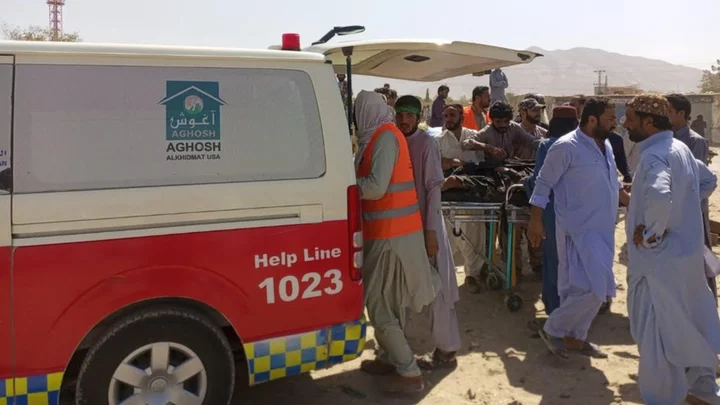
Pakistan: At least 20 killed, dozens injured in Mastung blast
The police suspect it was a suicide attack targeted at a religious gathering.
1970-01-01 08:00

Mysterious fairy circles are increasing across the world and scientists are baffled
A natural phenomenon consisting of polka-dot-style formations has been cropping up around the world, and scientists are baffled as to why. The circular-shaped patches of ground have been seen in deserts in Australia and Namibia but now experts believe they are more widespread than originally thought. Known as “fairy circles”, there are now 263 known sites across the globe where they can be found, according to new research published in the journal Proceedings of the National Academy of Sciences (PNAS). They have been documented in 15 countries, across three continents, including the Sahel region of Africa, Madagascar, and in Middle-West Asia. And yet, despite the spread of these anomalies, scientists are still none the wiser about how they actually form. A team led by environmental scientist Emilio Guirado, of the University of Alicante in Spain, explained in their paper on the "intriguing" phenomenon: “We conducted a global and systematic assessment of fairy circle-like vegetation patterns and discovered hundreds of [fairy-circle]-like locations on three continents. “Our study provides insights into the ecology and biogeography of these fascinating vegetation patterns and the first atlas of their global distribution.” The mysterious circles appear in desert regions and can be as wide as 12 metres (39 feet) in diameter. They are almost always spaced out and rarely connect or overlap with one another. Several theories have been put forward as to what causes them, including, tiny insects, termites, and plant toxins. But, none have been accompanied by any significant evidence and some have been debunked completely. One significant factor limiting their study is they are often found in places that are difficult to access and are inhospitable. Locating the 263 different sites of “fairy circles” involved analysing high-resolution satellite imagery. Guirado and his team wrote in their paper: “[The sites] include those already identified in Namibia and Western Australia, as well as areas never described before, including the Sahel, Western Sahara, Horn of Africa, Madagascar, Southwest Asia, or Central and Southwest Australia. “By doing so, our study provides a global atlas of areas showing FC-like vegetation patterns and expands the known existence of this vegetation type to new countries and continents.” The team hopes that locating new sites will enable them to find common traits that may point towards their cause. Sign up to our free Indy100 weekly newsletter Have your say in our news democracy. Click the upvote icon at the top of the page to help raise this article through the indy100 rankings.
1970-01-01 08:00

Evergrande: Anxious Chinese home buyers reel from crisis
As China's housing crisis grows, so have fears that dreams of home ownership have been bulldozed.
1970-01-01 08:00

Daily activities could help lower heart attack risk, study suggests
Everyday activities like walking up the stairs or playing with children could help lower the risk of heart attack, stroke and even premature death, new research suggests. The experts found that although short bouts of incidental activity are good for you, the how long you do them for, and how vigorously makes a difference. The findings may make physical activity much more accessible to people who are unwilling or unable to take part in structured exercise, researchers say. They found that the longer the bouts of activity, the better, regardless of total activity levels. The large majority (97%) of this everyday physical activity, like walking to the bus stop or household chores, was made up in bouts lasting less than 10 minutes. In a group of people who said they did not take part in exercise or sport, short bouts of less than 10 minutes at a moderate to vigorous intensity were associated with a steep decrease in heart attack and stroke, and death by any cause. According to the findings, moving consistently for at least one to three minutes was linked to significantly more benefit (29% lower) than very short bouts of movement that lasted less than one minute. Senior author Professor Emmanuel Stamatakis from the University of Sydney’s Charles Perkins Centre, in Australia, said: “From walking up the stairs to speedily mopping the floors, in recent years we’ve come to understand that it is not just structured exercise that is good for our health, but we know very little about how these short bouts of incidental activity translate to health benefits.” He added: “The take-home message here is any type of activity is good for your health, but the more effort you put into those daily tasks and the longer you keep up that energy, the more benefits you are likely to reap. “If you are huffing and puffing and unable to hold a conversation for some of that time you have hit the sweet spot.” Lead author Dr Matthew Ahmadi said: “The idea of accruing short bouts of moderate to vigorous activity through daily living activities makes physical activity much more accessible to people who are unwilling or unable to take part in structured exercise. But as we see in this data, the length and the vigour people put into these incidental activities matters.” The risk of all-cause death and major cardiovascular events (heart attack or stroke) was 29-44% lower for activity periods of five minutes to less than 10 minutes, than bouts of less than one minute. The study, published in The Lancet Public Health, also found that the higher the amount of vigorous activity in each bout the better. People who huffed and puffed for at least 15% of the activity period (10 seconds per minute) saw the greatest benefit. Bouts of less than one minute were also associated with benefits if the above 15% vigorous activity rule was applied, researchers found. The researchers used data from wrist devices worn by 25,241 people aged 42 to 78, in the UK Biobank database, and artificial intelligence to analyse the seven-day physical activity patterns in people who said they did not exercise. The study linked these physical activity patterns with health records, following people for close to eight years to identify how length and intensity of physical activity bouts were linked to health status. Dr Ahmadi added: “This study suggests people could potentially reduce their risk of major cardiac events by engaging in daily living activities of at least moderate intensity where they are ideally moving continuously for at least one to three minutes at a time. “In fact, it appears that this can have comparable health benefits to longer bouts lasting five to 10 minutes.” Read More Charity boss speaks out over ‘traumatic’ encounter with royal aide Ukraine war’s heaviest fight rages in east - follow live From tiredness to sweating – subtle warning signs something could be wrong with your heart Breast Cancer Awareness Month: 9 brilliant beauty buys supporting good causes Smokers 2.6 times more likely to give birth prematurely
1970-01-01 08:00

Cellnex Agrees to Sell Nordics Stake for €730 Million
Cellnex Telecom SA agreed to sell a stake in its businesses in Denmark and Sweden for about €730
1970-01-01 08:00

Billionaire Agarwal Plans Shake-Up of Vedanta’s Zinc Unit
Billionaire Anil Agarwal is exploring an overhaul of his Indian zinc operation that could create separate entities for
1970-01-01 08:00

Marcos Says Not Looking For Trouble, to Defend Territory
The Philippines will continue to defend its maritime territory and the rights of Filipino fisherfolk, President Ferdinand Marcos
1970-01-01 08:00

Man Utd and Brighton lead chase for Brazilian starlet Lorran
Manchester United and Brighton & Hove Albion are in the driving seat to sign promising Flamengo teenager Lorran.
1970-01-01 08:00

Take Five: Roll on Q4!
LONDON There's a looming partial shutdown of the U.S. government, embattled developer China Evergrande on the brink, and
1970-01-01 08:00

From tiredness to sweating – subtle warning signs something could be wrong with your heart
People can go years with no idea they have something wrong with their heart. Symptoms can be vague and subtle and many heart conditions are ‘hidden’ – meaning they’re not obvious from the outside. “Hidden heart conditions often go undiagnosed for too long, until something goes wrong or it’s too late,” says Sindy Jodar, senior cardiac nurse at the British Heart Foundation (BHF). “That’s why it is important to never ignore the signs of heart disease and get yourself checked, just to be sure.” While some warning signs are easy to spot – such as severe chest pain and collapse – there are also many little indicators that something could be wrong with your heart or circulatory system. These won’t necessarily mean you have a heart problem, but it’s always best to have them investigated. From tiredness and nausea to fainting, here are some of the less obvious symptoms everyone needs to know about… 1. Feeling unusually tired Dr M Adil U Khan, a GP at Pall Mall Medical, says you should not “ignore or downplay unusual levels of tiredness”. While it’s normal to feel exhausted if you’ve been very busy or lacking sleep, he adds: “Feeling unusually tired, especially if it’s not related to exertion, should be investigated.” It could be due to something like anaemia, a virus, or even linked to mental health. It could also be related to your heart, so it is important to have it investigated. 2. Subtle discomfort “Look out for subtle discomfort in different areas of your body, including discomfort or pain in the jaw, neck, back, or stomach, which can be associated with a heart problem,” says Khan. If symptoms are out of the norm for you and aren’t going away, it’s always best to get them checked. 3. Unusual swelling Perhaps you have noticed your ankles look particularly puffy, or maybe it’s your general tummy area that’s constantly swollen for no apparent reason. “Unexplained swelling, known as oedema, in the legs, ankles or abdomen, may also be signs of heart failure,” explains Khan. 4. Vomiting and a choking sensation Sudden vomiting or a choking sensation in your throat is something to be wary of too. “While not every bout of nausea means there could be something serious happening, feeling sick combined with other aches and pains, such as severe chest pain, should ring an alarm bell,” says Jodar. Yes, it could be a stomach bug, but if you are having sudden spells of vomiting and nausea more regularly and you’re not sure why, don’t delay in get things checked out. 5. Fainting If you experience sudden fainting, this is a big indicator of something being awry. “If fainting or any other symptom becomes a problem, consult a healthcare provider and schedule an appointment with a doctor or cardiologist,” says Khan. “Discuss your symptoms, medical history and risk factors with them. “Your healthcare provider will assess your vital signs and perform a physical examination. Depending on your symptoms and risk factors, you may undergo diagnostic tests like ECGs, echocardiograms, stress tests, blood tests, or more specialised cardiac assessments,” he adds. 6. Shortness of breath Struggling to catch your breath is not a trivial matter. “Anyone experiencing shortness of breath during everyday activities or at rest should see their doctor,” says Khan. This is especially the case if it’s accompanied by chest pain – even if it doesn’t seem especially severe. Khan adds: “Mild chest discomfort should always be investigated, but some people mistake this for indigestion or muscular pain.” 7. Unusual sweating “Feeling hot, clammy and quite sweaty when you haven’t been doing strenuous exercise shouldn’t be ignored,” adds Jodar. “If this is combined with chest pains, it’s important you get yourself looked at.” 8. Heart rate irregularities Does your pulse sometimes feel jumpy or too fast? Get it checked with your doctor. Khan says: “Smartwatches and fitness trackers can provide valuable data about your heart rate and may detect irregularities to some extent. They can help track general trends in heart rate, especially during physical activity or rest. “However, they are not a substitute for medical-grade monitoring and evaluation… Any concerning symptoms should be evaluated by a healthcare professional for a comprehensive assessment and diagnosis,” Khan adds. Read More Charity boss speaks out over ‘traumatic’ encounter with royal aide Ukraine war’s heaviest fight rages in east - follow live Breast Cancer Awareness Month: 9 brilliant beauty buys supporting good causes Smokers 2.6 times more likely to give birth prematurely Female students ‘more than twice as likely’ to be affected by poor mental health, research shows
1970-01-01 08:00

Michigan judge to rule whether teen Oxford High School shooter who killed 4 can receive life sentence
A Michigan judge is poised to decide Friday if the teenaged gunman who killed four students at his high school can be sentenced to life in prison without parole.
1970-01-01 08:00

Japan's economy minister says authorities must ensure end to deflation
By Yoshifumi Takemoto and Tetsushi Kajimoto TOKYO Japan is no longer in deflation but policymakers need to ensure
1970-01-01 08:00