

Demi Lovato says she still struggles with vision and hearing impairment after 2018 overdose
Demi Lovato has opened up about the lasting health struggles she continues to face following her 2018 overdose. The “Sorry Not Sorry” singer recently appeared on SiriusXM’s Andy Cohen Live, where she revealed that her near-fatal overdose left her with vision and hearing impairment. “I wouldn’t change my path because I don’t have any regrets,” she told host Andy Cohen on Wednesday 12 July. “The closest thing that I get to a regret is when I overdosed and I wish somebody had told me, one, that I was beautiful, because I didn’t believe it,” Lovato shared. “And two, I wish that someone would’ve told me that if you just sit with the pain, it passes.” “That overdose caused me a lot of - it actually caused a disability. I have vision impairment and hearing impairment to this day,” the 30-year-old singer said, even admitting that she doesn’t drive anymore due to “blind spots in [her] vision”. However, the Disney Channel alum went on to explain how the lasting effects of her overdose are a “daily constant reminder” throughout her sobriety journey. “Anytime I look at something - like, I have blind spots in my vision when I look at your face,” Lovato told Cohen. “And so it’s a constant reminder to stay on the right path, because I never want that to happen again.” In July 2018, Demi Lovato was rushed to the hospital after suffering “complications” from a reported overdose. She had previously celebrated six years of being sober. In her YouTube documentary series, Dancing with the Devil, which was released in March 2021, Lovato revealed that she became addicted to meth, heroin, and crack cocaine in the weeks before her overdose. “I’m surprised I didn’t OD that night,” she shared in the docuseries. “I just went to town. I went on a shopping spree. That night I did drugs I’d never done before. I’d never done meth before, I tried meth. I mixed it with [ecstasy], with coke, weed, alcohol, oxycontin. And that alone should have killed me.” Two weeks later, she added, she was “introduced to heroin and crack cocaine”. Lovato suffered three strokes and a heart attack during her overdose, leaving her with permanent brain damage. Lovato has been very open about her sobriety journey and mental health struggles. When the “Skyscraper” singer was diagnosed with bipolar disorder in 2011, Lovato shared that the diagnosis provided her with a sense of “relief” because she had spent “so many years struggling” with her mental health. “I was so relieved that I had finally had a diagnosis,” Lovato said at the Hollywood & Mind Summit in Los Angeles last May. “I had spent so many years struggling, and I didn’t know why I was a certain way in dealing with depression at such extreme lows, when I seemingly had the world in front of me just ripe with opportunities.” Lovato is now fully sober after initially adopting a “California sober” approach that involved marijuana and alcohol in moderation. “I no longer support my ‘California sober’ ways,” the singer said in an Instagram Story in December 2021. “Sober sober is the only way to be.” Read More Demi Lovato changed pronouns because explaining They/Them to people was ‘absolutely exhausting’ Demi Lovato explains why she was ‘relieved’ to be diagnosed with bipolar disorder Demi Lovato reveals she used opiates for first time at 13 Marina Diamandis says she has been diagnosed with chronic fatigue syndrome Should I keep my windows closed or open during a heatwave? How to sleep during hot weather, according to experts
1970-01-01 08:00

Crypto Stocks Set for Milestone Week on Ripple Token Ruling
Shares of companies with exposure to cryptocurrencies surged this week as investors cheered a key ruling on one
1970-01-01 08:00

AT&T Falls to 29-Year Low Amid Concerns of Cleanup Costs
AT&T Inc. shares hit an almost three-decade low Friday amid growing concerns of the potentially high costs the
1970-01-01 08:00

Merger-Arbitrage Funds See Tide Turning After FTC’s Microsoft-Activision Loss
Merger-arbitrage investors say the tide is turning in their favor after the Biden administration’s antitrust push suffered a
1970-01-01 08:00
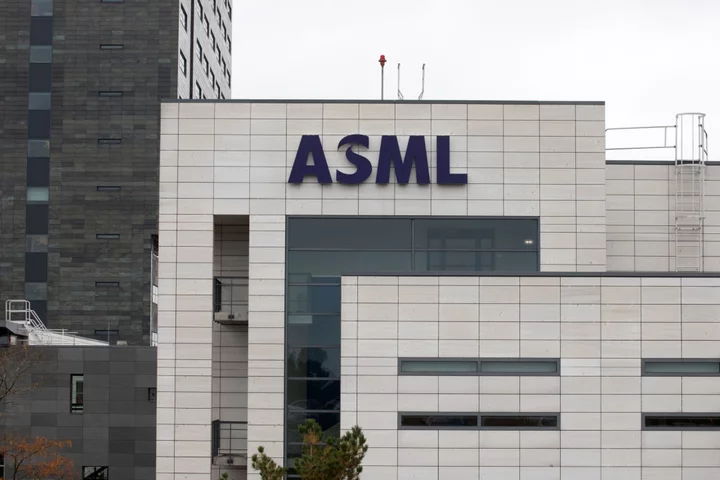
ASML Faces Tighter Dutch Restrictions on Servicing Chip Equipment in China
ASML Holding NV, the leading provider of chipmaking equipment, is facing tighter restrictions on its ability to work
1970-01-01 08:00

Harry Kane is put to the test during 'Hot Ones' appearance - but how did he do?
Harry Kane was the latest guest to appear on First We Feast's Hot Ones challenge and proved he could handle the heat off the pitch. The YouTube show sees host Sean Evans interview celebrity guests. During each question, both he and a guest eat a chicken wing that has been coated in different hot sauces, with the Scoville level (the heat or spiciness) increasing each time. Some of the previous celebrity guests include Jennifer Lawrence, Gordon Ramsay, Florence Pugh, and Noel Gallagher. In the latest episode, host Evans began by asking the England captain how he is around spicy food, to which Kane admitted that he's "not great," adding that "it's not something [he] normally [has] a lot". The first wing had a Scoville level of 1,600 which Kane ate with ease and said it was "not too bad," as Evans asked the footballer about his record-breaking season, scoring over 30 goals and becoming England's all-time leading goal scorer. Sign up to our free Indy100 weekly newsletter Kane described the latter achievement as a "dream come true," before having a slight cough and reaching for a glass of milk - was the spice getting to him already? Harry Kane Takes One For the Team While Eating Spicy Wings | Hot Ones www.youtube.com Next up was a wing with a Scoville level of 6,000 and to Kane's surprise he found this one "a little easier". "I do like a curry back home in England, so I'm quite familiar with that taste," he told Evans, appearing more confident in his ability to handle the spice. For the wings with a Scoville level of 15,500, 36,500, and then 49,000, followed by 71,000 and 103,000, Kane took them in his stride, with some coughs, a runny nose and sips of milk along the way. Then came "Da Bomb," hot sauce at a Scoville level of 135,600 which a nervous Kane commented: "I've heard about this. I've just heard it's brutal. Unenjoyable." Though it didn't stop the Tottenham player from taking a bite, before telling Evans that it was "not nice," and "disgusting," and added that he could have the other sauces he's tried with food, but not with "Da Bomb". Despite the discomfort, Kane continued on to eat wings that had a Scoville level of 641,000 before finally making it to the final wing where he join in the tradition of dabbing an extra bit of sauce on the wing. Going straight for it, the footballer noted how the heat "straight up [his] nose". Footy fans loved seeing Kane on Hot Ones and in the comments praised performance for making it to the end. One person said: "Never in a million years did I think I'd see Harry Kane on this show, but I'm all here for it." "Let's be real he surprised every single one of us after seeing his reaction to the first wing. Respect," another person wrote. Someone else added: "Harry seems so wholesome!! And handled the hot sauces so well for someone who doesn't appear to eat much hot sauce." "One of the best episodes ever! Big bites, no complaints and a good talk," a fourth person commented. Have your say in our news democracy. Click the upvote icon at the top of the page to help raise this article through the indy100 rankings.
1970-01-01 08:00
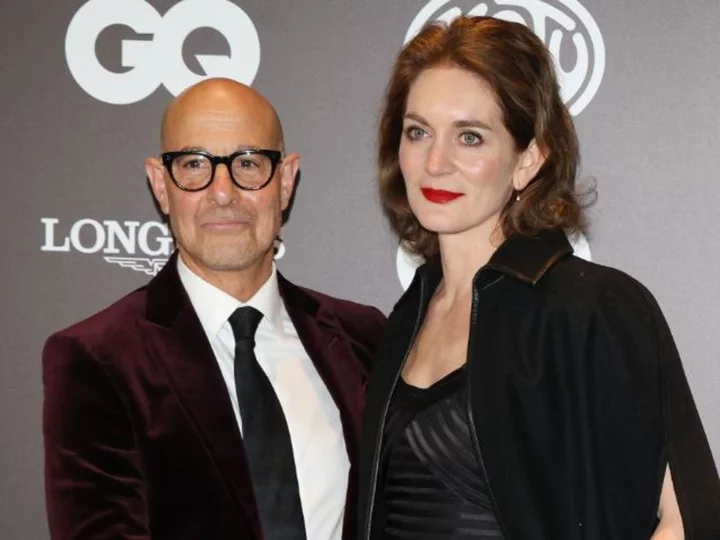
Stanley Tucci overcame a fear to find joy with wife Felicity Blunt
Stanley Tucci had some initial concerns about the age difference with his now wife, Felicty Blunt.
1970-01-01 08:00
Lilly to Pay Up to $2 Billion for Obesity Startup Versanis
Eli Lilly & Co. will acquire closely held Versanis Bio, a startup developing a drug for obesity and
1970-01-01 08:00

Scientists have discovered how to reverse ageing
Ageing could soon be a thing of the past, following the latest development in chemical therapy and anti-ageing research. The research focuses on anti-ageing genes and adds to a previous study which won a Nobel Prize, focusing on small cell cultures. A team from Harvard Medical School is leading the study into genes called Yamanaka factors. The research focuses on turning cells into induced pluripotent stem cells (iPSCs), which effectively turns the cell young again. If the research targeted cells in this fashion, it could ultimately reverse the physical impacts of ageing. Sign up to our free Indy100 weekly newsletter There’s a great deal to consider when it comes to treatment like this, as the effect of ageing is a natural way the human body protects against harmful mutations like cancer. However, the new research published in the journal Aging claims that the process doesn’t create cells that are prone to cancer. The results showed that six chemical mixes were found that showed scientist could make cells biologically “younger” in the space of just seven days. After previous research conducted on mice, the team behind the study is looking to thake the study to human trials by 2024. David A. Sinclair is Professor in the Department of Genetics and lead scientist on the project. He released a statement saying: “Until recently, the best we could do was slow aging. New discoveries suggest we can now reverse it.” He added: “This process has previously required gene therapy, limiting its widespread use.” Have your say in our news democracy. Click the upvote icon at the top of the page to help raise this article through the indy100 rankings.
1970-01-01 08:00
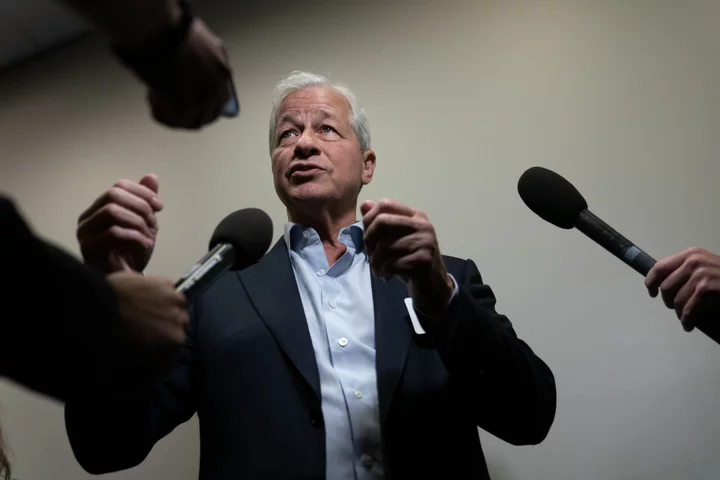
Jamie Dimon Says Some Rivals Are ‘Dancing in the Streets’
Jamie Dimon and his big bank are channeling Martha and the Vandellas. “They’re dancing in the streets,” Dimon
1970-01-01 08:00
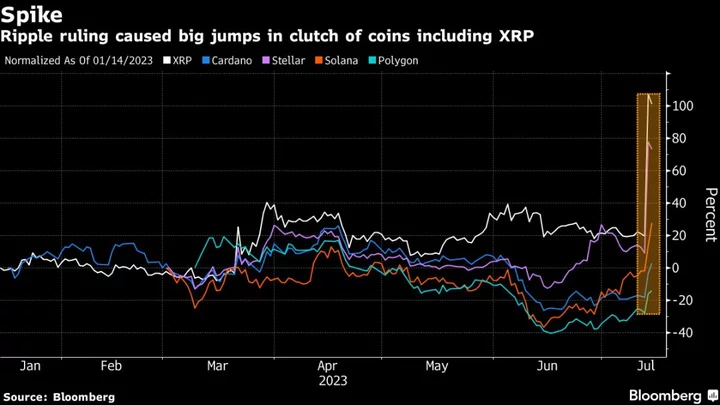
Crypto Market Is Celebrating SEC’s Setback in Ripple Suit. But the Case Is Far From Settled
A US Securities and Exchange Commission lawsuit against Ripple Labs Inc. has kept crypto on edge since 2020
1970-01-01 08:00

Nasa has found ‘diverse organic matter’ on surface of Mars
Nasa has discovered “diverse organic matter” on the surface of Mars, which could change our understanding of the red planet and the search for life in the universe. The Perseverance rover made the discovery in the Jezero Crater on Mars and a number of different explanations for the existence of the material have been posited. The materials could have been formed when water and dust interacted, or was dropped onto the planet by dust or meteors. Authors of the new study also refused to rule out that the materials are “biotic”, or came about due to the existence of life on the surface. Sign up to our free Indy100 weekly newsletter The findings could have a big impact on the continued search for alien life, with research into the organic matter on the surface telling us more about the existence of carbon sources on Mars. The Jezero crater has been explored by The Scanning Habitable Environments with Raman and Luminescence for Organics and Chemicals (Sherloc) instrument on the rover since February 2021. The crater is the site of an ancient lake basin and all 10 target sites explored within it came back with signs of organic molecules. Even if the materials are not biological in origin, research into them could be crucial in the search for alien life, according to the researchers. “Not all organics are biological in origin. Observing spatial relationships between minerals and organics is necessary when evaluating organic origins and potential biosignatures. Everything we know of life on Earth is limited to what is preserved in the rock-mineral record. On Earth, biosignatures are found in certain minerals and some minerals are better at preserving organics than others,” said Ashley E Murphy, a researcher at the Planetary Science Institute and co-author on the new paper. “Mars may have had a similar early geologic history to Earth so we use our knowledge of life as we know it on Earth for where to look for potential evidence of past life on Mars. Mapping organics allows for a better understanding of if the Martian carbon cycle is similar to or different from Earth, and the potential of Mars to host life.” Writing in the Nature journal, the authors said: “Our findings suggest there may be a diversity of aromatic molecules prevalent on the Martian surface, and these materials persist despite exposure to surface conditions. “These potential organic molecules are largely found within minerals linked to aqueous processes, indicating that these processes may have had a key role in organic synthesis, transport or preservation.” The findings are published in a new article, ‘Diverse organic-mineral associations in Jezero crater, Mars’, in Nature. Have your say in our news democracy. Click the upvote icon at the top of the page to help raise this article through the indy100 rankings.
1970-01-01 08:00