

Bryce Harper drilling a monster homer on his birthday was epic for Phillies fans
Bryce Harper drilling a monster homer on his birthday was epic for Phillies fans
1970-01-01 08:00

Displaced among dozens killed in Israeli strikes on southern Gaza
Some 600,000 Palestinians are sheltering there following an Israeli order to evacuate the north.
1970-01-01 08:00

Frenkie de Jong eyes early return from injury
Barcelona are hopeful that midfielder Frenkie de Jong will return from injury in time for their El Clasico clash with Real Madrid.
1970-01-01 08:00

How to look after your immune system as the weather changes
The changeable weather is not just affecting our mood and how we dress – doctors have warned it is impacting our immune systems, too. After the warmest October temperatures in five years were recorded at the start of the month, temperatures have since plummeted, with the first frosts of the autumn recorded in several parts of the country this week. And now Storm Babet is set to bring heavy rainfall and wind to many parts of the country over the next few days. Old wives’ tales tell us that cold, damp weather means we’re more likely to become ill – but there is some truth in the warnings, says Dr Babak Ashrafi, GP and clinical lead for service expansion at Superdrug Online Doctor. Recent US research found an increased risk of illness when temperatures drop, because cold lowers immunity in the nose and makes us more susceptible to viruses. A drop in nasal tissue temperature of just 5°C has been found to reduce immune response by almost half. “Rapid shifts from warm to cold weather can stress the body and shock the immune system, making you more vulnerable to colds and infections,” warns Dr Ashrafi. “With Storm Babet on its way, it’s important to prepare your body for this sudden cold spell, to keep your immune system on top form.” To make sure your immune system is as healthy as possible, he recommends: 1. Make sure you’re getting enough vitamin D Dr Ashrafi points out that the changing weather has coincided with seasonal outbreaks of viruses, such as flu. “These infections can put additional strain on the immune system,” he says. “During colder months, decreased sunlight exposure can cut your main source of vitamin D, which is essential for a healthy immune system.” Dr Ashrafi says adding more vitamin D-rich foods into your diet, such as fatty fish like salmon and mackerel, mushrooms, egg yolks and certain fortified orange juices, is a great way to help strengthen your immune system. “It can help protect your immune system by providing an all-important vitamin boost,” he says. “And remember, vitamin D supplements are also a good idea during winter.” The NHS recommends everyone, including pregnant and breastfeeding women, should consider taking a daily supplement containing 10 micrograms of vitamin D during autumn and winter. 2. Dress for the weather Prolonged exposure to cold can increase the risk of illnesses such as the common cold or flu, warns Dr Ashrafi, who explains the body’s core temperature needs to remain within a narrow range for optimal function. “When you’re exposed to cold temperatures, your body works harder to maintain this temperature, diverting energy and resources away from other essential functions, including immune responses,” he says. “It’s always best to check the weather and layer clothing to help insulate your body, making it easier to maintain core temperature without excessive effort.” 3. Maintain a healthy diet Consuming a well-balanced diet rich in fruits, vegetables, lean protein and whole grains will provide essential nutrients to support immune function, says Dr Ashrafi. “Probiotics from yoghurt or kefir are also great for helping to maintain a healthy gut microbiome, which plays a significant role in immune health,” he advises. 4. Stay hydrated It’s important to drink plenty of water or sugar-free soft drinks, even in the autumn and winter, as good hydration also plays a role in keeping the immune system healthy, says Dr Ashrafi. “Ensure you’re staying hydrated despite the cold, to keep mucous membranes moist, helping to defend against infections.” 5. Get some rest Dr Ashrafi explains that sleep is crucial for the production of antibodies, which in turn recognise and neutralise pathogens such as viruses and bacteria. “To boost and support your immune system, it’s essential to prioritise and maintain healthy sleep habits. Aim for seven to nine hours of quality sleep each night by establishing a regular sleep schedule in a comfortable environment. “These practices will help ensure your immune system functions optimally and can effectively protect your body from infections.” 6. Get your flu vaccination Flu vaccinations target the specific strains of the influenza virus that are expected to be prevalent during the flu season. Dr Ashrafi says: “If you’re considered vulnerable and are particularly concerned about the sudden cold, getting an annual flu shot can protect you from seasonal influenza. “Avoiding flu can be difficult, especially as it can be passed on through sneezing, coughing and even hand contact, so it’s important you wash your hands regularly. Getting vaccinated annually ensures your immune system is well-prepared to defend against the most likely influenza variants.” Read More How to protect your plants as the first frosts arrive How to prep your home for when the clocks go back This is shoe designer Jimmy Choo’s proudest achievement 4 black women on their experiences with breast cancer See Madonna’s extravagant tour outfits – including an updated cone bra Halloween pumpkins – how to grow your own
1970-01-01 08:00

Family seeks answers after Israel kidnap live-stream horror
One man's trying to piece together what happened to loved ones based on live streams made by Hamas.
1970-01-01 08:00

Lucid's quarterly deliveries marginally rise from second quarter
(Reuters) -Luxury electric-vehicle maker Lucid Group said on Tuesday it delivered slightly more units in the third quarter than the
1970-01-01 08:00

2024 NHL Stadium Series teams, location, date & how to watch
The Stadium Series will feature Devils vs. Flyers and Islanders vs. Rangers. These exciting games will be back-to-back at MetLife Stadium in February.
1970-01-01 08:00

The Planet 9 theory is making scientists question the rules of our existence
In space, discoveries continue to be made that challenge scientific beliefs, as distant objects reveal the solar system is much bigger than first thought and the observation was previously made that a part of the sun is broken. Now, there is evidence to suggest the existence of a ninth undiscovered planet that is at the very edge of the solar system and could point towards evidence that our understanding of gravity is wrong. The discovery was made by two scientists who studied the effects that the Milky Way galaxy had on objects in the solar system’s outer edge. Galaxies are able to rotate extremely fast without any of their contents escaping, and most experts believe that the existence of dark matter might explain why. Dark matter is invisible and does not emit, nor reflect light, and it is hypothesized that galaxies are surrounded by dark matter rings that bind the galaxies together in their own gravitation pull and stop them from emitting material. But now, the gravitational theory of Modified Newtonian Dynamics (MOND) may suggest that dark matter is not why galaxies stay intact despite staggering rotational speeds. Instead, some believe that under the rotational velocities experienced by galaxies, a new kind of gravitational behaviour occurs. Case Western Reverse scientist Harsh Mathur, explained: “MOND is really good at explaining galactic-scale observations, but I hadn’t expected that it would have noticeable effects on the outer solar system.” Planet 9 comes into play because objects in the Kuiper belt (the disk that surrounds the outer edges of the solar system) were observed clustering and exhibiting orbital anomalies that do not occur with other objects in the belt. Experts believe this may be due to the presence of an undiscovered ninth planet, as this is a phenomenon that occurred before with the discovery of new planets as their gravitation pull attracts other solar system objects. Katherine Brown, Hamilton College professor of physics, said: “We wanted to see if the data that support the Planet Nine hypothesis would effectively rule out MOND.” Their study revealed that the hypothesis could be correct and could point towards the existence of Planet 9, but they urged that their dataset was very small, so no definitive conclusions could be made. Brown explained: “Regardless of the outcome, this work highlights the potential for the outer solar system to serve as a laboratory for testing gravity and studying fundamental problems of physics.” Sign up to our free Indy100 weekly newsletter Have your say in our news democracy. Click the upvote icon at the top of the page to help raise this article through the indy100 rankings.
1970-01-01 08:00

Norway’s $1.4 Trillion Fund Sees More Net Zero Targets Set as Risks Mount
Norway’s $1.4 trillion sovereign wealth fund said more companies are honing emissions targets in response to tighter reporting
1970-01-01 08:00
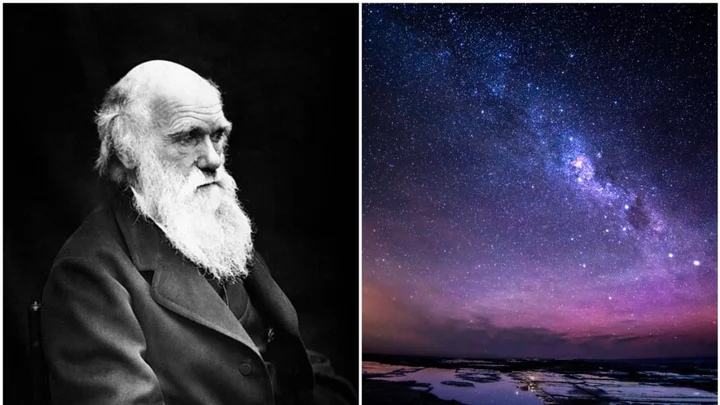
Scientists unveil 'missing' law of nature in landmark discovery
A group of scientists and philosophers claim to have identified a “missing law of nature”, in a discovery which has huge implications for our understanding of how, basically, everything works. Most of us are familiar with the names – if not the intricacies – of many of the physical laws which govern the world and beyond, such as gravity and thermodynamics. And yet, no established physical law has been able to describe the behaviours of countless complex systems that exist across the universe – until now. In a paper published in the PNAS journal on 16 October, a multidisciplinary team from some of the US’s top institutes and universities, unveiled a new law claiming to do just that. In a nutshell, their law states that evolution is not limited to life on Earth, it also occurs in other massively complex systems – from planets to atoms. This means that these systems naturally “evolve” to states of greater diversity, and complexity. In other words, the researchers found evolution to be a common feature of the natural world's complex systems which, according to the Carnegie Institution for Science, comprise the following characteristics: “They are formed from many different components, such as atoms, molecules, or cells, that can be arranged and rearranged repeatedly “Are subject to natural processes that cause countless different configurations to be formed.” Only a small fraction of these configurations survive via a process of natural selection called “selection for function”. According to the researchers, regardless of whether the system is living or nonliving, when a new configuration works and function improves, evolution occurs. The authors' new law – which they have christened "the Law of Increasing Functional Information" – states that the system will evolve "if many different configurations of the system undergo selection for one or more functions." "An important component of this proposed natural law is the idea of 'selection for function,'" the study’s lead author, astrobiologist Dr Michael L. Wong, explained. The team’s research builds on Charles Darwin’s theory of natural selection, which suggests the function exists to ensure the “survival of the fittest”. For their work, Dr Wong and his team expanded on this perspective, pointing to the existence of three types of this selection for function in nature. The first, most basic type, they claim, is stability – the stable arrangements of atoms or molecules which are selected to continue. Second, are dynamic systems which are selected for their ongoing supplies of energy. And the third, and most intriguing, function is "novelty" – the tendency of evolving systems to explore new configurations which can lead to surprising new behaviours or characteristics. Novelties are, ironically, nothing new. Indeed, life’s evolutionary history is rich with examples: photosynthesis evolved when single cells learned to harness light energy; multicellular life evolved when cells learned to cooperate; and species evolved thanks to advantageous new behaviours such as walking and thinking. The same type of evolution happens in the mineral kingdom, as the Carnegie Institution for Science notes in a release published by Phys.org. Indeed, Earth's minerals, which began with about 20 at the dawn of our solar system, now number almost 6,000 known today. This is thanks to the ever more complex physical, chemical, and biological processes which have occurred over the past 4.5 billion years. The paper also notes that just two major elements – hydrogen and helium – formed the first stars shortly after the big bang. Those earliest stars then used this hydrogen and helium to create around 20 heavier chemical elements, which was built upon by the next generation of stars. "Charles Darwin eloquently articulated the way plants and animals evolve by natural selection, with many variations and traits of individuals and many different configurations," co-author and research lead Robert M. Hazen explained. "We contend that Darwinian theory is just a very special, very important case within a far larger natural phenomenon. “The notion that selection for function drives evolution applies equally to stars, atoms, minerals, and many other conceptually equivalent situations where many configurations are subjected to selective pressure." The new law has a number of exciting implications, including a deeper understanding of how the Universe itself came to exist. It could also help explain how life differs from other complex evolving systems, and could help aid the search for life elsewhere. Furthermore, at a time when increasingly autonomous AI systems are of increasing concern, it’s very handy to have a law that characterises how both natural and symbolic systems evolve. It also offers insights into how we could artificially influence the rate of evolution of some systems which, again, could prove invaluable. The key point to remember, as Dr Wong put it, is that whilst life is the “most striking example of evolution”, it’s not the only one. Evolution, it transpires, is everywhere. Sign up for our free Indy100 weekly newsletter Have your say in our news democracy. Click the upvote icon at the top of the page to help raise this article through the indy100 rankings.
1970-01-01 08:00

3 Braves club options to decline for 2024, 1 to pick up
The Atlanta Braves have several club options to decide on. Here are three the team should opt out of, and one player Atlanta should keep around.
1970-01-01 08:00

Chelsea handed £80m boost in potential Stamford Bridge rebuild
Chelsea have been handed a big boost in their plans to redevelop Stamford Bridge after successfully acquiring the majority of a piece of neighbouring land from a local veterans charity.
1970-01-01 08:00