
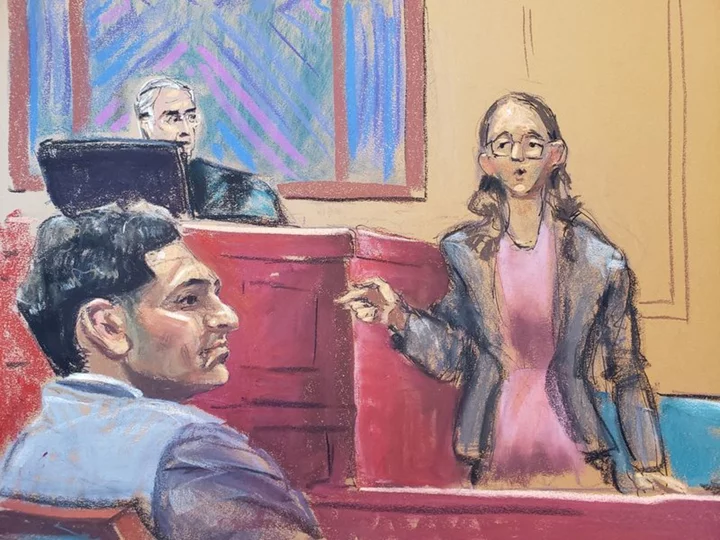
Sam Bankman-Fried's trial to resume with more testimony from Caroline Ellison
By Jody Godoy and Luc Cohen NEW YORK Caroline Ellison, the former co-head of Sam Bankman-Fried's hedge fund
1970-01-01 08:00

Slovakia’s Fico to Return to Power as Coalition Deal Sealed
Slovakia’s Robert Fico won the backing of two allied parties, putting the former prime minister who campaigned to
1970-01-01 08:00

US and allies warn militant group Hezbollah against escalating Hamas-Israel conflict
The US and its allies are warning the Lebanese militant group Hezbollah against escalating the conflict in Israel as the US prepositions military assets to deter a potential widening of the war, multiple US officials and people briefed on the discussions tell CNN.
1970-01-01 08:00
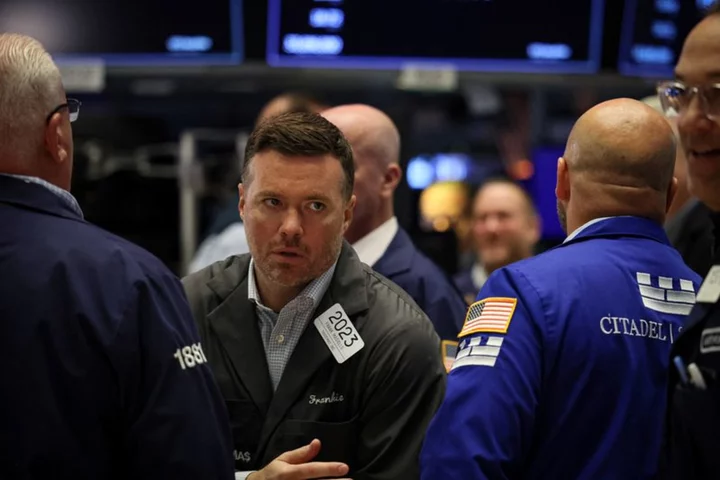
Marketmind: A window into the Fed's thinking
A look at the day ahead in U.S. and global markets by Amanda Cooper, editor, finance and markets
1970-01-01 08:00
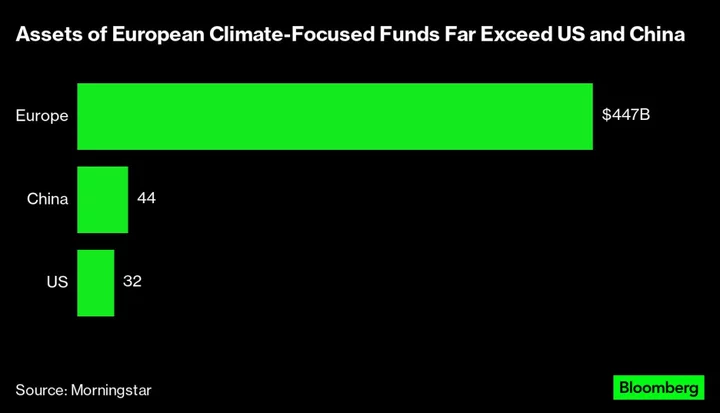
Europe Dominates Climate Fund Investing
It turns out the market for environmental-related investment funds is really small in the US, relative to Europe
1970-01-01 08:00
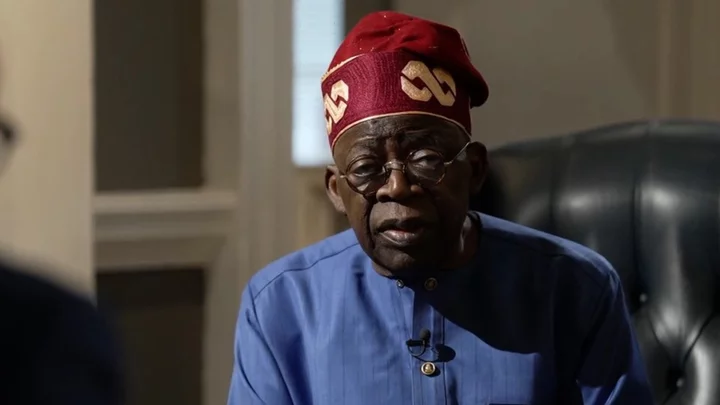
Bola Tinubu diploma: No evidence Nigeria's president forged college record
Allegations that Bola Tinubu's diplomas were fake went viral after the release of his school documents.
1970-01-01 08:00
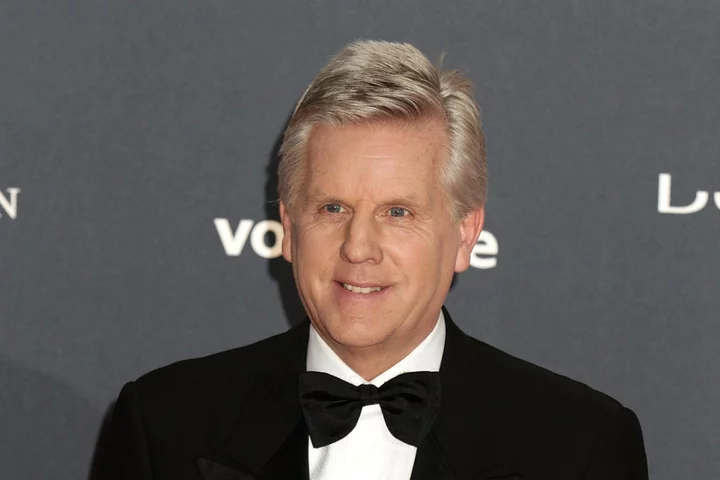
Steve Rider tells men to ‘recognise your vulnerability’ after prostate cancer diagnosis
Sports commentator Steve Rider has shared a message encouraging men to be conscious of their health after his prostate cancer diagnosis. Rider, 73, was told he had the disease last month after a biopsy. The former Grandstand and Sportsnight presenter will undergo surgery to treat it this weekend. Ahead of the operation, Rider shared some insight into his journey to diagnosis, which began when a friend was diagnosed during a routine health check. “He had a scan which showed some alarming things going on with the prostate and within a month he had the full operation and that woke everybody up because he had no symptoms and very fit guy, and roughly our age,” Rider told the PA news agency. After initially testing, Rider’s readings for cancer were “not that high”, so he’d planned not to take further action. His wife, Jane, urged him to have further tests, and a biopsy was taken. He continued: “I thought the worst that can happen is that I’m going to be monitored for the next six months or so and we got the results of the biopsy the next day and they said, ‘No, you come in as soon as you can, we’re going to operate.’” Rider said his diagnosis was aided by his friends having open conversations and his wife encouraging him to get further tested. “We do tend to treat these things a little bit like getting your eyes tested or ears done, you can put it off and maybe think ‘Well, I’ll wait till the symptoms come’. “Symptoms don’t come and when they do, it is probably too late.” He added: “The message is to recognise your vulnerability, especially with age and family history and so on. And if you do feel that you fall into those categories, then get yourself checked.” According to the charity Prostate Cancer UK, 144 men are diagnosed across the country each day – more than 52,000 per year. Rider’s former BBC colleague Bill Turnbull died in August 2022, nearly five years after being diagnosed. After sharing his diagnosis publicly in March 2018, Turnbull detailed his treatment in a Channel 4 documentary called Staying Alive. Speaking about the late broadcaster, Rider said: “The great thing about Bill was that he wanted to turn his misfortune into an information campaign which would save hundreds of others and I’m sure that probably hundreds and thousands of men have stepped back from a really serious cancer because of the attention that Bill Turnbull brought to early diagnosis and testing. “And apart from that, he was a lovely, lovely guy.” Rider found out that he had cancer the day after taking part in sports presenter Jeff Stelling’s charity Football March in Turnbull’s honour. Prostate Cancer UK has said the disease affects one in eight men in the UK and that more than 12,000 men die every year from the condition. They advise that if a man is over the age of 50, Black, or has a family history of prostate cancer that he may want to speak to a GP as these are higher risk factors. To find out more about your prostate cancer risk, or that of your partner, father or friend, you can visit Prostate Cancer UK’s website – prostatecanceruk.org/risk-checker – and try the 30-second online risk checker. Additional reporting by PA Read More Cancer cases in young people ‘are rising’ – the warning signs to look out for Jeff Stelling leads hundreds to complete Wembley to Wycombe walk in honour of Bill Turnbull Duran Duran’s Andy Taylor claims he was ‘visited by angel’ after starting new cancer treatment The psychology of Big Brother: How to survive in the house Sports culture is ‘intimidating’ and putting people off working out Israel-Hamas conflict: How to talk to teenagers about distressing news stories
1970-01-01 08:00

US Suspends Niger Aid After Coup While Keeping Military Presence
The US formally designated Niger’s military uprising a coup — a move that will halt counter-terrorism cooperation and
1970-01-01 08:00

'Give cinema some respect': Martin Scorsese defends marathon Killers of the Flower Moon runtime
Martin Scorsese has passionately defended the 206-minute running time of his latest movie 'Killers of the Flower Moon'.
1970-01-01 08:00

'They're wonderful together': Ocean's prequel producer Josey McNamara excited for Margot Robbie and Ryan Gosling reunion
Film producer Josey McNamara is looking forward to 'Barbie' stars Margot Robbie and Ryan Gosling reuniting on the 'Ocean's' prequel movie.
1970-01-01 08:00

The psychology of Big Brother: How to survive in the house
Big Brother has returned to British TV for the first time in five years. Hosted by AJ Odudu and Will Best, the ITV reality show has kicked off with 16 housemates living together in a custom-built home without access to the outside world – all in a bid to win £100,000. Since Big Brother first aired on Channel 4 in 2000, it’s become known as the ultimate social experiment. Here are a few tips from psychologists on how the new contestants can survive being cooped up in a house with a group of strangers, under the continuous monitoring of Big Brother… The psychology of Big Brother For Dr Rachael Molitor, a psychologist and lecturer at Coventry University, the psychology behind Big Brother involves “the intricate interplay of 24/7 surveillance on human behaviour, participant isolation from the outside world, and psychological challenges around newly formed and integral social friendships and group dynamics”. Although it may be deemed similar to other TV programmes, such as Love Island or The Traitors, where contestants also live together in a new home, Big Brother is different. “It has a unique stance, in that the contestants are not a cookie cutter of a particular type of person needed for the show’s storyline,” Molitor said. “With Love Island and My Mum Your Dad, the contestants needed to be single and of a certain age or criteria. With Big Brother, we can see a number of varying contestants, all with different backgrounds and personalities.” However, Molitor notes that Big Brother is “less of a psychological observational experiment” and “more of a TV entertainment viewing opportunity – and edited as such”. She said: “The environment provides a rich opportunity for the study of human behaviour, social dynamics, and the psychological effects of living in a controlled, highly competitive and monitored setting.” How can contestants survive in the Big Brother house? For Molitor, the key to survival is for contestants to be themselves. “Due to the length of time contestants will be on the show, it’s important to build strong genuine relationships. Effective communication supports the positive experience of all housemates,” Molitor added. Dr Sarita Robinson, associate dean of psychology and humanities at the University of Central Lancashire (UCLan) agrees, and said: “Like with any group of people in an enclosed space, inter-group conflict is likely to occur. “Rather than reacting immediately to something that has annoyed you, it is best to walk away and wait for 15 minutes. It’s amazing how a little bit of time can take the heat out of a situation for the contestants.” How can they protect their mental health? Taking care of your mental health isn’t always the easiest thing to do on a reality TV show, Robinson suggested. “Due to social evaluative stress that relates to what people think of us, this can have a marked impact on our physiological stress levels if we think people are making negative judgements about us.” But things have changed since the show first aired. “With the new care of duty plan, contestants can ask for help when needed and get mental health and wellbeing support prior to, during and after the show has ended,” Molitor said. Whilst in the house, there are a few “small health-enhancing behaviours” contestants can do. These include “getting enough sleep, exercise and healthy eating to support their health and wellbeing throughout”, Molitor advised. Robinson also warned against behaviours that might impact your state of mind. “If people start to stress their brains by drinking alcohol, having poor quality sleep, restricting their food intake or changing their normal use of things like nicotine, caffeine or medication like antidepressants, it can have an impact on the brain,” Robinson said. “For example, if you don’t get a good night’s sleep your brain will struggle to work as well as it usually does, which can cause problems with emotion regulation. The knock-on effect of this might make you more likely to be grumpy and have a row with someone.” Big Brother airs nightly on ITV2 and ITVX, excluding Saturdays. Read More How to support someone coming out in their 30s and beyond Israel-Hamas conflict: How to talk to teenagers about distressing news stories Autumn décor ideas for a seasonal refresh Why you shouldn’t tidy your garden too much in autumn World Mental Health Day: 5 ways to beat anxiety and change your life Alternative veg to grow for next season
1970-01-01 08:00

PGMOL chief reveals how referees will avoid Luis Diaz blunder in the future
PGMOL chief Howard Webb reveals how Premier League referees will avoid blunders similar to Luis Diaz's disallowed goal at Tottenham in the future.
1970-01-01 08:00