

Keep fit to avoid heart rhythm disorder and stroke, study suggests
Keeping fit could help you avoid heart rhythm disorder and stroke, new research suggests. The study of more than 15,000 people found that physical fitness is linked with a lower likelihood of developing both conditions. Atrial fibrillation – irregular and often fast heartbeat – is the most common heart rhythm disorder, affecting more than 40 million people worldwide. The findings indicate that keeping fit may help prevent atrial fibrillation and stroke Dr Shih-Hsien Sung Patients with the condition have a five-fold higher risk of stroke than their peers, experts suggest. Study author Dr Shih-Hsien Sung of the National Yang Ming Chiao Tung University, Taipei, Taiwan said: “This was a large study with an objective measurement of fitness and more than 11 years of follow up. “The findings indicate that keeping fit may help prevent atrial fibrillation and stroke.” The study examined whether fitness was related to the likelihood of developing atrial fibrillation. It included 15,450 people without atrial fibrillation who were referred for a treadmill test between 2003 and 2012. Fitness was assessed using a protocol where people are asked to walk faster and at a steeper grade in successive three-minute stages. Their fitness was calculated according to the rate of energy expended, which was expressed in metabolic equivalents (METs). Follow-ups looked at whether people developed atrial fibrillation, stroke, heart attacks, or whether they had died. During an average follow-up period of 137 months, 515 participants (3.3%) developed atrial fibrillation. Each one MET increase on the treadmill test was associated with an 8% lower risk of atrial fibrillation, 12% lower risk of stroke and 14% lower risk of major adverse cardiovascular events (MACE – a composite of stroke, myocardial infarction and death). People in the study were divided into three fitness levels according to METs achieved during the treadmill test. The levels were low (less than 8.57 METs), medium (8.57 to 10.72) and high (more than 10.72). According to the findings presented at the ESC Congress 2023 in Amsterdam, the probability of remaining free from atrial fibrillation over a five-year period was 97.1%, 98.4% and 98.4% in the low, medium and high fitness groups, respectively. Read More Charity boss speaks out over ‘traumatic’ encounter with royal aide Ukraine war’s heaviest fight rages in east - follow live How to give your home a proper summer sort out What you really need to do in autumn to keep your lawn in shape MRI screening for prostate cancer could help save lives, study finds
1970-01-01 08:00

Astronomers are expecting a message from aliens today that is 40 years in the making
Astronomers are hoping to receive a message from aliens after a 40-year wait for a reply comes to an end. On 15 August 1983, a pair of hopeful astronomers at Stanford University beamed a message into space via an antenna. They believe that 22 August 2023 is the earliest time they can expect to receive a reply. The experiment was the brain-child of professors Masaki Morimoto and Hisashi Hirabayashi, who, around 40 years ago, beamed 13 drawings in radio waves to a star named Altair, approximately 16.7 light-years away from Earth. The 13 drawings sent into space by Morimoto and Hirabayashi were designed to tell the story of human evolution and how human beings came to exist on Earth. Drawings depicted how humans evolved from microscopic creatures that eventually moved from water onto land. It also explained our solar system and what DNA is. It was the hope that if there was any intelligent life on planets close to the star, they would interpret the messages and hopefully send a reply. In anticipation of a reply, a team at The University of Hyogo in Japan will monitor for a reply using the Japan Aerospace Exploration Agency’s (JAXA) antenna. Led by Shinya Narusawa, the team will listen for around an hour for signs of unusual radio activity or signals that could suggest a reply. Narusawa explained: “A large number of exoplanets have been detected since the 1990s,” adding, “Altair may have a planet whose environment can sustain life.” Unfortunately, if a reply is received, it will be too late for Morimoto, one of the professors responsible for the original project, after he died in 2010. Dr Hirabayashi, the other pioneer, is currently a professor emeritus at JAXA. It is yet to be seen whether he will see his 40-year experiment gets the conclusion he was hoping for. Sign up to our free Indy100 weekly newsletter Have your say in our news democracy. Click the upvote icon at the top of the page to help raise this article through the indy100 rankings.
1970-01-01 08:00

Germany Seen Overestimating Its Climate Protection Efforts
The German government is overestimating the impact of its recently announced climate protection efforts and will likely make
1970-01-01 08:00

Sienna Miller pregnant with her second child
Sienna Miller is currently expecting her second child, it has been reported by multiple outlets. Photographs of the Lost City of Z star published by People magazine reveal Miller with a visible baby bump while on a beach holiday in Ibiza. The 41-year-old actor was pictured in a brown string bikini, with gold accessories, and could be seen smiling as she enjoyed the sea breeze. In one image, she wrapped a grey towel with a red stripe around her hips, accentuating her growing bump. Her second pregnancy comes 10 years after the birth of her first child, Marlowe, whom she shares with her former fiance, The Sandman star Tom Sturridge. According to the outlet, Miller was seen spending time with her boyfriend, actor Oli Green, in St Tropez before arriving in Ibiza. She has not commented publicly on her pregnancy and it is unclear what stage she is in. The Independent has contacted Miller’s representative for comment. Last December, Miller opened up about being a parent to British Vogue. She said she “loves being a mother”, adding: “It’s what I do best.” However, the American Woman star has also felt “pressure” to expand her family after turning 40. Speaking to Elle UK, Miller described questions surrounding whether she should have more children and why she has not as “a really loud noise”. “Biology is incredibly cruel on women in that decade – that’s the headline, or it certainly was for me,” she said. “Then I got to 40 and I froze some eggs. Having been really focused on the need to have another baby, I’m just like, if it happens, it happens. That kind of existential threat has dissipated.” Miller and Sturridge dated from 2011 to 2015, and their daughter was born in July 2012. They continue to be good friends and co-parents, and have been known to travel together and stay at one another’s houses as they continue to put Marlowe first. “It’s not like there’s a structure for custody,” Miller told Elle UK in 2019. “We make it work. It’s not conventional.” Reflecting on her relationship with her daughter, Miller told People: “When you are raising a child you see aspects of your character in that person, reflected back, and it’s the most loving, intense relationship that I have. There’s nowhere to hide. “She knows me, I know her. She’s really stubborn, which is very like me. I see her as her own person but I also see genetic things. She’s heaven, my kid.” Read More No music, no ball games, no fun: society is wiping out play Comedian Mark Watson says three-year affair was way of avoiding ‘the fact I wasn’t special’ Rihanna and A$AP Rocky reportedly welcome second child together Jana Kramer reveals she couldn’t brush her teeth for three months while pregnant Mom documents at-home abortion to destigmatise abortion pills Rumer Willis addresses criticism over breastfeeding photo with her child
1970-01-01 08:00
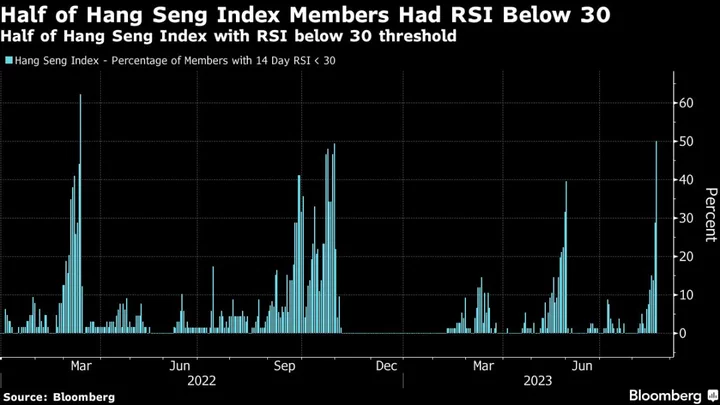
Sudden Rally in China Stocks Has Traders Scratching Their Heads
Chinese stocks staged a sudden rally late on Tuesday, with several traders attributing the rebound to technical reasons
1970-01-01 08:00

Dave Bautista and Jason Momoa 'to star in Angel Manuel Soto's The Wrecking Crew'
Angel Manuel Soto is to helm 'The Wrecking Crew', which is expected to see Dave Bautista and Jason Momoa team up on the big screen.
1970-01-01 08:00

Taika Waititi reveals goals for potential Thor 5
Taika Waititi admits Thor would need a more powerful villain to face in his next adventure.
1970-01-01 08:00

Microsoft, Activision Deal Back in Play as UK Reopens Probe
Microsoft Corp.’s $69 billion Activision Blizzard Inc. acquisition got a new chance at winning approval from UK regulators
1970-01-01 08:00

Microsoft Concedes Activision Cloud Streaming Rights to Ubisoft
Microsoft Corp. said it will give Ubisoft Entertainment SA the cloud streaming rights for all of Activision Blizzard
1970-01-01 08:00
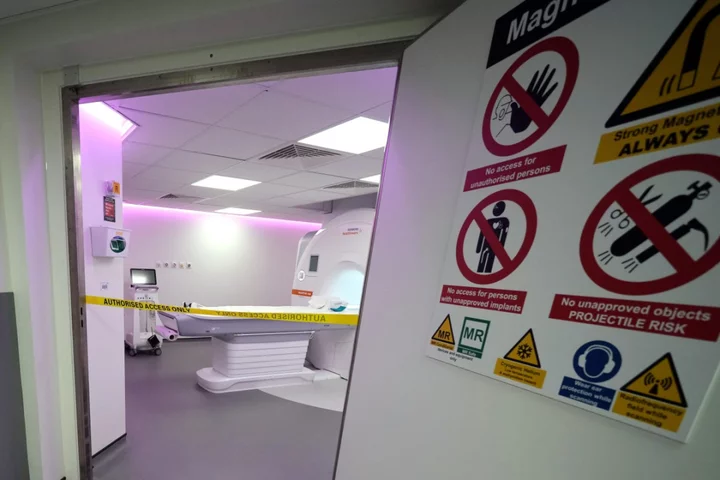
MRI screening for prostate cancer could help save lives, study finds
Using MRI scans to screen men for prostate cancer could reduce deaths from the disease “significantly”, researchers have suggested. Scientists said current tests, which detect the level of the protein prostate-specific antigen (PSA) in the blood, have been linked to over-diagnosis and over-treatment of low-risk cancer. Prostate cancer is the most common cancer found in men and, at the moment, those aged over 50 can request a PSA test if they are experiencing symptoms. The Reimagine study invited 303 men aged between 50 and 75 to have a screening MRI and a PSA test. Of the total, 48 (16 per cent) had an MRI that indicated the presence of prostate cancer despite having a median PSA density. Of the group, 32 had lower PSA levels than the current screening benchmark of 3ng/ml, meaning they would not have been referred for further investigation. After NHS assessment, 29 men were diagnosed with cancer that required treatment, 15 of whom had serious cancer and a PSA of less than 3ng/ml. Three men (1 per cent) were diagnosed with low-risk cancer that did not require treatment. Our results give an early indication that MRI could offer a more reliable method of detecting potentially serious cancers early Prof Caroline Moore The study was led by University College London, University College London Hospitals NHS Foundation Trust and King’s College London and is published in medical journal BMJ Oncology. Prof Caroline Moore, consultant surgeon at UCLH, chief investigator of the study and NIHR research professor, said the findings are “sobering” and “reiterates the need to consider a new approach to prostate cancer screening”. “Our results give an early indication that MRI could offer a more reliable method of detecting potentially serious cancers early, with the added benefit that less than 1 per cent of participants were ‘over-diagnosed’ with low-risk disease,” she added. Prof Mark Emberton, consultant urologist at UCLH, said: “The UK prostate cancer mortality rate is twice as high as in countries like the US or Spain because our levels of testing are much lower than other countries. “Given how treatable prostate cancer is when caught early, I’m confident that a national screening programme will reduce the UK’s prostate cancer mortality rate significantly. There is a lot of work to be done to get us to that point, but I believe this will be possible within the next five to ten years.” Nick James, a professor of prostate and bladder cancer research at the Institute of Cancer Research in London said the study “further reinforces the value of MRI in the diagnostic pathway for prostate cancer”. “The well-known limitations of the old PSA-based screening studies of over- diagnosis and linked over-treatment are increasingly mitigated by the use of MRI,” he added. “Similarly, MRI can also spot cases of prostate cancer in patients with normal PSA levels, who would have been missed using PSA only screening programmes.” MRI scans have revolutionised the way we diagnose prostate cancer, and it’s great to see research into how we might use these scans even more effectively Simon Grieveson, Prostate Cancer UK Prof Sir Mike Richards, chairman of the UK National Screening Committee (NSC), said the organisation does not currently recommend prostate cancer screening “because there is no clear evidence that the benefits outweigh the harms”. However, it is preparing to look at various proposals. He added: “The UK NSC will soon commission a major piece of work to consider six prostate cancer screening proposals that were submitted during its annual call for topics. “These include targeted and risk-stratified screening proposals for screening groups of men at higher risk due to factors such as ethnicity and family history.” Simon Grieveson, assistant director of research at Prostate Cancer UK, said: “MRI scans have revolutionised the way we diagnose prostate cancer, and it’s great to see research into how we might use these scans even more effectively. “These results are extremely exciting, and we now want to see much larger, UK-wide studies to understand if using MRI as the first step in getting tested could form the basis of a national screening programme.” Another trial, known as Limit, is being conducted with a much larger number of patients, which the research team said is the “next step towards a national prostate screening programme”. The trial will also attempt to recruit more black men, after the team behind Reimagine found they were much less likely to respond to the invitation to screening than others. Saran Green of King’s College London said: “One in four black men will get prostate cancer during their lifetime, which is double the number of men from other ethnicities. “Given this elevated risk, and the fact that black men were five times less likely to sign up for the Reimagine trial than white men, it will be crucial that any national screening programme includes strategies to reach black men and encourage more of them to come forward for testing.”
1970-01-01 08:00

UK’s Slower-Than-Expected Borrowing Gives More Room for Tax Cuts
UK government borrowing came in below official forecasts in the first four months of the fiscal year, providing
1970-01-01 08:00

Rice Supply Faces New Threat as India Mulls More Restrictions
India, the world’s biggest rice exporter, is considering more restrictions on its shipments of the grain as the
1970-01-01 08:00