

UK Set for Tropical Nights With Nocturnal Heat Testing Record
Britain’s national forecaster warned of “tropical nights” this week as heat builds again across much of Europe. UK
1970-01-01 08:00

Oil edges lower as markets shrug off supply jitters
By Mohi Narayan NEW DELHI (Reuters) -Oil prices reversed course on Wednesday after rising over 1% in the previous session,
1970-01-01 08:00

Is bottomless prosecco going to be killed off by climate change?
Picture this. The group chat has finally settled on a date and we are going out. Out out. Women of most ages know how serious this is. There was probably a spreadsheet involved. Boyfriends and husbands have been dispatched to the pub. Children and dogs have been dropped off at the sitter. Dignity has been left at the door. One of us is waiting for it to be cancelled so we can stay at home with our loungewear and girl dinners (it’s probably me). There’s only one thing for it. Bottomless brunch. Many Asos orders and outfit changes later, we arrive, take our seats and start the binge drinking timer. There’s only one problem. No prosecco. Freshly manicured fists pound the table. The elected Karen of the group starts to verbally pulverise the staff. Eggs Benedicts are thrown against the walls. The Prosecco Huns exclaim in unison: “But what are we going to drink now?!” The waiter bashfully suggests: “Spumante?” Give over. According to a new study, this could be a reality in the near future thanks to climate change threatening vineyards across Europe, in particular those dedicated to glera (the beloved prosecco grape) in Northern Italy. In a detailed report in iScience last month, researchers warned that unpredictable weather, soil degradation and drought could lead to the loss of a millennia-old winemaking tradition, and the livelihoods attached to it. RIP the Prosecco Hun. The Italian sparkling wine has long been the fizz of choice in the UK (we were only dethroned as the world’s biggest prosecco guzzlers last year by the US). In the early 2010s, more than a third of all the prosecco shipped out of Italy worldwide ended up in Britain – approximately 131 million bottles a year. That’s nearly two bottles per Brit. You get the idea. The origin of our obsession with prosecco dates back to just after the 2008 crash, when consumers were looking for an alternative to expensive champagne. The softer tasting, far more affordable (thanks to its cheaper and speedier production time) and incredibly quaffable prosecco was the obvious choice. Bottomless brunch was born. “My heart goes out to the huns whose weekends simply aren’t complete without a bottle of prosecco,” Hannah Crosbie, founder of Dalston Wine Club, laments at the news that just 15 years after it stormed onto supermarket shelves, prosecco might be quietly forced to say arrivederci. “In all seriousness though, climate change is seriously threatening every aspect of winemaking, and growing conditions are only getting more challenging.” Prosecco is certainly not the only vino at risk, but it faces a unique issue. Where other wine growing regions affected by climate change such as Champagne and Burgundy can simply put out a limited run with an inflated price tag and keep the snobby oenophiles coming, prosecco’s USP is its ability to produce in bulk and at a fraction of the cost. English sparkling is a big winner with the climate going the way it is. Prosecco, by all accounts, seems like it’s a bit of a loser in that regard Will Amherst, head wine buyer at Trullo Ali Finch, group sommelier at Angela Hartnett’s Michelin-starred Italian restaurant Murano in Mayfair, doesn’t believe there’s an appetite for a higher quality, more expensive prosecco. “With the impact of the climate as well as the cost of producing wine increasing, the challenge for prosecco is going to be how to balance the expectation of its price point with the need to make slightly smaller quantities,” she tells me. “Regions like Chablis, for instance, have had multiple horrible vintages back to back and people just accept the fact they have to pay more for it if they want to drink that wine.” For the uninitiated, the word “vintage” on a wine label simply means the year the grapes were harvested – compared to regular wines that may include grapes harvested in multiple years – and each vintage can taste vastly different based on the conditions affecting the grapes in that year. Chablis, produced from chardonnay grapes in the northernmost district of Burgundy, has always been particularly affected by the climate due to its geography, but in recent years has seen frost in 2016, 2017 and 2021, and drought and higher temperatures in 2019 and 2020. This has dramatically affected those vintages, and driven up the price of bottles from “good” years. But with prosecco, “people potentially wouldn’t be interested in” paying a higher price, Finch says. This is partly because its brand has become more associated with cheap fizz than fine wine in Britain. Part of the problem also lies in the simplicity of its production. Prosecco is a wine that reflects the aromatics of the grape at the point of harvest, whereas with other sparkling wines like champagne, as well as other types of wine in general, such as chablis, it’s about the ageing process. Rising temperatures mean grapes are ripening more quickly, which can result in a different flavour of wine or too much alcohol, so one option is to harvest the grapes earlier. You can get away with a slightly under-ripe fruit in aged wines as so much of the flavour is added during their long fermentations. In prosecco, a bottle of which is ready in just 30 days, an under-ripe grape could result in something that “tastes a lot like battery acid”, according to Finch. The Prosecco Huns don’t want to chug something flavourless and eye-wateringly alcoholic with their eggs Benedict. “If you pick too early, you’ve got no flavour,” Finch explains. “So they don’t really have the option to just keep making it in the same volume. With other wines, you can do more work in the winery to make the wine feel more balanced and more approachable and more complex. They don’t have that luxury in prosecco.” Under Italy’s DOC (Denominazione di Origine Controllata) laws, prosecco is only prosecco when it comes from just two regions of the country, Veneto and Friuli-Venezia Giulia, and adheres to strict growing and production rules. The same goes for champagne: only wine produced from eight permitted varieties of grape grown exclusively in the Champagne region of France may be called champagne. It’s these “heroic viticulture” sites that the report says are most at risk. Naming rights have been a point of contention across the whole wine industry for some time, with Australian producers of glera recently putting in a request to the EU to be allowed to call their wine prosecco on the grounds that it’s part of their migrant and cultural identity. Ironically, the glera grape is actually believed to be Slovenian in origin, and was first cultivated in the vineyards of Prosecco, a small village in the Friuli-Venezia Giulia region near the border with Slovenia. The name is even thought to derive from the Slovenian words preseka or poseka, or the Serbian/Croatian prosek, meaning “path cut through the woods”. While DOC laws might prevent anyone calling a sparkling wine made from glera grapes outside of the designated regions a prosecco, it hasn’t stopped winemakers around the world from essentially producing the same wine using the same techniques. As climate change has made it increasingly difficult to cultivate the grapes in their historical home, it’s also made conditions in more northern regions like the UK more favourable for the growing of certain grapes, including white varieties such as glera, opening the door to a whole new generation of winemakers. “This is not me saying this is the death of prosecco,” Finch adds quickly, but she stresses that the wine industry is naturally very dynamic. “There are loads of alternatives to prosecco, both within Europe in terms of pet nats and cremants and things like that, and with the New World as well.” Pet nats – sparkling wines made using the “traditional method” of fermenting in individual bottles – have become very trendy among the younger Gen Z crowd, she says, as it still offers something bright, fruity and super fizzy, but without the faff, or price tag, that comes with champagne. People are also drinking less but are happy to spend a little more and not drink as much. At Murano, Finch says diners are asking about English sparkling wines more than ever before. “The correlation, obviously, with post-Brexit is there. There’s a desire to try and drink more local wines, potentially from a sustainability point of view, potentially from a cost-to-quality point of view because of duty increasing. It’s also partly because during Covid people did a lot of staycations and UK wine tourism did very well during that time. And it sort of stuck.” It’s a sentiment echoed by Will Amherst, head wine buyer at Italian trattoria Trullo in Islington, north London. “I don’t want to bash prosecco too much, but if I was going out and I wanted sparkling wine, I would still look at champagne,” he says, much to the chagrin of the Prosecco Huns. “And if I’m going to look somewhere other than that, I would get a bottle of English sparkling. Because English sparkling is a big winner with the climate going the way it is. Prosecco, by all accounts, seems like it’s a bit of a loser in that regard.” Prosecco and the people that produce it are certainly not the only losers but its high-altitude, cooler temperature geography, which previously protected it from climate change, is now adversely affected by extreme weather. Sudden, intense rainfall damages the soil and creates “slope failures”, while conversely droughts make irrigation extremely difficult. While he’s yet to see a knock-on effect on prosecco supplies at Trullo, Amherst’s “immediate thoughts were, really sadly: is prosecco going to be able to pull itself out of that hole? I don’t know how you reconcile the spiralling production costs and the brand identity, which is synonymous with cheap wine in this country,” he says. Although it’s not recommended to keep prosecco longer than two to three years before it goes flat – compared to up to 10 years for vintage champagnes – he doesn’t anticipate stocks to run down soon. At any rate, his biggest use for prosecco at Trullo is in an Aperol Spritz, where it makes up half the drink. He actually sees it as an exciting opportunity for new wines to emerge. So does Will Hill, a wine buyer at online merchant Honest Grapes, who tells me: “Once again, cava is showing that there is great value to be found in traditional method sparkling wines and more and more we are seeing ‘prosecco-esque’ wines for lower prices. If the consumer isn’t tied to the name ‘prosecco’, there are plenty of good, affordable, entry-level options available.” It’s clear that wines of all colours are facing an uphill battle (quite literally in prosecco’s case), not just to survive but to protect their identity, which for prosecco is arguably more important. That could spell the end of the Prosecco Hun, but with English sparkling and other European varieties on the rise, perhaps it just means a rebranding is in order. Cremant Crew? Pet Nat Posse? They don’t have quite the same ring, but it won’t stop us booking bottomless brunch anytime soon. Read More I feel it in my fingers: Why more of us should start eating with our hands Pizza, cake and meringue martinis: When did cinema food get so silly? Michelin-starred chef Simon Rogan on 20 years of L’Enclume: ‘It all started with a radish’
1970-01-01 08:00
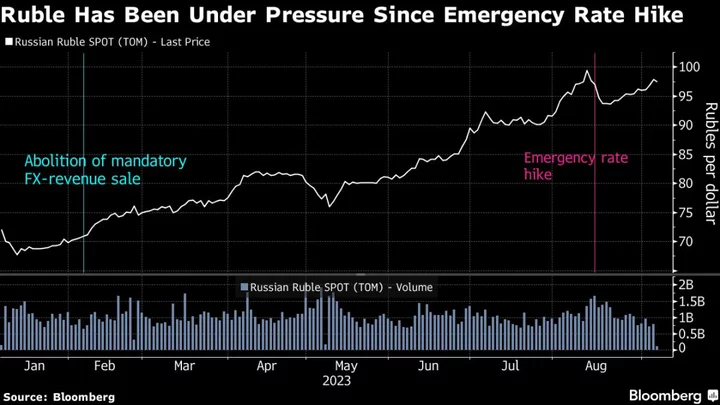
Bank of Russia to Meet Currency Demand as Eurobond Comes Due
Russia’s central bank will offload 150 billion rubles ($1.5 billion) of foreign exchange in the domestic market this
1970-01-01 08:00

New Thai Leader to Unleash Stimulus to Bolster Wobbly Economy Still Reeling From Pandemic
Thailand’s new government is set to unveil a number of fiscal stimulus measures next week that will include
1970-01-01 08:00

Searchers trying to 'stress' escaped Pennsylvania killer and force a mistake, official says as manhunt enters its 7th day
About 200 law enforcement personnel are searching for escaped convicted murderer Danelo Cavalcante in eastern Pennsylvania, hoping to "stress him" out of hiding as the manhunt Wednesday stretches into its seventh day, a US Marshals Service official said.
1970-01-01 08:00

Arsene Wenger reveals his blueprint for the future of football
There are still moments when Arsene Wenger sits at his desk in Zurich – of course overlooking every type of pitch, from 11-a-side to beach football – and wonders about the scale of the task he has taken on. Perhaps facing Sir Alex Ferguson or Pep Guardiola was easier. “When you sit here and think, ‘I have to improve football in the world’, you realise that it’s not easy, you know," Wenger laughs, before gesturing to the pitches below. "I would rather say ‘give me a team and down there I can show you what I can do’. But once you sit here and say, 'how much, 211 countries? OK, thank you very much!’” And yet, as great as Wenger’s managerial legacy is, there are so many moments in speaking to him about his role as Fifa chief of global football development when it’s impossible not to wonder how much the wider game could have benefitted from his rare insight. “I can understand that as long as I was at Arsenal I didn't care too much about that because I had to win the next game," he says. "Once you have a global vision of world football, you realise something is not right.” Wenger has probably attracted most focus in the role for fronting the move for a biennial World Cup, but his real work – and a truly great responsibility – is raising the level of the sport across the planet so every country and every child has a chance. “I believe really football can change the world,” he said at the Fifa Women’s Football Convention in Sydney last month. “Not just on the football side, the human side. That’s the next step.” Wenger is sitting here on transfer deadline day explaining in a wide-ranging interview with the Independent exactly how. It is a particular challenge when he goes to countries like Cote d’Ivoire and the president tells him they haven’t had an official youth game in five years. “And here you have Yaya Toure, Didier Drogba, Kolo Toure, you know we have the players, it’s a football country,” Wenger says. “I always think there’s a little girl or a little boy who has a dream, has the talent and no opportunity.” It’s all the more frustrating for Wenger since there is now a strong argument that football is the most popular cultural pursuit the planet has ever seen, particularly with the way it spreads into the United States and India, all while developing huge money. Most of that, however, stays in one corner of the globe. “In Europe, it's all done and we are a little bit not conscious of the needs elsewhere, because in some countries there's no [football] education… it’s incredible. “Football is conquering the world at an unstoppable speed and at the moment there is a dysfunction between the audience and the practice in some countries.” In other words, there aren’t the resources to match the interest: the dream. Wenger talks about how the first steps to solving this are creating free centres of excellence for the best young talent and spreading out from there to create grassroots structures. Fifa is currently funding 25 academies, and the former Arsenal manager recently had the coaches involved at his office for the final preparations. Such is the nature of the discussion and the nature of his thinking, though, that an hour-long interview spreads into all manner of areas. They include: How football may have to “create striker schools” to solve a lack of goalscorers How modern academies offer high technical quality but have meant “we lose a bit of that freedom, that creativity” How pressing has affected that “The trend in some academies is to recreate park football” How football isn’t producing anywhere near as many good players as it could “Does the world produce enough good players? I think no” How this has led to an inflated transfer market, where “everybody thinks the same” Why countries like Croatia and Uruguay are so repeatedly successful How football is addressing these issues There’s then the vintage manner he offers profound insights about football, and seemingly simple lines that capture so much, just in sitting there talking about it. Employing Wenger to directly study the game only amplifies that, which is what he has spent the last few years doing since taking the job in 2019. “We analysed football in 205 countries and we found in half of the world there’s a deficit in education… which I mean as identification of talent, coaching programme, quality of coaching, quality of the competitions and integration in the first team. “What we basically found out by analysing the whole world is there’s a huge correlation between the quality of the educational system and the results in the first team. That was mathematics. “We proposed to each member association to help them to develop the education. Basically, if you have no education in life, you have no chance so my purpose was of course to change that.” Some of the challenges themselves come from what has been one of the most transformational factors in the modern game. That is the way a sequence of wealthy western European countries like France, Spain, Germany and now England have essentially industrialised talent production. Wenger himself points to how Clairefontaine-fashioned underage teams were thrashing England’s when he arrived at Arsenal in 1996, but that no longer happens. England has caught up. It’s put to him that the old line from journalist and former footballer Eamon Dunphy - that “dictatorships and poverty” produce good footballers - no longer applies. It is typical Wenger, though, that immediately leads to another fascinating path of discussion. “No, no, I would say it's quality of education. What has dropped in recent generations is that of course park football has disappeared and now the trend in some academies is to recreate again what happened before. The game itself is a good coach. “Why? Because, if I play in the park, I have to make decisions. If I’m shrewd enough to think why did that not come off, and have a right assessment, the next time I am in the same situation I am correct. We have lost that a little bit. And maybe today we are overcoaching a little bit sometimes, and we lose a bit that freedom, that creativity, that individual personalised training that happened before.” A classic example of what Wenger is talking about comes from one of the most famous goals of all time. In bearing down on Peter Shilton in the 1986 World Cup quarter-final, Diego Maradona remembered a previous occasion when the England goalkeeper went one way. So, at this moment of heightened tension and consequence, the Argentina great went the other way. The rest is history, but the evolution since has removed something from the game’s present. Wenger believes the greatest cost of the more homogenised academy system is with that fundamental of the game - putting the ball in the back of the net. Or, more specifically, he believes it has resulted in a decline in strikers that has inevitably brought a decline in classic centre-halves, too. READ MORE: ‘Would Messi still have been Messi?’ A lost generation of future footballers The hermetically sealed nature of modern academies has meant young players are not “educated for the fight” in the same way. “I think football has improved dramatically all over the world but some positions today are more difficult to find because maybe the evolution and the quality of the coaching has suppressed natural fighting qualities in positional play. “The emphasis has become more on quality of passing, quality of coaching. What you lost from the wild football is, if you go out now to a training session here, it will be built to start with passing, after that the quality of possession. “Before, the training pitches were not good, so you had to lift the ball to the striker. A striker had to fight to get the ball so, naturally, you develop qualities that, with the passing, you develop a little bit less. “If we go out there and play in the park, you think you have to score goals to win the game. Then you have to fight. “As well, the man-to-man marking has disappeared so it’s easier to get the ball. You are less confronted with fight. You see that in Germany. Since they play zonal they don’t produce strikers anymore. “If you look at the global evolution, we have moved away from defenders who only defend, from strikers who only attack, from midfielders where some defend and some attack, to be more demanding completely. Technically, today, the players in every position need to be better because of higher demands than 30 years ago. The pace is higher, the athletic side is higher. So, today, the right-back is technically better, the centre-back is technically better. Of course, you had exceptions in history but maybe it has also kicked out specificity; the creativity of some players because of the pace. “Overall, every player in each position has become a more complete player. I would say because we have gone in a more specific passing game today, the demands on the striker to score is smaller than it was before. Jurgen Klinsmann made an interesting point on that at the World Cup. He said to me. ‘I played with only one thing: I have to score. I feel the strikers today judge their own game by how they combine with other players. I only judged my game on did I score or not.’” READ MORE: The Premier League is having an identity crisis – but one thing can save it So, how does football solve this? Wenger believes this is being deeply considered, and that Erling Haaland represents a throwback who could point to a new spin on an old way. “At the end of the day, no matter what you do, football is always the quality of the one who gives you the ball and the one who puts it in the net. It’s true you find more good passers now than finishers. “And you can develop these qualities. I think it’s something that will be addressed. Now, after 15 years of age, we have to start specialisation and positional play. “Finishing under pressure. Finishing by being challenged and the quality of the movement… to get that responsibility on their shoulders, that their focus every day is to score, to fix them targets. So maybe we have to create striker schools, internally inside the club, or more specific work. I think it’s on the way to happening now. “If I look at Haaland, Haaland is for me the real typical striker. He looks like he is ready for the fight, ready to be focused on only scoring goals. Like [Olivier] Giroud is a real striker in mentality, that explains why he’s still playing at 36, 36. And [Zlatan] Ibrahimovic, [Karim] Benzema, they have been educated for the fight, they have been educated to finish as well. “In France now, you have some good strikers again. Germany, where they had big strikers, they have less. They are thinking now how they can change that again.” It may bring a change in centre-halves, too, given how interlinked the two roles are. As someone who used to play in that area himself, Wenger now feels Jamie Carragher is right that it might be the most demanding position in the game. “At the end of my career, you wanted centre-backs to play out from the back. Today you want the centre-back to play like a number-10 and to defend as well, to be tough. Fighting and to play. It’s tough to always find that balance.” That, for Wenger, is also where the beauty lies. “You know, football is magic for me because there is a good balance we have to make between the technical, the physical and the tactical,” Wenger adds. “So, for example, one of the things we are cautious to change is the offside rule because we want to keep that balance right. READ MORE: The trick that made Erling Haaland the ultimate finisher – in more ways than one If I play for example against [Kylian] Mbappe, the only advantage I have is to play him offside. If offside is even more difficult for me to play, I have no chance anymore. So what can I do? When his team has the ball I can run in the box because I wait for him. The rest, I have no chance! Haaland is the same. “So, when you press, the defence has to move up, and the space is behind me. Against the quick players, it becomes even more difficult. That is a good example of the evolution of the game. The attack gives you a new problem. The defence responds by analysing your superiority. Then the attack finds a new solution and creates again a new problem and the defence comes behind. “So I would say now how do you slowly fight against the pressing, it’s by getting the players better technically. Evolution is created by opposition.” There is a similar dynamic in the transfer market, which has influenced some of this summer’s excesses. Whereas it used to be that Luis Figo and Zinedine Zidane would command the record fees because they were in their prime and had established careers that offered absolute proof of quality, that sort of expenditure is now geared towards much younger talent. Even teenagers like Rasmus Hojlund and Jude Bellingham have gone for huge fees. Part of that is their ability, particularly with Bellingham. Part of it is the premium on their positions, particularly with a striker like Hojlund. Part of it is the thinking. “What is happening now is because clubs think that confirmed players are so expensive, they try to fight for the younger players. They are thinking they will get them at the cheaper price. The fact that everybody thinks the same makes the prices of the younger players too high, in my opinion. Why? Because it is at 19, 20, 21 where you see if the player has the capacity to cope with the pressure. READ MORE: The year that sportswashing won: A season that changed football forever “For the confirmed players, with the high levels of transfers come high wages and even clubs like Real Madrid cannot cope with both. What is the trend in the top markets? They get the players to go to the end of the contract to be capable of giving the players the wages they want. And it looks like now the competition with Saudi Arabia will even increase that, so overall I would say there’s more fight for the young players. “But two questions. Does the world produce enough good players? I think no, and I believe as well that the prices depend on the identity of the buyer. If he is tomorrow president of Young Boys Berne [gesturing towards Fifa media officer Stefan Curtis] and I am Arsenal, I will come to see him. ‘Who are you? Arsenal, OK, English, I have a good player.’ In Switzerland he would sell for £5m, in England for £50m. So somewhere, the identity of the buyer fixes the price.” It’s a theme that brings together much of Wenger’s work, and why it is so important for the game, as well as how it’s played. So much of the money is concentrated in western Europe, and particularly the Premier League, which has in turn generated even more mega interest around the rest of the world. Many countries don’t have anything like the same resources, though, which has meant they cannot maximise the potential talent. The talent they do have is meanwhile quickly bought up, reducing the quality of their domestic competitions as well as the money the football culture can consequently invest. Part of Wenger’s great mission, beyond just changing the world by changing the football world, is to lift the level of their entire game; to restore a vitality. “I believe the globalisation of the world has concentrated the big money in a few number of clubs,” Wenger emphasises. “his few number of clubs has a huge potential and the rest of the world watches the Premier League. So, what does a guy in China or South Africa do in the morning? He thinks ‘ah, Premier League.’ Why? Because the best players play there and that reinforces the Premier League even more, so that means the concentration of the money in the small number of clubs has created even an inflated market. “And then once you have all the best players in the world in the same league, that means if I have a Chinese player in the Premier League, all China will watch the Premier League. That reinforces even more that superiority. “What I want to create is that in Angola, for example, we produce as well players who are good enough to produce a quality in their own championship, that the guy can have a choice. ‘Yes, I will still watch the Premier League but in my league something is happening as well - oh, here we have as well some good players’. Then it creates interest. “That’s why I tell you the deficit of education today is detrimental to the quality of the championships and as well to the quality of the national teams worldwide.” This is the “dysfunction” Wenger spoke about. “For example, the television audiences in India are very high, in China very high, but the players are not educated at the same pace,” Wenger maintains. “What we want is to provide them with the capacity to play. That’s our target.” If the targets are the same for every country, the challenges are different. While an emphasis will inevitably be on countries of inferior resources, those with more resources can bring the opposite problem, which is privatised football; or coaching that costs parents more money. The most obvious example is the United States’ “pay to play” system. “We have in some countries a lack of football culture,” Wenger concedes. “A lack sometimes of structures, and in some countries, because the private academies have taken over, a child from a poor background cannot pay to get into the football school. It’s exactly the reverse of what I want to do.” It’s also the opposite of what football represents. “You can play with an orange or you can make a ball with paper. That’s why football is so popular. But today if you want to get to a good level of education in football, in some countries you don’t get it. I find that not right because, in many countries, there are some private initiatives, but the parents have to pay to get the children in there. “For me it doesn't matter if you're rich or poor. If you are good, you come in. Our academies are free, just open to talent. You have to adapt and find a solution in every country.” *** It is here when another Wenger thought opens a whole new avenue of discussion. In this case, it is how some national teams constantly overperform. “What we found out, and what explains countries like Croatia, like Uruguay – who are small countries, three million people – is that a number of good players on a short surface is more important than a number of good players on a big surface.” In other words, they’ve realised how to use their size to an advantage, by being able to bring the best talent together more easily and enjoy a multiplying effect. “I realised 40 years ago from a study I made for Netherlands, why I want to put the best with the best. Because they play against each other, they stimulate each other. That explains countries like Netherlands, Croatia, Uruguay. “They keep creating teams and players because they have a good level of education and identification of talent. “Croatia was in the last four of the last two World Cups so that means success is not limited to big countries. It is just limited to the quality of education and organisation.” It is also a newly romantic virtue of international, that has inverted a lot of football history. It now offers a vitality that the club game can’t. No matter how big the population, international managers have to make do with what they have. The biggest clubs just buy what they lack. “Yes, the international team game is rewarding the quality of the educational work. The club game, and I am a big fan of big clubs, is the recruitment of the best players from all over the world. It’s fantastic, but I think you need the two, to give everybody the chance. “For example, Croatia today cannot compete with their clubs, at the top level, because the players leave early. Then they come back and compete with their national team so they are rewarded for the quality of their work. READ MORE: The famous Croatia shirt is transforming good players into World Cup greats “That’s our target. In Africa, it’s the same. In Concacaf it’s the same. I come back from Australia, football is unstoppable. “The boy or the girl wants the dream. When they watch football players, when they see the World Cup, when you watch it, you have the dream, which is to play football and to lift the World Cup. We create the dream. But we do not have at the moment the capacity to fulfil this dream.” That’s what he is pondering as he sits at that desk. It is in some ways the same as when he was a club manager, speaking to why the game is so popular. It’s to fulfil the dream. Read More Sportswashing is about to change football beyond anything you can imagine How modern football became broken beyond repair ‘Would Messi still have been Messi?’ A lost generation of future footballers Arsene Wenger defends Fifa’s time-wasting crackdown Spain manager Jorge Vilda sacked by Spanish FA amid Luis Rubiales crisis Manchester United share price crashes by £500m after report Glazers may not sell
1970-01-01 08:00
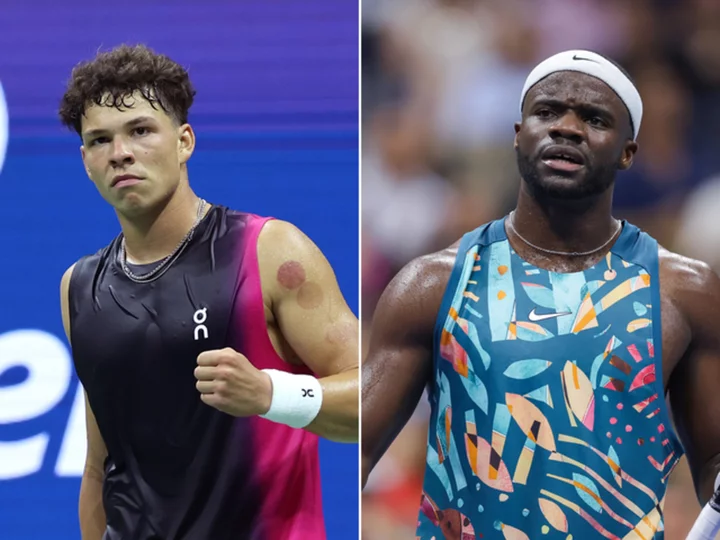
20-year-old Ben Shelton upsets Frances Tiafoe to advance to US Open semifinal
Ben Shelton pulled off an upset against fellow American and world No. 10 Frances Tiafoe in four sets in the US Open quarterfinals early Wednesday.
1970-01-01 08:00

Megadeth guitarist pulls out of tour
Megadeth will be continuing their world tour without Kiko Loureiro after the guitarist pulled out of the trek so he can spend more time with his family
1970-01-01 08:00

Pirates of the Caribbean 6 script so 'weird' writer is shocked Disney went for it
The script for 'Pirates of the Caribbean 6' is apparently so "weird" even the writer is shocked Disney bought it.
1970-01-01 08:00
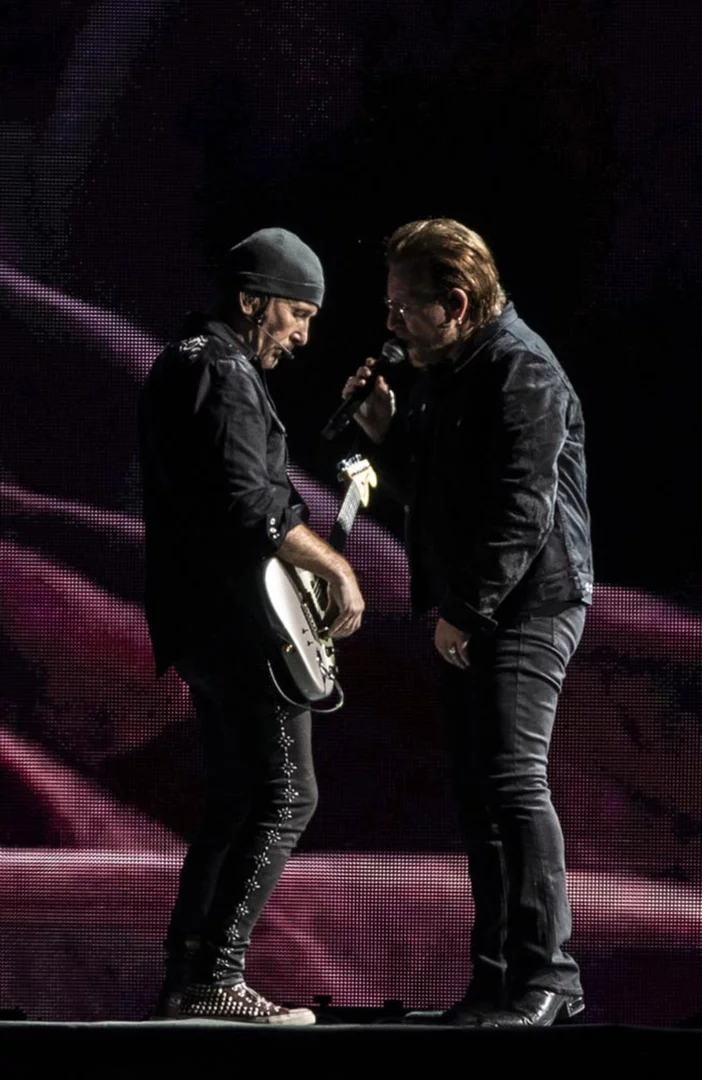
U2 will miss drummer Larry Mullen Jr as they prepare without him for Las Vegas shows
U2 will be without drummer Larry Mullen Jr for their Las Vegas gigs as he continues to recover from surgery.
1970-01-01 08:00

Richard Linklater fears for the future of indie cinema
Richard Linklater fears independent cinema is 'gone with the wind' because Hollywood has changed so much over the last few years
1970-01-01 08:00