

Rich Nations Must Speed Up Climate Action to Meet Paris Goals as Carbon Budget Shrinks
Rich nations must be more ambitious in their climate action to contain the rise in global temperatures to
1970-01-01 08:00

Shingles symptoms, what causes it and how to treat the virus
Shingles can be a very painful experience that affects around one in four adults in their lifetime. The infection, also known as herpes zoster, is caused by the varicella-zoster virus which also causes chickenpox. The virus is extremely common, with more than 90 per cent of the world’s population having it. It is usually contracted when people get chickenpox as children, but the virus does not go away, instead, it will lay dormant in the body’s nervous system for years. For about a third of people who get the virus, it will reactivate some years later and cause shingles. Here is everything you need to know about the symptoms of shingles and how to treat it: What are the symptoms? A person who gets shingles will experience a painful rash that can occur anywhere on the body. Early signs of shingles could be a tingling or painful feeling in an area of skin, a headache or feeling generally unwell. According to the NHS, the rash usually looks like “a single stripe of blisters that wraps around the left side or right side of your torso”. They appear as blotches on the skin that become itchy blisters, which can break and ooze fluid. The rash can be red, but this can be harder to see on brown or black skin. The rash can also appear on your face, eyes and genitals. If it appears around your eyes, it can affect your sight or hearing and make it hard to move one side of your face. According to the Mayo Clinic, if left untreated, the infection can lead to permanent eye damage. After a few days, the blisters will dry out and become scabs. If a rash appears on both the left and right side of the body, it is unlikely to be shingles. How is it treated? Shingles can take up to four weeks to heal, but can have more severe consequences in older people above the age of 50. If the symptoms are not serious, patients can take paracetamol to ease the pain and use a cool compress on the rash several times a day to soothe it. It is also recommended that you keep the area with the rash clean and dry to reduce the risk of infection and wear loose-fitting clothing. But there are some situations in which it is recommended you contact your GP or call 111. Due to the heightened risk in older people, you should seek help if you are aged 50 or older. People with a weakened immune system should also contact the health service, as well as those who have a rash that is widespread and painful, or has appeared near an eye. Are shingles contagious? Shingles are not contagious and you cannot spread them. However, if you come into contact with someone who has not had chickenpox and has not been vaccinated against chickenpox, they could catch chickenpox from you. The NHS recommends you avoid being around pregnant people who have not had chickenpox before, people with a weakened immune system, and babies that are less than a month old. Is there a vaccine against shingles? Yes, but it is only available on the NHS to people in their 70s. Shingles can be fatal for around one in 1,000 over-70s who develop it. The vaccine injection only needs to be given once. However, some people who cannot have the routine vaccine for health reasons will need two doses. Getting the vaccine will reduce your risk of getting shingles, and if you do get it, your symptoms may be milder and the illness shorter. If you already had shingles, you can still get the vaccine to protect yourself against developing it again. You may have to wait up to one year after you have recovered from the illness before you can get the vaccine. Read More When do the clocks go back in the UK this year? Hibernation mode: 5 small self-care adjustments to make before the clocks change Want to be a useful man? Arnold Schwarzenegger is here to tell you how When do the clocks go back in the UK this year? Hibernation mode: 5 small self-care adjustments to make before the clocks change Want to be a useful man? Arnold Schwarzenegger is here to tell you how
1970-01-01 08:00

Shingles explained as Holly Willoughby takes time off from This Morning
Holly Willoughby has announced that she “may not” be c-hosting ITV’s This Morning in the coming week due to contracting shingles. The 42-year-old TV presenter wrote on her Instagram Story on Sunday (16 April): “Hi, just to let you know, I may be away for the rest of the week as I have shingles.” “I’ll be back as soon as I’m better. Huge love,” she added. Shingles can be a very painful experience that affects around one in four adults in their lifetime. The infection, also known as herpes zoster, is caused by the varicella-zoster virus which also causes chickenpox. The virus is extremely common, with more than 90 per cent of the world’s population having it. It is usually contracted when people get chickenpox as children, but the virus does not go away, instead, it will lay dormant in the body’s nervous system for years. For about a third of people who get the virus, it will reactivate some years later and cause shingles. Here is everything you need to know about the symptoms of shingles and how to treat it: What are the symptoms? A person who gets shingles will experience a painful rash that can occur anywhere on the body. Early signs of shingles could be a tingling or painful feeling in an area of skin, a headache or feeling generally unwell. According to the NHS, the rash usually looks like “a single stripe of blisters that wraps around the left side or right side of your torso”. They appear as blotches on the skin that become itchy blisters, which can break and ooze fluid. The rash can be red, but this can be harder to see on brown or black skin. The rash can also appear on your face, eyes and genitals. If it appears around your eyes, it can affect your sight or hearing and make it hard to move one side of your face. According to the Mayo Clinic, if left untreated, the infection can lead to permanent eye damage. After a few days, the blisters will dry out and become scabs. If a rash appears on both the left and right side of the body, it is unlikely to be shingles. How is it treated? Shingles can take up to four weeks to heal, but can have more severe consequences in older people above the age of 50. If the symptoms are not serious, patients can take paracetamol to ease the pain and use a cool compress on the rash several times a day to soothe it. It is also recommended that you keep the area with the rash clean and dry to reduce the risk of infection and wear loose-fitting clothing. But there are some situations in which it is recommended you contact your GP or call 111. Due to the heightened risk in older people, you should seek help if you are aged 50 or older. People with a weakened immune system should also contact the health service, as well as those who have a rash that is widespread and painful, or has appeared near an eye. Are shingles contagious? Shingles are not contagious and you cannot spread them. However, if you come into contact with someone who has not had chickenpox and has not been vaccinated against chickenpox, they could catch chickenpox from you. The NHS recommends you avoid being around pregnant people who have not had chickenpox before, people with a weakened immune system, and babies that are less than a month old. Is there a vaccine against shingles? Yes, but it is only available on the NHS to people in their 70s. Shingles can be fatal for around one in 1,000 over-70s who develop it. The vaccine injection only needs to be given once. However, some people who cannot have the routine vaccine for health reasons will need two doses. Getting the vaccine will reduce your risk of getting shingles, and if you do get it, your symptoms may be milder and the illness shorter. If you already had shingles, you can still get the vaccine to protect yourself against developing it again. You may have to wait up to one year after you have recovered from the illness before you can get the vaccine. Read More Five signs of sepsis you need to know and act on immediately EuroMillions winner burned through £40m by spending £100K a week Tech entrepreneur, 45, spends $2m a year on reverse ageing to achieve body of an 18 year old: ‘Horrifying’ Shingles symptoms, what causes it and how to treat the virus When do the clocks go back in the UK this year? Hibernation mode: 5 small self-care adjustments to make before the clocks change
1970-01-01 08:00
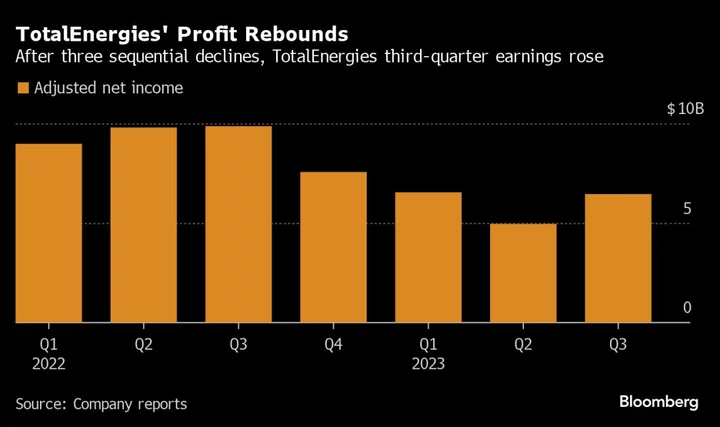
TotalEnergies’ Profit Rises on Higher Oil Prices, Refining
TotalEnergies SE’s third-quarter profit rebounded, ending a run of three consecutive declines as the French energy giant benefited
1970-01-01 08:00
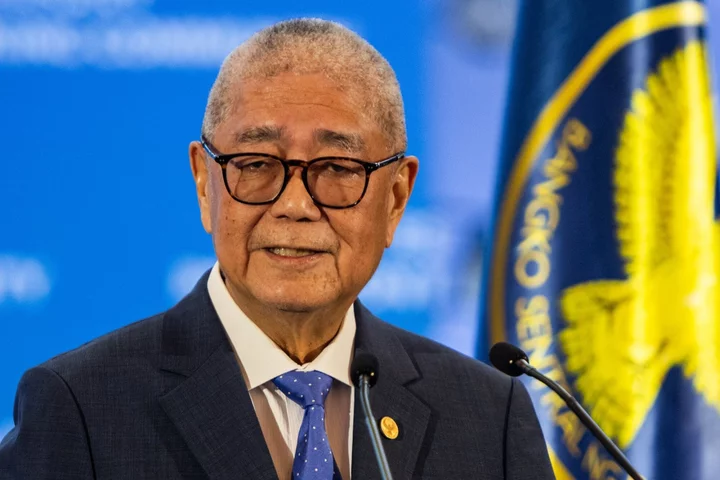
Philippines Announces Quarter-Point Rate Hike in Off-Cycle Move
The Philippine central bank resumed tightening monetary policy as it lifted its benchmark interest rate by 25 basis
1970-01-01 08:00

Christine McVie’s estate sells her stake in Fleetwood Mac's hits
Christine McVie’s estate has sold a stake in her music catalogue, including Fleetwood Mac's hits.
1970-01-01 08:00

Freelance director reveals why he cast John Cena in comedy role: 'He was perfect right away!'
Pierre Morel thinks John Cena has "amazing" versatility as an actor as he hailed the wresting legend for his performance in 'Freelance'.
1970-01-01 08:00

Jess Glynne reveals she used to idolise Amy Winehouse
Jess Glynne used to idolise Amy Winehouse so had a "full cirlce" moment when she was able to perform at a pub the late music legend used to visit.
1970-01-01 08:00
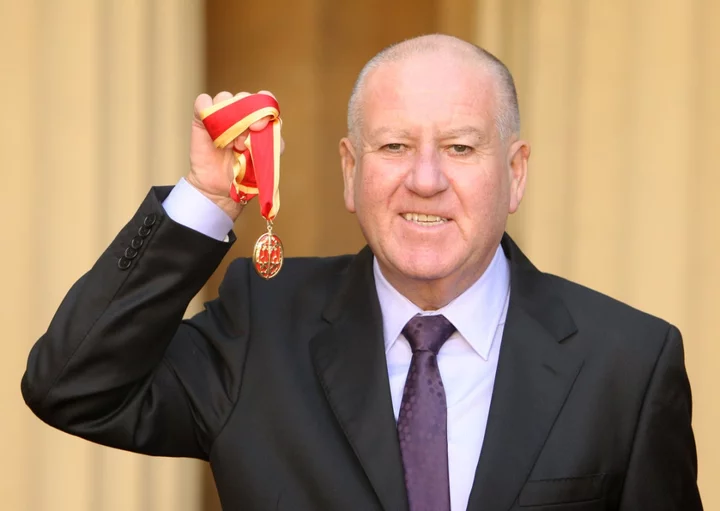
Former Sunderland chairman Sir Bob Murray on Newcastle, sportswashing and football’s forgotten roots
There were many moments that Sir Bob Murray could point to as illustrating how much football has changed, but one stands out for what he feels was a lack of basic decency. “My wife used to go to the boardroom at Chelsea, and they would thoroughly search her handbag,” he says. “She’s the woman married to the chairman of Sunderland.” The reason for that was out of the rigorous security concerns for Roman Abramovich, an ownership that Murray declares himself “personally diametrically against”. The 77-year-old even argues in his new book, I’d Do It All Again, that the entire issue of modern sportswashing “might have started with Abramovich picking up 20 trophies”. The deeper point is how some of football’s more dignified traditions, such as decency to rival clubs, were cast aside because of far loftier geopolitical concerns. Abramovich was a billionaire with a huge security detail, so that superseded the rest of the game. There is an obvious contrast with a great football figure that has been so celebrated this week, as Murray recounts in his book. The former accountant had taken his 10-year-old son James to see Sunderland’s match at Old Trafford, where Sir Bobby Charlton arranged for him to have his photo taken with the Champions League trophy. “When we played them at the Stadium of Light in the return fixture six months later, Sir Bobby had remembered the photo and handed James the picture. I was very touched by that; he’d showed great kindness and thought. Sir Bobby and his wife, Norma, always treated Sue and me like royalty at Old Trafford. In return, I always made sure I gave him some ham and pease pudding and stottie cake to take home whenever he came to our home games.” While so many of Murray’s stories raise a smile in the same way, it is very quickly apparent on talking to him about the book that this is no mere folksy look at what football used to be. It is about what the game is supposed to be, and what it represents. Drawing on his experience from 20 years as chairman of Sunderland, and having taken them up to the Premier League, Murray feels it is necessary to address the most complicated of themes. “Sportswashing” and the game’s many financial issues come up a lot, as he believes all of this is so damagingly moving the sport away from the community core it is supposed to be about. That ethos is visible in Sunderland’s Stadium of Light itself – with the financially sustainable way it was built seeing Murray brought into the St George’s Park and Wembley projects by the FA – as well as his aims for the book. He has insisted that 100 per cent of the cover prices goes to the Foundation of Light, the club-associated charity he set up “to use the power of football to invest in the communities we serve and to improve the education, health, wellbeing and happiness of people, no matter who they are”. It can be purchased at www.sirbobmurraybook.com. A core of the book of course covers Sunderland’s fortunes, from Roy Keane and the Niall Quinn-led takeover by Drumaville to Peter Reid’s transfers and tribulations, as well as the simple joy of having Kevin Phillips repeatedly lash the ball in after a Quinn knock-down. “It's the pace that things change,” Murray laments. “I think people don't realise it. This league is only 30 years old, it's in its infancy and yet... in 2000 I had the Golden Boot of Europe in Kevin Phillips. That was a wonderful thing to have, a lad that wanted to stay at Sunderland, that was 23 years ago.” It feels impossible now, because of how football’s economic infrastructure has been allowed to change. “It's just accelerating, we're just at the beginning of this journey... it's not going to get any better. We don't have any political leadership on it.” There is naturally a lot of discussion about Sunderland’s greatest rivals. While Murray is highly critical of the Public Investment Fund ownership of Newcastle United, and what it all represents, he believes the path to that point is instructive. He points to a period where both clubs reached agreements with broadcasters. “Where we’d created new shares, Newcastle United did a media deal of their own by selling existing shares to rivals NTL. The Newcastle directors received a lot more money – around £15m for themselves. The difference was it went straight into their pockets, while we took a share dilution so that ours could go straight into building and funding the Academy of Light. (We created new shares, so that the company – the club – got the money; Newcastle sold existing shares so that the directors got the money; then four years later the club bought some more Hall family shares, bringing the Hall income from Newcastle United to £20m. Add in salary packages and dividends paid to all shareholders and you’re looking at £36m to the Halls and £8m to Freddy Shepherd. And this was all before the sale to [Mike] Ashley.) “The receipts from the public flotation of Sunderland AFC all went to pay for the Stadium of Light and the Academy of Light. The receipts from the public flotation of Newcastle United helped pay back the Hall family loans. Sky had paid vast premiums to what the shares were really worth – but all the money went on the Academy of Light, and we had no debt. What do I think? I think we put the club first. Hall and Shepherd’s legacy to Newcastle was to get the highest price. That’s why they had 10 years of Mike Ashley. Now they’re owned by a Saudi. That’s your legacy…” While some would no doubt accuse Murray of jealousy or all the usual claims, that would be to completely misunderstand his perspective. This isn’t just about competing at any cost. It’s about creating something sustainable for the community. “It’s the Newcastle supporters I feel really sad for, they’ve got great tradition and pedigree, great supporters, very passionate, love their club, I'm concerned about them really. That’s what I’m concerned about. I don’t like them on a Saturday 3 o’clock, but after that I've got no problem with them.” He is highly critical of the Premier League’s leadership. “Who knows where it’s going to end? Probably with more clubs losing their soul.” Murray elaborates on this more in a chat about the book. “We've got a fantastic club, lots of youngsters, ladies, great mix, generations, really proper football club and we're very fortunate to have the owner we've got, but I didn't do the book because I'd been in the game so long again, and I did St George's Park and Wembley, I thought I should voice my concerns, that's to the advantage you spend a bit of time and effort on sportswashing, because it's quite new in the north east. That's where I am, I put my head above the parapet really, I didn't write the book to do sportswashing to be truthful. It's the issue isn't it.” Murray hones in on what this is in the book. “Sportswashing presents huge concern for the future. It’s money through the back door that hopefully will be investigated properly. And it goes back to that old chestnut of the supporter not being able to influence the thing he or she loves. In fact, it’s even worse: supporters are now turning their heads and not looking where the cash comes from as long as they are winning trophies or qualifying for Europe – that’s the ultimate triumph of sportswashing.” Speaking now, he brings much of this down to a core driving motivation. “There’s a lot of self interest because we have to win games. But football should be for the good of society. That's what we're all about really isn't it. “It reflects on them, because it's the power of the brand. We can get people to live better lives due to the crest. “That’s what the game's about.” Sir Bob Murray’s book can be bought at www.sirbobmurraybook.com, with 100% of the cover price going to the Foundation of Light Read More Eddie Howe’s tactical move exposes Newcastle weakness in Dortmund ‘lesson’ Newcastle given reality check as summer decision returns to haunt them One of those nights – Eddie Howe bemoans fine margins after Newcastle defeat Eddie Howe’s tactical move exposes Newcastle weakness in Dortmund ‘lesson’ Newcastle given reality check as summer decision returns to haunt them One of those nights – Eddie Howe bemoans fine margins after Newcastle defeat
1970-01-01 08:00
Man dies after his e-scooter is struck by a van
A man in his 50s has died after his e-scooter was struck by a van in County Sligo.
1970-01-01 08:00
PizzaExpress Circles In on Wagamama: The London Rush
This morning’s news deluge offers good occasion to think about lunch early: Wagamama owner The Restaurant Group Plc
1970-01-01 08:00

Unilever Rules Out Big M&A as New CEO Sets Out His Strategy
Unilever Plc ruled out any major acquisitions as new Chief Executive Officer Hein Schumacher set out a strategy
1970-01-01 08:00