

BP leader is the latest to resign over questions about personal conduct
Global energy giant BP is scurrying to find a new chief executive after CEO Bernard Looney became the latest corporate leader to step down amid questions about his personal conduct
1970-01-01 08:00
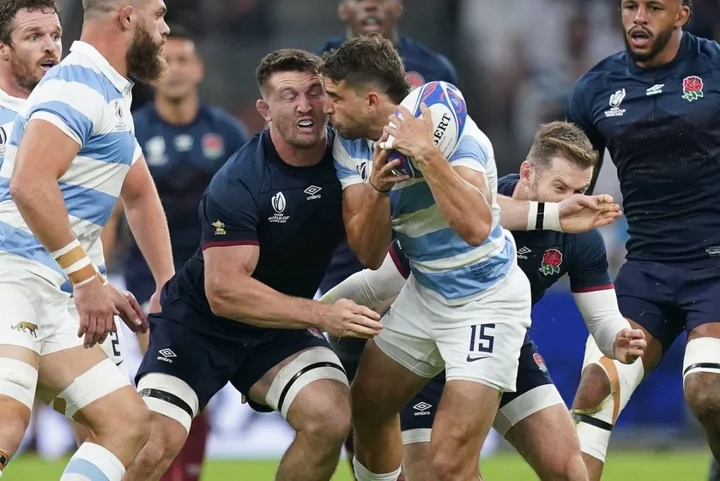
Rugby World Cup: Red card rules explained
Refereeing, head collisions and player safety again made the headlines on the opening weekend of the Rugby World Cup with a number of contentious incidents. The most high-profile came on Saturday when an England player was shown a red card for the fourth time this year, as Tom Curry was sent off early in his side’s win over Argentina, following a head-on-head collision with Juan Cruz Mallia. However, apparent inconsistency among officials irked many, especially on social media, with other incidents of head contact across the weekend not being punished as severely. Later in that same match, Santiago Carreras only received a yellow card despite his leap in attempting to charge down a George Ford kick seeing his hip make contact with the England No 10’s head. During South Africa’s impressive 18-3 win over Scotland, Jesse Kriel’s tackle on Jack Dempsey in which his head clattered into that of his Scottish opponent wasn’t even reviewed by the TMO and hasn’t subsequently been cited, while Chile captain Martin Sigren was only sin-binned despite a head-on-head collision while tackling a Japanese attacker. But what are the laws around head contact and high tackles that referees are following and how do they decide on the punishment? Here’s everything you need to know: What are World Rugby’s laws on head contact? Head-on-head contact in the tackle comes under Law 9 of the Laws of Rugby Union, which covers foul play. Law 9.11 dictates “Players must not do anything that is reckless or dangerous to others, including leading with the elbow or forearm, or jumping into, or over, a tackler” and Law 9.13 goes on to say “A player must not tackle an opponent early, late or dangerously. Dangerous tackling includes, but is not limited to, tackling or attempting to tackle an opponent above the line of the shoulders even if the tackle starts below the line of the shoulders.” If a player breaks these laws and the act is deemed to be reckless or dangerous, then the referee is entitled to issue a yellow or red card. World Rugby also clarify the intent of the laws, stating in their guidelines that: “ Player welfare drives World Rugby’s decision making for zero tolerance of foul play, especially where head contact occurs. The focus must be on the actions of those involved, not the injury – the need for an HIA [a Head Injury Assessment] does not necessarily mean that there has been illegal head contact.” What are the punishments for head-on-head contact? Ok, this is where things get technical and debates start to occur. In March 2023, World Rugby issued their latest ‘head contact process law application guidelines’ to guide referees on whether foul play has occurred and how it should be punished. The referee has to go through a four-step process (detailed below) to determine the extent of the foul play and the sanction. The four steps are: Has head contact occurred? Was there any foul play? What was the degree of danger? Is there any mitigation? Step 1 (has head contact occurred?) is relatively straightforward, with head contact including the head and the face as well as the neck and throat area. If any head contact is made at all, we move on to Step 2. Step 2 (was there foul play?) is a touch more complex. The referees are told to consider whether the head contact was either intentional, reckless or avoidable – e.g. the defender is always upright. If it was, the tackler will be penalised and they move on to Step 3. However, if the head contact was deemed not to be foul play, the game continues. Step 3 (what was the degree of danger?) – judged from high to low – determines the initial punishment. A degree of high danger is judged on any of: direct contact rather than indirect, a high-force impact, a lack of control from the tackler, the incident occurring at high speed, the tackler leading with the head/shoulder/elbow/forearm or the tackle being reckless. If the referee judges there to be a high degree of danger, a red card will be shown. Meanwhile, low danger is judged as indirect contact, low force, low speed or no leading head/shoulder/forearm/swinging arm and a yellow card or even just a penalty to the opposition may be awarded. The final step, Step 4 (is there any mitigation?) determines whether the punishment can be reduced by one grade (i.e red card down to yellow card or yellow card down to just a penalty). Mitigation includes a sudden or significant drop in height or change in direction from ball carrier, a late change in dynamics due to another player in the contact area, a clear effort from the tackler to reduce their height or the tackler having no time to adjust. However, mitigation will never apply for intentional or always-illegal acts of foul play. What about the Foul Play Review Officer/Bunker review? Introduced for this World Cup was the Bunker review system. This allows the referee to issue a yellow card to a player, sending them to the sin-bin while play goes on, where a Foul Play Review Official (FPRO) will then take another look at the incident and determine if the yellow card should be upgraded to red, allowing the game to continue rather than a long stoppage to debate this. This is what happened to Curry against Argentina. The referee crosses their arms to indicate a Bunker review will take place. Once a player is in the sin-bin, the FPRO has up to eight minutes to review the decision and decide if it warrants upgrading to a red card. If not, the player will return to the field after their 10 minutes in the sin-bin has elapsed. Read More Tom Curry ban: How many games will England star miss after red card vs Argentina? ‘Ruining this World Cup’: TV presenter slams ‘grotesque’ refereeing as Wales beat Fiji George Ford plays the pragmatist as England finally come to the boil in Marseille cauldron South Africa explain use of signals during Scotland win National anthems are ruining the Rugby World Cup – they must be changed now Tom Curry banned after red card in Rugby World Cup against Argentina
1970-01-01 08:00

How tall is Natalie Portman? Internet once called MCU star ‘kid in cosplay’ for her role in ‘Thor’
Natalie Portman does not try to hide her short stature as most of her co-stars tower above her
1970-01-01 08:00

‘Top-level’ England are the benchmark for improving Scotland – Lewis Ferguson
Lewis Ferguson believes Scotland came up against a benchmark England side in their 3-1 defeat at Hampden Park. In a challenge match to commemorate the first official international match between the two countries in 1872, the visitors were a class apart. Goals from Phil Foden, the brilliant Jude Bellingham and skipper Harry Kane sealed a well-deserved victory against the Scots, whose only strike came courtesy of a Harry Maguire own goal. After five straight Euro 2024 qualifying wins, it was a chastening night for Steve Clarke’s side and Ferguson gave due credit to Gareth Southgate’s men. The 24-year-old Bologna midfielder said: “It was tough defeat, a difficult match. They are a top team and so that is the level we want to get to. “In the first half we weren’t quite ourselves. We were better in the second half and got back in the game, but then the third goal kills it off. “You are up against top-level guys playing at the highest possible level. It is good to test ourselves and see where we are as a team. “We have talented players and at the top end of football it is fine margins. “Over the past three or four years we have been improving every time we have come away with the national team, we have been working well and it is a positive place to be at the minute. “We have so many talented, hungry players who want to keep improving and over the last three years we have done that. So the aim is to just to keep improving.” They are a top team and so that is the level we want to get to Scotland's Lewis Ferguson Scotland went into the game on the back of a morale-boosting 3-0 win over Cyprus in Larnaca on Friday night. But, in addition to defeat by the Auld Enemy, the Scots suffered further disappointment as the draw they needed between Norway and Georgia to confirm qualification for Euro 2024 failed to materialise. The Norwegians ran out 2-1 winners in Oslo and, with Spain thrashing Cyprus 6-0 to go within six points of leaders Scotland having played a game fewer, there is still all to play for in Group A. Scotland take on Spain away on October 12 before completing their qualification fixtures in November with games against Georgia and Norway. Former Aberdeen playmaker Ferguson said: “The gaffer just said last night was disappointing but that the camp overall was positive. “The main aim was three points in Cyprus, that was the most important game for us. “Ultimately our aim is to qualify for the Euros next year and that was another step in doing so. “We are in a great position. Last night was disappointing, a little set back ,but hopefully we can bounce back from that.” Ferguson did not get off the bench in Larnaca and replaced McGinn with only eight minutes remaining. The former Hamilton player has made just one start in seven appearances and he knows he will have to be patient as he waits for more game time. He said: “I have spoken to the manager. I know I need to be patient and he said I will play minutes for him. “The guys in midfield just now have been incredible in the past year or so, so I just need to be patient and, when I get my chance, take it. “I am always positive and always real. I know where I am at and the lads that are playing – I know where they are at. I need to improve to get to that stage. “It is all about being patient, keep improving every time I come away and hopefully get as many minutes as possible.” Read More Charity boss speaks out over ‘traumatic’ encounter with royal aide Ukraine war’s heaviest fight rages in east - follow live Football rumours: Martin Odegaard tight lipped about Arsenal contract extension On this day in 2007: McLaren fined £49.2m and stripped of points over ‘spygate’ Andrew Porter says Ireland squad ‘all have the belief’ to win World Cup
1970-01-01 08:00
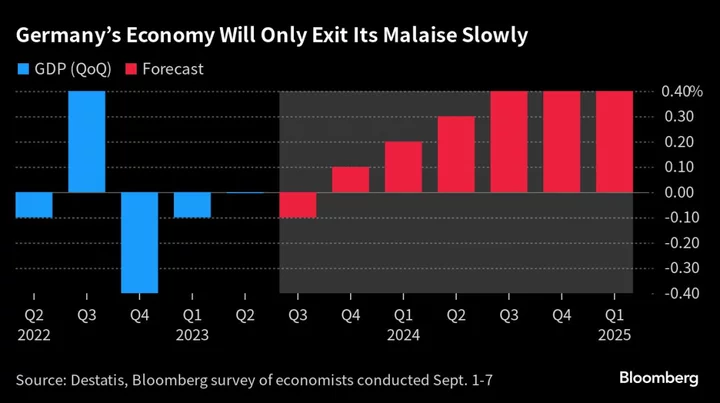
Germany to Predict 2023 Contraction in Updated GDP Forecast
The German government will predict a contraction for this year instead of sluggish growth when it updates its
1970-01-01 08:00

V&A cares for looted Yemeni funeral stones
The stones were reported by an archaeology enthusiast in an interior design shop.
1970-01-01 08:00

Venice Wants to Combat ‘Overtourism’ With New €5 Entrance Fee
Venice has approved a €5 ($5.4) daily entrance fee in a bid to regulate the hoards of tourists
1970-01-01 08:00

Joao Cancelo reveals plan to 'explode' at Barcelona
Joao Cancelo has revealed his intention to burst onto the scene at Barcelona after joining the Catalan giants on loan from Manchester City on deadline day.
1970-01-01 08:00

Live updates: North Korean leader offers his country's support to Russia amid its war in Ukraine
North Korean leader Kim Jong Un has told Russian President Vladimir Putin that his country offers its “full and unconditional support” for Russia’s “sacred fight” to defend its security interests, an apparent reference to the war in Ukraine
1970-01-01 08:00

Sudan country profile
Provides an overview of Sudan, including key dates and facts about this northeast African country.
1970-01-01 08:00

Celebrities who own properties in the Bahamas
'You've got to have some sanctuary, a safe place where you can escape the scrutiny,' said Depp about jetting off to the Bahamas
1970-01-01 08:00

China says it hasn't issued any ban on Apple's iPhone
China hasn't issued any laws or rules to ban the use of iPhones or any other foreign phone brand, a Chinese government spokesperson said on Wednesday.
1970-01-01 08:00