
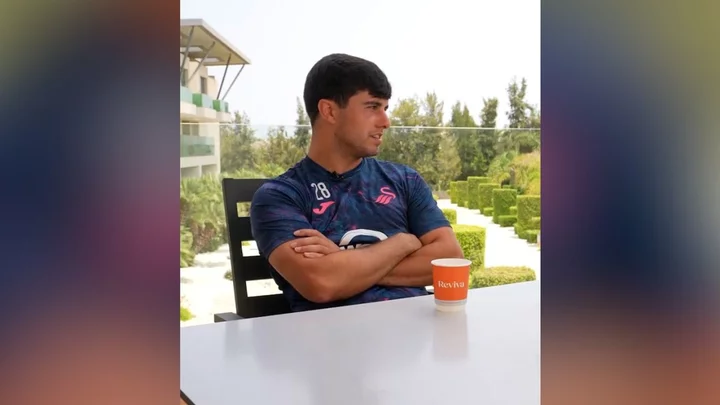
Swansea AFC players get final say on whether aliens really exist
The experts have weighed-in, and now it's time for the real verdict on whether aliens exist from the people that matter: Swansea City players. Liam Walsh and Jamie Paterson sparked a debate as part of the club's 'Spill The Beans' series, and there was a clear divide in opinion, with the Liverpudlian not buying the idea of aliens. "I believe in stuff, just not something daft", he argued, while Paterson clapped back: "You're such a sceptic mate". Sign up to our new free Indy100 weekly newsletter
1970-01-01 08:00
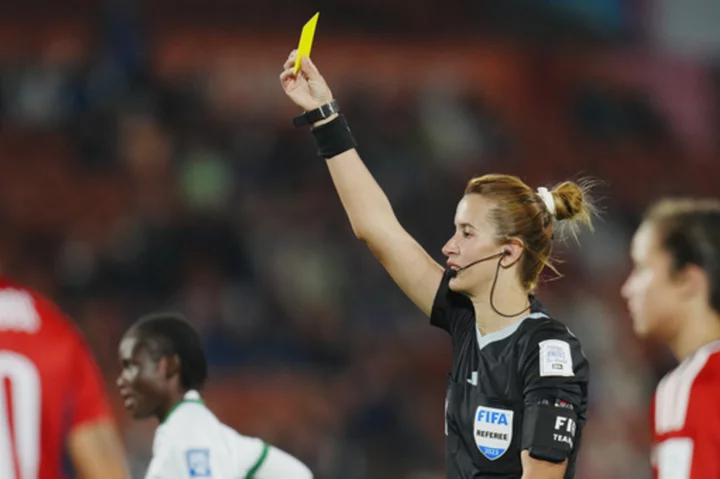
Yellow cards for confronting referees part of tougher sanctions for English soccer season
Players and coaches will face stricter sanctions for bad behavior in matches in the upcoming English soccer season
1970-01-01 08:00
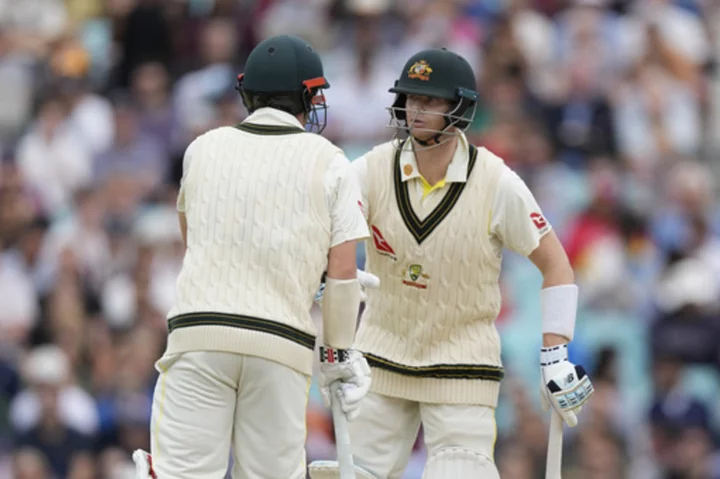
Australia fights back though Smith and Head in bid for series-clinching win in Ashes
Australia recovered from losing three quick wickets and was mounting a recovery through Steve Smith and Travis Head in its bid for a series-clinching win over England on the final day of the fifth Ashes test
1970-01-01 08:00
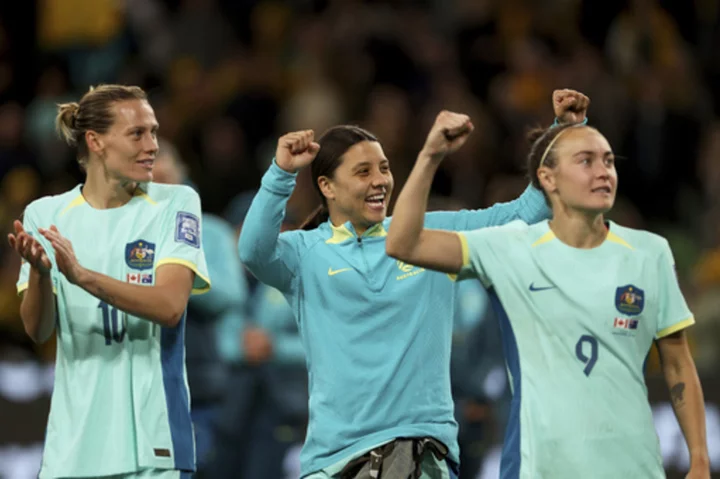
Raso scores twice as co-host Australia advances, knocking Canada out of the Women's World Cup
Haley Raso has scored her first Women’s World Cup goals at just the right time, with a first-half brace in Australia's 4-0 win over Canada in the pivotal group-stage finale
1970-01-01 08:00

Pope to Portugal for bittersweet 'Catholic Woodstock' of the young
(Corrects para 9 to clarify group is yet to put up outdoor signs but is planning to do so) By
1970-01-01 08:00
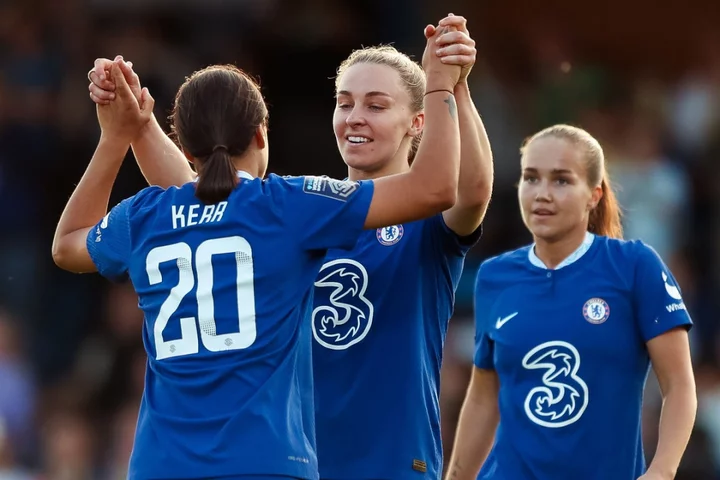
England’s Niamh Charles has new level of respect for ‘machine’ Sam Kerr
England defender Niamh Charles has reached a new level of respect for Chelsea team-mate Sam Kerr since she landed in the Australian captain’s home country for the World Cup. The Lionesses could face co-hosts Australia in the last 16 if they finish second in Group D following their clash with China on Tuesday, after the Matildas advanced as Group B’s top side with a thumping 4-0 victory over Canada on Monday. Kerr, who sat out Australia’s first two matches with a calf injury, declared she would be available for the must-win victory but did not feature against the Olympic champions, instead watching on as her team-mates kept the dream alive for the striker’s comeback to come during the knockouts. Charles said: “She means a lot to us back home but it’s so nice to come here. We were so excited for her in the build-up to the tournament that she’s in England all the time, she goes home for a fraction of time. “I was really excited leading up for her to get an opportunity to be here and everyone to come to her for once rather than her having to go – so yeah it’s really nice to see, especially in general for the Matildas. “Obviously it was gutting for her (getting injured) but yeah, I think being here and watching her being so excited in playing in front of her home country is really special.” The Lionesses, who have now been in Australia for nearly a month, travelled from New South Wales to South Australia on Monday ahead of Tuesday’s encounter with China in Adelaide, where England need just a point to clinch top spot in Group D and set up a meeting with Nigeria in Brisbane. Charles grew up on the Wirral, about 227 miles and just over a four-hour drive from the Blues’ HQ at Stamford Bridge, while Kerr’s hometown of Fremantle, Western Australia, is a nearly 9000-mile journey that takes up the best part of an entire day. When England embark on their inaugural UEFA Nations League campaign after the World Cup, the maximum time change will be one hour when they travel to Group A1 opponents Belgium and the Netherlands, with Scotland rounding out the group. And while the Lionesses have benefitted from hosting the four-nation Arnold Clark Cup in the February/March international break for the last two years, Kerr hopped on another plane Down Under for the Cup of Nations before returning to club duty with Chelsea earlier this year. If all that travel and personal sacrifice ever fazes the four-time Ballon d’Or nominee and FIFA 23 cover star, Charles certainly has not noticed. “She does it all the time – she just gets on with it,” Charles said. “I had admiration for her anyway as she’s a machine, but some of the Swedes did it at one point in the season and they were like ‘I don’t know how she does it all the time’. “For sure, you do not hear a moan out of her at all. She just gets on with it and the level of consistency she maintains despite that is very impressive.” Read More Charity boss speaks out over ‘traumatic’ encounter with royal aide Ukraine war’s heaviest fight rages in east - follow live Ben Stokes drops Steve Smith as Australia edge towards target in Ashes finale Heather Knight not thinking about next Ashes showdown as focus turns to Hundred Manchester United signing a ‘very good player’ in Rasmus Hojlund
1970-01-01 08:00
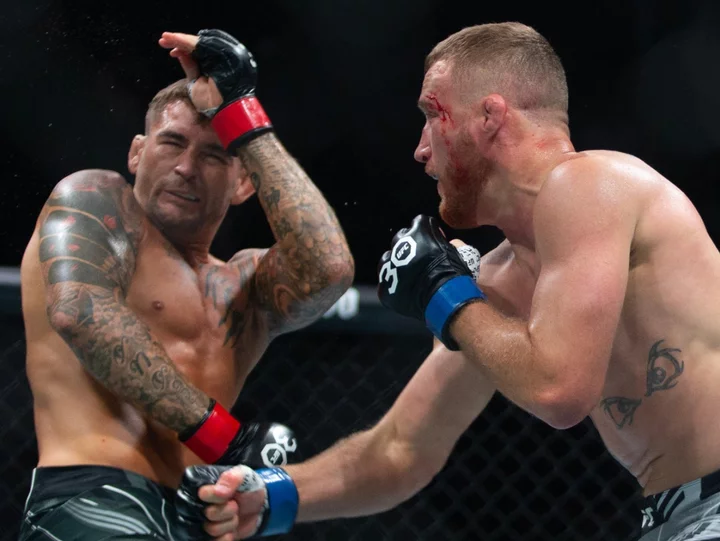
Justin Gaethje and Dustin Poirier share wholesome backstage moment after UFC 291 KO
Justin Gaethje and Dustin Poirier paid respect to one another in a wholesome moment at UFC 291 on Saturday, speaking backstage after Gaethje knocked out his fellow American. Gaethje won the main-event bout with a stunning head kick in the second round, avenging a 2018 loss to Poirier and claiming the ‘Baddest Motherf*****’ title. And as Gaethje spoke to TNT Sports backstage after the fight, Poirier came over to congratulate his fellow lightweight. “Congratulations, man,” Poirier told Gaethje, patting him on the shoulder. “Bad motherf*****. I didn’t see it, I didn’t see the kick! Congrats, man. I’m proud of you, you worked hard for this. You took it. Have a great night.” Gaethje, 34, responded: “Thank you, man. We both are [bad motherf*****s], we both [worked hard]. That’s what we do. Let’s hang out, I’m serious.” Poirier, also 34, replied: “I’ll whip you at ping pong,” to which Gaethje laughed: “You might! I’m pretty good, but you might.” TNT Sports presenter McKenzie Pavacich then asked Gaethje what he was feeling after the interaction. “I feel bad,” he said. “I care about people, and I knew that I had to go in there and not care about him. “That hurts in a way, but it’s me or him. I chose this game, I signed up for this, and so I have to go there – luckily only twice a year, usually.” Gaethe, who suffered a TKO loss to Poirier in 2018, is positioned to fight for the UFC lightweight title next. Like Poirier, Gaethje is a former interim champion who has twice failed to become undisputed champion. In October, Islam Makhachev defends the title against Charles Oliveira, in a rematch 12 months in the making. Russian Makhachev submitted Oliveira to win the vacant belt last year, five months after the Brazilian submitted Gaethje. Oliveira, a former champion, previously submitted Poirier in 2021. Click here to subscribe to The Independent’s Sport YouTube channel for all the latest sports videos. Read More Justin Gaethje stuns Dustin Poirier with brutal head-kick knockout at UFC 291 Justin Gaethje reacts to Conor McGregor callout after knocking out Dustin Poirier Jake Paul vs Nate Diaz live stream: How to watch fight online and on TV this weekend
1970-01-01 08:00
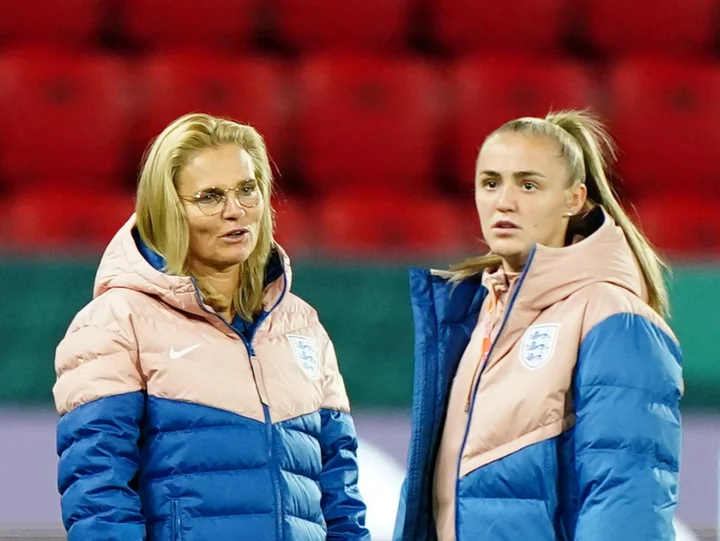
England can cope without Keira Walsh — here is how Sarina Wiegman can adjust
When Keira Walsh got injured, there was a collective groan of sympathy for a world-class player missing the rest of the tournament, but also for the rest of England’s squad. They must now deal with the loss of Walsh, the deep-lying playmaker who knits the team’s approach play together and so brilliantly patrols the space in front of the back four. Walsh is probably Sarina Wiegman’s most important player, certainly in the absence of Leah Williamson and Beth Mead, and England have now lost all three of the players who led them to European Championship glory. I have a lot of empathy for this team. In 2002, Faye White, Katie Chapman and I were all out. White had an ACL injury and my leg was broken. Chapman was pregnant. At the time, we were all integral players for England and were trying to qualify for the World Cup. In the group stages, we finished second to Germany in the group which meant we went into a play-off system. We beat Iceland over two legs and then had to play France to see who would clinch the final spot for the World Cup. We lost both games. I remember thinking that the three of us being out was a driving factor to not qualifying for the 2003 World Cup. It was devastating to watch France progress through the tournament and England not having any involvement. You could see the impact once Walsh went off on the game. England’s left, Lauren James and Rachel Daly, had been surging into the Danish half, pinning them back and generating chances and field tilt; that stopped. Arsenal’s excellent young midfielder Kathrine Møller Kühl had been tasked with stopping Walsh; now she was free to drop off, help Denmark build through the thirds and join in some attacks. Georgia Stanway moved back into the Walsh role, with Laura Coombs coming on as an 8; this meant England generally sat deeper, pressing less high without the security Walsh offers and losing Stanway’s bite higher up the pitch for dangerous turnovers. England have to solve several problems, but the first is probably mental. There are a lot of strong characters and experienced, quality players in that dressing room, but England’s spine in the Euros was Mary Earps, Williamson, Walsh, Fran Kirby and Mead – only Earps is still there. The downside of having world-class players and being able to pick them consistently, as Sarina has done, is that when you lose one or two in a department in short order, the change can be pretty tricky to manage. England need leaders and the pressure on Earps, Millie Bright and Stanway is now greater than ever. The next issue is tactical. Walsh’s most natural replacement, Lucy Staniforth, was only on the standby list and has gone home. England could change formation, perhaps bringing in a third centre-back to help the ball progression from deep or drop Stanway into the pivot role with two 8s ahead of her or, more likely, another defensive midfielder to make a double pivot. Coombs did not look out of place, but there is an argument for Jordan Nobbs’ energy and aggression in that area too, not least because if all that is left to Stanway, you miss out on her going forward as well and it would leave England light in terms of players joining attacks from midfield. England’s current approach means they must be able to build the ball through the thirds and circulating the ball quickly and safely around the back, and breaking the lines by going through or over, are both key. Walsh was instrumental to both, although it’s worth saying that Alex Greenwood was moved to centre-back against Denmark because even Walsh can’t do that alone. The pressure on Greenwood is now very intense; much of England’s ability to progress from deep will now be down to her and this is one reason why Sarina could opt to add another defender to the mix and go to a 3-4-3 system. England could also go for a slightly different approach. Great sides, and England are one, are expected to control the ball and hog possession, but tournaments can often favour a more counter-attacking approach. While England are not as brutally quick and athletic as the USA, for example, James, Daly, Lauren Hemp, Beth England and Chloe Kelly are all very dynamic, quick runners. England could focus on solidity in the middle and longer, more direct passing to a rapid front three or four. However Sarina addresses these issues, it is a huge loss to England and the tournament as a whole that Walsh will be missing, for some or all of it. The World Cup is about showcasing the best our sport has to offer and Walsh has joined the already too long list of star players who are absent. We need to get better at understanding the risks of injuries, why they are happening, and managing loads across the women’s game. More investment, especially in sports science and nutrition, at every level of the sport is required. Until that happens, and the injured list diminishes, our flagship events will be poorer for it. Read More Women’s World Cup TV schedule: How to watch every match today As Sarina Wiegman solves one problem – a bigger one presents itself In Keira Walsh, England lose the one player who is impossible to replace Australia thrash Canada to save Women’s World Cup dream from the jaws of a nightmare Women’s World Cup group permutations: How can each team qualify? Nouhaila Benzina: The hijabi-wearing Moroccan making World Cup history
1970-01-01 08:00
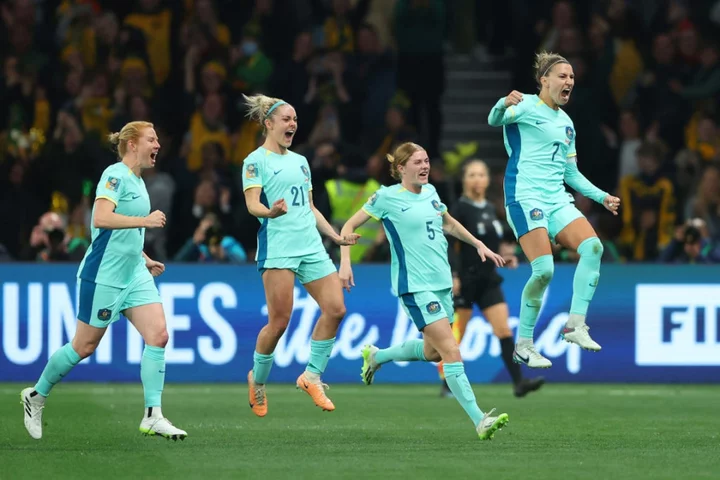
Australia thrash Canada to save Women’s World Cup dream from the jaws of a nightmare
Sam Kerr remained on the bench but thankfully for Australia, they did not need her. In a must-win match, the co-hosts did much more to keep their World Cup alive: thrashing the Olympic champions Canada to reach the knockout stages and restoring belief that looked to have been lost in the shock defeat to Nigeria. With it, Group B was flipped on its head: Ireland’s draw with Nigeria means Australia advance as group winners, avoiding a potential clash with England in the last-16. Kerr could yet return for that, but Australia finally found a way to play without their star striker and captain. It came at the perfect time with the Matildas facing elimination and a World Cup dream that was instead turning into a nightmare. Kerr was back on the bench after missing Australia’s opening two games with a calf injury, but against Canada they were instead lifted by another returning star in Mary Fowler. Ruled out of the defeat to Nigeria, a result that left Australia on the brink, Fowler returned to spark Australia’s attack into life, saving a World Cup that threatened to be over long before it was meant to. The Australia head coach Tony Gustavsson changed his shape and landed on a 4-4-2 that devastated Canada on the counter-attack, with Hayley Raso scoring a decisive brace from the right and Caitlin Foord enjoying her best performance of the tournament on the left. By the end, Australia’s position was so secure that there was no need to rush Kerr back. In her absence, Fowler has emerged as Australia’s next great hope. Badly missed against Nigeria after she was ruled out with concussion, Fowler gave Australia ideas and another option, a willing runner and clever dribbler to pull Canada out of their defensive shape. With Fowler setting Australia’s press alongside Emily van Egmond, her return meant Foord could return to the left wing, creating space for Steph Catley and restoring their key combination. It gave Australia familiarity and, even without Kerr, they had the attacking options to overwhelm Canada down the channels. Catley’s cross set up Raso’s opener inside 10 minutes, with the forward taking a touch before firing a low shot through the legs of Canada defender Ashely Lawrence. Australia were denied a second after a farcical offside, but Canada failed to take the warning with Raso scrambling in her second from a corner. Fowler’s tap-in, finished after Foord was released down the left in the second half, was then added to by Steph Catley’s late penalty. Relief had long since turned into joy, with Australia celebrating their biggest ever World Cup win, but this was meant to be nervy and a potentially disastrous night. Canada represented the worst possible opponents for a must-win decider, a side built for knockout football. In winning the Olympic gold medal, they were the team who simply refused to lose, absorbing pressure in their low-block and edging victories in games where they were second-best in possession and chances. They had cracked the code, always managing to find the breakthrough goal they needed to win close games. But at the World Cup that side did not turn up, and they became the first Olympic champions to exit at the group stage. Perhaps Chrstine Sinclair’s penalty miss in the opening stalemate with Nigeria was the moment that foreshadowed a doomed campaign - what would have been a historic goal for Sinclair, and a record sixth World Cup in which she had scored, turned into a missed opportunity. Throughout their three games, Canada only showed up in the second half against Ireland, where for 45 minutes they were able to solve some of their problems. Defensively, Canada never found a shape or structure that suited them. Kadeisha Buchanan, hooked at half time against Ireland, was overwhelmed again, struggling alongside Vanessa Gilles. Lawrence, another experienced member of their side, was often found out of position, never settling left or right. Behind them, goalkeeper Kailen Sheridan was far from the reassuring presence in goal that Canada desperately required. Bev Priestman’s four changes at half time was an alarming indication of how far Canada’s levels had fallen. It did not rescue them. Instead, Canada fell to their heaviest defeat under Priestman, a team in disarray. Australia now look the opposite: they are likely to face either Denmark or China in the last-16 and even without Kerr, this is a side who will be confident of progressing. Kerr could yet return and her World Cup is not yet over - more importantly, neither is Australia’s. Read More Kelly Smith: England can cope without Keira Walsh — here is how Lionesses can adjust Women’s World Cup group permutations: How can each team qualify? Nouhaila Benzina: The hijabi-wearing Moroccan making World Cup history
1970-01-01 08:00

Justin Gaethje reacts to Conor McGregor callout after knocking out Dustin Poirier
Justin Gaethje has claimed that he has little desire to fight Conor McGregor, after the Irishman called him out in the aftermath of UFC 291. Gaethje avenged a 2018 loss to Dustin Poirier on Saturday, knocking out his fellow American with a stunning head kick to win the ‘Baddest Motherf*****’ title. And McGregor, as he so often does after major UFC cards, then took to social media to call out one half of the main-event fight. “I’ll slap you around,” tweeted McGregor, 35. “I KO him one shot. Guarantee it.” At the UFC 291 post-fight press conference, Gaethje was asked about the former UFC champion’s comments. The lightweight, 34, replied: “I think he’s turned me down six times. And usually you have to lose to fight him, so don’t know what’s going on. “I don’t know, I don’t really care. Whatever. I fight MMA, I like to fight big fights, I like exciting things, so it sounds pretty exciting to me. [But] I’m not going to fight someone on steroids.” Gaethje was addressing the fact that McGregor, who has never tested positive for a performance-enhancing drug, is currently absent from the United States Anti-Doping Agency (Usada) testing pool. McGregor is set to fight Michael Chandler next, but the Irishman must first spend six months in Usada’s testing pool and return two negative tests – and zero positives. As such, McGregor vs Chandler is still without a date and location. Gaethje added: “I’ve never taken steroids in my life, never will. Well, maybe when I retire, I might... but I’ve never taken steroids, and I don’t want to fight someone that’s cheating. And I probably shouldn’t even say that if I want the fight, but it’s the truth.” McGregor vs Gaethje is a fight that many fans have long wanted to see. Meanwhile, McGregor has fought Poirier three times. McGregor knocked out the 34-year-old in a featherweight bout in 2014, before suffering a KO loss to Poirier in January 2021 at lightweight. In their trilogy fight in July 2021 – also contested at lightweight – McGregor suffered a broken leg at the end of Round 1. Click here to subscribe to The Independent’s Sport YouTube channel for all the latest sports videos. Read More Justin Gaethje stuns Dustin Poirier with brutal head-kick knockout at UFC 291 Jake Paul vs Nate Diaz live stream: How to watch fight online and on TV this weekend Next UFC Fight Night: Event start time, card and how to watch
1970-01-01 08:00
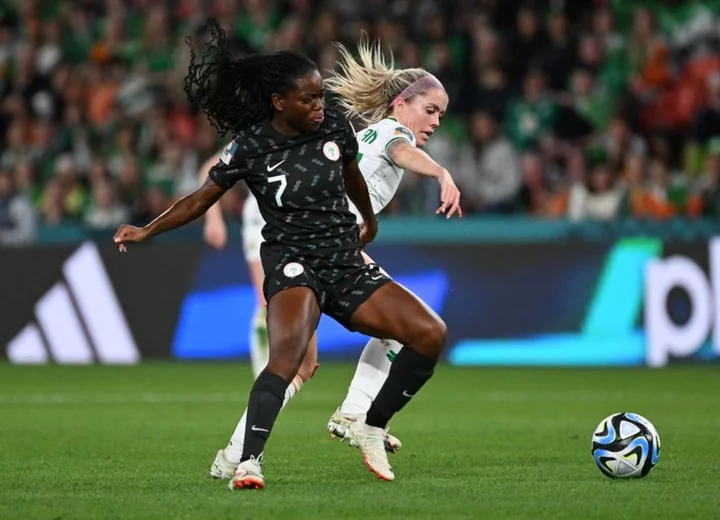
Soccer-Nigeria through to World Cup last 16 despite stalemate with Ireland
BRISBANE Nigeria advanced to the Women's World Cup knockout stages for just the third time in their history
1970-01-01 08:00
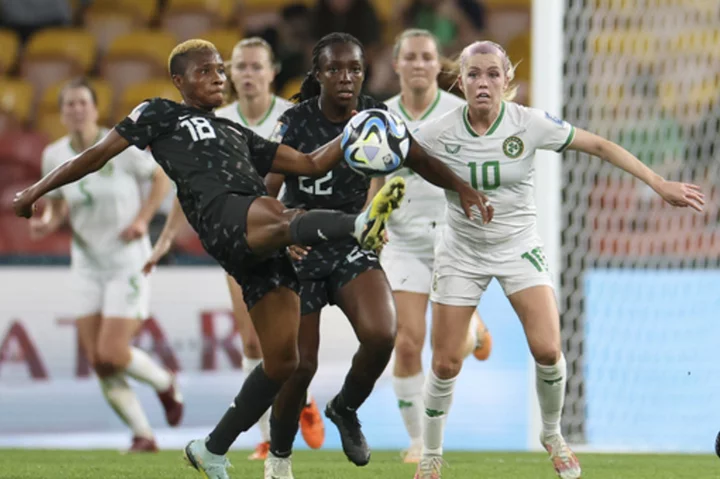
Nigeria advances to round of 16 at Women's World Cup with 0-0 draw against Ireland
Pre-tournament underdog Nigeria has used a scoreless draw against Ireland to advance to the round of 16 of the Women’s World Cup
1970-01-01 08:00