

Country Garden: How bad are the Chinese property developer's debt problems?
By Xie Yu HONG KONG (Reuters) -China is grappling with a slowdown that has rattled global markets, with the spotlight
1970-01-01 08:00

USMNT gossip: McKennie to stay, Cardoso to stay, Pefok joins Gladbach
It is transfer deadline day in Europe but the USMNT gossip is that the players linked with moves could be set to stay at their clubs.
1970-01-01 08:00
Fraser Franks set for op – four years after heart problem ended football career
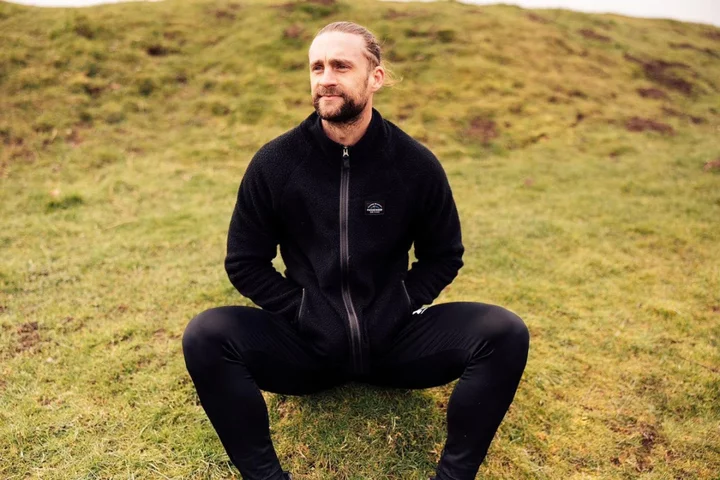
Former Newport defender Fraser Franks faced a difficult “grieving process” when a heart problem cut short his football career at the age of 28. But four years on, as he prepares for surgery that will ultimately save his life, he is “grateful” the condition was picked up early – as many people are not even aware they are at risk. “I’ll be having a mechanical valve fitted and work done on my aorta,” Franks, now 32, told the PA news agency. His surgery is set for September 4. “It is a big operation and I’ll be in hospital for about 10 days. And the recovery after, I won’t be able to lift anything, even a bag of shopping, for two to three months. “With a four-year-old daughter, that’s going to be difficult for me and her,” added Franks, who shares daughter Nellie with his wife, former S Club 8 singer Stacey McClean. “It’s been a lot to get my head around. There will be certain things I can’t do afterwards and a lot of lifestyle adjustments, but I’m really happy and content with it. “I’m grateful that this has been found and that there’s a solution for me, where unfortunately a lot of people haven’t got that. “I’ve had conversations with cardiologists and surgeons (who’ve said) this is going to save my life, I probably wouldn’t live much longer with the heart I’ve currently got. So I’m really grateful for that and it’s only through playing for a professional football club that this was picked up.” Franks was born with a bicuspid valve – meaning his aortic valve – which helps control blood flow in the heart – had two cusps (flaps) instead of the usual three. The condition is believed to affect around one in every 100 people, but it often does not cause symptoms and only becomes serious if the valve begins to leak or develops severe narrowing (aortic stenosis), which is what has happened in Franks’ case. A routine medical at the age of 16 first picked up the defect. Franks, who signed with Chelsea at age eight, had always been fit and healthy, but when he signed with Brentford at 16, like all players joining pro clubs, he was given a heart scan. Further investigations revealed the bicuspid valve, but because it was not causing problems, he was given the green light to continue as normal. Franks carried on, trying not to give it too much thought – until at 28, he suddenly started feeling unwell after a game and was rushed to hospital the next day, worried he was having a heart attack. “I wasn’t having a heart attack or anything like that, but I contracted an infection. While I was in there though, I told them I’d had this heart issue when I was 16, so they scanned me and saw the condition had worsened,” he recalled. “I’d developed aortic stenosis and the valve was leaking a lot more. Then it was deemed unsafe for me to carry on playing football, so I had to stop playing there and then.” London-born Franks has teamed up with the British Heart Foundation for their September Spotlight campaign, which aims to shine a spotlight on hidden heart conditions. His story highlights how heart problems can potentially affect anyone – including those who are young and seemingly very fit and healthy. Even when symptoms are mild or barely noticeable, undetected issues could become serious and even life-threatening, which is why research and awareness is so vital. Plus, as Franks has experienced, there are complex layers and emotional challenges to living with a hidden heart condition too. Being forced to suddenly retire early when he’d previously felt fine – and still looked well on the outside – was tough. “Ever since age eight, I’d been known as ‘the footballer’. It had been my whole identity, so to retire at 28 out of the blue was difficult,” Franks explained. “I think I kidded myself in the first six months, where I was saying, ‘Yeah I’m fine, I’m enjoying retirement and all that good stuff’. But I was really struggling and drinking heavily. “I reached out and got some help and had to do a lot of therapy. It really is a grieving process and I had to figure out who I was and what I enjoyed away from being ‘the athlete’. I do a lot of work around addiction and alcohol now, because I really struggled with those things Fraser Franks “And I didn’t play at the top level, so I didn’t have savings in the bank – I had to pretty much get to work straight away and earn a living. My wife was heavily pregnant then too, so there was a lot of stress and overwhelm at that period.” Yoga and meditation also proved a huge help in coming to terms with everything and Franks has since found a new sense of purpose, channelling his experiences into helping others. He added: “I do a lot of work around addiction and alcohol now, because I really struggled with those things. “That’s become a big part of what I do now, helping people who want to transition away from sport and working with young athletes on addiction and mental health.” He took up yoga as a gentle form of exercise when doctors told him strenuous sport was too risky. “I just completely fell in love with it,” Franks added. “I’ve found a real passion for it. It’s actually a goal of mine now – it’s going to be something I’ll be thinking about when I’m in hospital – when I’m healed, I want to go to India or Bali and actually earn a qualification and get trained as a yoga teacher. “Instead of focusing on all the things I’m unable to do, that’s something I will be able to do. That brings me a lot of comfort.” :: This September, the BHF is shining a spotlight on hidden heart conditions and urging everyone to get involved by supporting the charity however they can, with stories, stuff, time or money. Visit spotlighton.bhf.org.uk Read More Charity boss speaks out over ‘traumatic’ encounter with royal aide Ukraine war’s heaviest fight rages in east - follow live Brighton to face European giants Ajax and Marseille in Europa League Liverpool turn down £150m offer for Mohamed Salah from Al-Ittihad Man City seal Matheus Nunes deal as Cole Palmer leaves and Man Utd sign keeper
1970-01-01 08:00

Challenges to Afghan special visa program remain two years after US withdrawal, State Dept. watchdog finds
Numerous challenges to the Afghan Special Immigrant Visa program remain two years after the chaotic and deadly US withdrawal from Afghanistan, the State Department's watchdog agency said in a new report released Thursday.
1970-01-01 08:00

Scientists believe they have found a cure for alcoholism
Alcohol addiction ruins millions of lives every year, but scientists may have found a cure for this terrible affliction. A new treatment for alcohol use disorder (AUD) has been trialled in monkeys with impressive results and, if these translate to human trials, the impact could be monumental. A team of neuroscientists and physiologists from across the US tested a new type of gene therapy to see if they could directly target the underlying brain circuitry associated with sustained heavy drinking. As they noted, in the journal Nature Medicine, people suffering from AUD commonly return to alcohol use even if they attempt to quit. This is largely to do with what’s known as mesolimbic dopamine (DA) signalling – meaning how the central nervous system circuit communicates the feelgood neurotransmitter dopamine. A protein called glial-derived neurotrophic factor (GDNF) is key to keeping these neurons in this reward circuitry functioning. However, experts have found that levels of GDNF are reduced in people with AUD during periods of alcohol abstinence, most notably in a region of the brain called the ventral tegmental area (VTA), as IFLScience notes. Therefore, the researchers decided to test whether using gene therapy to deliver more GDNF to the VTA could help reinforce this crucial dopaminergic signalling and prevent patients from suffering an alcoholic relapse. The team of scientists explained how alcohol consumption in non-addicts prompts the release of dopamine, creating a pleasurable buzz feeling, but chronic alcohol use causes the brain to adapt and stop releasing so much dopamine. “So when people are addicted to alcohol, they don’t really feel more pleasure in drinking,” Dr Kathleen Grant, a senior co-author of the study, said in a statement. “It seems that they’re drinking more because they feel a need to maintain an intoxicated state.” For their research, Dr Grant and her colleagues used eight rhesus macaque monkeys, who were exposed to increasing concentrations of alcohol over four 30-day “induction” periods. The monkeys then had free access to alcohol and water for 21 hours a day for six months, during which they developed heavy drinking behaviours. This was then followed by a 12-week abstinence phase, with the GDNF treatment performed four weeks in for half of the subjects. The gene therapy was delivered using a a viral vector containing a copy of the human GDNF gene injected directly into the primate’s VTA, according to IFLScience. And the results were truly jaw-dropping. “Drinking went down to almost zero,” Dr Grant said. “For months on end, these animals would choose to drink water and just avoid drinking alcohol altogether. They decreased their drinking to the point that it was so low we didn’t record a blood-alcohol level.” The most exciting aspect of their findings is the suggestion that gene therapy could offer a permanent solution for people with the most severe cases of AUD. This will be a welcome glimmer of hope to many, given that some 29.5 million people were diagnosed with AUD in the US alone in 2021, according to the National Institute on Alcohol Abuse and Alcoholism. Of these 29.5 million sufferers, almost a million (894,000) were aged between 12 and 17. It’ll likely be some time before we know for sure whether the gene therapy can be rolled out in humans, but it’s an important first step in tackling this devastating disorder. Sign up for our free Indy100 weekly newsletter Have your say in our news democracy. Click the upvote icon at the top of the page to help raise this article through the indy100 rankings.
1970-01-01 08:00

Dutch government to press ahead with Schiphol flight cap as airlines protest
By Toby Sterling AMSTERDAM (Reuters) -The Dutch government is set to press ahead with plans to cap the number of
1970-01-01 08:00

Defending champion Spain and Serbia lose at the World Cup. Germany and the United States roll
Defending champion Spain and Serbia were upset in second-round play at the Basketball World Cup
1970-01-01 08:00

Aaron Rodgers calls out Jihad Ward and the beef continues
New York Jets quarterback Aaron Rodgers isn't too happy with Jihad Ward, as this new rivalry continues to grow by the minute.
1970-01-01 08:00

Disney Yanks ESPN Off Charter Cable Ahead of Football Season
Walt Disney Co. said customers of Charter Communications Inc. can no longer watch its TV networks because of
1970-01-01 08:00

Broadcom falls as forecast pales before Nvidia's blowout results
Broadcom shares fell 4.2% in premarket trading on Friday as the semiconductor maker's quarterly revenue forecast fell short
1970-01-01 08:00

What’s Trending Today: Murder Suspect Escapes, Disney/Charter Dispute
Welcome to Social Buzz, a daily column looking at what’s trending on social media platforms. I’m Caitlin Fichtel,
1970-01-01 08:00

Nvidia's market cap climbs amid tech turbulence in August
Nvidia Corp’s market capitalization climbed higher in August thanks to its strong profit forecasts, which defied the broader
1970-01-01 08:00