

South Africa producer inflation quickens to 4.3% y/y in August
JOHANNESBURG South Africa's producer inflation quickened to 4.3% year on year in August from 2.7% in July, statistics
1970-01-01 08:00
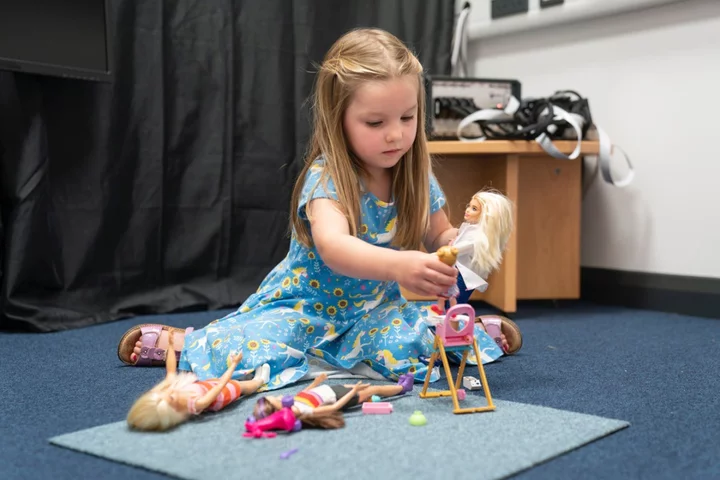
Playing with dolls could help a child’s social development
Playing with dolls could help the social development of children - including those with neurodiverse conditions such as autism, according to a study. The research, from Cardiff University, found children exhibiting higher levels of autism traits showed increased brain activity in a key region associated with social processing when engaging in conversations with individuals during doll play. The new findings suggested that broader social engagement with others while engaging in doll play was a unique pathway to social development for these children. This was in contrast to what was observed in neurotypical children, who were more likely to discuss the dolls’ thoughts and emotions. However, researchers said that despite this difference, it showed that both groups may be able to benefit from doll play by using it as a tool for practising social scenarios and developing social skills, such as empathy. The findings are the latest release from a multi-year study by the Centre for Human Developmental Science at the university’s School of Psychology. Previous years have focused on neurotypical children and found wide-ranging social and developmental benefits of playing with dolls. Now, in its third year, the research team has replicated those results with a more diverse range of participants, including children aged between four and eight displaying both high and low levels of traits associated with autism. Lead researcher Dr Sarah Gerson said: “Our study shows that doll play can encourage social processing in children, regardless of their neurodevelopmental profile. “The findings show that all children, even those who display neurodivergent traits commonly associated with autism, may use doll play as a tool for practicing social scenarios and developing social skills, such as empathy.” State-of-the-art functional, near-infrared spectroscopy equipment was used to explore brain activation while children played with dolls and on tablets, both by themselves and with another person, replicating conditions from the first year of the study. While observing children, researchers saw increased brain activity in the posterior superior temporal sulcus (pSTS) region - which is heavily involved in social and emotional processing such as empathy - when playing with dolls, for both play with a social partner and during solo doll play, but less so during solo tablet play. The study’s results suggest that doll play could support social processing, regardless of a child’s neurodevelopmental profile, but through different pathways. For children displaying fewer autistic traits in the research, talking about the mental states and emotions of the dolls they were playing with was associated with increased pSTS activity. In contrast, for those displaying more autistic traits, talking with others during doll play, even when playing by themselves, led to more social processing on a neural level. Other research has shown that social processing and empathy skills are important determinants in children’s future emotional, academic, and social success. The study was a collaboration with the Wales Autism Research Centre. ‘Create a more inclusive and supportive environment for their development’ Its director Dr Catherine Jones said: “The study reinforces how it is important that that we acknowledge and value neurodiversity. “This means recognising and valuing the diverse ways in which children’s brains work and approaching social development in a way that is inclusive and accommodating for all children, regardless of their neurodivergence. “By embracing all ways that children choose to play, we can create a more inclusive and supportive environment for their development.” Since the landmark publication of Piaget’s theory of cognitive development, the effects of play have been thought to be positive for kids’ social skills and creativity, but this has never been scientifically evidenced at the brain level. The multi-year long-term study, commissioned by Barbie, is the first time key Piaget theories on play have been scientifically evidenced via brain imaging and the first to use neuroimaging evidence with natural doll play, meaning there was no prescribed storyline to show how the brain is activated during doll play. Michael Swaisland, head EMEA of insight and analytics, Mattel, said: “We are proud to know that when children, regardless of their neurodevelopmental profile, play with Barbie, their playtime may benefit their development. “As Barbie continues to inspire the limitless potential in every child, we are delighted to know, through neuroscience, that playing with dolls may encourage the development of social skills such as empathy in children, including those who display neurodivergent traits commonly associated with autism. “We look forward to uncovering even more benefits of doll play through our long-term partnership with Cardiff University as we look to shine a light on the benefits the play pattern has towards development, that parents might not have been aware of.” Parents and caregivers can visit here to learn more about the research and access resources. Read More Toys children play with can have an effect on their success in adulthood The best exclusive discount codes this payday Many parents of under 5s on less than £50k ‘quit work due to childcare costs’ – survey
1970-01-01 08:00

Volkswagen restarts production after suffering major IT outage
By Christoph Steitz FRANKFURT (Reuters) -Volkswagen said on Thursday that a major IT outage, which had caused most of its
1970-01-01 08:00

Boeing delivery delays disrupt Ryanair flights again
Ryanair has announced cuts to its winter schedule due to delays in the delivery of Boeing aircraft, but Europe's largest airline by passenger numbers said its full-year traffic forecast was unaffected "as yet."
1970-01-01 08:00

Travis King arrives back on US soil from N Korea
The US soldier had illegally crossed into North Korea in July and had been held there since.
1970-01-01 08:00
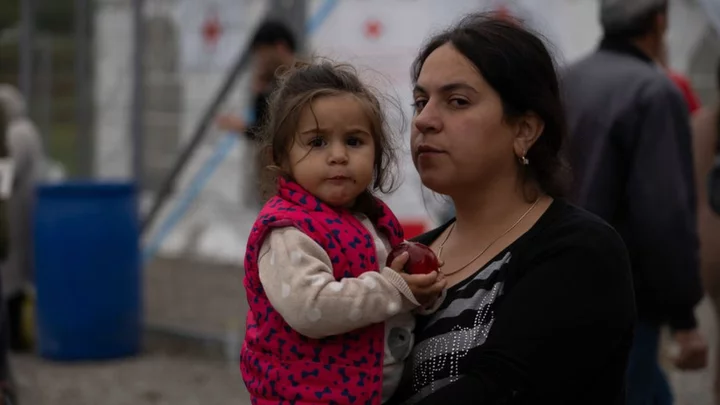
Nagorno-Karabakh state will cease to exist in January, says leader
More than half of the region's ethic Armenians are now thought to have fled the Azerbaijani takeover.
1970-01-01 08:00

Biden to issue a warning over Trump's threats to democracy as they head toward possible 2024 rematch
President Joe Biden will issue blunt new warnings about ongoing threats to US democracy in a major address Thursday, sharpening the central argument in his potential rematch with Donald Trump, who he's accused of trying to "destroy" bedrock American institutions.
1970-01-01 08:00

'I rejected it, like, full on': Kevin Bacon was scorched by Footloose fame
Kevin Bacon "rejected" the fame that he got from starring in 'Footloose' as he had his heart set on becoming a "serious actor".
1970-01-01 08:00

Kylie Minogue wows fans with free show in London
Kylie Minogue performed a 16-song set, including viral hit 'Padam Padam' and old classics, including her and Robbie Williams' noughties smash hit 'Kids'.
1970-01-01 08:00

'I've got quite high standards when I work with other people': Taika Waititi could relate to Next Goal Wins coach Thomas Rongen
Taika Waititi noticed parallels between himself and coach Thomas Rongen, the main character in his new movie 'Next Goal Wins'.
1970-01-01 08:00

Smokers 2.6 times more likely to give birth prematurely
Women who smoke during pregnancy are 2.6 times more likely to give birth prematurely compared with non-smokers – more than double the previous estimate, new research suggests. The University of Cambridge study also found smoking meant the baby was four times more likely to be small for its gestational age, putting it at risk of potentially serious complications including breathing difficulties and infections. There was no evidence caffeine intake was linked to negative outcomes. We’ve known for a long time that smoking during pregnancy is not good for the baby, but our study shows that it’s potentially much worse than previously thought Professor Gordon Smith, University of Cambridge Professor Gordon Smith, head of the department of obstetrics and gynaecology at the University of Cambridge, said: “We’ve known for a long time that smoking during pregnancy is not good for the baby, but our study shows that it’s potentially much worse than previously thought. “It puts the baby at risk of potentially serious complications from growing too slowly in the womb or from being born too soon. “We hope this knowledge will help encourage pregnant mums and women planning pregnancy to access smoking-cessation services. “Pregnancy is a key time when women quit and if they can remain tobacco free after the birth there are lifelong benefits for them and their child.” The NHS recommends that women who are pregnant should stop smoking and limit their caffeine intake because of the risk of complications to the baby. When the toxins from smoke travel through the bloodstream to the baby, it struggles for oxygen. When this happens it affects their development, and is linked to premature birth and low birthweight, though it has also been linked to a reduced risk of pre-eclampsia (high blood pressure during pregnancy). High caffeine intake has also been linked to lower birthweight and possibly foetal growth restriction. But caffeine can be more difficult to avoid than cigarette smoke as, as well as being found in coffee and tea, it can be found in chocolate, energy drinks, soft drinks and certain medications. Researchers say studies looking at the links between smoking and caffeine and their impact on pregnancy tend to rely on people reporting how much they have consumed, or exposure to smoke, data which is not always reliable. Blood tests for metabolites – chemical by-products created when substances such as tobacco and caffeine are processed in the body – might be more accurate. Researchers at Cambridge and the Rosie Hospital, part of Cambridge University Hospitals NHS Foundation Trust, recruited more than 4,200 women who attended the hospital between 2008 and 2012 as part of the Pregnancy Outcome Prediction (POP) study. The team analysed blood samples taken from a group of these women four times during their pregnancies. To assess exposure to cigarette smoke, the team looked at levels of cotinine, which can be detected in blood, urine and saliva. Only two out of three women with detectable levels of cotinine in every blood sample were self-reported smokers, showing that this measure is a more objective way of assessing smoking behaviour, researchers say. A total of 914 women were included in the smoking analysis. Of these, 78.6% were classified as having no exposure to smoking while pregnant, 11.7% as having some exposure and 9.7% as having consistent exposure. The study, published in the International Journal of Epidemiology, found that compared with those without smoke exposure while pregnant, those with consistent exposure were 2.6 times more likely to experience spontaneous preterm birth. According to the researchers, this is more than double the previous estimate of 1.27 from an analysis of multiple studies. They were also 4.1 times as likely to experience foetal growth restriction. Additionally, babies born to smokers were found to be on average 387g lighter than babies born to non-smokers – that is, more than 10% smaller than the weight of an average newborn. This increases the risk that the baby will have a low birth weight (2.5kg or less), which in turn is linked to an increased risk of developmental problems as well as poorer health in later life. Unlike in previous studies, the team found no evidence that smoking reduced the risk of pre-eclampsia. To assess caffeine intake, researchers looked for the metabolite paraxanthine in 915 women. Of these women, 12.8% had low levels of paraxanthine throughout pregnancy (suggesting low caffeine intake), 74.0% had moderate levels and 13.2% had high levels. The researchers say there was little evidence of an association between caffeine intake and any of the negative outcomes. However, because the researchers did not study all possible adverse outcomes of pregnancy, and some of the outcomes not studied – such as stillbirth – have been associated with higher caffeine intake in previous studies, they cannot interpret the findings as indicating that current recommendations around caffeine intake should be changed. The work was supported by the National Institute for Health and Care Research (NIHR), Cambridge Biomedical Research Centre and the Medical Research Council. Read More Charity boss speaks out over ‘traumatic’ encounter with royal aide Ukraine war’s heaviest fight rages in east - follow live Female students ‘more than twice as likely’ to be affected by poor mental health, research shows Many parents of under 5s on less than £50k ‘quit work due to childcare costs’ – survey 5 trainer trends that will be everywhere this autumn
1970-01-01 08:00

Ujjain: India anger as minor rape victim walks around for help
CCTV footage of a young girl walking around a street reportedly asking for help surfaced online this week.
1970-01-01 08:00