
Supreme Court rules against Navajo Nation’s access to drought-stricken Colorado River, despite US treaty
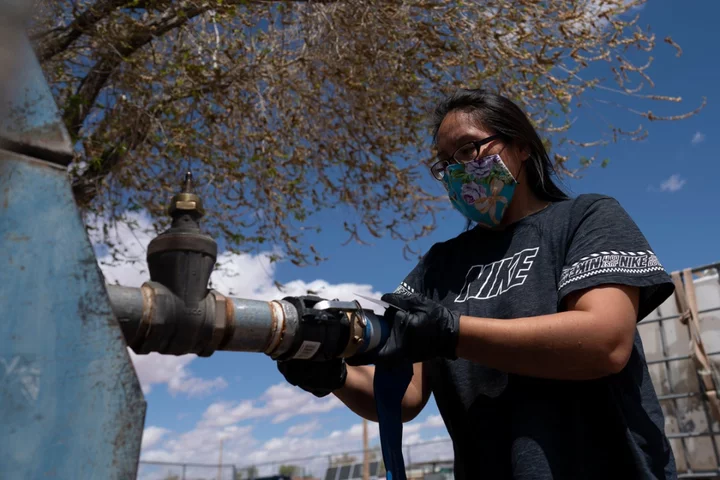
The Supreme Court ruled on Thursday against the Navajo Nation in a dispute concerning the tribe’s access to the drought-stricken Colorado River. Critics says the decision harms a community where an estimated one-third of tribal members lack running water and furthers the history of the US government breaking its promises to tribes. The case, Arizona v Navajo Nation, centres on the obligations of an 1868 treaty, which established the Navajo reservation as the tribe’s permanent home, following their forced removal from their ancestral lands by the United States military. The tribe argued that under the treaty, the US government has an obligation to evaluate the tribe’s need for water and factor that analysis into how it divides up water access to the Colorado River, which serves over 40 million people and passes through seven states. The US government, as well as the states of Arizona, Nevada, and Colorado, and various water districts in California, argued against the tribe in consolidated appeals. They claimed that the tribe’s interpretation of the treaty would undermine existing agreements on sharing the water from the Colorado and create and impose unsubstantiated obligations on the US government to develop water infrastructure for the tribe. In a 5-to-4 decision, all but one of the high court’s conservatives ruled against the tribe. “In light of the treaty’s text and history, we conclude that the treaty does not require the United States to take those affirmative steps,” Justice Brett Kavanaugh wrote in the majority opinion. “And it is not the Judiciary’s role to rewrite and update this 155-year-old treaty. Rather, Congress and the President may enact — and often have enacted — laws to assist the citizens of the western United States, including the Navajos, with their water needs.” The court’s three liberal justices, as well as the Trump-appointed Neil Gorsuch, an advocate for tribal rights, dissented. “The Navajo have waited patiently for someone, anyone, to help them, only to be told (repeatedly) that they have been standing in the wrong line and must try another,” he wrote in his dissenting opinion. He argued, alongside the tribe, that the Navajo weren’t forcing the US government to immediately start building water infrastructure or changing water claims on the river, but rather begin the process of fully accounting for what the nation needed. Navajo representatives criticised the ruling. "My job as the president of the Navajo Nation is to represent and protect the Navajo people, our land, and our future,” Navajo Nation president Buu Nygren said in a statement after the ruling. “The only way to do that is with secure, quantified water rights to the Lower Basin of the Colorado River.” With a population of about 175,000 and a land mass larger than West Virginia, the Navajo Nation is the largest US tribal reservation, and the Colorado River and its tributaries flow alongside and through the tribe’s territory. “The US government excluded Navajo tribal citizens from receiving a share of water when the original apportioning occurred and today’s Supreme Court decision for Arizona v. Navajo Nation condoned this lack of accountability,” John Echohawk, executive director of the Native American Rights Fund, one of the many Indigenous groups that filed briefs in support of the Navajo Nation, said in a statement. “Despite today’s ruling, Tribal Nations will continue to assert their water rights and NARF remains committed to that fight.” In 2003, the Navajos sued the federal government regarding access to the Colorado River, while the tribe has also fought for access to a tributary, the Little Colorado River, in state court. As The Independent has reported, many on the Navajo nation struggle for basic water access. “If you run out [of water] in the evening, you have to get up earlier the next day to make sure that there’s water for the kids to wash hands, brush their teeth, make breakfast,” Tina Becenti told The Independent. “It was time-consuming and took a lot of energy.” Tribes were cut out of initial deals made to allocate the water on the Colorado River, leaving many to rely on thousands of unregulated wells, springs, and livestock troughs that are spread across the reservation, which can pose a serious health risk. According to the Environmental Protection Agency, these sources may contain bacterial or fecal contaminants, along with unsafe levels of uranium and arsenic – a legacy of mining on Navajo land which began with the US military’s Manhattan Project for nuclear weapons in 1944 and continued until 2005. The fate of the Colorado River has become increasingly contentious, as the vital waterway dwindles under heavy demand and a changing climate. In May, following years of tense negotiations, Arizona, California, and Nevada agreed to cut their use of water from the Colorado in exchange for $1.2bn in federal funding, a last-minute compromise that staved off catastrophic impacts to agriculture, electricity generation, and water supplies to major cities like Phoenix and Los Angeles. The high court decision follows a ruling this month on another topic with a long and complicated history involving tribal groups: adoption. Last week, a 7-2 majority ruled to preserve the Indian Child Welfare Act, defending the law’s preference for the foster care and adoption of Native children by their relatives and Tribes, which was implemented following investigations that revealed more than one-third of Native children were being removed from their homes and placed with non-Native families and institutions, cutting off important family and cultural ties. Louise Boyle and Alex Woodward contributed reporting to this story. Read More Father of 13 dies in Colorado rafting accident after saving his children from danger Feds announce start of public process to reshape key rules on Colorado River water use by 2027 Nevada fight over leaky irrigation canal and groundwater more complicated than appears on surface Supreme Court rules against Navajo Nation in Colorado River water rights case Feds announce start of public process to reshape key rules on Colorado River water use by 2027 Vegas water agency empowered to limit home water flows in future
1970-01-01 08:00

Spurs Twitter rejoices as team selects Victor Wembanyama in NBA Draft
In a no-brainer move, the San Antonio Spurs select Victor Wembanyama with the first pick in the NBA Draft, and fans rejoiced on Twitter.The 2023 NBA Draft officially arrived on Thursday, June 22, but it officially began with the No. 2 pick. Why's that? Well, the San Antonio Spurs won the NB...
1970-01-01 08:00

Victor Wenbanyama has joined record books without even playing an NBA game
Already on draft night, Victor Wenbanyama is already one of the most unique players to join the NBA.According to ESPN stats and info, Victor Wenbanyama will be joining the basketball record books before even signing his NBA contract. He is the sixth NBA Draft pick that does not have a college ba...
1970-01-01 08:00
Domingo German implosion proved why Yankees need to bring back traded player
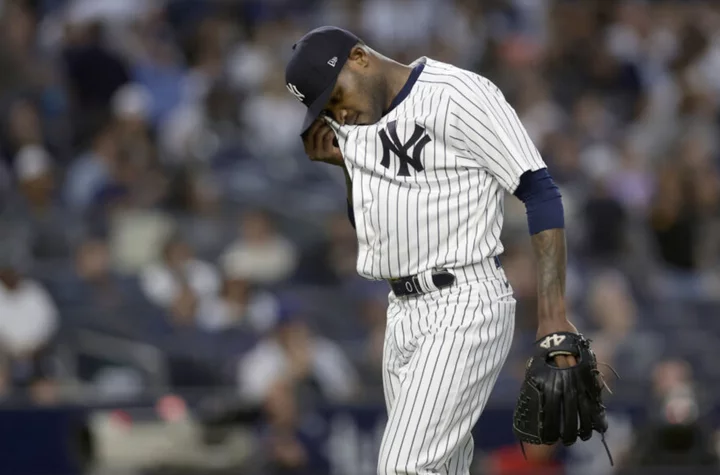
Domingo German gave up 10 earned runs on Thursday night, showing why the Yankees need to make a move as quickly as possible.Yankees starter Domingo German left the mound in the fourth inning on Thursday night. The Mariners, by that point, had scored 10 runs, several of those coming from the four...
1970-01-01 08:00
North Carolina legislature passes ban on transgender athletes from girls' sports teams
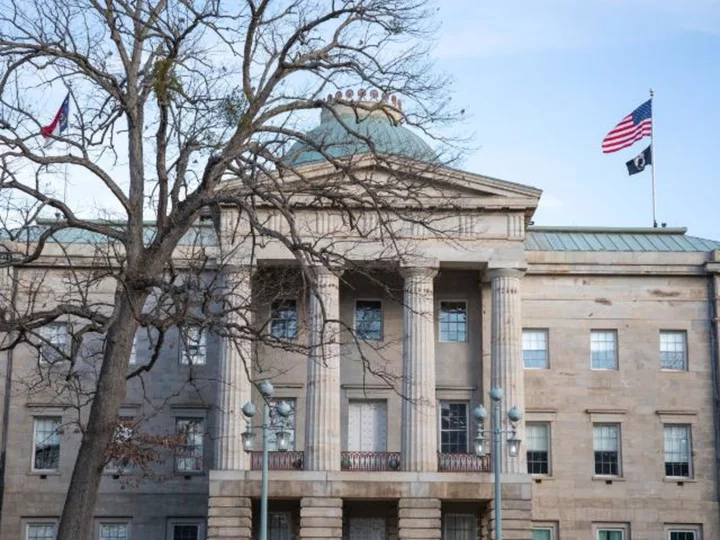
The Republican-controlled North Carolina state House gave final approval to a bill Thursday that would ban transgender girls and women from competing on middle school, high school and college sports teams that align with their gender identity.
1970-01-01 08:00

Pirates place outfielder Bryan Reynolds on 10-day injured list
The Pittsburgh Pirates placed outfielder Bryan Reynolds on the 10-day injured list Thursday retroactive to Tuesday because of lower back inflammation
1970-01-01 08:00
Adani Group Draws Regulatory Scrutiny in the US After Short Seller Report
US authorities are looking into what representations Adani Group made to its American investors following a scathing short
1970-01-01 08:00

Spurs draft Wembanyama and now look for French phenom to help end NBA playoff drought
The San Antonio Spurs are looking to end their four-year playoff drought with the addition of Victor Wembanyama
1970-01-01 08:00

Hornets select Brandon Miller over Scoot Henderson with No. 2 pick in NBA draft
The Charlotte Hornets selected Alabama’s Brandon Miller with the No. 2 pick in the NBA draft, giving them an athletic 6-foot-9 wing with a smooth shooting stroke from the perimeter
1970-01-01 08:00

Victor Wembanyama is the No. 1 pick in the NBA draft, with expectations of stardom
Victor Wembanyama is the No. 1 pick in the NBA draft, headed to San Antonio with enormous expectations to become basketball’s newest sensation
1970-01-01 08:00

7-foot-4 Frenchman Victor Wembanyama taken by the San Antonio Spurs with first pick of NBA Draft
Victor Wembanyama, a 7-foot-4 Frenchman who some NBA commentators think could be a generational talent, was the No. 1 pick by the San Antonio Spurs in the NBA Draft on Thursday night.
1970-01-01 08:00
Wife of pilot in fatal sub implosion descended from couple who died on Titanic, report says
The wife of the man who was piloting the submersible when it imploded during this week’s dive to the the Titanic wreckage site is a descendant of a couple who died when the ocean liner sank in 1912
1970-01-01 08:00