
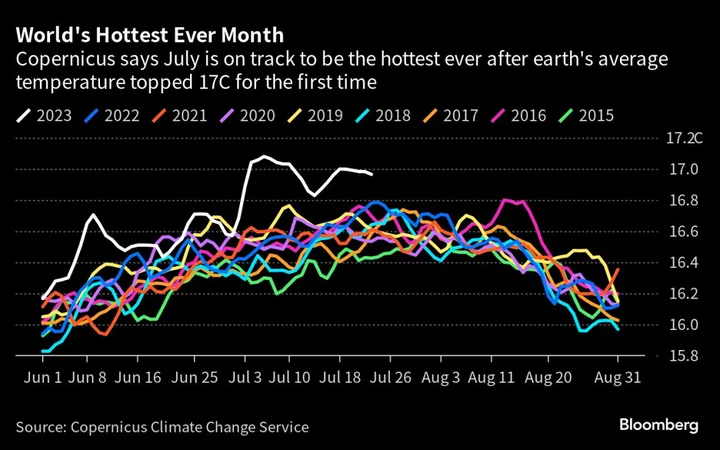
Europe Wildfire Risk Spreads to French Riviera as Heat Retreats
Europe’s wildfire threat is spreading to the French Riviera, while firefighters in Greece battle more than 100 blazes.
1970-01-01 08:00
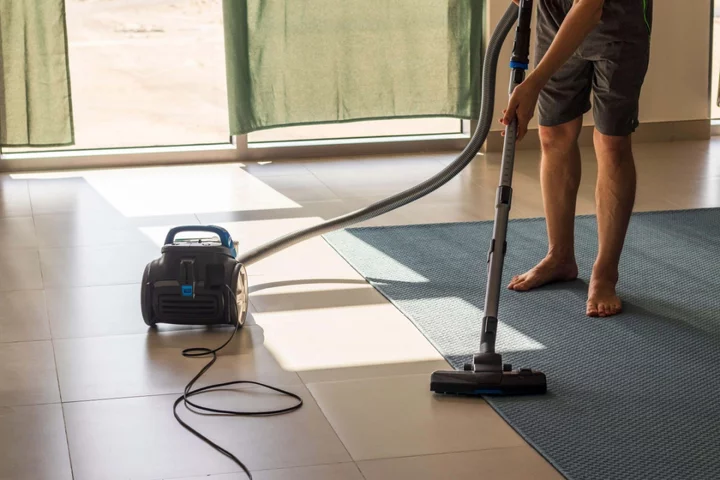
Bursts of activity that make you huff and puff ‘linked to reduced cancer risk’
Short bursts of daily activity that make you huff and puff – such as playing high-energy games with children – could help reduce the risk of cancer, research suggests. According to the study, a total of just four-and-a-half minutes of vigorous activity – done in bursts of around one minute each – during daily tasks could reduce the overall risk of cancer by 18 per cent, and the risk of some cancers linked to physical activity by up to 32 per cent. Other activities could include vigorous housework, carrying heavy shopping around the supermarket, or bursts of power walking. Lead author Professor Emmanuel Stamatakis, of the Charles Perkins Centre, University of Sydney, Australia, said: “We know the majority of middle-aged people don’t regularly exercise, which puts them at increased cancer risk, but it’s only through the advent of wearable technology like activity trackers that we are able to look at the impact of short bursts of incidental physical activity done as part of daily living. “It’s quite remarkable to see that upping the intensity of daily tasks for as little as four to five minutes a day, done in short bursts of around one minute each, is linked to an overall reduction in cancer risk by up to 18 per cent, and up to 32 per cent for cancer types linked to physical activity.” Cancer types linked to physical activity are those where not exercising increases the risk of developing the disease. The cancers associated with physical activity included liver, lung, kidney, gastric cardia (a type of stomach cancer), endometrial, myeloid leukaemia, myeloma, colorectal, head and neck, bladder, breast and esophageal adenocarcinoma (cancer of the oesophagus). Published in Jama Oncology, the study used data from wearable devices to track the daily activity of more than 22,000 people who do not exercise. Researchers then followed the group’s clinical health records for close to seven years to monitor for cancer. They found that as few as four to five minutes of vigorous intermittent lifestyle physical activity (Vilpa) was associated with a substantially lower cancer risk compared with those who undertook no Vilpa. Vilpa was coined by researchers at the University of Sydney’s Charles Perkins Centre to describe the very short bursts of activity – around one minute each – we do with gusto each day. Vilpa is a bit like applying the principles of high-intensity interval training (HIIT) to your everyday life Professor Emmanuel Stamatakis, University of Sydney Prof Stamatakis said: “Vilpa is a bit like applying the principles of high-intensity interval training (HIIT) to your everyday life.” He added that adults who do not exercise are at increased risk of developing certain cancers such as breast, endometrial or colon. But, until recently, experts were not able to measure the impact of less structured forms of vigorous physical activity. In the study sample of 22,398 people with an average age of 62 who did not exercise in their leisure time, the researchers found 2,356 new cases of cancer (1,084 in physical activity-related cancer) over an average follow-up of 6.7 years. They found that a minimum of around 3.5 minutes of daily Vilpa was associated with up to an 18% reduction in cancer incidence, compared with no Vilpa, while 4.5 minutes of daily Vilpa was associated with up to a 32% reduction in the risk of cancers linked to physical activity. The researchers used data from the UK Biobank Accelerometry Sub Study and only included people who reported no leisure time exercise and no regular recreational walks. Read More TV chef James Martin reveals cancer diagnosis in apology over ‘bullying’ allegations Men have a problem – and it won’t be solved by either Andrew Tate or Caitlin Moran Husband fired from family business after wife roleplayed with reborn dolls
1970-01-01 08:00
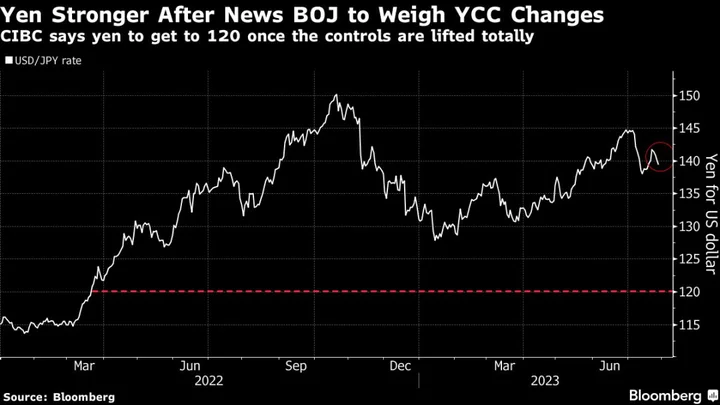
Global Bonds Fall as Japan Tweaks Yield Control: Markets Wrap
Bonds around the world retreated after the Bank of Japan, so far a holdout on ultra-loose monetary policy,
1970-01-01 08:00

Elon Musk congratulates his ex-wife on getting engaged to the Love Actually kid
In one of the more unlikely stories you'll hear this year, Elon Musk has congratulated his ex-wife Talulah Riley on getting engaged to Love Actually child actor Thomas Brodie-Sangster. Riley and Brodie-Sangster, who are both actors, have been together for two years having met while working on the FX series Pistol. Now after just two years together, Riley announced on Twitter that she and Brodie Sangster were getting hitched. The 37-year-old St Trininan's star wrote: "Very happy to share that after two years of dating, Thomas Brodie Sangster and I are engaged!" Sign up to our free Indy100 weekly newsletter Riley, who has been married to Elon Musk twice and as a result divorced twice, even chimed in to offer his congratulations as the happy couple shared a wholesome selfie of themselves together. Riley and Musk began dating in 2008 and married each other in Scotland in 2010 only for Musk to end the relationship in 2012 and file for divorce. They then reconciled their differences and in July 2013 got married again but by December 2014 Musk had filed for another divorce only to withdraw. Riley and Musk then lived separately for six months before she filed for divorce in 2016 with the pair finally separating in October 2016. The two appear to still be on good terms with Riley telling Musk in March 2022: "Can you buy Twitter and then delete it, please?" America is going insane. Or can you just buy Twitter and make it radically free speech? So much stupidity comes from Twitter." Some foreshadowing there... Brodie-Sangster is best known for his role as Sam in the Christmas classic Love Actually but has also starred in Nowhere Boy, Game of Thrones and the Maze Runner series. Have your say in our news democracy. Click the upvote icon at the top of the page to help raise this article through the indy100 rankings.
1970-01-01 08:00

Top China Housing Official Urges Fresh Property Aid Efforts
China’s top housing official urged financial regulators and lenders to strengthen efforts to revive the country’s ailing property
1970-01-01 08:00

China Bulls Look for Redemption as Beijing Shows Policy Resolve
A rally in Chinese stocks is gathering steam as early signs emerge that authorities are acting on the
1970-01-01 08:00

Study uncovers what nap times reveal about young children’s brain development
Babies and toddlers who nap a lot may have smaller vocabularies and poorer memory and thinking skills, research suggests. Parents and guardians all over the world worry about their children getting either too little or too much sleep. But a new study reveals that some children are better at consolidating information during sleep, so they nap less frequently. Those with fewer words and poorer cognitive skills need to nap more frequently, the researchers found. Young children will naturally nap for as long as they need and they should be allowed to do just that Dr Teodora Gliga, University of East Anglia However, the findings suggest that reducing naps for these children will not improve brain development, and that they should be allowed to nap as frequently and for as long as they need. Lead researcher Dr Teodora Gliga, from the University of East Anglia (UEA), said: “There is a lot of parental anxiety around sleep. “Parents worry that their kids don’t nap as much as expected for their age – or nap too frequently and for too long. “But our research shows that how frequently a child naps reflects their individual cognitive need. “Some are more efficient at consolidating information during sleep, so they nap less frequently. “Children with smaller vocabularies or a lower score in a measure of executive function nap more frequently.” She added: “Young children will naturally nap for as long as they need and they should be allowed to do just that.” The research team studied 463 infants aged between eight months and three years during lockdown in 2020. What we found is that the structure of daytime sleep is an indicator of cognitive development Dr Teodora Gliga, University of East Anglia Parents were asked about their children’s sleep patterns, their ability to focus on a task, keep information in their memory, and the number of words that they understood and could say. They also asked parents about their socioeconomic status – including their postcode, income, and education – and about the amount of screen time and outdoor activities their child engaged in. Dr Gliga said: “Lockdown gave us an opportunity to study children’s intrinsic sleep needs because when children are in childcare, they rarely nap as much as they need to. “What we found is that the structure of daytime sleep is an indicator of cognitive development. “Infants with more frequent but shorter naps than expected for their age had smaller vocabularies, and worse cognitive function. “We also found that this negative association between vocabulary and frequency of naps was stronger in older children.” She added that although the majority of parents reported that lockdown did not impact their children’s sleep, parents from lower socioeconomic backgrounds were more likely to report a worsening in sleep. Caregivers should use a child’s mental age and not chronological age to ascertain a child’s sleep needs Dr Teodora Gliga, University of East Anglia “Screen time increased during lockdown and outdoor activities decreased but these did not explain differences in children’s sleep,” Dr Gliga said. She continued: “Our findings suggest that children have different sleep needs – some children may drop naps earlier because they don’t need them anymore. “Others may still need to nap past three years of age. “In the UK, preschools enrolling three to five-year-olds have no provisions for napping. “Caregivers should use a child’s mental age and not chronological age to ascertain a child’s sleep needs.” The study, published in the JCPP Advances journal, was led by UEA in collaboration with researchers at the University of Oxford, Oxford Brookes University, the University of Leeds and the University of Warwick. It was funded by the Economic and Social Research Council (ESRC). Read More Charity boss speaks out over ‘traumatic’ encounter with royal aide Ukraine war’s heaviest fight rages in east - follow live Bursts of activity that make you huff and puff ‘linked to reduced cancer risk’ New outfits in Highland dress collection help museum tell the story of modern tartan 5 expert-approved ways to stop your hair colour fading this summer
1970-01-01 08:00

Engie Profit Jumps 25% on Energy Prices, Renewable Expansion
French utility Engie SA said first-half earnings jumped 25% on strong prices, growth in renewable energy and greater
1970-01-01 08:00

Cheap Beer Choices Hold Earnings Risk for Europe’s Brewers
It’s been a sobering earnings season for Europe’s corporations, unless you’re a bank. While a higher portion has
1970-01-01 08:00

Gucci Owner Kering to Buy 30% of Valentino for €1.7 Billion
Kering SA agreed to buy a 30% stake in fashion house Valentino for €1.7 billion ($1.87 billion) in
1970-01-01 08:00

Unilever Names Meakins as Next Chairman Following CEO Change
Unilever Plc named Ian Meakins to succeed Chairman Nils Andersen, continuing an overhaul of its leadership after a
1970-01-01 08:00
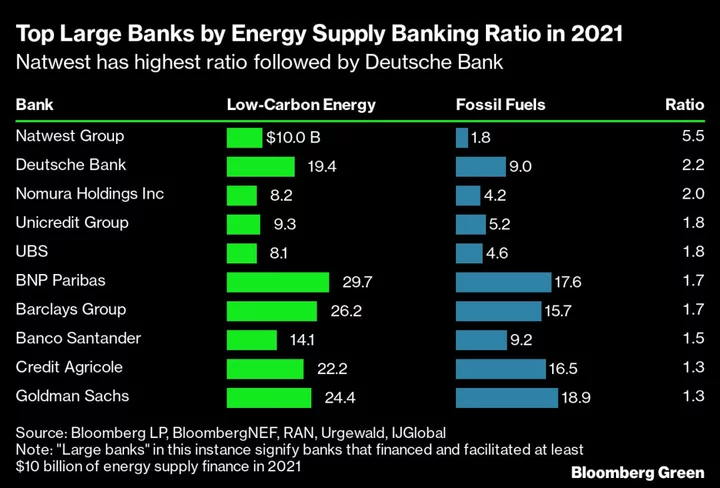
NatWest Executive Missteps Fueled UK’s Nascent Anti-ESG Movement
NatWest Group Plc is reeling from the resignations of two high-level, veteran executives following missteps that placed them
1970-01-01 08:00