
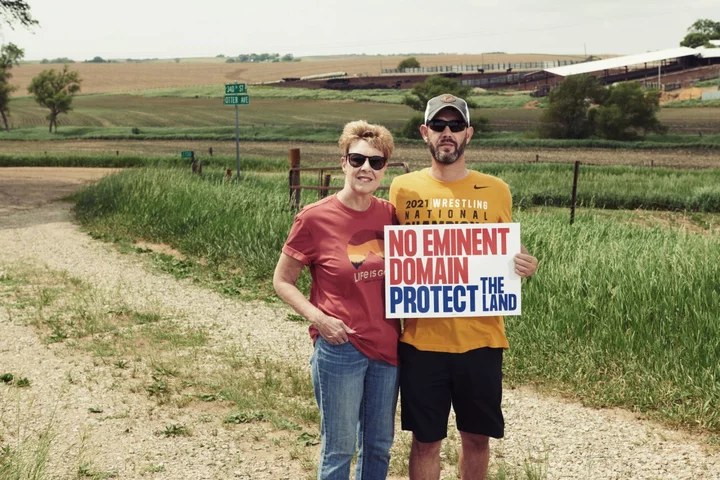
The Midwest Is Ground Zero for the Fight Over Carbon Capture Pipelines
Deadly rupture. Groundwater contamination. Earthquake triggers. One after another, residents from across Iowa fired off their concerns at
1970-01-01 08:00
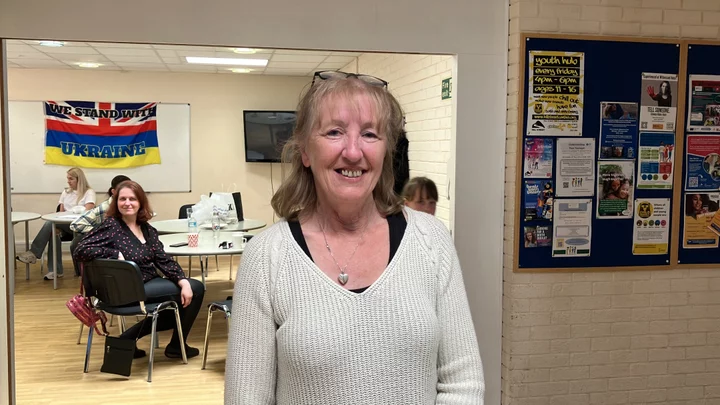
Rugby volunteer takes Ukrainians under her wing
Kym Bromley said they were like "rabbits in headlights" when they arrived.
1970-01-01 08:00
Biden slammed for offering ‘insulting’ $700 payments to Maui wildfire victims
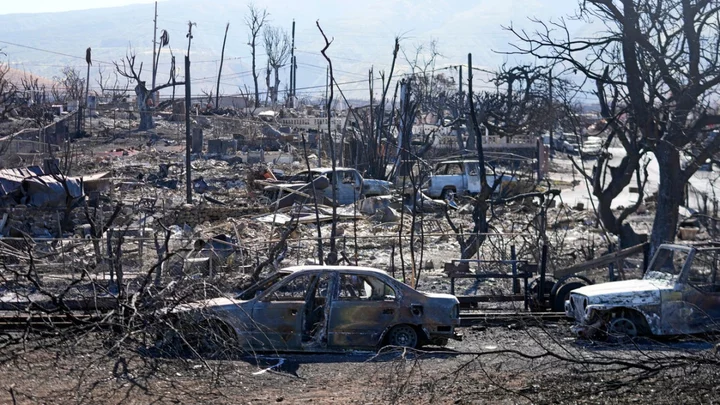
President Joe Biden’s offer of a $700 emergency payment to households impacted by the devastating Maui wildfires has been criticised as an insult to survivors. The death toll from the US’s deadliest wildfires in more than 100 years rose to 106 on Wednesday, with hundreds still unaccounted for, thousands left homeless and an estimated $7bn in economic damage. Mr Biden, who has faced criticism for his handling of the disaster, announced an economic relief package on Monday that included cash payments and temporary housing assistance for survivors. “We're laser-focused on getting aid to survivors, including Critical Needs Assistance: a one-time $700 payment per household offering relief during an unimaginably difficult time. “We have staff on the ground dedicated to helping survivors navigate the registration process,” Mr Biden added. A White House statement confirmed the offer was only available to residents who were displaced from their homes and had critical needs. With 1,200 families sheltering in emergency shelters over the weekend, and 2,200 buildings destroyed, it’s not clear how many Hawaiians will be eligible. It was immediately decried as too small to have a meaningful impact by some commentators. “Make it $700 a month. Per family member in a household. For a minimum of two years,” wrote Scott Santens, the director of the ITSA Foundation which backs universal basic income, on X, formerly known as Twitter. “A one time $700 payment will definitely get their lives, houses and property back! Great job Biden,” another user wrote. Many compared the offer unfavourably to the $113bn in aid the Biden administration has sent to Ukraine since February 2022 to support the war effort, with a further $200m approved on Monday. Financial commentator Mark Wlosinski wrote on X estimated the $700 offer would amount to $1.9m, and labelled it “insulting”. “Can someone please explain how our government can send hundreds of billions to other countries, but chooses to pinch pennies when our own people are in need? An entire town on US soil has been destroyed overnight, and the best our government can do is $700?” Actor Rob Schneider, an outspoken anti-vaxxer and Trump supporter, wrote on X: “The ($115bn) US TAX PAYER DOLLARS TO UKRAINE… $1.9 million dollars to American Maui fire victims. Biden hates Americans…” Right-wing commentator Colin Rugg wrote: “Can someone please explain to me why our leaders are so reckless with money sent to Ukraine but then pinch pennies when the money is spent on Americans?” Mr Biden has faced criticism for his response to the Maui fires from his political opponents. He appeared to brush off a White House pool reporter reporter’s questions when asked for a comment on the rising death toll over the weekend. White House press secretary Karine Jean-Pierre addressed the snub on Monday, saying that Mr Biden remained “deeply concerned” about the wildfires. The newly-indicted former President Donald Trump seized on Mr Biden's apparent no comment, claiming the Democrat “refuses to help or comment on the tragedy”. On 9 August, Mr Biden offered his “deepest condolences to the families of those who lost loved ones in the wildfires in Maui” in a statement as the first fatalities were confirmed. The next day he declared a federal disaster in the state, freeing up federal funds to provide grants for temporary housing and home repairs, and low-cost loans to cover uninsured property losses. Mr Biden made brief remarks during a trip to Salt Lake City last week in his only public comments so far about the unfolding tragedy. “Anyone who's lost a loved one, whose home has been damaged or destroyed, is going to get help immediately,” he said. The White House has since touted its “whole-of-government response effort”, which included deploying 500 federal personnel and thousands of meals, beds and litters of water. The Democratic Hawaii governor Josh Green has publicly praised Mr Biden’s response to the disaster. The Independent has approached the White House for comment. Read More Maui fires – update: Hawaii death toll rises to 106 with 1,000 still missing amid struggle to identify victims Dramatic video shows family narrowly escaping Maui wildfires by fleeing to the ocean How to help victims of Hawaii wildfires ‘I think I messed up’: Moment US representative mistakenly introduces Joe Biden Death toll from devastating Maui fire reaches 106, as county begins releasing names Maui fires death toll rises to 106 amid struggle to identify victims – live
1970-01-01 08:00
Vegan diet can reduce hot flashes associated with menopause, study suggests
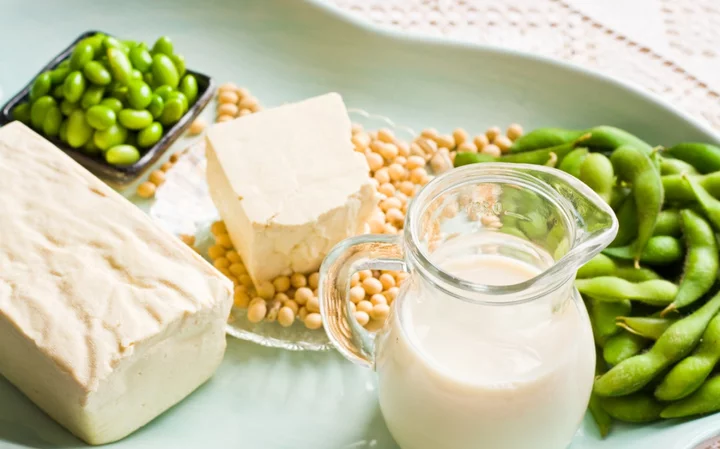
Plant-based diets with a sufficient amount of soy can reduce hot flashes while also aiding weight loss, according to the Women’s Study for the Alleviation of Vasomotor Symptoms (WAVS) trial. A study published by the North American Menopause Society in the journal Menopause found that a diet intervention is about as effective as hormone replacement therapy for reducing menopausal hot flashes, without the associated health risks. “We do not fully understand yet why this combination works but it seems that these three elements are key—avoiding animal products, reducing fat, and adding a serving of soybeans,” explained lead researcher Neal Barnard, MD, president of the Physicians Committee and adjunct professor at the George Washington University School of Medicine. “Our results mirror the diets of places in the world, like pre-Westernized Japan and modern-day Yucatán Peninsula, where a low-fat, plant-based diet including soybeans is more prevalent and where postmenopausal women experience fewer symptoms.” To conduct the study, researchers recruited 84 postmenopausal women that reported episodes of hot flashes two or more times per day. Participants were randomly assigned into two groups. One group was an intervention group that was on a low-fat vegan diet consuming half a cup of cooked soybeans daily, while the other was a control group with no dietary changes for 12 weeks. After 12 weeks, researchers found that those on a vegan diet had a 88 per cent decrease in moderate to severe hot flashes and had lost an average of eight pounds. This is about the same success rate as hormone replacement therapy (HRT), which is usually 70 to 90 per cent effective against hot flashes. The trial was split into two parts, the first being published in 2021 and the second being published this year. It successfully addressed the point that there may be positive changes seen in menopause relief due to seasonal temperature variations. The first trial, which was conducted during the autumn season raised the question of whether this symptomatic improvement might have been attributed to cooler temperatures. But women who began the study as the weather warmed up in the spring had the same benefit, ruling out the effect of the temperature outside. “These new results suggest that a diet change should be considered as a first-line treatment for troublesome vasomotor symptoms, including night sweats and hot flashes,” explains Dr Barnard. Dr Barnard and the team agree said their results not only support putting diet and lifestyle at the forefront of the conversation with hot flash relief during menopause but also for other common complications such as weight gain and chronic disease implications. “This study demonstrates the effectiveness of a dietary intervention for menopausal symptoms,” Dr Barnard said. “As well, it is precisely the diet that would be expected to reduce the health concerns of many women reaching menopause: an increasing risk of heart disease, breast cancer, and memory problems.” The findings are published in the journal Menopause. Read More What are the symptoms of menopause and how can they be relieved? What’s the link between the menopause and anxiety? Menopause affecting your mental health? Experts reveal what to do What I gained (and lost) by walking 10,000 steps each day for 5 months Raven-Symoné details cosmetic surgeries she had before she turned 18 Nearly half of US adults are interested in taking weight loss prescription drugs
1970-01-01 08:00

A Year Into Biden’s Climate Agenda, the Price Tag Remains Mysterious
It’s been exactly one year since President Joe Biden signed the Inflation Reduction Act, securing a core part
1970-01-01 08:00

Mindy Kaling and Dev Patel executive produce To Kill a Tiger
Hollywood star Mindy Kaling has been announced as an executive producer of 'To Kill a Tiger'.
1970-01-01 08:00

The Killers apologise for offending fans in Georgia with Russian 'brother' remark
Fans booed frontman Brandon Flowers for asking them to welcome a fan from neighbouring Russia.
1970-01-01 08:00
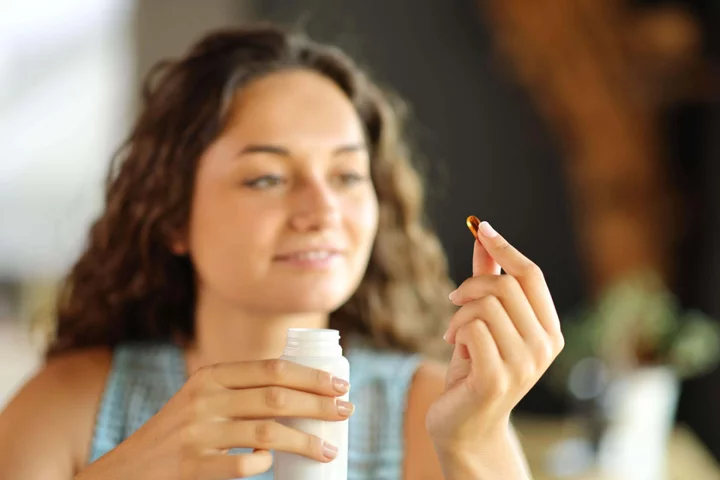
Vitamin D intake ‘may reduce cancer mortality in the population by 15%’ – study
Taking regular Vitamin D supplements may reduce cancer deaths in the population by 15%, according to scientists. Data gathered from the UK Biobank, an online database of medical and lifestyle records of around 500,000 Britons, indicates vitamin D deficiency is linked to an increased cancer mortality risk – particularly in relation to bowel, stomach, prostate, and lung cancers. The researchers said their work, published in Elsevier’s European Journal of Cancer, adds to evidence that vitamin D may have a protective effect against cancer. While the findings do not explain why this happens, the team said one possibility is that vitamin D supplements may induce anti-inflammatory, antioxidant, and DNA damage repair mechanisms, which can thwart mutations that allows tumours to grow. Study author Ben Schottker, an epidemiologist at the German Cancer Research Centre, said: “Our findings identified a statistically significant relationship between vitamin D deficiency and increased mortality among several cancers. “These results can be explained by other studies, which found mechanisms by which vitamin D inhibits cancer growth and metastasis.” The NHS advice is that adults and children over four take a daily supplement containing 10 micrograms of vitamin D throughout the year. According to the Department of Health and Social Care, around one in six adults and almost 20% of children in the UK have vitamin D levels lower than government recommendations. Older people, the housebound and people from black and South Asian communities are more likely to have lower levels of vitamin D. Our findings identified a statistically significant relationship between vitamin D deficiency and increased mortality among several cancers Ben Schottker For the study, the researchers looked at data from more than 400,000 people aged 40–69. In-depth medical information was gathered through blood, urine and saliva samples. A short interview and a questionnaire as used to assess vitamin D consumption as well as lifestyle factors such as alcohol consumption, smoking. Follow-up data on health outcomes were gathered through NHS links as well as care data, cancer screening data, and disease-specific registers. Over a period of nearly 13 years, close to 13,000 people died of cancer. Results showed a majority of the study population had either vitamin D deficiency (21.1%) or insufficiency (34.4%) – used to describe low levels of vitamin D. Of the people involved in the study, only 4.1% regularly took a vitamin D supplement and 20.3% regularly took a multivitamin. Results showed that vitamin D supplement users had 15% lower total cancer mortality and 25% lower lung cancer mortality compared to those who did not take the supplement. The also found researchers found that those with vitamin D deficiency had 42% increased mortality for stomach, 27% for bowel, 24% for lung, and 36% for prostate cancers. Meanwhile those with vitamin D insufficiency were found to have 14% increased bowel cancer mortality and 19% increased lung cancer mortality. The scientists said that the potential to reduce cancer mortality by vitamin D supplementation in populations with low levels should be further explored in new research. Commenting on the study, Dr Jenna Macciochi, senior lecturer in immunology at the University of Sussex, said: “This study adds to the growing body of evidence on vitamin D and cancer. “Vitamin D plays multiple key roles in immune health and the immune system is part of the body’s cancer defence system. “With cancer rates rising and presenting a serious public health issue, its useful to have further insight into the role of vitamin D in the prevention of cancer.” But Dr Macciochi also cautioned that the Biobank data might not be diverse and representative of the whole of the UK population. Alex Ruani, doctoral researcher at University College London and chief science educator at The Health Sciences Academy – who was not involved in the study, said that the exact dosage taken by participants was not ascertained and the risk reduction was not the same for all cancers. She said: “This research doesn’t imply that taking vitamin D3 supplements will for sure lower your risk of death from cancer. “Supplementation may help with consistent vitamin D levels, whereas production from sunlight can be variable and dependent on weather, time of the day, exposure duration, being outdoors or indoors, protective UV wear or sunblock, and many other factors.” She added: “Common food sources of vitamin D3 include full-fat dairy, egg yolks, and fish. “Although toxicity is rare, there is an upper tolerable limit set in the UK, where vitamin D3 supplementation shouldn’t exceed 100 micrograms a day.”
1970-01-01 08:00
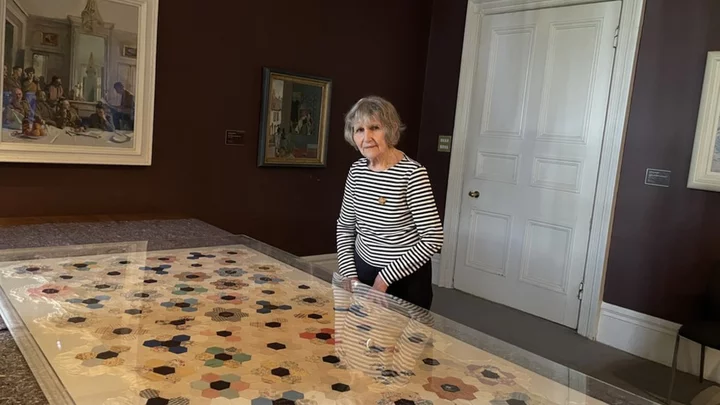
'I celebrated my 10th birthday in Changi PoW camp'
Olga Henderson, 91, has been reunited with a quilt she made with her fellow child prisoners.
1970-01-01 08:00
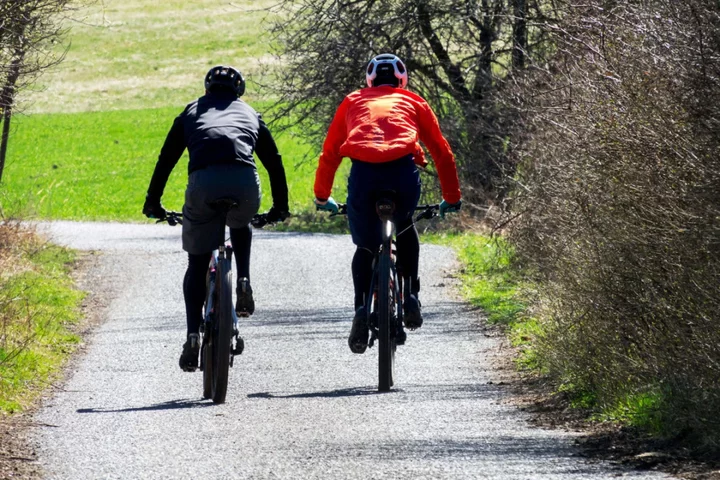
Men who cycle, jog or swim could cut risk of nine cancers – study
Male joggers, swimmers and cyclists could be cutting their risk of nine cancers, a new study suggests. Researchers found that men with good cardiorespiratory fitness are far less likely to go on to develop cancers of the head and neck, stomach, pancreas, liver, bowel, rectum, kidney, lung and oesophagus. Cardiorespiratory fitness refers to a person’s ability to do aerobic exercise, such as running, cycling and swimming for sustained periods, or even to climb stairs. The new study, published in the British Journal of Sports Medicine, saw experts from Sweden track just over a million men for an average of 33 years. The men involved in the study were conscripted to military service in Sweden between 1968 and 2005. At the start of their conscription the men underwent a battery of tests assessing a number of factors including their height, weight, blood pressure, muscle strength and cardiorespiratory fitness. During the follow-up period, about 84,000 developed cancer. Researchers found that, compared with those with low cardiorespiratory fitness, men with a higher level of cardiorespiratory fitness were: – 19% less likely to develop head and neck cancer.– 39% less likely to develop cancer of the oesophagus (food pipe).– 21% less likely to develop stomach cancer.– 40% less likely to have liver cancer.– 18% less likely to develop bowel cancer and 5% less likely to develop cancer of the rectum– 20% less likely to develop kidney cancer.– 42% less likely to develop lung cancer.– 12% less likely to develop pancreatic cancer. “These results could be used in public health policymaking, further strengthening the incentive for promoting interventions aimed at increasing [cardiorespiratory fitness] in youth,” the authors wrote. The researchers did find that higher cardiorespiratory fitness was linked to a slight (7%) increased risk of prostate cancer and a 31% increased risk of skin cancer. A previous study examining the same data set suggested the slight increase in risk for prostate cancer was not linked to a higher rate of aggressive prostate cancer or prostate cancer death, and could be attributable to increased screening. The authors suggested a higher skin cancer rate could be explained due to “higher UV exposure”. Read More Charity boss speaks out over ‘traumatic’ encounter with royal aide Ukraine war’s heaviest fight rages in east - follow live Why are wellbeing experts concerned about TikTok’s ‘lazy girl job’ trend? Red flags you might be missing about your child’s online safety Rumer Willis says she is ‘grateful’ to her body following birth of daughter
1970-01-01 08:00

Liverpool's plans for Mohamed Salah and Alisson amid Saudi Arabia interest
Liverpool duo Mohamed Salah and Alisson are subject to interest from clubs in the Saudi Pro League, but the Reds do not intend to sell either of them.
1970-01-01 08:00
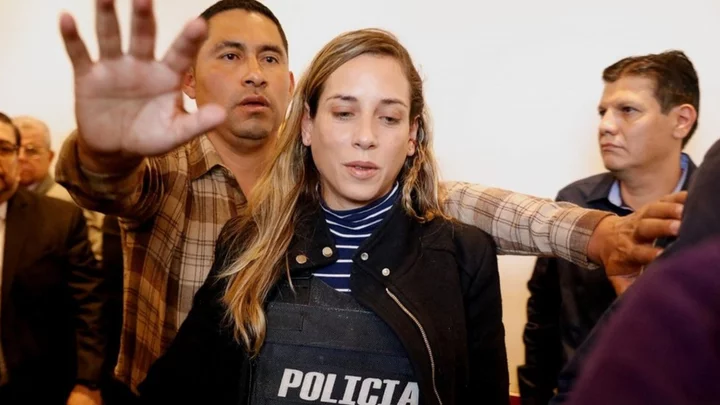
Ecuador election: 'I'm wearing a bulletproof vest 24 hours a day'
Andrea González aims to be vice-president in Ecuador after her party's presidential candidate was shot dead.
1970-01-01 08:00